A majority of voters say they support impeaching James Boasberg, the federal judge linked to the Biden administration’s “Arctic Frost” investigation, which reportedly involved surveillance of Republican members of Congress.
Meanwhile, 26% of respondents said they do not consider the controversy serious, including 12% who said it is “not at all” serious, Just the News reported.
The survey comes amid a GOP-led effort to make Boasberg the first impeached judge since 2010. A total of 15 federal judges have been impeached by the House, but only eight were removed by the Senate.
Republican lawmakers in the House want to move against Boasberg after revelations that he and Judge Beryl Howell issued non-disclosure orders shielding nearly 200 subpoenas targeting Republican organizations, officials, and donors under former Special Counsel Jack Smith, who was appointed by the Biden Justice Department.
Last week, Rep. Brandon Gill (R-Texas) said he is drafting articles of impeachment against Boasberg. Rep. Byron Donalds (R-Fla.) also signaled his intent to pursue impeachment. It is not yet clear whether Howell will also face similar action, The National Pulse reported.
The outlet added that Smith issued 197 subpoenas affecting more than 430 Republican groups and individuals as part of what is being described as the “Arctic Frost” probe. Sen. Chuck Grassley (R-Iowa) called the investigation a “fishing expedition” targeting the Republican political apparatus.
New Breakthrough In Jan. 6 Pipe Bomb Case Sends Shockwave Through DCRead More
Among the subpoenas were requests for telecom companies to hand over cell data from about a dozen Republican lawmakers. The disclosure orders signed by Boasberg and Howell prevented the companies from notifying the affected members.
“Radical activist judge James Boasberg continues to weaponize his judicial authority and target his political opponents,” Gill said in a statement. “Judge Boasberg facilitated the egregious Arctic Frost scandal, where he equipped the Biden DOJ to spy on Republican senators. His lack of integrity makes him clearly unfit for the gavel.”
Boasberg, appointed by former President Barack Obama, serves as chief judge for the U.S. District Court in Washington, D.C. He has faced criticism in the past for rulings that affected Trump administration policies.
According to reports, the subpoenas targeted political vendors and financial institutions linked to Trump-aligned PACs, suggesting that Smith’s office sought to trace potential monetary connections between consulting firms, advisors, and nonprofits. The goal appeared to be establishing grounds for possible RICO charges if prosecutors had secured a conviction against Trump.
In March, Representative Andy Biggs of Arizona introduced a resolution to remove Judge Boasberg from office under Article III, Section 1 of the Constitution — an approach that would bypass impeachment and the two-thirds vote required in the Senate, JustTheNews reported.
Biggs said federal judges “serve during good behavior” and argued that Congress has the authority to remove those who fail to meet that standard.
“Most Americans believe that there is lifetime tenure for a federal judge. That unless impeached, a federal judge can serve until death,” Biggs told Just the News. “But lifetime tenure is not guaranteed, nor mentioned, in the Constitution. Article III, Section 1 permits a federal judge to serve only ‘during good behavior.’”
Boasberg had previously blocked President Trump from using the Alien Enemies Act of 1798 to deport illegal immigrants alleged to be members of the Venezuelan gang Tren de Aragua. He ordered government planes en route to El Salvador carrying the alleged gang members to return to the United States.
Biggs said such actions exceeded judicial authority and interfered with presidential powers over foreign policy and national security.
“Maybe firing such a judge could be the answer,” Biggs said. “It would certainly be specific deterrence that would prevent that type of misconduct from such a judge. And it would provide general deterrence in that all other federal judges would think more about applying the law to the case rather than attempting to twist the law so that the judge can attack a political adversary.”
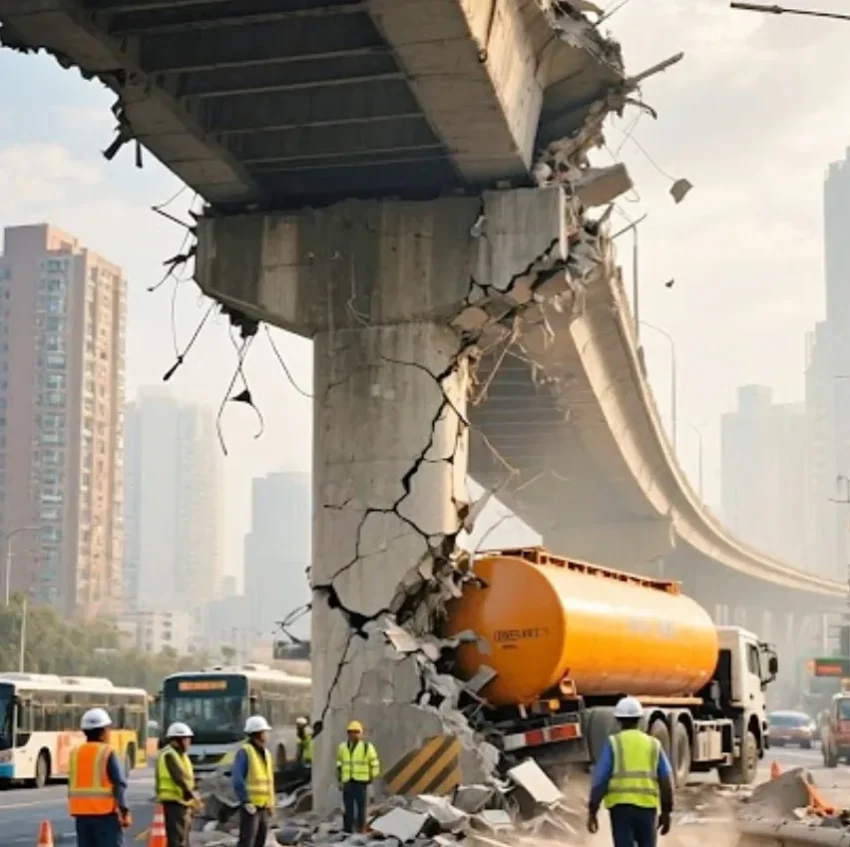
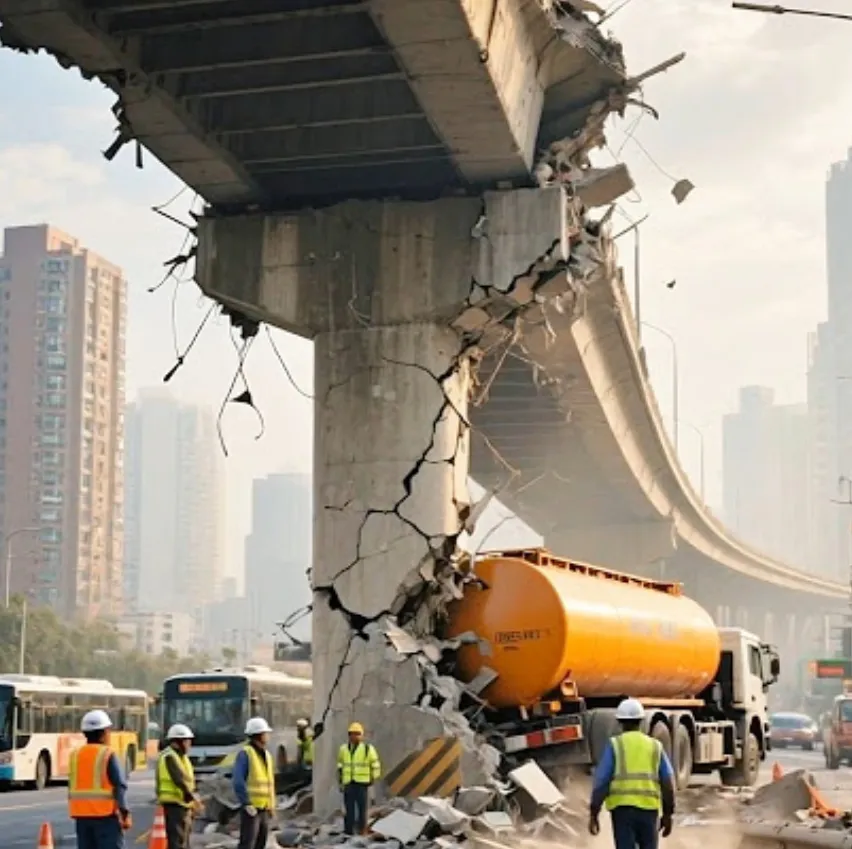
What first appears to be an ordinary roadside clip quickly transforms into something that leaves viewers unsettled. A large fuel tanker sits motionless under a visibly damaged bridge. Cracks spread across the concrete, the support beams appear strained, and every shift in the structure seems to hint at the possibility of collapse.
The short video, which has circulated widely across TikTok and other platforms, has been nicknamed “Seconds from Collapse” by online audiences. It raises a haunting question: was this a real disaster narrowly avoided, a staged awareness piece, or simply a moment caught during construction or demolition work?
The footage provides no answers. Instead, it leaves millions of viewers speculating, debating, and reflecting on the fragility of everyday safety.
Part of the reason the viral clip has gained so much traction is its powerful imagery. A tanker carrying fuel, one of the most dangerous types of cargo, sits beneath a bridge that looks as though it could give way at any second. The visual alone is enough to stir fear.
For many people, it also taps into a universal anxiety: the collapse of structures we depend on every day. Bridges, highways, and overpasses are part of the daily rhythm of modern life. When we see one in danger of failing, it touches something deeply human—the awareness that stability can vanish without warning.
The lack of context only makes the video more gripping. Some captions claim it depicts an old bridge that gave way under stress, while others suggest it was filmed during a planned demolition or a controlled safety test. Without verified details, the audience is left to wonder, filling in the blanks with their own fears and memories of past tragedies.
Even if the clip itself remains unexplained, it strongly resembles real-life disasters that have already taken place across the world.
In Taiwan in 2019, the Nanfang’ao Bridge collapsed suddenly, sending a tanker and several fishing boats crashing into the water below. The horrifying event was captured on camera and quickly made global headlines.
In India in 2025, Gujarat’s Gambhira Bridge gave way during morning traffic, leaving a tanker dangling from the wreckage while rescue teams fought to secure the structure in dangerous conditions.
In Brazil in 2024, a highway bridge collapsed just as a tanker carrying hazardous chemicals was crossing. The incident caused both human loss and environmental contamination, sparking national debates about infrastructure investment.
When viewers see the viral “tanker under bridge” video, many are reminded of these real events. That connection adds gravity to what might otherwise be dismissed as a staged performance or a routine construction scene.
Beyond the question of authenticity, the video has become a symbol of something much bigger. Around the world, countless bridges and highways are operating beyond their intended lifespan. Some were built decades ago for lighter traffic loads, yet today they carry far more vehicles than ever imagined.
Engineers have long warned that delayed maintenance and insufficient funding put these structures at risk. Each time a viral clip like this emerges, it reignites public conversation about whether enough is being done to ensure safety.
For many viewers, the tanker frozen beneath the cracked bridge becomes more than just an eerie image. It serves as a metaphor for vulnerability—the idea that society often waits until disaster strikes before addressing problems that were visible all along.
The internet plays a major role in shaping how such imagery spreads. A short, context-free video can travel faster than official reports, sparking speculation before authorities have a chance to clarify details. While this can lead to confusion, it also draws much-needed attention to issues that might otherwise go unnoticed.
In this case, whether the video was staged or not, it has already fueled widespread discussion about infrastructure safety. Viewers share their own experiences of driving over deteriorating bridges, express concern for loved ones who travel daily, and call for stronger investment in public works.
That ripple effect demonstrates the power of viral media: even a 20-second clip can inspire serious conversations about safety, responsibility, and preparedness.
Amid the anxiety stirred by the footage, it is also important to remember that moments of crisis often reveal human resilience. In past bridge collapses, ordinary drivers have acted within seconds to save others. Emergency responders have risked their own lives to stabilize unstable structures, evacuate victims, and prevent further harm.
These stories highlight that even when systems fail, courage and compassion rise to meet the challenge. The viral tanker video may remind us of danger, but it can also remind us of the bravery that surfaces when people face the unthinkable.
The sight of a tanker halted under a deteriorating bridge leaves us with a lasting impression. Whether the video shows a real near-disaster, a staged awareness campaign, or a controlled construction moment, its impact cannot be denied.
It underscores that safety is never guaranteed. Structures we rely on daily require constant monitoring, repair, and investment. Ignoring cracks—literal or metaphorical—can have devastating consequences.
At the same time, the clip offers a chance to reflect on how communities respond when faced with fear. Public awareness, media attention, and collective action can push leaders to prioritize safety before tragedy strikes.
In the end, the viral video of a tanker trapped under a crumbling bridge has become more than entertainment. It is a mirror of our shared anxieties and a reminder of real events that have taken lives in the past. It asks us to imagine what we would do if faced with the same sight, and it challenges society to ensure that such scenarios remain rare.
Preparedness is not optional. Bridges, roads, and other critical infrastructure form the backbone of modern life. One overlooked crack can change everything. By taking warnings seriously, investing in maintenance, and staying vigilant, we can turn moments of fear into opportunities for resilience and prevention.