
According to allegations and evidence presented by U.S. Attorney Russ Ferguson, the Democratic-controlled North Carolina Department of Motor Vehicles has been found to be registering noncitizens to vote in violation of federal laws, while residents of North Carolina wait in long lines outside the buildings and young drivers wait months for their license tests.
As reporter Naomi Kowles describes, Charlotte, North Carolina’s Democrat-run WBTV is rushing to fill in for their fellow Democrats at the NCDMV and Governor Josh Stein’s offices, saying it’s all a minor mistake and nothing to worry about.
— “A Hispanic woman from Charlotte was unaware that a federal investigator and a police officer had knocked on her door earlier this year to question her about a voter registration of which she was not aware. To find out why the woman’s name had been included in a letter sent by a federal prosecutor to the North Carolina Department of Motor Vehicles, WBTV Investigates went to her house and spoke with her in Spanish in collaboration with Jorge Andrés of QC Life. After discussing the registration with the woman, Andres stated, “She didn’t know until they contacted her
.” The woman informed WBTV that she was unaware of what had happened at the time, is lawfully in the United States, and is not facing any criminal charges. WBTV is not naming the woman at her request and for her protection. U.S. Attorney Russ Ferguson is charging the DMV with unlawfully registering to vote six noncitizens, including her. According to documents that WBTV collected, investigators believed that in almost all cases, the registered individuals were unaware of what had occurred. (
See the source.)
ALIPAC entirely agrees with U.S. Attorney Russ Ferguson, who was appointed by Republican DOJ head Pam Bondi earlier this year, and Same Hays, the newly appointed Republican leader of the North Carolina State Board of Elections (NCSBE), who are worried that this small sample of illegal noncitizen voters is a sign of a larger systemic issue.
“Our rapidly growing archives contain proof and documentation of illegal immigrants and other noncitizens illegally registering and voting in US elections despite our laws and indicate that America has many systematic vulnerabilities in our elections that Democrats are eager to exploit in pursuit of power, control, and permanent political dominance
,” stated William Gheen, a lifelong resident of North Carolina and the founder of ALIPAC. “We call on federal authorities, the NC SBE, and our Republican legislature to authorize and conduct a full screening of North Carolina’s voter registration records to remove all felonious noncitizen voters from our elections
Experience the ultimate restoration of your gut health with Bio-Defense. (Use Promo Code: TrumpWon for Discount.)
For NC State Senator Fern Shubert’s 2004 gubernatorial campaign, William Gheen was the first North Carolina citizen and campaign consultant to correctly estimate the state’s illegal population at over 400,000.
These new findings in North Carolina will be posted on the website www.NonCitizenVoters.com, added to ALIPAC’s Non-Citizen & Illegal Migrant Voters (HERE). The information was gathered in the archives and eventually added to the main tracking database. Copies of this press release are being distributed to Republican staff and state and federal lawmakers.
Start your day with a refreshing glass of Peach Mango Covilyte! Packed with energy, hydration, and a full spectrum of essential vitamins and minerals, it’s a delicious way to fuel and protect your body.
In a letter to the NCDMV, US Attorney Russ Ferguson stated, “We have come across some ineligible people who have registered to vote at the DMV but are unaware that they have done so… They consistently state that a DMV staffer only gave them paperwork to sign. Although many of these people do not understand English well enough, that form is presented in English. Although the majority of them remembered signing an electronic block at the DMV, they thought it was a necessary step in the driver’s license application process
.”
The Democrats at WBTV appear to be more concerned about “Hispanics” who registered to vote as noncitizens and committed felonies than about American voters whose ballots might be stolen by these illegally registered individuals! The story lacks the American perspective on this issue.
Since Democrat Governors like Roy Cooper and Josh Stein have crammed these offices with their Democratic patrons, we now find that while Americans wait in line, noncitizens are inside DMVs illegally being registered to vote by Democratic-appointed state employees. North Carolina DMVs have been in the news for numerous scandals involving absurdly long lines and wait times for services.
ALIPAC urges all Americans to contribute to the elimination of all illegal noncitizen voters from the 2026 election cycle.
Recent public appearances and medical observations have prompted questions about the 79-year-old president’s wellbeing, leading to Vice President JD Vance’s detailed response about succession preparedness and Trump’s current health status.
Video footage of Vice President Vance’s complete interview is available at the end of this article.
Vice President JD Vance recently found himself fielding questions about President Donald Trump’s health and his own readiness to assume presidential duties if necessary. The inquiry comes amid heightened public attention to the 79-year-old president’s physical condition, sparked by several recent observations and medical disclosures.
The discussion around Trump’s health has intensified following multiple incidents that have drawn media attention. Most recently, observers noted what appeared to be significant bruising on the president’s hand during public appearances. White House staff reportedly attempted to conceal the marking with makeup, leading to speculation about potential underlying health concerns.
Additionally, earlier this year, Trump received a diagnosis of chronic venous insufficiency (CVI), a cardiovascular condition affecting blood circulation in the leg veins. The diagnosis coincided with Trump’s 79th birthday celebrations in June, making him the oldest person to serve as president in American history when he was inaugurated at age 78 in January.
Chronic venous insufficiency is a medical condition that occurs when leg veins become damaged and cannot effectively return blood to the heart. The condition affects millions of Americans, particularly those over 50, and can result from various factors including age, genetics, prolonged standing, or previous blood clots.
Dr. Sarah Martinez, a cardiovascular specialist not involved in Trump’s care, explains the condition: “CVI can cause symptoms ranging from mild swelling and discomfort to more serious complications like skin changes and ulceration. While it’s manageable with proper treatment, it does indicate underlying cardiovascular system changes that require monitoring.”
The condition typically manifests through symptoms including leg swelling, aching, skin discoloration, and in severe cases, the development of varicose veins or skin ulcers. Treatment usually involves lifestyle modifications, compression therapy, and in some cases, medical interventions to improve circulation.
When questioned by USA Today about Trump’s health and his own preparedness to assume presidential responsibilities if needed, Vice President Vance, 41, provided what he characterized as reassuring information about the president’s condition.
“I’ve had a lot of on-the-job training in the last 200 days, but the president is in incredibly good health. He’s got incredible energy,” Vance stated during the interview. “While most of the people who work around the president of the United States are younger than he is, I think that we find that he’s actually the last person to go to sleep, he’s the last person making phone calls at night, and he’s the first person who wakes up and is the first person making phone calls in the morning.”
The vice president acknowledged that unexpected events can occur in any administration, noting that “terrible tragedies happen,” but expressed confidence in Trump’s current health status and ability to complete his presidential term. Vance emphasized his belief that Trump “is in good shape” and will continue serving effectively as president.
Regarding his own preparedness for potential succession scenarios, Vance referenced his experience since taking office: “If God forbid there is a terrible tragedy, I can’t think of better on-the-job training than what I’ve gotten in the last 200 days.”
Questions about presidential health and succession have been recurring themes throughout American political history. The 25th Amendment to the Constitution, ratified in 1967, provides specific procedures for presidential succession and temporary transfer of power when presidents become unable to discharge their duties.
Previous presidents have faced similar scrutiny regarding their health status. Ronald Reagan dealt with questions about his age and cognitive abilities during his second term, while more recently, both Joe Biden and Donald Trump during their previous terms faced health-related inquiries from media and political observers.
Constitutional law expert Dr. Michael Chen notes: “The American public has a legitimate interest in presidential health, given the enormous responsibilities of the office. However, there’s always tension between transparency and privacy in these discussions.”
The question of how much health information presidents should disclose remains a subject of ongoing debate. While presidents typically release annual physical examination summaries, the level of detail varies significantly between administrations.
White House physician Dr. Sean Barbabella has previously described Trump as being in “good health” and “fully fit to execute the duties of Commander-in-Chief.” However, critics argue that such statements often lack sufficient detail to allow independent medical assessment.
Medical ethics experts emphasize that presidents, like all patients, have rights to medical privacy. However, the unique responsibilities of the presidency create competing interests between personal privacy and public transparency about the leader’s fitness for office.
Vance’s comments have generated varied responses across the political spectrum and among media observers. Some praised his transparency and readiness to address succession questions directly, while others questioned specific aspects of his phrasing and approach.
Political analyst Jennifer Roberts noted: “Vice presidents always face the delicate challenge of expressing confidence in the president’s health while simultaneously demonstrating their own preparedness to assume office if necessary. It’s a difficult balance to strike.”
Social media reactions reflected this divided response, with some users appreciating Vance’s direct approach to the questions, while others found his specific word choices concerning or inappropriate for the circumstances.
The discussion has also prompted broader conversations about age limits for federal office holders and whether additional health disclosure requirements should be implemented for presidential candidates and office holders.
The vice presidency has evolved significantly since the founding of the republic, transforming from a largely ceremonial position to an integral part of modern presidential administrations. Modern vice presidents typically serve as senior advisors, diplomatic representatives, and key political surrogates for the president.
In terms of succession preparedness, vice presidents receive regular intelligence briefings, participate in National Security Council meetings, and are generally kept informed about ongoing governmental operations to ensure continuity of government if succession becomes necessary.
Vance’s reference to “on-the-job training” reflects the reality that modern vice presidents are increasingly involved in day-to-day governmental operations rather than serving in purely ceremonial roles.
The constitutional framework for presidential succession provides clear procedures for various scenarios involving presidential incapacity or death. The 25th Amendment establishes processes for both temporary and permanent transfer of presidential powers to the vice president.
Section 3 of the amendment allows presidents to voluntarily transfer power temporarily, such as during medical procedures requiring anesthesia. Section 4 provides for involuntary transfer of power if the vice president and cabinet determine the president is unable to discharge presidential duties.
These mechanisms have been invoked several times in modern history, most recently when presidents underwent medical procedures requiring temporary incapacitation.
Modern presidents undergo regular medical examinations and monitoring, though the specific details of these assessments are typically kept private unless significant health issues arise. The White House medical unit provides continuous healthcare support and monitoring for the president and immediate family.
Presidential health monitoring has become increasingly sophisticated, incorporating advanced diagnostic technologies and preventive care approaches. However, the balance between thorough healthcare and maintaining presidential privacy and dignity remains a constant consideration.
The current discussion about Trump’s health and Vance’s succession preparedness reflects broader questions about leadership transition and governmental continuity. As the American population ages and life expectancy increases, these discussions may become more frequent and detailed.
Political scientists suggest that increased transparency about presidential health, within appropriate privacy boundaries, may help address public concerns while maintaining necessary confidentiality for sensitive medical information.
The conversation also highlights the importance of vice presidential preparedness and the ongoing evolution of the role in modern American government.
The level of media attention devoted to presidential health reflects the significant public interest in leadership stability and continuity. News organizations balance their responsibility to inform the public with respect for medical privacy and the need to avoid speculation about sensitive health matters.
Recent polling data suggests that American voters across party lines express interest in having basic health information about presidential candidates and office holders, though opinions differ on the appropriate level of detail and disclosure requirements.
Vice President Vance’s recent comments about President Trump’s health and his own succession preparedness illustrate the ongoing challenges of balancing public transparency with personal privacy in American presidential politics. While constitutional mechanisms exist to address presidential incapacity, public discussion about these possibilities remains sensitive and politically charged.
The conversation reflects broader questions about age, health, and fitness for office that are likely to remain relevant as American political leaders continue to serve into advanced age. Finding appropriate balance between legitimate public interest and personal privacy will remain an ongoing challenge for future administrations.
As the Trump administration continues, monitoring of presidential health and succession preparedness will likely remain topics of public and media interest, particularly given the president’s status as the oldest person to serve in the office.
The constitutional framework provides clear procedures for addressing health-related succession scenarios, while the ongoing political discussion reflects the American public’s legitimate interest in leadership continuity and governmental stability.
Watch the complete interview with Vice President JD Vance discussing President Trump’s health and succession preparedness in the video player below.
This article presents factual reporting on public statements and observable events. Medical assessments mentioned are based on publicly available information and expert commentary for educational context only.
In a Senate Judiciary Committee hearing on July 29, 2025, Senator John Kennedy (R-LA) unleashed a fiery rebuke against Stacey Abrams, accusing her of making “blatant racial remarks” during a discussion on voting rights. The confrontation, which left Congress in stunned silence, took an unexpected turn when a hot mic captured a private comment from Abrams moments later, flipping the narrative and sparking a nationwide uproar that reverberated far beyond the Capitol.
The clash began as Kennedy grilled Abrams, a prominent voting rights advocate and founder of Fair Fight Action, over her critique of a proposed federal voting law. Abrams had argued that certain provisions echoed Georgia’s 2021 election law, which she called racially discriminatory due to its impact on minority voters. Kennedy, known for his sharp rhetoric, interrupted her testimony, accusing her of “playing the race card” to inflame divisions. “Your remarks are reckless and divisive,” he thundered, citing her past statements about voter suppression as evidence of “baseless racial accusations.” The chamber fell silent as Kennedy demanded Abrams retract her claims, asserting they undermined bipartisan efforts.
Abrams, undeterred, responded with characteristic precision. Drawing on her Yale Law background, she listed specific provisions—shortened runoff periods, restrictive voter ID requirements, and reduced dropbox access—that she argued disproportionately harmed Black and low-income voters. “The intent and impact matter, Senator,” she said calmly, refusing to back down. Her measured delivery contrasted sharply with Kennedy’s escalating tone, amplifying the tension. After nearly two minutes, Kennedy cut her off, saying, “I’ve heard enough,” leaving the room in a hush.
Moments later, as the hearing paused, a hot mic caught Abrams muttering to an aide, “He’s more interested in soundbites than solutions.” The offhand remark, broadcast live, ignited a firestorm. Social media erupted, with #HotMicHeard trending as supporters hailed Abrams’ candor, while critics, including MAGA influencers, accused her of disrespecting the Senate. The comment, though private, was seen as a pointed jab at Kennedy’s theatrical style, turning the confrontation into a broader debate about political discourse.
NEW YORK CITY—November 6, 2025—In a tear-streaked finale that shattered daytime TV’s glass ceiling, Whoopi Goldberg, 70, was captured on shaky fan cell footage sobbing uncontrollably as she clutched a dog-eared script and shuffled out of ABC’s Upper West Side studios for what insiders confirm is the last time. The emotional exodus came just three hours after tech titan Elon Musk, in a move as audacious as his Twitter rebrand, finalized a staggering $10 billion acquisition of ABC from a beleaguered Disney and axed *The View*—the Emmy-winning gabfest that’s ruled mornings since 1997—with a single tweet: “ABC now free from woke echo chambers. *The View* canceled. Time for real talk. #MediaReform.”
The footage, uploaded at 2:47 p.m. ET by a heartbroken intern (@ViewFan4Life on TikTok), has amassed 28 million views in under an hour, showing Goldberg—co-host since 2007 and EGOT legend—pausing at the studio door, mascara rivers carving paths down her cheeks. “Thirty years… we spoke for the voiceless,” she whispered to co-host Joy Behar, 83, who wrapped her in a frail embrace. Sunny Hostin, 57, trailed behind, dabbing eyes with a crumpled tissue, while Sara Haines, 48, mouthed “I love you” through sobs. The clip ends with Goldberg’s iconic laugh fracturing into a wail as she vanishes into a waiting Town Car, bound for her Jersey farm. No statement from the women yet—ABC’s feeds went dark at 1:30 p.m., replaced by a looping test pattern and Musk’s grinning avatar.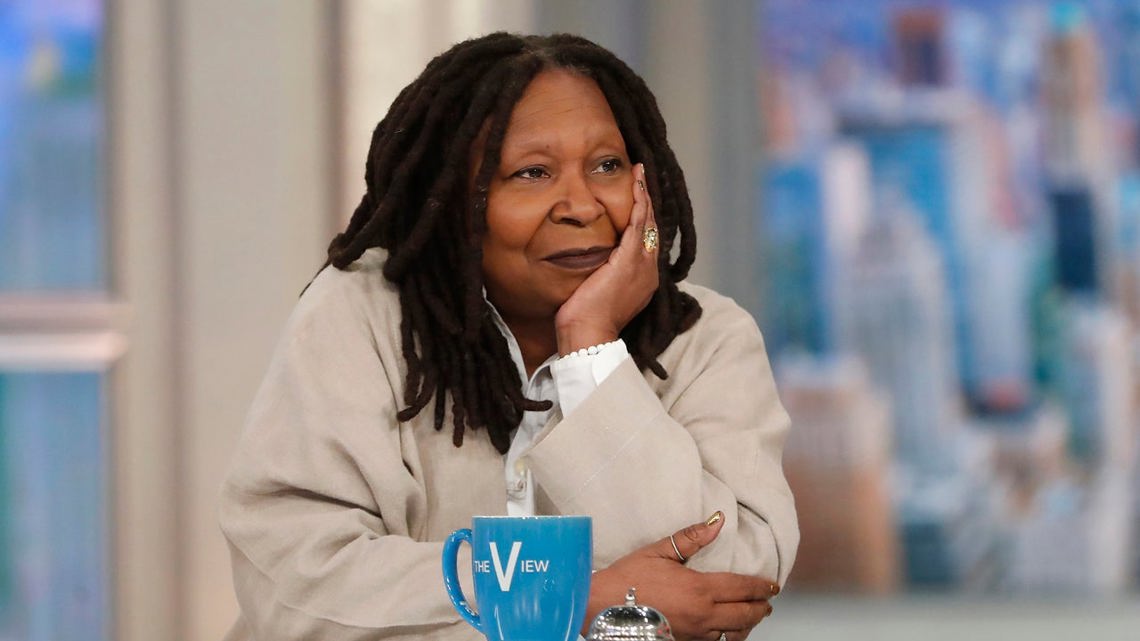
The deal’s ink was barely dry. Musk, 54, announced the purchase on X at 11:02 a.m.—a fire sale from Disney, reeling from a $4 billion Q3 flop on *Mufasa: The Lion King* and *Moana 2*’s underwhelming $150 million opening. Sources close to the Mouse House whisper Bob Iger, 74, caved after Musk’s $10B all-cash bid—fueled by Tesla stock surge and xAI windfalls—outbid Byron Allen’s $8.5B counter. “Elon’s not buying a network; he’s buying a bully pulpit,” one Disney exec lamented anonymously. Musk’s first edict? Nuke *The View*, the show’s 12.3 million weekly viewers be damned. “Endless hot air, zero facts,” he posted, attaching a meme of the co-hosts as screeching seagulls. “ABC’s new era: unfiltered truth, no filters on outrage.”
*The View*’s demise caps a saga of ratings gold and cultural lightning. Launched by Barbara Walters as a “view from the hot seat,” it weathered 11 hosts, 29 seasons, and firestorms—from Walters’ 2014 Rosanne Barr dust-up to Goldberg’s 2022 Holocaust flap that drew 15,000 FCC complaints. Peaks: Whoopi’s 2009 Oscar roast; the 2020 Kamala Harris veep reveal. Lows: 2023’s Alyssa Farah Griffin hiring, spiking ad boycotts from Goya. Yet it thrived—$200 million annual revenue, 60% female demo—until Musk’s meddling. “We’re the canary in the coal mine,” Behar texted a producer mid-meltdown. “Elon’s turning TV into his personal X.”
Hollywood howled. Oprah Winfrey, 71, teared up on IG Live: “Whoopi birthed conversations that changed us—don’t let one billionaire silence sisters.” Alyssa Milano blasted: “Musk’s ‘reform’? It’s revenge porn for his ego.” Even rivals rallied—Kelly Ripa vowed a *Live* tribute; Ellen DeGeneres, 67, emerged from retirement for a “View” sendoff special. Trump, never one to miss a roast, Truth Socialed: “Whoopi cried? Good! *The View* was a witch hunt for 30 years. Elon—genius move! #MAGAviews.”
Backlash brewed fast. #SaveTheView surged to 4.2 million posts, with Gen Z edits splicing Goldberg’s teary exit to *Cry Me a River*. Protests brewed outside Disney HQ—Code Pink in “Whoopi Was Right” tees clashing with Musk stans waving Tesla flags. Ad giants like Procter & Gamble paused $50 million in spots, citing “brand misalignment.” Musk, unfazed from his Austin lair, replied: “Tears are free. Truth costs. ABC’s next: Tucker at 8, Rogan at 11. Watch.” Disney shares dipped 7%; xAI spiked 12%.
As the sun sets on Manhattan’s skyline, Goldberg’s final words—leaked from the green room—echo: “We didn’t just talk. We roared.” *The View* ends not with a whimper, but a wail—one woman’s floodgates cracking the dam on an empire’s end. In Musk’s media multiverse, where algorithms trump empathy, Whoopi’s tears aren’t defeat—they’re defiance. The hot seat’s cold now, but the fire? It burns eternal. Fans chant: Encore. The View must go on.