Kansas Attorney General Kris Kobach dropped a bombshell Wednesday, announcing election fraud charges against Coldwater Mayor Jose (Joe) Ceballos, just one day after voters handed him another term in office.Ceballos, 54, was charged in Comanche County with three counts of voting without being qualified and three counts of election perjury, non-person felonies that could land him behind bars for more than five years.
House Speaker Mike Johnson revealed on Tuesday that Democrats are demanding billions in wasteful and ideological spending, including $3.9 million for LGBTQI+ democracy grants in the Western Balkans, as part of their conditions to reopen the government.
Speaking on the 14th day of what he called the Democrat government shutdown, Johnson said the American people are suffering because Democrats have chosen politics over responsibility.
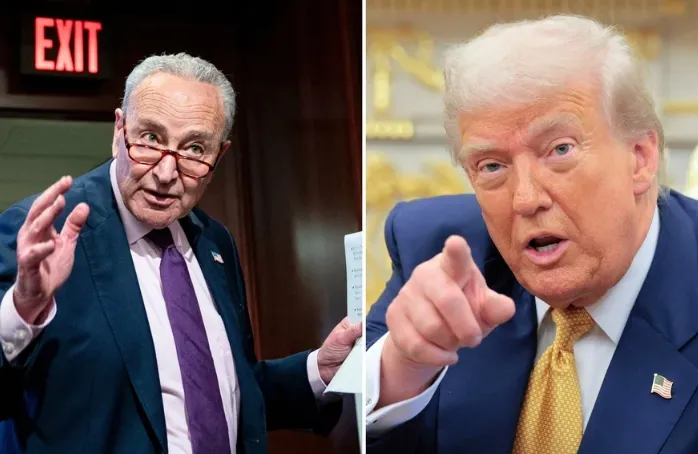
“Welcome to day 14 of the Democrat government shutdown,” Johnson said during his press briefing. “It’s two weeks of Democrats in Congress inflicting untold pain on the American people for nothing other than pure politics.”
Johnson explained that House Republicans had already offered a clean continuing resolution to keep the government funded, but Democrats repeatedly rejected it.
Instead, he said, Democrats are tying unrelated left-wing priorities to essential government operations in an attempt to strong-arm Republicans into approving radical spending measures.
He accused Senate Minority Leader Chuck Schumer of catering to what he described as the party’s “Marxist base.”
The Speaker laid out details from the Democrats’ counterproposal, calling it a $1.5 trillion wish list of reckless spending that would send taxpayer money to liberal causes and foreign projects that have nothing to do with running the U.S. government.
Among the examples he cited were $24.6 million for climate resilience programs in Honduras.
Another $13.4 million would go to civic engagement programs in Zimbabwe.
An additional $2.9 million is earmarked for desert locust risk reduction in the Horn of Africa.
The Democrats’ plan also calls for $2 million to fund “organizing for feminist democratic principles” in Africa, according to Johnson.
Johnson highlighted the $3.9 million in LGBTQI+ democracy grants for the Western Balkans as an example of Democrats’ misplaced priorities.
“They want to spend 3.9 million of your hard-earned dollars for LGBTQI+ democracy grants in the Western Balkans,” Johnson said. “We are not doing that.”
He argued that Democrats are also trying to undo common-sense reforms enacted by Republicans that prevent illegal immigrants from accessing taxpayer-funded healthcare.
“This is a fact,” he said. “They would add illegal aliens and non-citizens back to taxpayer-funded benefits. It would cost taxpayers nearly $200 billion.”
Johnson further warned that Democrats want to roll back modest work requirements placed on able-bodied young men without dependents.
At the same time, Democrats are pushing to make COVID-era Obamacare subsidies permanent, with no income limits or meaningful reforms.
Johnson said this approach would not only punish working Americans but also reward dependency and mismanagement.
The Speaker accused Democrats of prioritizing ideological projects over the immediate needs of the American people.
He said their proposal exposes how out of touch the party has become, highlighting spending for causes abroad while Americans face uncertainty at home.
“This is not about keeping the lights on,” Johnson said. “This is about Democrats trying to use the shutdown as leverage to fund their far-left agenda.”
Johnson reminded reporters that Republicans have already passed legislation to reopen the government responsibly, without any of the unrelated political riders Democrats insist on including.
The Republican plan, he said, would maintain government operations, protect taxpayers, and prevent wasteful spending abroad.
Johnson also pointed out that the Democrats’ proposal would restore funding to the Corporation for Public Broadcasting, sending a half-billion dollars to what he described as liberal media outlets that have long benefited from taxpayer subsidies.
He described it as another example of Democrats using government funding to reward their political allies rather than serving the public good.
“These are not the priorities of the American people,” Johnson said firmly. “They are the priorities of a radical political class that has forgotten who they work for.”
The Speaker ended his remarks by calling on Democrats to stop the political games and join Republicans in reopening the government immediately.
“We have a clean bill ready to go,” he said. “It keeps the government open, pays our troops, secures the border, and protects hardworking taxpayers. Democrats need to stop holding America hostage.”
Johnson’s comments reflect growing frustration among House Republicans who say Democrats are using the shutdown to push through spending on social experiments, foreign projects, and activist groups under the guise of government funding.
He warned that such spending will only deepen America’s fiscal crisis and fuel public anger toward Washington’s political class.
“This is a moment for leadership,” Johnson concluded. “It’s time to put the American people first and end this shutdown—not by giving in to woke demands, but by standing firm for fiscal sanity and common sense.”
Through his leadership PAC, Barr contributed multiple times to lawmakers including Reps. Anthony Gonzalez, John Katko, David Valadao, and Jaime Herrera Beutler—all of whom broke with Trump after the January 6 Capitol riot. A Trump adviser called Barr’s support “a slap in the face,” and others have labeled him a McConnell protégé unlikely to stand with Trump in tough moments.
Barr is competing against former Kentucky Attorney General Daniel Cameron and businessman Nate Morris. Cameron lost the 2023 governor’s race despite Trump’s endorsement, while Morris has come under fire for donating to Nikki Haley shortly before she challenged Trump in the 2024 GOP primary.
Barr’s team argues he remains a strong Trump ally and that his PAC has made hundreds of donations aimed at building GOP unity. His spokesman highlighted Trump’s past support for Barr and pointed to Morris’ backing of Haley and his business record as reasons to question Morris’s commitment to conservative principles.With Trump maintaining broad influence in Kentucky—where he won by over 30 points—his endorsement could be decisive in the 2026 Senate primary, shaping the future of GOP leadership in the state and beyond.
In the corridors of political power, where influence flows through carefully constructed networks of donors, operatives, and elected officials, one state’s top law enforcement official has launched an investigation that could unravel what he describes as a sophisticated scheme to manipulate democratic processes. The probe threatens to expose the hidden financial mechanisms that may be funding coordinated political resistance across state lines, raising fundamental questions about the integrity of legislative processes and the influence of out-of-state money on local governance.
What began as a political standoff over legislative procedure has evolved into a complex legal investigation that touches on issues of bribery, coordination between political organizations and elected officials, and the potential criminal liability of those who fund political resistance. The expanding inquiry suggests that what appeared to be a spontaneous political protest may have been a carefully orchestrated campaign funded by some of the nation’s most influential political networks.
The stakes extend far beyond any single state or political dispute, potentially setting precedents for how law enforcement agencies investigate the intersection of political funding and official misconduct in an era where traditional boundaries between activism, political organizing, and potentially criminal activity have become increasingly blurred.
Texas Attorney General Ken Paxton has initiated what may become one of the most significant investigations into political funding and legislative misconduct in recent state history. The formal probe targets Texas Majority PAC (TMP), a political action committee that has received substantial funding from billionaire philanthropist and political activist George Soros, focusing on allegations that go to the heart of how modern political influence operates.
The investigation centers on accusations of illegal coordination, bribery, and financial malfeasance related to TMP’s alleged role in facilitating and incentivizing a mass exodus of Democratic lawmakers from the state legislature. According to Paxton’s office, the organization may have used donor funds to encourage and support the departure of House Democrats, effectively breaking the legislative quorum and paralyzing the chamber’s ability to conduct business.
“This investigation is about protecting the integrity of our legislature,” Paxton declared in a public statement that framed the inquiry in terms of fundamental democratic principles. “If Texas lawmakers are bowing to the Soros Slush Fund rather than the will of the voters, Texans deserve to know. Getting financial payouts under the table to abandon your legislative duties is bribery.”
The Attorney General’s characterization of TMP as a “Soros Slush Fund” reflects both the specific focus of the investigation and broader political narratives about the influence of wealthy donors on state and local politics. The language chosen suggests that Paxton views this as more than a technical violation of campaign finance laws, but rather as a fundamental threat to democratic governance and legislative integrity.
The investigation has been formalized through the issuance of a Request to Examine to Texas Majority PAC, a legal mechanism that compels the organization to provide documentation and information about its activities, funding sources, and coordination with elected officials. This formal step indicates that the Attorney General’s office believes it has sufficient evidence to warrant a comprehensive investigation rather than preliminary inquiries.
The events that triggered this investigation began on August 4th with a dramatic political maneuver that captured national attention and highlighted the extreme measures lawmakers are willing to take in pursuit of their political objectives. Dozens of Democratic legislators made the unprecedented decision to flee Texas entirely, traveling to other states in a coordinated effort to deny Republicans the quorum necessary to conduct legislative business during a special session.
The mass exodus represented one of the most dramatic examples of legislative resistance in modern American politics, with lawmakers essentially abandoning their posts and constituents to prevent the passage of legislation they opposed. The tactic, while not entirely unprecedented in American political history, was unusual in its scale and coordination, involving a significant portion of the Democratic caucus in what appeared to be a carefully planned operation.
The constitutional and legal framework surrounding legislative attendance requirements in Texas provided the backdrop for what became a complex legal and political confrontation. Article III, Section 10 of the Texas Constitution, along with Rule 5, Section 8 of the House rules, authorize the detention of lawmakers who leave the chamber without valid excuse, giving the Speaker of the House significant powers to compel attendance and maintain quorum.
Speaker Dustin Burrows responded swiftly to the Democratic departure by issuing arrest warrants for the absent members, a dramatic step that escalated the political conflict into a legal confrontation with potential criminal consequences. The warrants were not merely symbolic gestures but represented actual legal instruments that could result in the physical detention and return of the fleeing lawmakers.
“Speaker Burrows immediately issued warrants for the arrest of runaway Democrats who fled Texas, abandoned their constituents, and abdicated their legislative duties,” Paxton explained, using language that characterized the lawmakers’ actions as both legally problematic and morally reprehensible.
The geographic scope of the lawmakers’ flight created additional legal complications, as several Democrats had traveled to Illinois and potentially other states, raising questions about interstate enforcement of Texas legal processes. The Texas House subsequently requested that Paxton’s office pursue enforcement of the arrest warrants across state lines, a complex legal maneuver that involves coordination between multiple jurisdictions and potentially contentious questions about state authority.
The investigation into Texas Majority PAC represents part of a broader effort by Paxton’s office to examine what he characterizes as a network of interconnected political organizations that may be coordinating to influence Texas politics through substantial out-of-state funding. The probe extends beyond TMP to encompass other organizations that may have played roles in organizing and supporting the Democratic lawmakers’ coordinated departure.
Paxton has also initiated investigations into Powered by People, another organization aligned with former Texas Democratic senatorial candidate Beto O’Rourke, which the Attorney General suggests may have been involved in organizing the Democrats’ exodus. The inclusion of multiple organizations in the investigation suggests that Paxton’s office believes it has identified a coordinated network rather than isolated incidents of problematic behavior.
“There is a pattern of radical groups, flush with out-of-state money, interfering with the legislative process here in Texas,” Paxton stated, framing the investigation in terms of external interference with state governance. “We’re going to expose that network and hold every part of it accountable.”
This characterization of the organizations as “radical groups” reflects both the political dimension of the investigation and Paxton’s apparent belief that the activities under scrutiny go beyond normal political advocacy and organizing. The emphasis on “out-of-state money” taps into broader political narratives about local democratic processes being influenced by external interests with different priorities and values than local constituents.
The connection to George Soros adds another layer of political significance to the investigation, given Soros’s high profile as a progressive political donor and the frequent focus on his activities by conservative politicians and media outlets. Soros’s extensive network of political and philanthropic organizations has been the subject of numerous investigations and political attacks over the years, making any connection to his funding a politically charged element of the case.
The legal foundation for Paxton’s investigation rests on several potentially serious criminal theories that could result in significant penalties for both the political organizations and potentially the lawmakers who participated in the legislative exodus. The most serious allegation involves bribery, which would require proof that TMP or other organizations provided financial incentives directly to lawmakers in exchange for their decision to leave the state and break quorum.
Bribery charges in the context of public officials typically require evidence of a quid pro quo arrangement where something of value is provided in exchange for official action or inaction. In this case, the theory would be that the organizations provided financial support, travel expenses, or other benefits to lawmakers in exchange for their participation in the quorum-breaking strategy.
The coordination allegations involve potentially complex questions about the legal boundaries between legitimate political organizing and illegal coordination between political action committees and elected officials. Federal and state campaign finance laws impose strict limits on coordination between PACs and candidates or officeholders, and violations can result in both civil and criminal penalties.
Financial malfeasance charges could encompass a range of potential violations, from improper use of PAC funds for purposes not permitted under campaign finance laws to fraudulent reporting of expenditures and activities to state election authorities. These charges might be easier to prove than bribery, as they primarily require documentation of improper financial transactions rather than proof of corrupt intent.
The investigation’s focus on “illegal abandonment of public office” suggests that Paxton’s office may also be exploring whether the lawmakers’ departure constituted a criminal violation of their official duties, potentially opening them to charges related to dereliction of duty or abandonment of office.
The investigation and related legal actions raise complex constitutional questions about the balance between legislative autonomy, executive authority, and judicial oversight in state government. The use of arrest warrants to compel legislative attendance, while authorized under Texas law, represents an unusual exercise of executive power over legislators that could potentially conflict with separation of powers principles.
Paxton has taken the legal confrontation to the Texas Supreme Court through actions connected to Governor Greg Abbott’s quo warranto petition against Democratic Representative Gene Wu. The quo warranto proceeding, which challenges an official’s right to hold office, could potentially result in the removal of lawmakers who fail to return to the legislature by specified deadlines.
“Texas is taking every available avenue to force runaway Democrats to return to Texas and hold them accountable for breaking quorum,” Paxton explained, indicating that his office is pursuing multiple legal strategies simultaneously to address what it views as unprecedented misconduct by elected officials.
The Attorney General’s letter to the Texas Supreme Court emphasized the unique legal authority his office holds in quo warranto proceedings: “This Court’s precedent is clear that a ‘quo warranto’ proceeding ‘can only be brought by the attorney general, a county attorney, or a district attorney.’ … As a result, the Court should not dismiss the Governor’s petition until the Speaker’s Friday deadline passes and the Attorney General can be heard on these weighty issues.”
Beyond the immediate legal questions, the investigation raises broader concerns about the health of democratic institutions and the proper boundaries of political resistance in American governance. The mass departure of elected officials to prevent legislative action represents an extreme form of political resistance that challenges traditional norms about legislative participation and democratic representation.
Paxton has repeatedly characterized the Democratic lawmakers as operating “at the behest of radical donors and D.C. operatives,” suggesting that their actions represent external influence on Texas governance rather than legitimate expressions of political disagreement or resistance. This framing positions the investigation as a defense of local democratic processes against outside interference.
The Attorney General’s statement that “We will not let Texas be held hostage by billionaires with an anti-democratic agenda” reflects a broader political narrative about wealthy donors undermining democratic processes through the funding of extreme political tactics. The characterization of the alleged activities as “anti-democratic” suggests that Paxton views the funding of legislative resistance as fundamentally incompatible with democratic governance.
The investigation also highlights tensions between different conceptions of political resistance and civil disobedience in American political culture. While the Democratic lawmakers may view their actions as legitimate protest against policies they consider harmful, Paxton’s office characterizes the same actions as criminal misconduct enabled by corrupt financial relationships.
The Texas investigation could establish important precedents for how law enforcement agencies approach the intersection of political funding and legislative conduct in other states. The aggressive use of criminal law to address what might traditionally be considered political disputes represents a significant escalation in how election-related conflicts are resolved.
If the investigation results in successful prosecutions, it could deter similar tactics by lawmakers in other states while also potentially encouraging other attorneys general to pursue similar investigations into political funding networks. The precedent could fundamentally change how political organizations approach funding for legislative resistance and how lawmakers calculate the risks of extreme political tactics.
The national political implications extend beyond immediate legal consequences to encompass broader questions about campaign finance regulation, the influence of wealthy donors on state politics, and the proper role of law enforcement in addressing political disputes.
As the investigation continues to unfold, its ultimate impact will depend on the evidence uncovered by Paxton’s office and the legal theories that can be successfully prosecuted in court. The complexity of the alleged coordination and funding relationships may require extensive documentary evidence and witness testimony to establish criminal liability.
The political ramifications of the investigation are likely to extend beyond Texas, potentially influencing national conversations about political funding, legislative tactics, and the proper boundaries of political resistance in American democracy. The outcome could also affect the strategies employed by political organizations and lawmakers in future legislative conflicts.
The Texas Attorney General’s investigation into Soros-funded political organizations represents more than a state-level political dispute—it constitutes a significant test of how American democratic institutions handle extreme political resistance and the influence of major donors on legislative processes. The investigation’s outcome could establish new precedents for the criminal prosecution of political funding networks while also potentially deterring similar tactics in future legislative conflicts.
As the legal proceedings continue, they will likely provide important insights into the boundaries between legitimate political organizing and potentially criminal coordination between donors, political organizations, and elected officials. The case serves as a reminder that in American democracy, even the most extreme forms of political resistance remain subject to legal scrutiny and potential criminal prosecution when they cross the line from protected speech and political activity into potentially illegal conduct.
The broader implications extend to fundamental questions about representation, accountability, and the proper role of wealthy donors in influencing state and local political processes—questions that will likely resonate far beyond Texas as other states grapple with similar challenges to traditional democratic norms and legislative procedures.