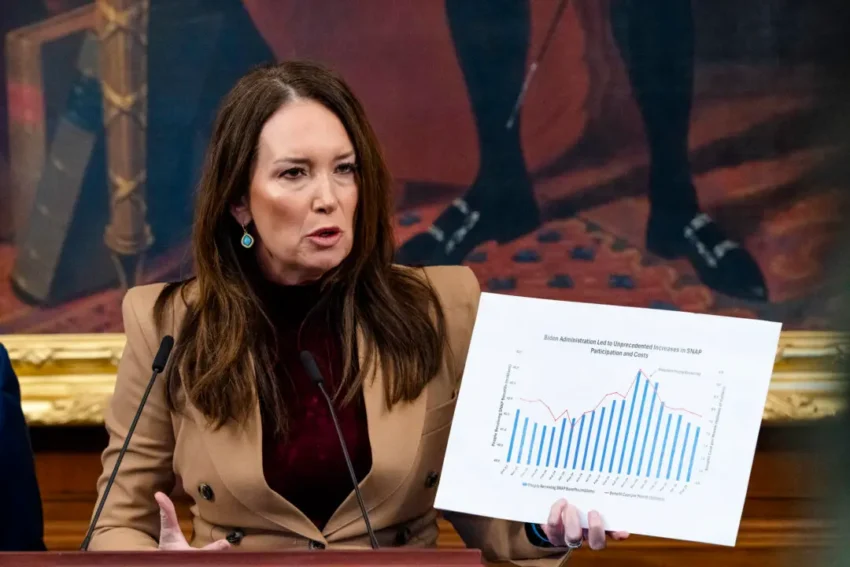
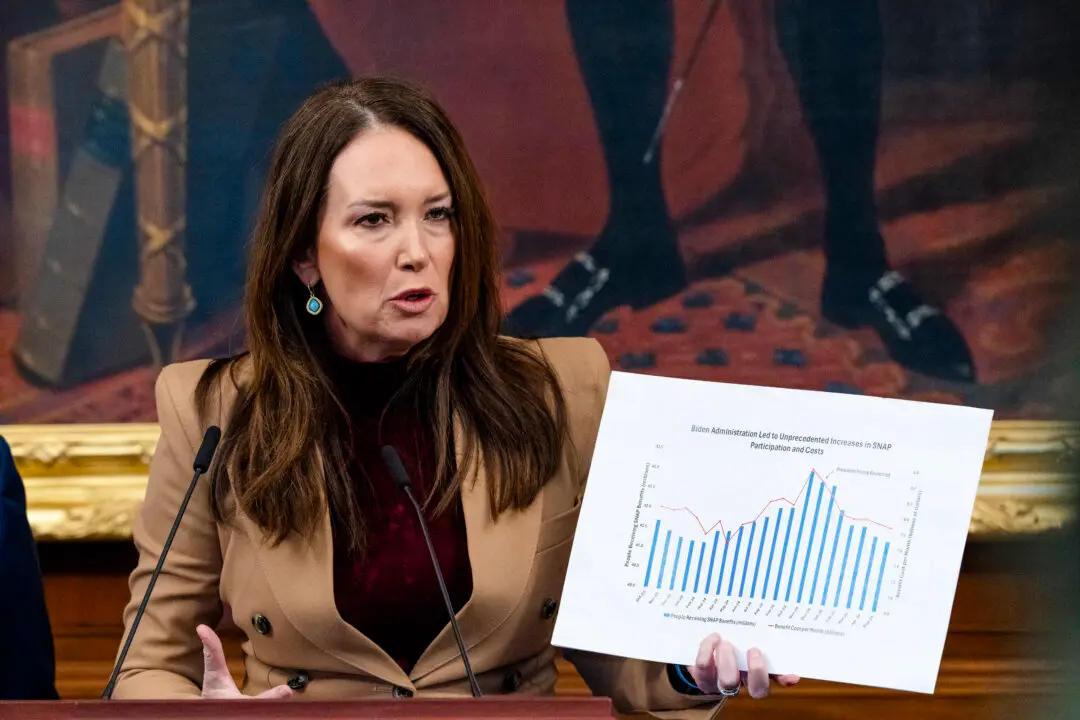
Brooke Rollins, agriculture secretary under the renewed Trump vision for America, dropped a bombshell on the American public. She exposed a rot within the federal welfare system that not only drains taxpayer dollars but also emboldens corruption and inefficiency. Rollins revealed in an interview that nearly 5,000 dead individuals were still receiving SNAP benefits and that over 500,000 instances of duplicate enrollees had been uncovered.This isn’t just a bureaucratic blunder. This is emblematic of a broken system that Democrats have allowed to fester, enabling abuse at the expense of working Americans. For decades, the left has wrapped welfare in the warm language of compassion, but what Rollins reveals is a scheme benefiting fraudsters, illegals, and career welfare recipients while punishing the responsible and the honest.
We found one guy receiving benefits in six different states,” Rollins said. This is not just anecdotal. It’s systemic. It’s widespread. And it’s been protected by blue states that refused to cooperate with federal investigations into their welfare rolls.
Rollins’ testimony reinforces what conservatives have warned for years: that the Democratic Party is less interested in accountability and more invested in creating a permanent dependent class that can be controlled and harvested for votes.
This revelation confirms what President Trump emphasized during both his terms and campaign trail speeches: America must put its citizens first, and part of that is cleaning up fraud and prioritizing the deserving over the deceitful.
Under Rollins’ leadership, nearly 700,000 individuals have already been removed from the rolls. But the job is far from over. Democrat-led states have refused to share eligibility data and have filed lawsuits to block investigations. What are they hiding?
It’s no surprise that the Biden administration resisted such reforms. While Rollins and Trump aimed to safeguard the public trust and restore fiscal integrity, the Biden camp seems committed to open-handed spending with little oversight.
The mainstream media barely blinked at Rollins’ revelation. Had a Trump official been caught enabling such fraud, the outcry would be deafening. But when Democrats are the culprits, silence prevails.
The question Americans must ask is simple: Why is the left so afraid of transparency? Why do they fight to keep dead people on welfare and illegals on the dole?
Every fraudulent SNAP card represents dollars stolen from hard-working Americans. It means fewer resources for truly needy citizens. And it means a culture of dependency is being fostered, not the self-reliance and dignity that America First policies promote.
Rollins framed this as a national security issue as well, with illegal immigrants potentially benefitting from these systems through fraudulent documentation. This is not just an economic drain; it’s an attack on national sovereignty.
President Trump has long called for E-Verify, biometric ID, and strict eligibility rules for any federal assistance. His policies, backed by data like Rollins presented, are the only viable path forward.
What this country needs is a full audit of every entitlement program. The rot is deeper than SNAP. If dead people can draw food assistance, who else is bleeding the system dry?
The welfare state must be rebuilt from the ground up. And the only party willing to do that is the one led by Trump.
Blue states are terrified of what audits might reveal: networks of fraud, collusion, and incompetence that date back decades. They would rather sue than comply because exposure would cost them power.
This is a wake-up call to every Republican governor and lawmaker. The time for polite requests is over. Subpoenas and legislation must compel compliance. Any official obstructing this mission is complicit in theft.
Brooke Rollins has done more than expose fraud. She has given patriots the ammunition to demand change. The GOP must seize this moment.
Taxpayers must understand that the stakes are high. Every dollar wasted on a dead man’s EBT card is a dollar not spent securing the border, rebuilding infrastructure, or helping our veterans.
But somewhere between the innings and the cheers, something darker unfolded in the stands — a confrontation caught on camera, raw and unfiltered, that would ultimately derail a woman’s entire career.
The video surfaced on a Tuesday evening, quickly circulating on X (formerly Twitter) before spreading like wildfire to Reddit, TikTok, and Instagram.
The woman, who has now been publicly labeled as “Phillies Karen,” was seen in a heated altercation — details of which are still under debate — but her aggressive tone, dismissive gestures, and visible hostility left an unmistakable mark on viewers.
She wasn’t just another spectator losing her cool; she was someone in a position of authority.
And the internet wasn’t going to let that slide.
Within hours, digital sleuths had pieced together her identity.
It didn’t take long — one facial recognition thread, a school newsletter, a few tagged photos — and there it was.
The woman in the video was a school administrator in a New Jersey district, a role that demanded leadership, restraint, and professionalism.
The irony wasn’t lost on anyone.
What followed was a digital takedown so brutal it bordered on cinematic.
Students, former and current, flooded her Facebook page with comments ranging from scathing disappointment to outright fury.
“This is who’s supposed to guide us?” wrote one.
Another posted, “Imagine disciplining students when you can’t control yourself at a baseball game.
” The outrage wasn’t just about the clip — it was personal.
This was someone they knew.
Someone who had power over them.
And now, they were holding her accountable in the most public way possible.
By Wednesday morning, rumors were already swirling that she had been placed on administrative leave.
But by Thursday afternoon, it was official.
Multiple sources confirmed she had been fired from her position.
The district released a carefully worded statement, declining to name her directly, but noting their commitment to “upholding professional standards” and ensuring “the safety and integrity of the educational environment.
” Translation: she was done.
What’s eerie isn’t just the speed of her downfall — it’s the silence that followed.
After the initial wave of outrage, she deleted her social media accounts.
No apology.
No defense.
No attempt to explain.
Just… nothing.
The digital footprint she once proudly curated vanished overnight, leaving only screenshots, stitched videos, and commentary from millions of strangers who now felt entitled to dissect every inch of her life.
And while the public rage has simmered, it’s left a lasting imprint.
Local parents have reportedly demanded a full review of district hiring practices.
Some students have called for mandatory behavioral training for administrators.
Meanwhile, others argue that the punishment went too far — that she’s a human being who made a mistake and was crucified in the court of public opinion.
But this isn’t just a story about a woman losing her job.
It’s a story about power, perception, and the dangerously thin line between public and private life in the digital age.
Once, a bad day might’ve ended in an apology or a reprimand.
Now, it ends in complete annihilation.
Observers have noted that this isn’t the first time a viral “Karen” has been held accountable by the masses — but rarely has the fallout been so swift or so severe.
There was something uniquely triggering about this particular clip.
Maybe it was the setting — a family-friendly baseball game.
Maybe it was her job — working with youth.
Or maybe it was just the perfect storm of optics, timing, and outrage culture.
What’s certain is this: the phrase “Karma is real” echoed across every comment section, every retweet, every post.
People weren’t just watching her fall — they were cheering it on.
And in that moment, the internet didn’t just hold a mirror up to her behavior; it weaponized it.
As of now, she remains unemployed, unreachable, and unrepentant.
Her former school district has moved on, but whispers linger in hallways and classrooms.
Students swap the video like a ghost story.
Parents tread carefully around the topic.
And somewhere in New Jersey, a woman sits in silence, facing the haunting realization that a few minutes of bad behavior cost her everything.
So what really happened that night at the ballpark? We may never know the full context.
But one thing is crystal clear: in 2025, your worst moment isn’t just a memory — it’s a monument.
Permanent.
Viral.
Career-ending.
And as the story of the “Phillies Karen” proves, sometimes all it takes is one misstep to go from respected educator to national cautionary tale.