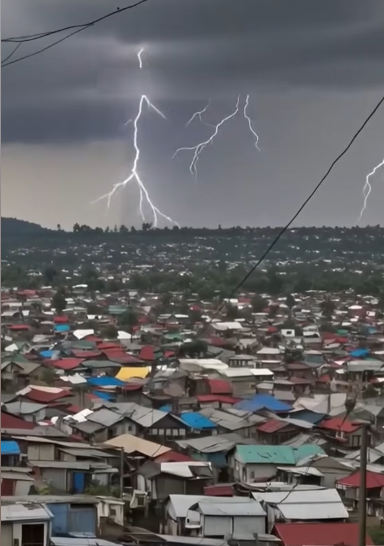
Melissa becoming major threat to Jamaica, Haiti, Dominican Republic
Melissa becoming major threat to Jamaica, Haiti, Dominican Republic
Melissa is expected to strengthen from a tropical storm into a major hurricane this weekend, and it could bring “life-threatening and catastrophic” flash flooding and landslides to Jamaica, Haiti and the Dominican Republic early next week, the Miami-based National Hurricane Center warns.
Melissa, the 13th named storm of the Atlantic season, isn\\\\\\’t expected to have major impacts on the mainland United States
Melissa\\\\\\’s forecast and path
Advertisement
On Friday night, Melissa\\\\\\’s core was about 180 miles southeast of Kingston, Jamaica, and about 245 miles southwest of Port-au-Prince, Haiti, the hurricane center said. Maximum sustained winds were 65 mph, with tropical storm-force winds extending some 140 miles east from the storm\\\\\\’s center. It was inching north at 3 mph.
Map shows the forecast path for Melissa, which is forecast to become a major hurricane in the Caribbean. / Credit: CBS News
It was forecast to become a hurricane by Saturday and a major hurricane — meaning a Category 3 or higher — by Sunday.
“It\\\\\\’s going to intensify very rapidly,” CBS News weather anchor Lonnie Quinn said Friday evening.
Jamaica, Haiti and eastern Cuba should brace for “catastrophic rainfall, up to nearly 3 feet of rain,” Quinn said. “Mountainous terrain — there\\\\\\’s going to be mudslides. I am fearful for what we will find by the time we get into next week for this portion of the Caribbean.”
Advertisement
On top of that, he warned, the storm could be packing 140 mile per hour winds.
“Jamaica, I think, is going to take the worst of it,” Quinn said.
A hurricane warning was in effect for Jamaica. A hurricane watch and a tropical storm warning were in effect for the southwestern peninsula of Haiti, from the border with the Dominican Republic to Port-au-Prince.
Although Melissa was moving north Friday, the hurricane center said it was forecast to take a turn to the west on Saturday and continue that westward movement through Monday.
“On the forecast track, the center of Melissa is expected to move near or over Jamaica early next week and could be near or over eastern Cuba by the middle of next week,” the hurricane center said.
Melissa is expected to drop up to 25 inches of rain on parts of southern Haiti, the southern Dominican Republic and Jamaica through Tuesday, with higher amounts possible in some areas, the hurricane center said. Southeast Cuba could see up to 12 inches of rain.
“Potentially catastrophic flash flooding and landslides are possible across portions of Jamaica and the southern Dominican Republic, while catastrophic flash flooding is anticipated in southern Haiti,” forecasters said.

Additional heavy rainfall is likely beyond Tuesday, the hurricane center said, but uncertainty remains about the more extended forecast.
Tropical Storm Melissa forecast to become major hurricane as Jamaica under threat
Topical Storm Melissa has been called a ‘slow-moving disaster’ amid warnings of catastrophic flash flooding in Haiti
 open image in gallery
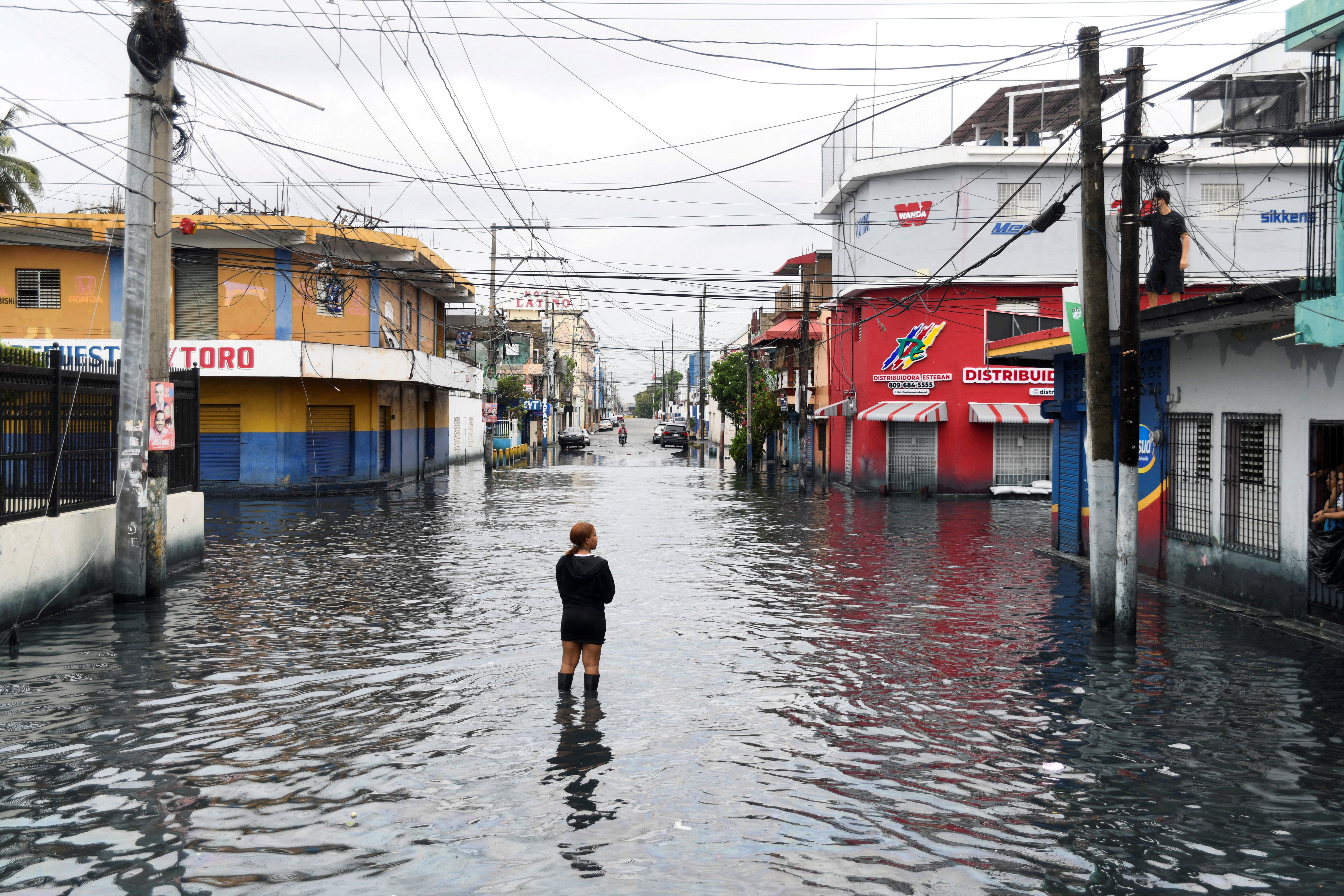
A woman is standing on a street flooded by rains caused by Tropical Storm Melissa, in Santo Domingo, Dominican Republic (REUTERS)
Tropical Storm Melissa could soon strengthen into a powerful hurricane and brush past Jamaica, forecasters have warned.
The storm is currently almost stationary in the central Caribbean, but threatens catastrophic flash flooding and landslides in southern Haiti, where at least three deaths have already been reported.
Copious amounts of rainfall are expected to drop across Jamaica, southern Haiti, and the Dominican Republic throughout the weekend as a result of the erratic storm.
Michael Brennan, director of the U.S. National Hurricane Center in Miami, highlighted the danger, stating: “The rainfall is a huge risk with the storm. Rainfall has historically been the biggest cause of loss of life of tropical storms and hurricanes in the Caribbean.”
The storm was located approximately 215 miles (345 kilometres) southeast of Kingston, Jamaica, and 250 miles (405 kilometres) southwest of Port-au-Prince, Haiti. It maintained maximum sustained winds of 45 mph (75 kph) and was moving east-southeast at a sluggish 2 mph (4 kph), according to the U.S. centre.
A hurricane watch and a tropical storm warning were in effect for Jamaica and the southwestern peninsula of Haiti.Up to 20 inches (51 centimeters) of rain is forecast for portions of southwestern Haiti and eastern Jamaica through Monday, with higher amounts possible in some areas.
Up to 12 inches (30 centimeters) of rain was expected for the remainder of southern Haiti and for the southern Dominican Republic.
 open image in galleryPeople place plastic tarps over their tents ahead of expected rain at a shelter for families displaced by gang violence in Port-au-Prince, Haiti (AP)Catastrophic warnings for Haiti
The National Hurricane Center warned that heavy rainfall would cause “catastrophic flash flooding and landslides across southwestern Haiti by this weekend into early next week.
“It noted that strong winds could also potentially last for a day or more over Haiti\\’s Tiburon peninsula.
Haiti\\’s Civil Protection Agency said Friday that a landslide in Port-au-Prince killed two people and injured another, with the death toll rising to three. Earlier this week, a large tree fell on an elderly man in southern Haiti and killed him, while five other people in the country\\’s central region were injured in flooding.
The U.N. said it has prepared more than 100 emergency shelters in Haiti\\’s southern region.
A slow-moving disaster
Melissa was expected to slowly begin moving closer to Jamaica over the weekend. It was forecast to strengthen into a hurricane by Saturday and become a major hurricane by Sunday, possibly reaching Category 4 status before dawn on Monday.
Forecasters said that Jamaica could see life-threatening flooding and landslides because the ground is already saturated from recent heavy rains unrelated to the storm.
The storm is moving so slowly that parts of Jamaica could experience hurricane conditions for 72 hours or longer, said Alex DaSilva, AccuWeather\\’s lead hurricane expert.
“Melissa is evolving into a slow-motion disaster,” he said. “Millions of people are at risk of catastrophic impacts. We are increasingly concerned about the threat of a humanitarian disaster unfolding, especially if this storm stalls.”
Schools, health centers and government offices closed across Jamaica on Thursday, with authorities warning that all airports would close within 24 hours if a hurricane warning is issued.
“The situation is indeed serious,” said Matthew Samuda, Jamaica\\’s minister of economic growth and job creation.
The Bahamas\\’ Foreign Affairs Ministry announced it would evacuate Bahamian students out of Jamaica on Friday ahead of the storm.
Flooding persists in Dominican Republic
The storm has damaged nearly 200 homes in the Dominican Republic and knocked out dozens of water supply systems, affecting more than half a million customers. It also downed trees and traffic lights and unleashed a couple of small landslides.
All public schools across the Dominican Republic were closed Friday, while government offices in 12 provinces under alert would do the same, officials said. Nearly two dozen communities were cut off by floodwaters.
“This is an event that we should be following minute by minute,” said Juan Manuel Méndez García, emergency operations director in the Dominican Republic.
Officials noted that evacuations in areas under alert were mandatory.
“The main thing here is to save lives. The risk is the enormous amount of rain,” said Dominican President Luis Abinader.
Melissa is the 13th named storm of the Atlantic hurricane season, and the first named storm to form in the Caribbean this year.
The U.S. National Oceanic and Atmospheric Administration had predicted an above-normal season with 13 to 18 named storms. Of those, five to nine were forecast to become hurricanes, including two to five major hurricanes, which pack winds of 111 mph (178 kph) or greater.
The Atlantic hurricane season runs from June 1 to Nov. 30.
In a move that surprised approximately zero people but still managed to dominate headlines, Texas Governor Greg Abbott held a press conference Wednesday morning to announce his latest crusade: a full statewide ban on Pride flags in public schools.
Standing at a podium flanked by a giant Texas state flag and, curiously, a framed photo of Charlie Kirk, Abbott declared:
“This is Texas, not TikTok. And as long as I’m Governor, the only flags we recognize are the American flag, the Texas flag, and that oversized Dallas Cowboys banner Jerry Jones sent me last Christmas.”
The order comes just days after Utah enacted a similar policy, creating what conservative commentators are gleefully calling the “No Rainbow Coalition.”
Under Abbott’s new directive, classrooms across the Lone Star State will be stripped of rainbow banners, inclusive posters, and anything resembling a unicorn sticker with too much glitter. Schools will instead be encouraged to decorate with “real Texan symbols,” which according to Abbott include oil rigs, steakhouse coupons, and faded portraits of Ronald Reagan.
Teachers, already scrambling to adjust to constant changes, now face yet another set of guidelines. “We just finished removing books from the library,” sighed one Houston English teacher. “Now I’ve gotta tell little Emma she can’t put a rainbow on her art project because it looks too woke? At this point, I’m gonna start teaching kids with finger puppets made out of H-E-B receipts.”
Parents across Texas reacted with a predictable mix of outrage and applause.
Conservative parent groups flooded Facebook with celebratory memes of eagles holding Bibles while stepping on rainbow flags. “Finally, our children can grow up free from indoctrination and go back to learning important things,” one father wrote, “like how to field dress a deer by age 9.”
On the other side, progressive parents expressed concern. “My son just wanted to wear a rainbow pin to show support for his sister,” said a mom in Austin. “Now the school says if he does, they’ll replace it with a pin that says ‘Howdy.’ Like… what exactly is the lesson here?”
To enforce the new policy, Abbott announced the creation of a “Wokeness Patrol,” a special task force of self-described patriots who will wander schools ensuring no rainbows slip through the cracks. Their uniform? Cowboy hats, mirrored sunglasses, and cargo shorts filled with citation slips.
“These are highly trained volunteers,” Abbott explained. “If a child draws a rainbow, they’ll immediately hand them a Texas-themed coloring sheet. Maybe a brisket. Maybe a picture of a pickup truck. Whatever it takes to steer them back to tradition.”
Early reports indicate the patrol has already cited one middle school for allowing rainbow sprinkles on cupcakes during a bake sale. The cupcakes have since been replaced with plain cornbread muffins, described by students as “sad but compliant.”
Utah’s own ban on Pride flags, passed just a week earlier, served as the inspiration for Abbott’s crusade. “When I saw Utah do it, I said to myself, ‘Hold my Shiner Bock,’” Abbott told reporters.
Conservative news outlets are already speculating which state will follow next. Florida’s Ron DeSantis reportedly texted Abbott a congratulatory message reading, “Bro, we’re already banning rainbow fish books down here. Respect.”
Critics argue Abbott’s move is less about protecting kids and more about scoring easy points in the culture wars.
“Greg Abbott banning Pride flags is about as shocking as Greg Abbott eating barbecue,” said one political analyst. “He’s trying to shore up his base by turning classrooms into battlegrounds. But what’s next? Banning Skittles? Outlawing sunsets? Arresting Lucky Charms mascots?”
Satirists online quickly piled on. One viral meme featured Abbott pointing at a child’s drawing with the caption: “No rainbows, Timmy. Only tumbleweeds.” Another quipped, “Texas students now required to pledge allegiance to brisket.”
Unsurprisingly, students themselves are not taking the ban quietly. Across Dallas, San Antonio, and Austin, teenagers staged small walkouts, waving rainbow shoelaces, phone cases, and in one case, a life-sized inflatable unicorn.
One high school sophomore declared, “If they ban flags, fine. We’ll just become the flags. What are they gonna do, suspend us for being colorful?”
The Wokeness Patrol responded swiftly, but their cowboy hats were no match for the swarm of TikTok livestreams broadcasting the protests to millions.
Reaction to Abbott’s announcement rippled across the country.
Former President Donald Trump praised the move, saying, “I love Texas. Great state. They love me. No rainbows, only red, white, and blue, and maybe gold, because I like gold.”
Meanwhile, President Joe Biden chuckled awkwardly when asked by reporters, muttering something about how rainbows were “created by God, man, c’mon.”
Elon Musk, never one to miss a headline, tweeted: “Pride flags banned in Texas schools. Maybe now we can paint Charlie Kirk murals instead. Just saying.” The tweet received 500,000 likes and exactly three angry replies from Mark Cuban.
When pressed about whether his administration would stop at Pride flags, Abbott smirked. “We’ll see. Texas is about tradition. If we have to protect our children from rainbow Goldfish crackers next, we’ll do it. No hesitation.”
His spokesperson later clarified that rainbow-themed cereals, candies, and crayons were still “under review.”
Analysts predict this latest move will boost Abbott’s approval among conservatives while intensifying the cultural divide nationwide. In the meantime, schools are bracing for confusion as they figure out how to handle everything from rainbow graphs in math class to the occasional multicolored umbrella on rainy days.
Texas, never shy about planting its cowboy boot firmly on America’s cultural fault lines, has once again delivered a headline that writes itself.
For some, Abbott is defending children from the terrifying sight of multicolored fabric. For others, he’s turning classrooms into political theater. But for most students? It’s just another day of watching grownups argue about flags while they sneak rainbow bracelets under their hoodies.
Because here’s the truth Abbott forgot: kids are always five steps ahead. Ban the flags, and they’ll turn TikTok into a rainbow flood so massive even the Wokeness Patrol won’t be able to lasso it back.
Until then, Texas will continue to lead the “No Rainbow Coalition,” proving once again that in the culture wars, nothing is too small—or too colorful—to ban.
The tragic assassination of Charlie Kirk, the 31-year-old founder of Turning Point USA, has left America shaken. In the midst of this national grief, a powerful and emotional gesture came from the NFL world.
Mahomes, who is widely admired not just for his talent but also for his leadership and character, explained his decision with heartfelt sincerity. “I’m also a father, and I understand the loss his family feels at this moment. No child should ever face the future wondering if they will be taken care of. If I can ease that pain and help secure their
future, I feel it is my responsibility to step in,”
Mahomes said in his emotional statement.
Within minutes of his announcement, social media erupted. Hashtags like #MahomesStrong, #SupportForKirk, and #ChiefsCare began trending on X, with fans praising Mahomes for his compassion and leadership off the field. Many users noted that while his achievements on the gridiron are historic, it is acts like these that define his true legacy. One comment read,
“Patrick Mahomes is more than a quarterback — he’s a role model for America.”
Charlie Kirk’s family issued a statement filled with gratitude. “We are humbled by Patrick Mahomes’s generosity. In our darkest hour, he has brought us light and comfort. Charlie always believed in the American spirit of community, and Mahomes’s support shows that spirit lives on,” the family said.
Inside the Chiefs organization, teammates and staff applauded Mahomes’s decision. Many expressed pride in their quarterback for setting an example of compassion and civic duty. His gesture also inspired discussions across the NFL about creating a league-wide initiative to support families of public figures and community leaders lost to tragedy.
Mahomes’s words — “I’m also a father, I understand the loss of his family at this time” — resonated deeply, not only with parents but with all Americans moved by the tragedy. His actions underline the belief that leadership is not just about winning games but about making a difference in people’s lives when it matters most.
As America continues to mourn Charlie Kirk, Patrick Mahomes’s pledge will be remembered as a defining moment — one that transcends sports and highlights the power of empathy. In grief, he provided hope. In tragedy, he brought unity. And in doing so, he reminded the nation that heroes are not only found on the field, but also in the compassion they show when the world needs it most.