In the heart of the nation’s capital, the battle over crime and public safety has taken on a new intensity. Federal agents, prosecutors, and political leaders are no longer talking only about policies or strategies. Instead, they are showcasing bold action — raids, arrests, and seizures that span thousands of miles. This week, that action became visible in a dramatic way, as one of the most extensive law enforcement operations in recent years culminated in a wave of arrests.
Behind the headlines lies a story that stretches from Los Angeles to Baltimore to Washington, D.C., weaving together drugs, weapons, violence, and politics. It is a story of a network dismantled — and a city bracing itself for what comes next.
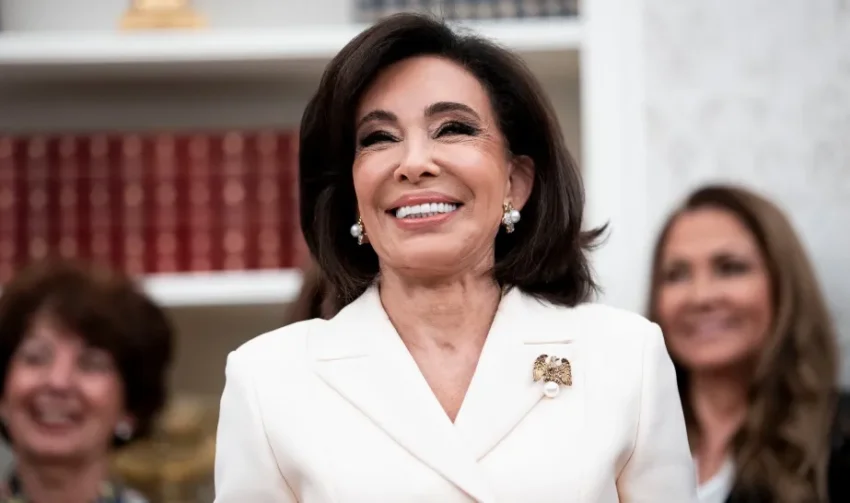
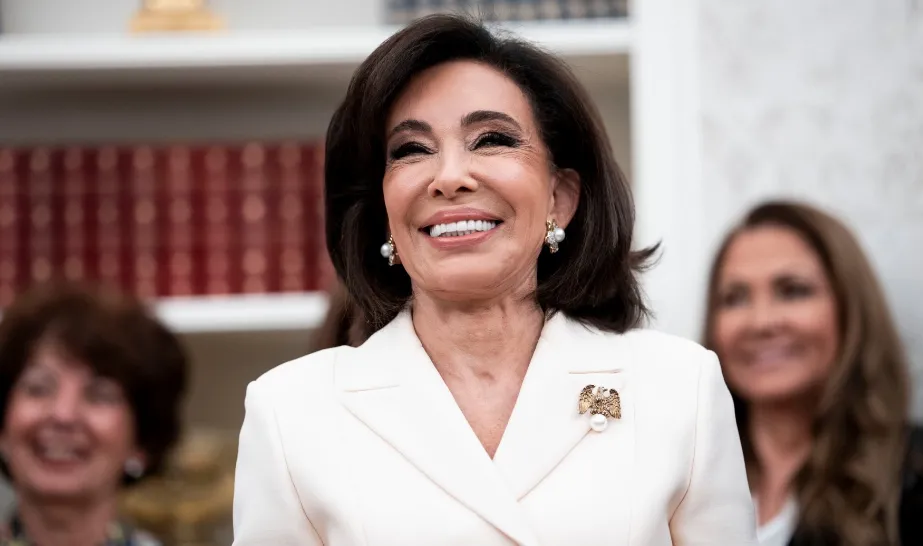
At the center of this storm is Jeanine Pirro, the U.S. Attorney for the District of Columbia. Appointed by President Donald Trump earlier this year, Pirro has made no secret of her intent to pursue crime aggressively. This week, she stood before the press to announce the outcome of a
year-long federal investigation that ended with simultaneous raids across three states.
More than 20 residential search warrants were executed on Tuesday morning in Washington, D.C., Maryland, and Los Angeles. The scale of the operation was unprecedented for the city in recent memory. Backed by the FBI, the Drug Enforcement Administration, and the Metropolitan Police Department, federal agents stormed properties tied to what they described as a
highly organized drug trafficking enterprise.
The charges? Running a network that funneled PCP and fentanyl — two of the most dangerous drugs on the streets — into Washington neighborhoods already scarred by violence.
The seizures told their own story. Authorities recovered:
18 firearms, including an AR-style rifle, a shotgun, and a Draco-style pistol.
Over two kilograms of suspected narcotics.
More than $50,000 in cash.
A pill press machine designed to manufacture counterfeit fentanyl pills.
The pill press was especially alarming. Such machines have fueled the opioid crisis
, producing pills that mimic legitimate medications but often contain fatal doses of fentanyl. Investigators believe this network wasn’t just distributing — it was
manufacturing.
For prosecutors, the discovery underscored the scale of the operation: not just street-level dealing, but an enterprise that reached into production itself.
eight-person conspiracy indictment unsealed last week revealed the cast of characters. The defendants came from across the country: two from California, one from Baltimore, and five from Washington, D.C.
Seven were arrested in the raids:
Leonard Edwards, 52, Washington, D.C.
Eric “Marbury” Prather, 43, Washington, D.C.
Thomas Wilton Hancock Jr. (“Fresh”), 43, Baltimore, Maryland
Sarda Smith, 36, Oxon Hill, Maryland
Michael Thomas, 49, Los Angeles, California
Reginald Lassiter, 39, Washington, D.C.
Darryl Riley, 39, Washington, D.C.
One remains at large, their indictment sealed as law enforcement continues the pursuit.
The use of street names — “Marbury,” “Fresh” — reflects a familiar pattern in organized drug networks. Aliases create barriers for investigators, shielding identities and reinforcing loyalty within the group.
Authorities believe the group concentrated much of its activity around the 2900 block of Knox Place SE in Washington. For years, the neighborhood has struggled with homicides, shootings, and drug crime. At least five killings occurred there in the last year alone.
The choice of Knox Place was no accident. Criminal networks often embed themselves in areas where economic hardship and strained policing create opportunities. For residents, the arrests may bring relief — but they also raise painful questions about why the violence had to reach such intensity before real intervention came.
Prosecutors described the network as structured like a business.
Suppliers in California sourced the drugs.
Baltimore served as a distribution hub, a midpoint connecting West Coast suppliers with East Coast dealers.
Washington, D.C. was the retail market, with local dealers flooding communities with product.
This separation of supply, distribution, and sales made the network harder to trace — but not impossible.
A turning point came earlier this year when law enforcement intercepted a shipment in Kansas containing 17 gallons of PCP. Such a quantity could supply multiple cities for months. It also revealed just how ambitious this network was, moving drugs in industrial volumes across the heartland.
The arsenal recovered in the raids reflects the violent nature of the trade. The Draco pistol in particular — compact, powerful, and favored by gangs — is emblematic of the firepower traffickers use to protect product, intimidate rivals, and enforce control.
Investigators believe the group’s operations directly contributed to spikes in shootings and homicides across D.C. neighborhoods. For Pirro, the case is proof that drug trafficking and gun violence are inseparable problems
.
But Pirro’s announcements did not stop with arrests. She also revealed a policy change on firearms prosecutions that could reshape how the U.S. Attorney’s Office handles gun cases in D.C.
From now on, her office will not automatically prosecute individuals for simply possessing rifles or shotguns under D.C.’s strict local laws. Instead, federal charges will focus on:
Cases where long guns are used in violent crimes.
Cases involving defendants legally barred from possessing firearms.
This shift reflects recent Supreme Court rulings expanding Second Amendment rights, including the landmark District of Columbia v. Heller (2008) and the 2022 ruling that struck down New York’s concealed carry restrictions.
“A blanket ban on possessing shotguns and rifles cannot stand under the Supreme Court’s guidance,” Pirro said. “We will continue to seize all illegal firearms, and vigorously prosecute crimes connected with them.”
The change does not apply to handguns, which remain subject to existing prosecution guidelines.
All of this unfolds within the larger framework of President Trump’s declaration of a
crime emergency in Washington, D.C.
Federal agents and National Guard troops have been deployed in the capital since early September, tasked with curbing what the White House calls an “escalating public safety crisis.”
According to administration figures, the crackdown has already led to the seizure of 76 firearms in just a few weeks. The dismantling of the drug network is being hailed as the
most significant victory yet under this initiative.
Jeanine Pirro’s appointment as U.S. Attorney was controversial from the start. A former Fox News host and outspoken critic of D.C.’s crime policies, she has brought an aggressive, media-savvy style to the office.
Her early months have been marked by both high-profile arrests and setbacks. In recent weeks, two separate cases brought by her office failed to secure grand jury indictments — raising questions about strategy and preparation.
But this week’s operation may help quiet critics. By coordinating a multi-state takedown and unveiling a major conspiracy indictment, Pirro is showing the aggressive approach she promised when she took the role.
The arrests and seizures highlight several realities:
Drug trafficking today is interstate. No longer confined to one city, networks stretch across states with supply chains resembling legitimate businesses.
Firearms are central to the trade. From rifles to compact pistols, weapons protect profits and enforce control.
Federal-local cooperation is critical. Only by combining FBI, DEA, and local police resources was the network exposed and dismantled.
The stakes are immense. With counterfeit fentanyl pills and bulk PCP shipments, the potential damage to communities was enormous.
As legal proceedings begin against the seven arrested defendants, prosecutors will argue their case not just in court, but in the court of public opinion. For the Trump administration, the takedown is proof that the crime crackdown is working. For critics, questions remain about long-term solutions and whether aggressive federal presence can address the root causes of violence and addiction.
What is certain is that Washington, D.C. has become a testing ground — a city where crime, politics, and policy collide in real time.
The story of this drug network is not just about eight defendants. It is about a capital city at the center of a national debate: how to balance justice with rights, toughness with fairness, and immediate results with lasting change.
Sophia Rivers is an experienced News Content Editor with a sharp eye for detail and a passion for delivering accurate and engaging news stories. At TheArchivists, she specializes in curating, editing, and presenting news content that informs and resonates with a global audience.
Sophia holds a degree in Journalism from the University of Toronto, where she developed her skills in news reporting, media ethics, and digital journalism. Her expertise lies in identifying key stories, crafting compelling narratives, and ensuring journalistic integrity in every piece she edits.
Known for her precision and dedication to the truth, Sophia thrives in the fast-paced world of news editing. At TheArchivists, she focuses on producing high-quality news content that keeps readers informed while maintaining a balanced and insightful perspective.
With a commitment to delivering impactful journalism, Sophia is passionate about bringing clarity to complex issues and amplifying voices that matter. Her work reflects her belief in the power of news to shape conversations and inspire change.
In an era where outrage seems to be the currency of public discourse, J.K. Rowling—author, activist, and frequent lightning rod—has once again thrust herself into the center of a global debate. This time, her target is not a government, a movement, or even her own critics, but the creeping hypocrisy surrounding the concept of free speech. In a series of pointed remarks, Rowling laid out a framework that slices through the noise and exposes the dangers of illiberalism, fundamentalism, totalitarianism, and political violence.
If you want opponents dead, you’re not a liberal—you’re a terrorist,” Rowling declared. The words are stark, unambiguous, and, in today’s climate, profoundly necessary.
But what does it mean to defend free speech in a time when every utterance can spark a firestorm? How did we arrive at a moment where the principles of liberal democracy—once cherished across the political spectrum—are now up for debate? And why is Rowling’s intervention so critical, not only for writers and thinkers, but for anyone who values the fragile fabric of civil society?
The Anatomy of a Statement
Rowling’s remarks, delivered via social media and amplified across newspapers and talk shows, are more than just soundbites. They are a manifesto against the erosion of liberal ideals. “If you believe free speech is for you but not your political opponents, you’re illiberal,” she wrote. “If no contrary evidence could change your beliefs, you’re a fundamentalist. If you believe the state should punish those with contrary views, you’re a totalitarian. If you believe political opponents should be punished with violence or death, you’re a terrorist.”
Each sentence is a scalpel, dissecting the layers of modern political identity. They are not just definitions—they are warnings.
Rowling’s words come at a time when the boundaries of acceptable speech are being redrawn by activists, politicians, and corporations alike. From college campuses to online platforms, the battle over who can speak—and what they can say—has become a proxy war for deeper ideological divides.
The Rise of Illiberalism
To understand the urgency behind Rowling’s statements, one must first grapple with the concept of illiberalism. Liberalism, at its core, is the belief that individuals should be free to express their ideas, challenge orthodoxy, and pursue truth without fear of censorship or reprisal. Illiberalism, by contrast, is the impulse to restrict those freedoms, often in the name of “protecting” society from harm.
Rowling’s critique is directed at those who claim to champion liberty while seeking to silence dissent. In recent years, this contradiction has become increasingly visible. Progressive activists have called for the deplatforming of speakers whose views they find offensive. Conservative lawmakers have pushed for bans on books and curricula that challenge their worldview. Each side claims to be defending “freedom,” but the reality is a narrowing of the public square.
The hypocrisy is not lost on Rowling. Her own experience—being vilified for her views on gender and sex—has made her acutely aware of the dangers of selective free speech. “If free speech is only for those who agree with you,” she warns, “then it is not free speech at all.”
Fundamentalism and the Death of Debate
Rowling’s second charge—that the refusal to accept contrary evidence is a form of fundamentalism—cuts to the heart of modern polarization. In a world awash with information, the temptation to retreat into ideological bunkers is strong. Social media algorithms feed us what we want to hear. Cable news channels reinforce our biases. The result is a culture where debate is replaced by dogma.
Fundamentalism, in this sense, is not merely religious. It is the elevation of belief over reason, certainty over curiosity. Rowling’s warning is clear: when we close ourselves off to new evidence, we become prisoners of our own convictions.
This phenomenon is especially dangerous in politics, where the stakes are high and compromise is rare. The refusal to engage with opposing views leads to gridlock, resentment, and, ultimately, the breakdown of democratic norms.
Totalitarian Temptations
“If you believe the state should punish those with contrary views, you’re a totalitarian.” With this line, Rowling draws a straight line from censorship to tyranny. History is littered with examples of governments that sought to control thought—Stalin’s Soviet Union, Mao’s China, the theocracies of the Middle East. Each began with the suppression of dissent and ended with the destruction of freedom.
In the West, the threat is less overt but no less real. Laws against “hate speech,” while well-intentioned, can be weaponized to silence legitimate criticism. Corporate censorship, driven by fear of backlash, can erase voices from the digital public square. The line between protecting citizens and policing thought is perilously thin.
Rowling’s intervention is a reminder that the defense of free speech is not just about individual rights—it is about preserving the conditions for democracy itself. When the state becomes the arbiter of acceptable opinion, liberty dies.
The Logic of Violence
Rowling’s final warning is the most chilling: “If you believe political opponents should be punished with violence or death, you’re a terrorist.” The escalation from rhetoric to violence is not theoretical—it is a reality that has played out on streets and campuses across the world.
From the attack on the offices of Charlie Hebdo in Paris to the riots in Charlottesville, Virginia, the willingness to use force against those with opposing views is a cancer on civil society. It is the antithesis of liberal democracy, which depends on the peaceful resolution of conflict.
Rowling’s words are a call to reject the logic of violence, to reaffirm the principle that disagreement is not a crime, and that the solution to bad ideas is better ideas—not bullets or bombs.
The Price of Speaking Out
Rowling herself is no stranger to the consequences of controversial speech. Since voicing her opinions on gender and sex, she has faced boycotts, threats, and relentless harassment. Critics accuse her of bigotry; supporters hail her as a defender of women’s rights. The intensity of the backlash is a testament to the power of words—and the risks of challenging orthodoxy.
Yet Rowling refuses to be cowed. Her insistence on engaging with critics, debating ideas, and defending the right to disagree is a model for public discourse. In a time when many retreat from controversy, she stands firm.
Her experience is a microcosm of a broader trend: the shrinking space for honest conversation. Writers, academics, and activists across the spectrum report self-censorship, fear of reprisal, and pressure to conform. The chilling effect is real—and it threatens the vitality of democratic life.
Free Speech in the Digital Age
The debate over free speech is not new, but the digital revolution has transformed its contours. Social media platforms are now the primary arena for public debate, but they are also private companies with their own rules and incentives.
Twitter, Facebook, and YouTube have all grappled with the challenge of balancing open expression with the need to combat hate, misinformation, and abuse. The result is a patchwork of policies that often seem arbitrary and inconsistent.
Rowling’s critique applies here as well. When platforms silence voices based on political pressure or popular outrage, they risk becoming gatekeepers of thought. The danger is not just censorship—it is the erosion of trust in the institutions that shape our public life.
The Global Context
Rowling’s remarks resonate beyond the borders of Britain or the United States. Around the world, the struggle over free speech is playing out in different forms. In Hungary and Poland, populist governments have cracked down on independent media. In China, dissent is ruthlessly suppressed. In Russia, critics of the regime are jailed or exiled.
Even in democracies, the impulse to silence opposition is growing. Laws against “fake news” and “extremism” are used to target journalists and activists. The line between protecting society and controlling it is blurring.
Rowling’s intervention is a reminder that the defense of free speech is a global imperative. It is the foundation of liberty, the safeguard of minority rights, and the engine of progress.
The Moral Case for Free Speech
At its core, Rowling’s argument is not just political—it is moral. Free speech is the mechanism by which societies test ideas, expose injustice, and pursue truth. It is the right of the dissenter, the whistleblower, the artist, and the reformer.
When we abandon free speech, we abandon the possibility of change. We lock ourselves into systems of power and privilege, unable to challenge the status quo. The result is stagnation, resentment, and, ultimately, revolt.
Rowling’s words are a plea for humility—the recognition that no one has a monopoly on truth, and that progress depends on the clash of ideas. It is a call to listen, to debate, and to disagree without fear.
The Limits of Tolerance
Of course, free speech is not absolute. Societies have always drawn lines—against incitement, libel, and threats. The challenge is to distinguish between genuine harm and mere offense.
Rowling acknowledges this complexity, but insists that the answer is not to silence dissent. “If you want opponents dead, you’re not a liberal—you’re a terrorist.” The line is clear: violence is never justified, and the defense of free speech must be unwavering.
The test of a society’s commitment to liberty is not how it treats popular ideas, but how it handles unpopular ones. The willingness to defend the rights of those we disagree with is the measure of true liberalism.
The Way Forward
So where do we go from here? Rowling’s intervention is a challenge—to activists, politicians, and ordinary citizens alike. It is a call to rebuild the foundations of civil society, to restore the norms of debate, and to reject the temptations of censorship and violence.
This requires courage. It means standing up for principles even when they are unpopular. It means engaging with opponents rather than dismissing them. It means defending the right to speak, even when the words are uncomfortable.
It also requires humility—the recognition that we might be wrong, that others have something to teach us, and that the pursuit of truth is a collective enterprise.
Conclusion: A Fragile Freedom
J.K. Rowling’s words are a reminder that freedom is fragile, and that the defense of free speech is the responsibility of every generation. In a time of polarization, outrage, and fear, the temptation to silence dissent is strong. But the cost is too high.
If we want to preserve the possibility of progress—if we want to build societies that are just, vibrant, and free—we must defend the right to speak, to challenge, and to disagree. We must reject the logic of violence, the lure of totalitarianism, and the comfort of fundamentalism.
Rowling’s intervention is not just a defense of her own rights—it is a defense of ours. The question is whether we will rise to the challenge
In a stunning turn of events, Hollywood icon Jamie Lee Curtis has come forward with explosive claims against CBS, accusing the network of orchestrating a behind-the-scenes takedown of The Late Show with Stephen Colbert. According to Curtis, this wasn’t just a business decision—it was a deliberate sabotage. Her allegations include bribery, planted personnel, and a gag order that kept her from speaking out in defense of her friend, Colbert.
“I will stand up against you on behalf of my friend,” Curtis declared publicly, accusing CBS of silencing her as part of a broader plot to smear Colbert’s name. The actress, known for her outspoken activism, suggests an “imposter” was embedded within the show’s production team to torpedo its success from the inside. The network’s motivation? A mix of internal politics, corporate shakeups, and an upcoming merger that may have no room for Colbert’s brand of satire.
The shock cancellation of The Late Show on July 17, 2025, caught fans and the entertainment industry off guard. After nearly a decade of Colbert leading the show—and continuing the franchise’s 33-year legacy—CBS announced its end, citing financial constraints and a shifting media landscape. But the timing, paired with Curtis’ accusations and rumors of a $16 million settlement involving Donald Trump and 60 Minutes, has many asking: was Colbert pushed out to make room for a cleaner corporate image?
As CBS prepares to shutter The Late Show in May 2026, all eyes have turned to Stephen Colbert’s next move. And the rumors are nothing short of thrilling.
Insiders are abuzz with talk of a dynamic new partnership between Colbert and MSNBC’s Rachel Maddow. If true, the two are planning to launch The Rachel Maddow and Stephen Colbert Show, a late-night format that could redefine the genre. Picture Colbert’s signature wit woven together with Maddow’s political insight. Comedy meets commentary. Entertainment meets investigation. A powerful hybrid designed for today’s fragmented, always-on media environment.
This would not be Colbert’s first reinvention. From The Colbert Report to The Late Show, he has proven time and again his ability to adapt. But joining Maddow—who herself has shifted from nightly TV to podcasting and flexible long-form journalism—would mark a bold new chapter. Sources suggest the show could premiere in late 2026 on MSNBC or Peacock, tapping into both cable loyalists and streaming-first audiences.
Why does this matter? Because their potential combined reach is massive. Colbert pulled in an average of 2.42 million viewers in Q2 2025, while Maddow commands around 2.1 million nightly. A merger of these fanbases could produce a late-night juggernaut—possibly the only one with enough firepower to compete in today’s fractured media market.
The chemistry is already there. Maddow has appeared multiple times on The Late Show, most recently in May 2025 to discuss her book Prequel: An American Fight Against Fascism. Their easy rapport and mutual respect were on full display, hinting at a deeper creative synergy just waiting to be unleashed.
If the show moves forward, it won’t just entertain. It will challenge. Expect deep dives into political scandals, viral satirical segments, and a format flexible enough to switch between hard-hitting journalism and playful sketches. With advertising revenue from traditional TV in steep decline—down 40% since 2016—and streaming subscribers soaring, this type of content hybrid is exactly what networks are desperate for.
Behind the curtain, corporate power struggles are also in play. Paramount Global, CBS’s parent company, is in the middle of an $8.4 billion merger with Skydance Media, led by David Ellison. Colbert’s sharp-edged humor and political candor may not mesh with the new vision for the company. By contrast, MSNBC—under Comcast—has consistently backed bold, opinion-driven voices like Maddow. It’s a natural fit.
And then there’s creative freedom. CBS, under pressure from multiple angles—including legal battles and declining ratings—may have been tightening its leash on Colbert. A move to MSNBC could free him from those constraints, allowing both him and Maddow to speak truth to power without fear of corporate reprisal.
So, is this the end of The Late Show, or the beginning of something bigger?
As Colbert prepares to say farewell to his CBS audience over the course of his final season starting in September 2025, fans are already anticipating what comes next. Will he ride off into the sunset—or step back into the spotlight with Maddow by his side, leading a revolution in late-night TV?
If the rumors hold true, The Rachel Maddow and Stephen Colbert Show could become a cultural force. A spac
Stay tuned. This isn’t just a new show. It might just be the future of television.