The storm clouds over Chicago aren’t just hanging in the sky — they’re political.
After years of reckless leadership, woke experiments, and fiscal mismanagement, the city’s far-left Mayor Brandon Johnson just got a wake-up call from Washington that he never saw coming.
The Trump administration, led with characteristic bluntness, has officially frozen $2.1 billion in federal infrastructure funding earmarked for Chicago. The reason? The projects were riddled with race-based contracting requirements — the type of “diversity, equity, and inclusion” nonsense that Trump’s White House has promised to eradicate from federal spending altogether.
To most Americans, this was a long time coming. To Johnson and his allies, it was a meltdown waiting to happen.
Because once again, Chicago’s progressive leadership tried to play chicken with a man who doesn’t bluff. And this time, they lost — big.
The irony is that Chicago had plenty of warning.
Just weeks ago, the Trump administration dropped an $18 billion bombshell on New York City, halting two of its flagship infrastructure projects over the same issue. The message couldn’t have been clearer: if your city’s funding is tied to “equity-based contracting” or racial quotas, don’t expect federal money to keep flowing.
That move should have rattled every liberal mayor across the country — a signal that the gravy train was slowing down and accountability was on the way.
But apparently, Brandon Johnson was too busy attending “anti-racism summits” and recording TikTok videos about “environmental justice” to notice.
This is, after all, the Trump doctrine in action — government by merit, not identity.
The president has made it clear since his return to the White House: every taxpayer dollar must be used to improve American life, not to subsidize social experiments or racial favoritism disguised as fairness.
It’s not a radical position — it’s common sense.
Most Americans couldn’t care less whether the person pouring the concrete is white, Black, Hispanic, or Asian. They just want their roads fixed, their bridges repaired, and their trains running on time.
But that’s not how left-wing bureaucrats see it.
To them, a construction contract isn’t about who can do the job best. It’s about who checks the right demographic boxes.
And that, the Trump administration has decided,
The news broke Friday morning in a post from Russell Vought, director of the Office of Management and Budget. His statement was short, sharp, and politically explosive:
“$2.1 billion in Chicago infrastructure projects — specifically the Red Line Extension and the Red and Purple Modernization Project — have been put on hold to ensure funding is not flowing via race-based contracting.”
Moments later, the U.S. Department of Transportation issued its own confirmation.
“This week, USDOT issued an interim final rule barring race- and sex-based contracting requirements from federal grants,” the department announced.
It wasn’t just bureaucratic language — it was a shot across the bow of every progressive-run city still clinging to identity-based politics.
The DOT further clarified that the Chicago Transit Authority’s two major projects
— the Red Line Extension and the Red and Purple Modernization Program — were now under administrative review to determine if any unconstitutional contracting practices were taking place.
In other words: Washington was coming to audit Chicago’s “equity empire.”
The backlash was immediate.
Progressive lawmakers from Illinois rushed to microphones, accusing the Trump administration of “discrimination,” “racism,” and — predictably — “authoritarianism.”
But none of their usual outrage tactics seemed to work this time.
Because the facts were simple: the Constitution doesn’t permit race-based discrimination — in any direction.
And as the Department of Transportation’s statement bluntly put it:
“The American people don’t care what race or gender construction workers, pipefitters, or electricians are. They just want these massive projects finally built quickly and efficiently.”
That single line cut straight through the fog of political spin. It was a declaration that Washington was done funding ideological crusades masquerading as infrastructure.
Chicago Mayor Brandon Johnson — a man whose tenure has been defined by slogans rather than solutions — clearly thought Trump was bluffing.
He assumed, like many Democrats, that Trump’s threats were political theater meant to stir up the base.
But if there’s one thing the last decade should have taught his party, it’s this:
The mayor’s obsession with performative politics, social media pandering, and “equity first” policies has already driven his city deeper into chaos. Murders are up, businesses are fleeing, and homelessness continues to surge.
Now, thanks to his arrogance, Chicago is set to lose billions in desperately needed infrastructure funding — all because its leadership refused to remove racial quotas from public contracts.
At its core, this controversy isn’t about construction or even funding. It’s about ideology.
For the progressive left, “equity” has replaced equality.
Equality says: everyone deserves the same opportunity.
Equity says: everyone must have the same outcome — no matter what.
That’s the philosophical rot at the heart of DEI (Diversity, Equity, and Inclusion) programs. It’s why unqualified firms are handed contracts simply to meet race-based targets. It’s why city projects cost millions more than they should.
And it’s why America’s cities — run by people who believe in “representation” over results — are crumbling while taxpayers foot the bill.
Trump’s move isn’t just a legal one. It’s a moral one.
He’s saying what millions of Americans already know: government should not discriminate against anyone — not for race, not for sex, not for ideology.
If you want to see what panic looks like, just turn on CNN.
Within hours of the announcement, anchors were spinning furiously, framing Trump’s decision as a “war on racial progress.” MSNBC hosts breathlessly claimed that halting funding was “a direct attack on minority-owned businesses.”
What they didn’t mention, of course, was the truth: many of these “minority-owned” companies were front organizations that secured contracts through loopholes rather than legitimate qualifications.
The result? Shoddy work, endless delays, and inflated costs — all in the name of “equity.”
Meanwhile, ordinary Americans, regardless of race, are stuck paying for the dysfunction.
It’s remarkable how far modern Democrats have drifted from the basic principles of American law.
The Fourteenth Amendment guarantees equal protection under the law. It doesn’t carve out exceptions for political trends or woke experiments.
Race-based contracting, by definition, violates that principle.
Trump’s administration — through the new interim final rule — has taken the first major step toward restoring constitutional sanity to federal spending.
The message is clear: if your city’s programs discriminate based on identity, you won’t get a dime of taxpayer money.
The Chicago freeze isn’t an isolated event. It’s the start of a nationwide reckoning.
According to the Office of Management and Budget, more than a dozen cities — including Los Angeles, Philadelphia, Seattle, and Minneapolis — have active contracts containing “race- or sex-based criteria.”
All of them are now on notice.
Federal funds will not be used to prop up racial favoritism. Period.
This is, without question, one of the most consequential policy shifts of Trump’s second term. It’s the administrative equivalent of draining the swamp — this time not from bureaucrats, but from ideological parasites feeding off taxpayer money.
What’s truly astonishing is the complete lack of self-awareness from leaders like Johnson and New York’s Kathy Hochul.
They scream about “fairness,” “justice,” and “opportunity,” yet they actively promote laws that treat Americans differently based on skin color.
They accuse Trump of being divisive while enforcing policies that literally divide citizens into racial categories for government benefit.
And then, when the inevitable consequences arrive — like losing billions in federal dollars — they act shocked.
It’s a pattern that has repeated for years:
Create a crisis. Blame Trump. Ignore reality.
But this time, the political bill came due — and it’s a big one.
In its closing remarks, the Department of Transportation didn’t mince words.
“We urge Democrats in Congress to stop holding the federal government’s budget hostage so USDOT can get back to the important work of the American people. Benefits for illegal immigrants are not worth potential impacts to important investments in our nation’s transportation infrastructure.”
That sentence alone exposed everything wrong with today’s Democratic Party.
While the Trump administration prioritizes infrastructure, security, and lawfulness, Democrats are obsessed with extending benefits to illegal immigrants — even if it means sabotaging the economy and freezing vital national projects.
It’s not about compassion anymore. It’s about ideology — at all costs.
The real question now is how many other liberal mayors will face the same reckoning.
Will New York back down and strip race-based requirements from its contracts to unlock its frozen $18 billion?
Will California’s Gavin Newsom risk losing federal funding by doubling down on DEI programs?
Will Philadelphia, Seattle, or Los Angeles choose ideology over functionality?
Because the Trump administration has drawn a clear line: if you discriminate — no matter how you justify it — you lose federal money.
And as it turns out, when you take away the funding, the moral grandstanding fades fast.
Mayor Brandon Johnson’s tenure was already on shaky ground before this debacle.
Rising crime, collapsing schools, and an exodus of businesses had reduced Chicago’s once-great reputation to a national cautionary tale. Now, the loss of $2.1 billion in federal funding is likely to cripple his administration’s credibility entirely.
For decades, Chicago has prided itself on being “the city that works.”
Under Johnson, it’s becoming the city that wokes.
And the people paying for his ideology aren’t lobbyists or bureaucrats — they’re Chicago’s working families, the ones who depend on reliable transit and functional infrastructure.
They deserve better than a mayor who would rather virtue-signal than govern.
When history looks back on this moment, it will likely see it for what it truly was: a turning point.
For years, progressives have weaponized the language of “equity” to push divisive, unconstitutional agendas. They’ve used moral guilt to disguise political control.
Trump’s decision to pull the plug on Chicago’s $2.1 billion isn’t just about budgets — it’s about restoring the idea that government should serve all Americans equally.
And the fact that Democrats are furious about that tells you everything you need to know.
Because when fairness becomes “controversial,” it’s not the country that’s broken — it’s the people running it.
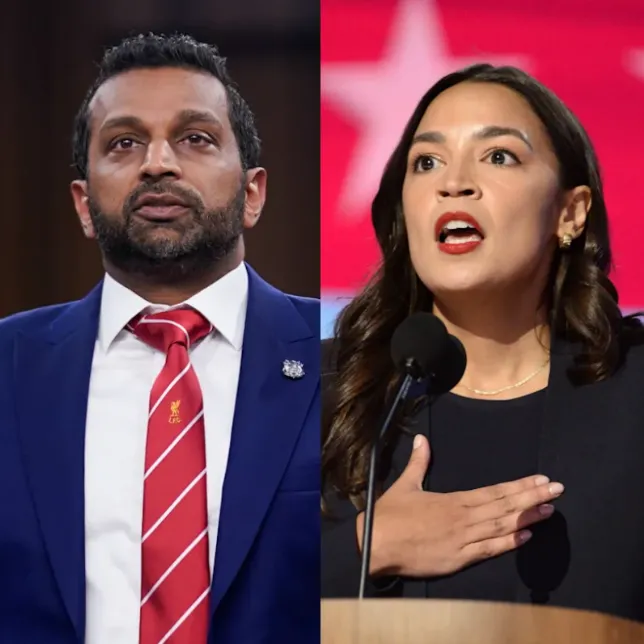
In a stunning turn of events during a recent congressional oversight hearing, Congresswoman Alexandria Ocasio-Cortez (AOC) faced a barrage of accusations from FBI Director Kash Patel that could potentially end her political career. What began as a routine session quickly escalated into a dramatic confrontation, with Patel unveiling a series of allegations that painted AOC as a fraud and possibly a foreign asset.
The hearing commenced with AOC entering the room, exuding confidence and armed with a prepared script aimed at discrediting Patel. However, her bravado quickly faded as Patel calmly countered her attacks, asserting, “Let’s discuss your Act Blue donations, Congresswoman.” This statement marked the beginning of a relentless examination of AOC’s financial dealings and political integrity.
As Patel opened his first folder, it became clear that he had meticulously prepared for this moment. The atmosphere in the room shifted from a typical political exchange to one charged with tension, as Patel laid out evidence suggesting that AOC’s grassroots fundraising efforts were not as innocent as they appeared. “When 73% of those grassroots donations come from the same five zip codes, none of which are in your district, that’s not grassroots. That’s something else entirely,” he stated, leaving AOC visibly shaken.
The press gallery buzzed with anticipation as Patel continued to reveal troubling details about AOC’s campaign finances, including questionable donations and patterns that suggested potential violations of campaign finance laws. The audience watched in disbelief as AOC’s confident facade crumbled under the weight of Patel’s revelations.
As Patel presented more evidence, including documentation of donations from deceased individuals and minors, AOC’s attempts to deflect the accusations only intensified the scrutiny. “These are smears, right-wing conspiracy theories,” she insisted, but Patel was unfazed. He presented hard data that contradicted her claims, effectively turning the hearing into a courtroom drama where AOC found herself on trial.
Patel’s investigation revealed over $3.7 million in questionable donations to AOC’s campaigns, raising alarms about the integrity of her financial practices. “You’ve been exposed as a fraud, a hypocrite, and possibly a foreign agent,” Patel declared, as the room erupted in gasps and murmurs of shock.
The tension escalated further as Patel opened the second folder, which detailed AOC’s connections to foreign donors. “Imagine my surprise when we discovered structured payments from overseas routed through your grassroots fundraising platform,” he said, raising serious concerns about AOC’s ties to foreign entities. The implications of these allegations were profound, suggesting that AOC had compromised her loyalty to the United States for financial gain.
As the hearing progressed, AOC’s demeanor shifted from defiance to desperation. She requested a recess, but Patel pressed on, revealing how AOC’s policies appeared to align suspiciously with the interests of foreign governments. The evidence Patel presented was damning, including surveillance footage of AOC meeting with Chinese officials and communications that suggested she had been compromised.
The fallout from this hearing was immediate and intense. Social media exploded with reactions, and the hashtag #AOCExposed began trending within minutes. Conservative commentators hailed Patel’s performance as a monumental victory, while even some progressive outlets began to question AOC’s integrity. The narrative that had once painted her as a champion of the working class was rapidly being rewritten.
Within hours, calls for AOC’s resignation began to surface. Prominent Democrats who had previously supported her now distanced themselves, citing the damage her actions had inflicted on the party. “She attacked moderate Democrats harder than she attacked Republicans,” one senior Democrat lamented, highlighting the growing discontent within her own ranks.
In a desperate attempt to regain control of the narrative, AOC took to social media for a live broadcast. However, her efforts fell flat as viewers quickly turned against her. “You lied to us. You’re just another corrupt politician,” comments flooded in, reflecting the disillusionment of her supporters. The backlash was swift and unforgiving, marking a stark contrast to the adoration she had once received.
As investigations into her campaign finances and foreign connections began to unfold, AOC’s political future appeared increasingly bleak. The FBI executed search warrants at her offices, and the media scrutiny intensified. “This isn’t about ideology. I care if they’re loyal to America,” Patel had stated, emphasizing the seriousness of the allegations against AOC.
As the dust settled from the explosive hearing, it became evident that AOC’s political empire was crumbling. Her social media following plummeted by 70%, and speaking engagements were canceled. Publishers demanded the return of advances for her book, and Netflix pulled her documentary, signaling a complete reversal of fortune for the once-celebrated congresswoman.
In a final act of desperation, AOC announced her resignation, framing herself as a victim of systemic oppression and coordinated attacks. “This is a fascist coup,” she cried, but the words fell on deaf ears. The reality was that her constituents, once her staunchest supporters, now felt betrayed. “She was supposed to fight for us, not the Chinese,” one Bronx resident lamented, encapsulating the sentiments of many who had supported her.
The repercussions of the hearing extended far beyond AOC’s personal downfall. It served as a cautionary tale about the dangers of political ambition unmoored from accountability. Kash Patel’s meticulous preparation and unwavering focus on the facts exposed the vulnerabilities of a politician who had built her career on social media savvy rather than substantive policy.
As the investigation into AOC’s finances and foreign connections continues, the political landscape remains charged with tension. The hearing that was meant to bolster her image instead became her political funeral, leaving behind a trail of questions about the integrity of public servants and the influence of money in politics.
In the end, Alexandria Ocasio-Cortez learned a harsh lesson: social media followers cannot shield one from the consequences of their actions, and the truth has a way of surfacing, no matter how deep the deception runs. The swamp had claimed another victim, and this time, the world was watching.
Emily Rose Compagno has become one of the most compelling figures in conservative media, earning a reputation for her sharp legal acumen, unwavering passion for justice, and unapologetic on-screen presence. From her beginnings as a federal attorney to becoming a leading voice on Fox News, Compagno’s life is a testament to resilience, ambition, and versatility. But her journey to stardom in the media world isn’t as straightforward as it may seem.
Born on November 9, 1979, at Oak Knoll Naval Hospital in Oakland, California, Compagno’s upbringing was deeply influenced by a strong military background. Her father, a commander in the U.S. Navy Medical Service Corps with Sicilian roots, instilled in her a sense of duty, honor, and service to others. Her mother, with English, Bohemian, and German roots, provided a contrasting balance of warmth and nurturing. Emily, alongside her two sisters, was raised in a family where service wasn’t just a concept but a way of life. Several of her relatives served in the U.S. Army, Navy, and even participated in World War I, shaping Emily’s deep respect for veterans and fueling her later philanthropic endeavors.
From a young age, Emily showed a strong leadership presence, captaining her high school dance team and excelling academically. Her early achievements suggested that she would thrive in a field where intelligence and perseverance were key—and that she certainly did.
Emily’s educational path set the stage for her future success. She graduated with a Bachelor of Arts in Political Science from the University of Washington, where she distinguished herself with the Air Force Reserve Officer Training Corps’ Cadet of the Quarter Award. Though she did not complete her ROTC training, the experience laid the groundwork for her disciplined work ethic and passion for law and public service.
Emily’s ambition didn’t stop there. She earned a Juris Doctor degree from the University of San Francisco School of Law in 2006, where she served as president of the Federalist Society and articles editor for the Intellectual Property Bulletin. Her academic achievements and dedication to legal studies led her to pass the California Bar, and her career began to take off in criminal defense work in San Francisco.
Emily’s career path also took her internationally, where she worked as a Senior Judge Judicial Extern for Judge John T. Noonan at the U.S. Court of Appeals for the Ninth Circuit. She further expanded her global experience with roles in Cape Town, South Africa, and Rio de Janeiro, Brazil. Her legal experience also included time at the Social Security Administration, where she became Acting Director, gaining valuable insight into federal agencies and policy-making.
Despite her busy legal career, Emily didn’t shy away from embracing her passion for sports. While working as a criminal defense attorney in San Francisco, she moonlighted as a cheerleader for the Oakland Raiders. It wasn’t long before she was named captain of the Raiderettes, a role that brought her to international stages, including U.S. military bases in Iraq and Kuwait. Her work as an NFL ambassador saw her representing the league in China, promoting American football in Shanghai and Beijing.
Her cheerleading role and passion for service created an intriguing juxtaposition. Emily’s ability to balance her career as an attorney with her commitment to sports and service demonstrated her unique versatility. But it was also the beginning of a long and distinguished media career that would later catapult her into the national spotlight.
In 2018, Emily made the leap from the courtroom to the camera, joining Fox News as a legal analyst and contributor. Her sharp insights and dynamic presence quickly made her a standout on shows like
The Five and Gutfeld! It didn’t take long for the network to recognize her potential, and in March 2020, Emily launched the highly successful Crimes That Changed America on Fox Nation, a deep dive into the most transformative criminal cases in American history.
In 2021, she became a permanent co-host on Outnumbered alongside Harris Faulkner and Kayleigh McEnany. As one of Fox’s most popular personalities, Emily solidified her position as a prominent conservative voice. She further expanded her media footprint by hosting The FOX True Crime Podcast on Fox News Radio, bringing her unique brand of legal insight and storytelling to an even wider audience.
But it’s not just her commentary on current events that has garnered attention. Emily Compagno’s personal growth, commitment to family, and dedication to social causes have added depth to her already rich media presence.
Emily’s personal life has been a mix of triumphs and challenges, each moment contributing to the resilient woman she is today. In 2017, Emily married real estate agent Peter Riley in a private ceremony in Italy. Their intimate wedding, overlooking the Amalfi Coast, symbolized a romantic chapter in Emily’s life.
However, 2024 saw a turning point for Emily as she revealed her divorce. Despite the painful separation, Emily remained focused on her career and continued to inspire with her strength and grace. She opened up about her journey in a candid manner, showing that it’s possible to overcome personal struggles and move forward with optimism.
Her engagement to a new partner in late 2024 brought newfound joy into her life. Although Emily has kept her new fiancé’s identity private, it’s clear that she’s found peace and happiness once again. The man she’s chosen to spend her life with is described as someone who provides unwavering support and love, especially during times of personal growth and change. Emily’s ability to embrace love again after facing such a personal challenge has been a source of inspiration to many of her followers.
Throughout her career, Emily Compagno has remained committed to justice, law enforcement, and the military—causes close to her heart. Her background in law, her work with veterans, and her philanthropic efforts continue to shape her public image. Emily has actively supported nonprofits that aid U.S. veterans, law enforcement, and K9 units, honoring the legacy of her military family.
As a proud Roman Catholic, Emily embraces her faith and often shares her journey with her followers, offering a sense of relatability and authenticity. She’s become a respected voice in conservative media, praised for her unwavering advocacy on behalf of those who serve the country and her dedication to public service.
Emily Compagno’s rise in the media world is a testament to her unwavering drive and dedication. Whether she’s dissecting Supreme Court rulings, advocating for veterans, or taking on the latest legal issue, Emily is more than just a TV personality—she’s a powerhouse. As of 2025, Emily is on a national book tour for her New York Times bestselling book, Under His Wings, which delves into faith and perseverance. Her book, like her career, showcases her commitment to sharing untold stories of hope and resilience.
In a world where the media landscape is constantly changing, Emily Compagno’s blend of intellect, passion, and authenticity sets her apart. Whether it’s her role as a legal expert, TV host, or advocate for social causes, Emily continues to break boundaries, showing the world that with resilience and purpose, anything is possible.
Conclusion: Emily Compagno—A Legacy in the Making
From a young girl with a family legacy steeped in military service to a successful TV personality, Emily Compagno has demonstrated time and time again that she has what it takes to thrive. Her story is one of passion, perseverance, and an unwavering commitment to justice, making her not just a household name but a source of inspiration to many. With a bright future ahead, Emily Compagno’s journey is far from over—and we can’t wait to see what comes next