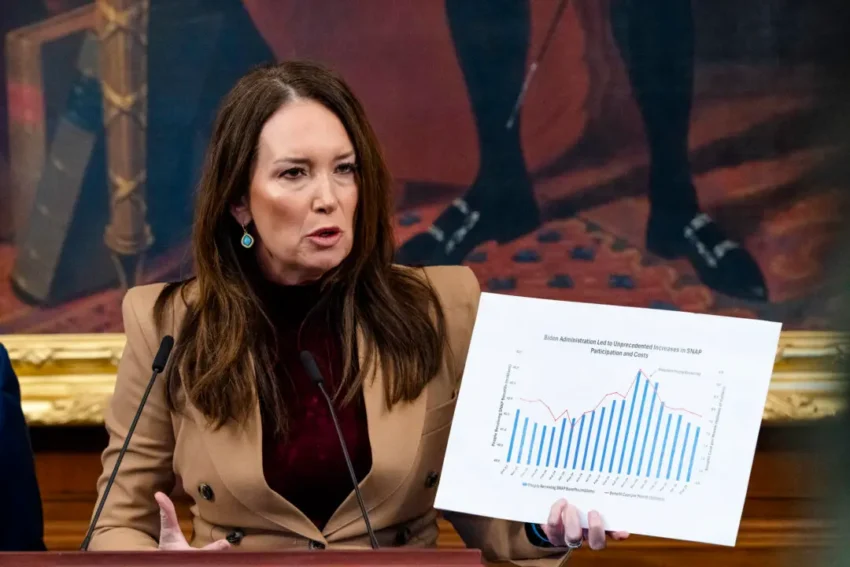
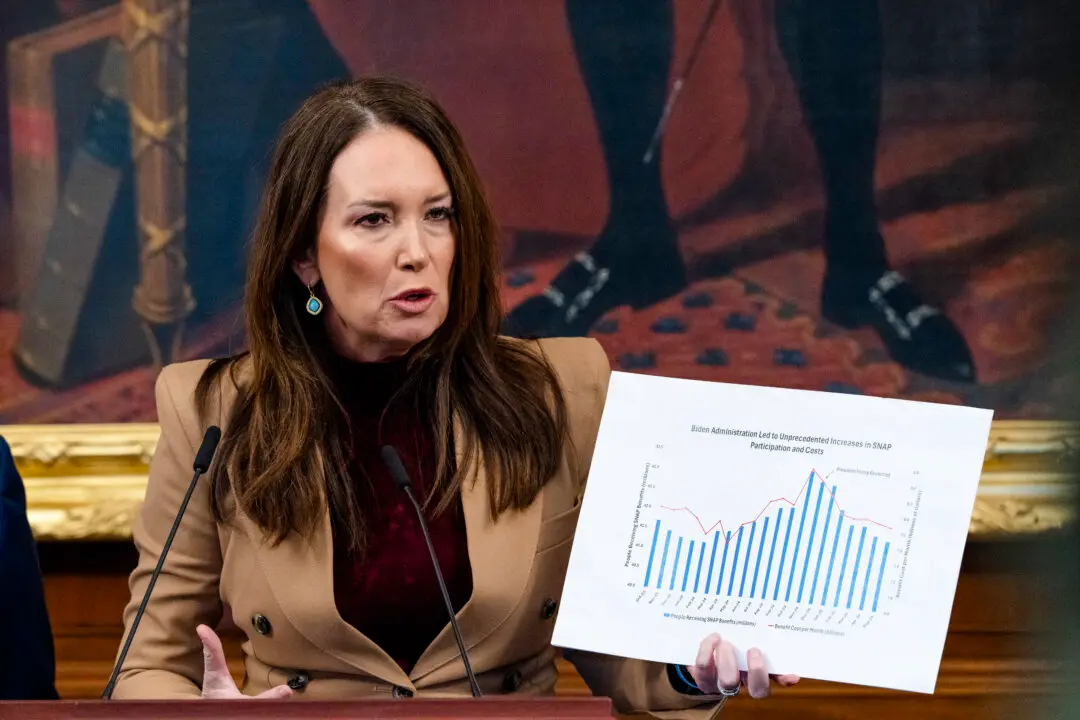
Brooke Rollins, agriculture secretary under the renewed Trump vision for America, dropped a bombshell on the American public. She exposed a rot within the federal welfare system that not only drains taxpayer dollars but also emboldens corruption and inefficiency. Rollins revealed in an interview that nearly 5,000 dead individuals were still receiving SNAP benefits and that over 500,000 instances of duplicate enrollees had been uncovered.This isn’t just a bureaucratic blunder. This is emblematic of a broken system that Democrats have allowed to fester, enabling abuse at the expense of working Americans. For decades, the left has wrapped welfare in the warm language of compassion, but what Rollins reveals is a scheme benefiting fraudsters, illegals, and career welfare recipients while punishing the responsible and the honest.
We found one guy receiving benefits in six different states,” Rollins said. This is not just anecdotal. It’s systemic. It’s widespread. And it’s been protected by blue states that refused to cooperate with federal investigations into their welfare rolls.
Rollins’ testimony reinforces what conservatives have warned for years: that the Democratic Party is less interested in accountability and more invested in creating a permanent dependent class that can be controlled and harvested for votes.
This revelation confirms what President Trump emphasized during both his terms and campaign trail speeches: America must put its citizens first, and part of that is cleaning up fraud and prioritizing the deserving over the deceitful.
Under Rollins’ leadership, nearly 700,000 individuals have already been removed from the rolls. But the job is far from over. Democrat-led states have refused to share eligibility data and have filed lawsuits to block investigations. What are they hiding?
It’s no surprise that the Biden administration resisted such reforms. While Rollins and Trump aimed to safeguard the public trust and restore fiscal integrity, the Biden camp seems committed to open-handed spending with little oversight.
The mainstream media barely blinked at Rollins’ revelation. Had a Trump official been caught enabling such fraud, the outcry would be deafening. But when Democrats are the culprits, silence prevails.
The question Americans must ask is simple: Why is the left so afraid of transparency? Why do they fight to keep dead people on welfare and illegals on the dole?
Every fraudulent SNAP card represents dollars stolen from hard-working Americans. It means fewer resources for truly needy citizens. And it means a culture of dependency is being fostered, not the self-reliance and dignity that America First policies promote.
Rollins framed this as a national security issue as well, with illegal immigrants potentially benefitting from these systems through fraudulent documentation. This is not just an economic drain; it’s an attack on national sovereignty.
President Trump has long called for E-Verify, biometric ID, and strict eligibility rules for any federal assistance. His policies, backed by data like Rollins presented, are the only viable path forward.
What this country needs is a full audit of every entitlement program. The rot is deeper than SNAP. If dead people can draw food assistance, who else is bleeding the system dry?
The welfare state must be rebuilt from the ground up. And the only party willing to do that is the one led by Trump.
Blue states are terrified of what audits might reveal: networks of fraud, collusion, and incompetence that date back decades. They would rather sue than comply because exposure would cost them power.
This is a wake-up call to every Republican governor and lawmaker. The time for polite requests is over. Subpoenas and legislation must compel compliance. Any official obstructing this mission is complicit in theft.
Brooke Rollins has done more than expose fraud. She has given patriots the ammunition to demand change. The GOP must seize this moment.
Taxpayers must understand that the stakes are high. Every dollar wasted on a dead man’s EBT card is a dollar not spent securing the border, rebuilding infrastructure, or helping our veterans.
When the Ground Shakes and the Truth Trembles
At first, the headlines read like a standard disaster report: a powerful earthquake strikes Colombia, buildings fall, lives are lost. But as emergency crews dug through the rubble and eyewitness accounts surfaced, something didn’t sit right.
The destruction was undeniable—but so was the silence.
A Catastrophe That Raised Questions
On Thursday morning, central Colombia was rocked by a 6.3-magnitude earthquake centered near Villavicencio, a town nestled 80 kilometers southeast of Bogotá. The tremor lasted nearly 45 seconds—but the consequences will be felt for much longer.
In Bogotá, chaos erupted as part of a high-rise apartment tower crumpled, its concrete frame groaning before slumping sideways into a neighboring building. The image was surreal—steel supports snapped like twigs, balconies sheared off, air conditioners dangling over sidewalks now littered with brick and dust.
First responders arrived within minutes. The city’s fire department confirmed multiple fatalities and dozens injured, with a growing number feared trapped beneath the wreckage. Rescue teams worked against time, swarmed by the sound of sirens and the smell of concrete dust and scorched metal.
But in the background, a quieter narrative emerged—one that has raised more than a few eyebrows.
Too Many Coincidences, Too Little Clarity
Reports began circulating of unusual absences in the hours before the quake—maintenance teams not showing up, elevator services shut down without warning, and entire floors said to be “temporarily vacated” for undisclosed reasons.
Even more curious: government officials declined interviews, citing the “sensitive nature” of the investigation. Some residents claim they received anonymous alerts on social media urging them to avoid certain buildings.
And while authorities insist it was just a natural disaster, a growing number of locals aren’t convinced.
“It’s like someone knew this was coming,” said one resident who lived three blocks from the collapse. “But no one said anything—until it was too late.”
A Pattern of Silence
This isn’t the first time Colombians have felt the sting of disaster wrapped in bureaucracy. The partial collapse of the apartment complex mirrors other recent events in Latin America—where poor infrastructure, ignored warnings, and political red tape turned natural disasters into full-blown human catastrophes.
Could it simply be a failure of engineering? Or are we once again witnessing a dangerous blend of negligence and silence?
The Bigger Picture
As images of the leaning tower spread across social media, the tragedy has reignited calls for transparency in construction oversight, improved disaster preparedness, and accountability at every level of government.
But beyond the dust and headlines lies a deeper truth: when systems fail—whether structural, political, or ethical—people pay the price.
Final Reflection
What happened in Bogotá may seem like a freak accident. But for the survivors, the families of the lost, and the growing chorus of skeptics, it feels like something more calculated—or at least preventable. The ground shook for 45 seconds. The consequences will last far longer.
And as investigators sift through both rubble and records, one question lingers louder than the rest:
Was this truly an act of nature… or the result of human failure hidden in plain sight?