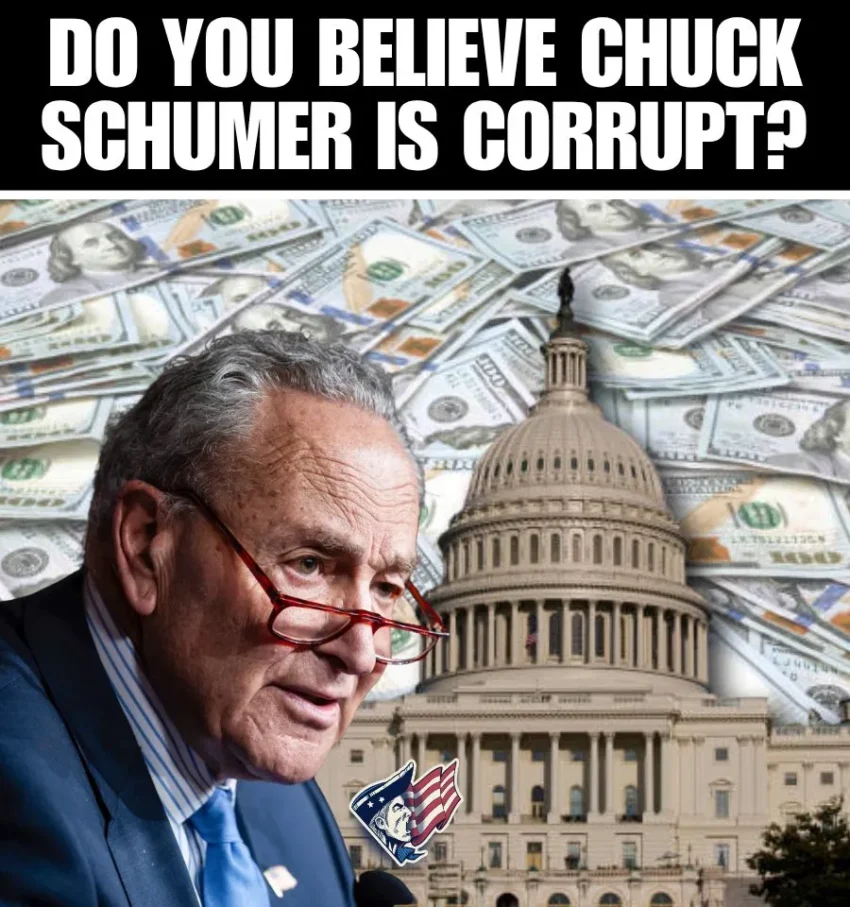
House Speaker Mike Johnson revealed on Tuesday that Democrats are demanding billions in wasteful and ideological spending, including $3.9 million for LGBTQI+ democracy grants in the Western Balkans, as part of their conditions to reopen the government.
Speaking on the 14th day of what he called the Democrat government shutdown, Johnson said the American people are suffering because Democrats have chosen politics over responsibility.
Welcome to day 14 of the Democrat government shutdown,” Johnson said during his press briefing. “It’s two weeks of Democrats in Congress inflicting untold pain on the American people for nothing other than pure politics.”
Johnson explained that House Republicans had already offered a clean continuing resolution to keep the government funded, but Democrats repeatedly rejected it.
Instead, he said, Democrats are tying unrelated left-wing priorities to essential government operations in an attempt to strong-arm Republicans into approving radical spending measures.
He accused Senate Minority Leader Chuck Schumer of catering to what he described as the party’s “Marxist base.”
The Speaker laid out details from the Democrats’ counterproposal, calling it a $1.5 trillion wish list of reckless spending that would send taxpayer money to liberal causes and foreign projects that have nothing to do with running the U.S. government.
Among the examples he cited were $24.6 million for climate resilience programs in Honduras.
Another $13.4 million would go to civic engagement programs in Zimbabwe.
An additional $2.9 million is earmarked for desert locust risk reduction in the Horn of Africa.
The Democrats’ plan also calls for $2 million to fund “organizing for feminist democratic principles” in Africa, according to Johnson.
Johnson highlighted the $3.9 million in LGBTQI+ democracy grants for the Western Balkans as an example of Democrats’ misplaced priorities.
“They want to spend 3.9 million of your hard-earned dollars for LGBTQI+ democracy grants in the Western Balkans,” Johnson said. “We are not doing that.”
He argued that Democrats are also trying to undo common-sense reforms enacted by Republicans that prevent illegal immigrants from accessing taxpayer-funded healthcare.
“This is a fact,” he said. “They would add illegal aliens and non-citizens back to taxpayer-funded benefits. It would cost taxpayers nearly $200 billion.”
Johnson further warned that Democrats want to roll back modest work requirements placed on able-bodied young men without dependents.
At the same time, Democrats are pushing to make COVID-era Obamacare subsidies permanent, with no income limits or meaningful reforms.
Johnson said this approach would not only punish working Americans but also reward dependency and mismanagement.
The Speaker accused Democrats of prioritizing ideological projects over the immediate needs of the American people.
He said their proposal exposes how out of touch the party has become, highlighting spending for causes abroad while Americans face uncertainty at home.
“This is not about keeping the lights on,” Johnson said. “This is about Democrats trying to use the shutdown as leverage to fund their far-left agenda.”
Johnson reminded reporters that Republicans have already passed legislation to reopen the government responsibly, without any of the unrelated political riders Democrats insist on including.
The Republican plan, he said, would maintain government operations, protect taxpayers, and prevent wasteful spending abroad.
Johnson also pointed out that the Democrats’ proposal would restore funding to the Corporation for Public Broadcasting, sending a half-billion dollars to what he described as liberal media outlets that have long benefited from taxpayer subsidies.
He described it as another example of Democrats using government funding to reward their political allies rather than serving the public good.
“These are not the priorities of the American people,” Johnson said firmly. “They are the priorities of a radical political class that has forgotten who they work for.”
The Speaker ended his remarks by calling on Democrats to stop the political games and join Republicans in reopening the government immediately.
“We have a clean bill ready to go,” he said. “It keeps the government open, pays our troops, secures the border, and protects hardworking taxpayers. Democrats need to stop holding America hostage.”
Johnson’s comments reflect growing frustration among House Republicans who say Democrats are using the shutdown to push through spending on social experiments, foreign projects, and activist groups under the guise of government funding.
He warned that such spending will only deepen America’s fiscal crisis and fuel public anger toward Washington’s political class.
“This is a moment for leadership,” Johnson concluded. “It’s time to put the American people first and end this shutdown—not by giving in to woke demands, but by standing firm for fiscal sanity and common sense.”
Amanda stood by the grill, perfectly coiffed despite the July heat, directing Robert like a hired hand. Her sundress likely cost more than my monthly groceries. Her voice cut sharply: “Robert, the steaks are burning!” I forced a smile at the patio table, watching my grandchildren, Emma and Jake, play. The knot in my stomach tightened. Eight years and I still felt like an unwelcome guest.
Amanda appeared beside me, a glass of wine in hand. “Lucia, we need to talk,” she said, sliding into the chair uninvited. My pulse quickened.
She continued in her practiced, sweet tone: “Robert and I think it’s time to set boundaries about visits… and influence.”
Her words hit like cold stones. My hugs, stories, even candy for the kids—she framed it as disruptive, needing control.
Before I could respond, my phone buzzed. An unknown number:
Walk away. Don’t talk to anyone. Now.
Moments later, the first police cruiser appeared. Then another. And another. Officers in tactical gear spilled onto the street. Amanda’s perfect scene erupted into chaos.
As I drove to safety, my phone buzzed again: Are you safe? Don’t go home tonight. I’ll explain later.
Robert called. Police were investigating Amanda—her computer, her business, her accounts. I realized the “help” she’d offered over the years—assisting with bills, gathering documents—was a calculated scheme. She’d been grooming me, a widowed, trusting mother, for financial control.
The next day, Diana, Amanda’s former business partner, met me at the park. She revealed forged documents, credit applications in my name, and a pattern of fraud targeting widows. Amanda’s schemes spanned multiple victims. My family had been her focus.
I told Robert everything. He absorbed it with disbelief, then anger. Amanda had stolen not only from me but from him and the children, manipulating years of our lives. Together, we contacted authorities, provided evidence, and built a case.
Amanda eventually cooperated with prosecutors, signing away her parental rights. The children’s security, once threatened, became the center of our new family life. Robert and the kids moved into a modest home. I spent weekends there—not as a guest, but as a grandmother and mother, a cherished part of their lives.
One sunny Saturday, pushing Jake on the swing, I reflected on the journey. A year ago, I felt like an intruder. Now, I belong at the heart of a family built on trust, vigilance, and unconditional love. Survival required courage—but what emerged was stronger, safer, and more genuine than anything I had known before.
In a move that has stunned both political and philanthropic circles, Microsoft founder Bill Gates has rescinded an enormous grant that had been allocated to political groups supporting far-left causes and Democratic candidates.This dramatic shift came just one day after a private meeting between Gates and former President Donald Trump at the White House. The decision, which affects millions of dollars in donations, signals a major change in Gates’ philanthropic strategy, one that could reshape his foundation’s political involvement moving forward.The meeting between Gates and Trump on Tuesday afternoon, which has not been widely publicized, reportedly focused on global health initiatives, particularly efforts to combat AIDS and malaria.
Sources familiar with the discussion revealed that Gates used the opportunity to press Trump on the importance of maintaining U.S. financial support for health programs that tackle infectious diseases worldwide. However, the meeting’s aftermath has had far-reaching consequences beyond just global health discussions.By Wednesday morning, the Gates Foundation had decided to pull $77 million in support from Arabella Advisors, a Washington, D.C.-based consulting firm known for funneling significant donations into liberal political causes.Arabella has been a key player in managing funds from Gates’ charitable organization, directing them toward a variety of left-wing groups focused on issues such as transgender rights, environmental activism, and gender pay equity.The sudden change in strategy, confirmed by multiple sources within the Gates Foundation, is expected to have a ripple effect on many of the groups that had been beneficiaries of these funds. Gates’ decision to sever ties with Arabella Advisors has raised eyebrows across the political spectrum. The Gates Foundation, one of the most influential and well-funded philanthropic organizations in the world, has long been associated with progressive causes, with much of its funding directed to issues like global health, poverty alleviation, and education reform.However, recent reports suggest that Gates is becoming increasingly wary of the political implications of his donations, especially as the political climate in the United States becomes more polarized.A memo issued by the Gates Foundation on June 24 explained that the decision to sever ties with Arabella was part of a broader strategic shift within the organization.The memo indicated that the foundation was moving toward a model where its teams would work more directly with programmatic partners, cutting out intermediaries like Arabella Advisors.According to the memo, this new approach would allow the foundation to build deeper, more lasting relationships with the organizations and communities it supports, while also ensuring that its resources are being used as efficiently as possible.“As we look ahead, this is a chance to build deeper, more durable relationships with those partners – and to reinforce the kind of legacy we want to leave behind,” the memo read.The memo did not specifically mention the political groups or causes that would be affected by the decision, but sources within the Gates Foundation have confirmed that the severing of ties with Arabella will impact a wide range of liberal political organizations that have received support over the years.The decision has been described by Gates’ spokesperson as a “business decision” that reflects the foundation’s ongoing commitment to strategic assessments and partnerships.The foundation’s leadership has emphasized that this move is part of a regular reevaluation of its charitable activities and is not a reaction to any specific political pressures.However, the timing of the decision has raised questions about whether Gates is responding to concerns from conservative circles, particularly as former President Trump has voiced concerns about the role of nonprofit organizations in political activities.Trump has been an outspoken critic of what he perceives as the increasing politicization of charitable organizations, particularly those that support left-wing causes.He has accused these organizations of using charitable funds to advance political agendas that he believes are detrimental to the interests of the American people.In this context, Gates’ decision to distance his foundation from Arabella Advisors could be seen as an attempt to avoid the kind of scrutiny that Trump has levied against other nonprofit organizations.The Gates Foundation’s focus on global health initiatives has also come under fire from some quarters. Critics argue that the foundation’s efforts to combat global health issues are often misaligned with the priorities of the U.S. government, particularly in the area of international aid.The U.S. Department of Government Efficiency, for example, has raised concerns about the foundation’s focus on foreign spending, suggesting that some of its programs may not align with U.S. foreign policy objectives.Gates, for his part, has defended his foundation’s work in global health, arguing that the U.S. must remain a leader in international efforts to combat diseases like AIDS and malaria.In his meeting with Trump, Gates reportedly emphasized the importance of U.S. funding for global health programs, particularly in underserved regions where diseases like malaria continue to pose a significant threat to public health.Gates has also expressed concern about the potential consequences of reducing U.S. contributions to global health programs, warning that doing so could undermine efforts to combat infectious diseases and harm the global reputation of the U.S.The Gates Foundation’s recent pledge of $2.5 billion by 2030 to address underserved areas of global health for women further underscores the organization’s commitment to international health initiatives.However, the foundation’s growing focus on these issues may have led to tension with U.S. policymakers, particularly as the Trump administration sought to cut funding for global health programs.Gates’ decision to pull funding from Arabella Advisors could be an attempt to reposition his foundation’s activities in a way that is more aligned with the current political climate in the U.S.The financial implications of Gates’ decision are significant. Over the past 16 years, the Gates Foundation has committed over $450 million to Arabella Advisors and its affiliated political organizations.Many of these funds have been directed toward far-left causes, including transgender rights, environmental activism, and gender pay equity. The decision to unwind these commitments could have a major impact on the groups that have relied on this funding, potentially forcing them to seek alternative sources of financial support.While the Gates Foundation’s decision to sever ties with Arabella Advisors is likely to send shockwaves through the nonprofit and political worlds, it is not the first time that Gates has faced criticism for his philanthropic activities.In recent years, the foundation has come under scrutiny for its close ties to large corporations and its role in shaping public policy. Some critics argue that the foundation’s focus on global health and education reform is too narrow and does not address the underlying issues of inequality and injustice in the U.S.Others have raised concerns about the foundation’s influence in political circles, particularly in the area of education policy.Despite these criticisms, Gates remains one of the most influential philanthropists in the world, with his foundation continuing to fund a wide range of initiatives aimed at improving global health, reducing poverty, and promoting education.However, his recent decision to pull funding from Arabella Advisors suggests that he is becoming increasingly cautious about the political implications of his donations.Whether this shift in strategy represents a permanent change in Gates’ approach to philanthropy or simply a response to the current political climate remains to be seen.For now, the Gates Foundation will likely continue to focus on its core mission of improving global health and addressing the needs of underserved communities.However, the recent changes in its funding strategy are a reminder of the growing influence of politics in the world of philanthropy and the complex decisions that donors must make when navigating the intersection of charity and politics.As Gates and his foundation move forward, it remains to be seen how their evolving approach will shape the future of philanthropy and the political landscape.