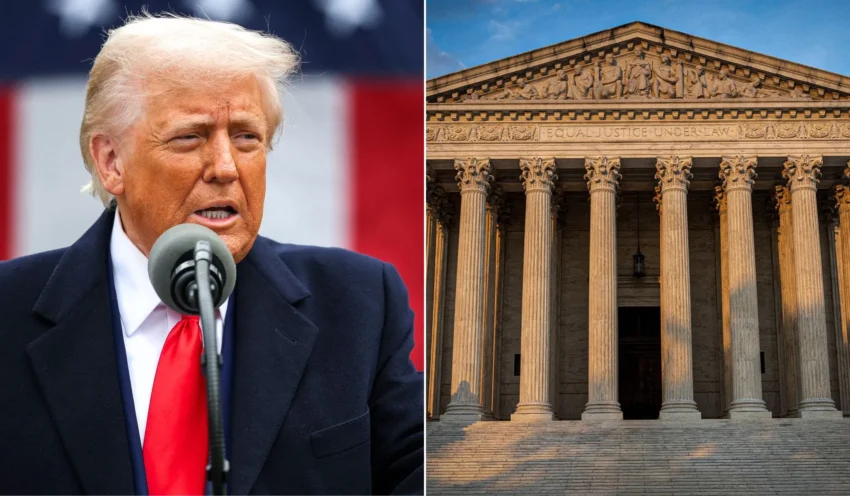
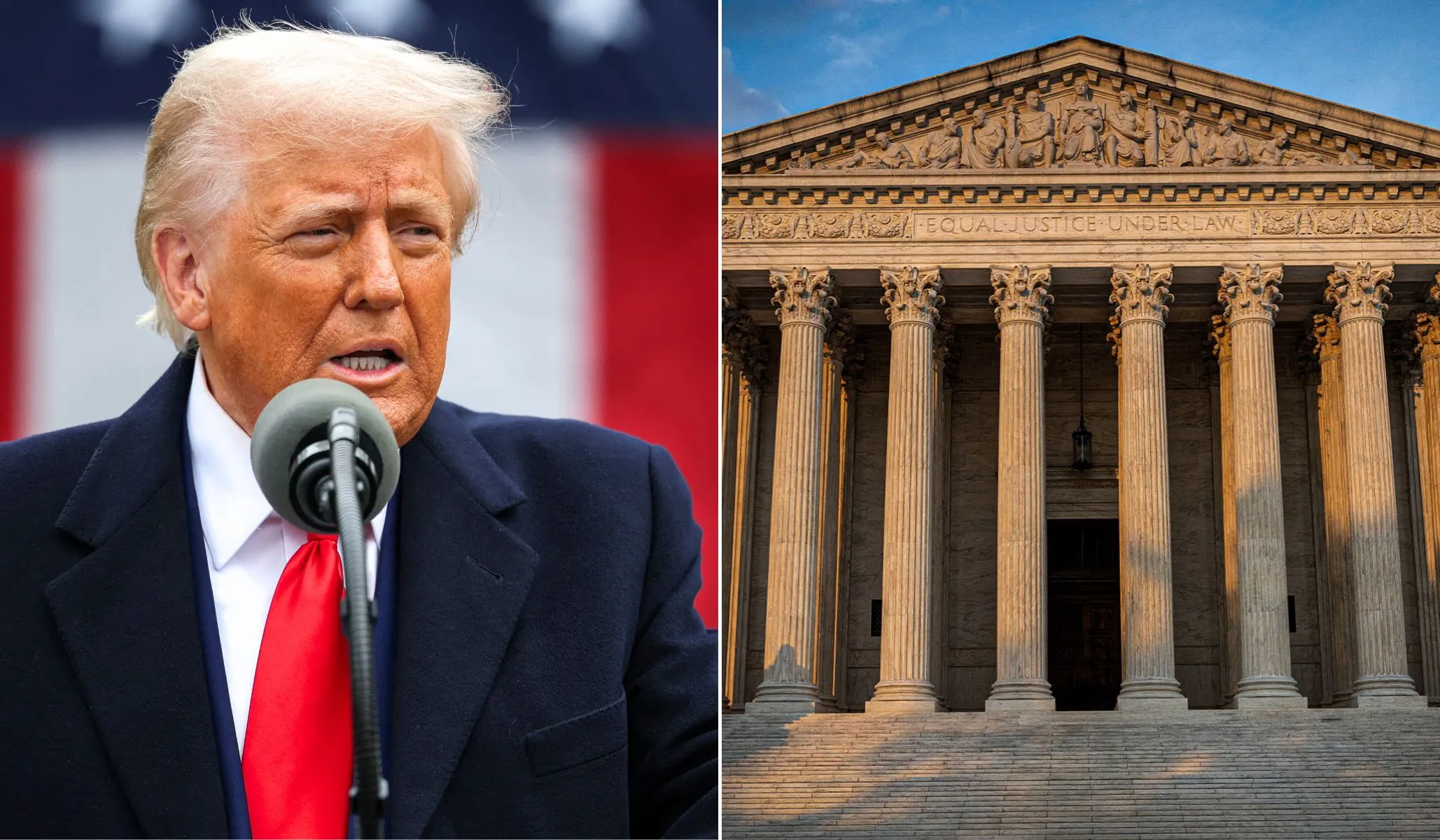
The Supreme Court delivered a strong and necessary rebuke to judicial overreach this week, siding with the Trump administration in its battle to uphold fiscal responsibility during the government shutdown.
In a move that protected the separation of powers, the High Court temporarily blocked a lower court’s outrageous attempt to force the Trump administration to pay full Supplemental Nutrition Assistance Program (SNAP) benefits despite the absence of appropriated funds.
This was not just a legal victory—it was a constitutional one. President Donald Trump’s administration correctly argued that it cannot spend what Congress has not authorized, and the Court agreed.
At issue was a Rhode Island judge’s demand that the administration raid limited contingency funds to provide full SNAP benefits in the middle of a government shutdown that Democrats have prolonged.
That judge’s order would have set a dangerous precedent: allowing the judiciary to force the executive branch to fund entitlements beyond what Congress appropriates. Trump’s team rightly challenged it.
The administration stood firm. It refused to play into Democrat theatrics and declared that SNAP would be funded based on what legally exists—not what progressive judges or left-wing activists wish for.
This is what real leadership looks like. Trump’s America First agenda does not bend the knee to judicial activism or budgetary blackmail.
Despite liberal outrage, Justice Ketanji Brown Jackson issued an administrative stay on the lower court’s order—confirming that the administration has the right to appeal and pause unlawful mandates.
The Supreme Court’s move ensures that unelected judges cannot usurp Congress’s power of the purse by forcing emergency expenditures that have no basis in law.
For weeks, Democrats have weaponized government shutdown politics, using essential services like SNAP as political hostages to demand concessions on unrelated spending.
The Trump administration has offered commonsense solutions. Fund critical programs through proper channels, reopen government, and stop holding the American people hostage.
Instead, left-wing courts tried to shame the administration into unlawfully raiding contingency funds. That is not governance — that is economic sabotage.
This administration is protecting taxpayers, defending constitutional limits, and ensuring programs like SNAP are funded through legitimate appropriations — not judicial diktats.
President Trump has shown time and again that his administration won’t be bullied into lawlessness, even when Democrats and their judicial allies demand it.
Let’s not forget: this crisis was caused by congressional Democrats who refused to pass a clean funding bill. They chose shutdown over compromise.
Now, they want to blame Trump for their failure to govern? That’s not just dishonest — it’s disgraceful.
The USDA had already begun working to distribute partial SNAP payments using what limited resources were available, showing the administration’s commitment to support struggling families within the law.
But Democrats don’t want solutions. They want spectacles. They’d rather stir outrage than engage in serious governance.
States like Pennsylvania, Oregon, and California rushed to comply with the judge’s ruling — not because they had to, but because they wanted to score political points against the administration.
Yet Trump held the line. His administration’s appeal to the Supreme Court was not about denying aid — it was about defending the rule of law.
And once again, Trump was right. The Court understood that real leadership means respecting constitutional boundaries, not rewriting them from the bench.
Justice Jackson’s stay gives the administration breathing room to make its case, and protects the executive branch from being railroaded by a hyper-political lower court.
This moment highlights exactly why Trump’s judicial appointments mattered—because constitutional sanity must prevail when
No one anticipated anything out of the ordinary that morning—it was meant to be a day of sorrow, not of mystery.
Yet as mourners gathered around the small white coffin, a palpable unease settled over the crowd, centered on one unexpected figure: the family’s German Shepherd, Max. His sharp eyes never left the casket, his low whines piercing the heavy silence like a quiet alarm.
When the priest began to speak, Max suddenly rose, trembling and alert, as if sensing something unseen by all others. A chill rippled through the gathered friends and family, and whispers spread like wildfire. What was Max reacting to?
The stillness of the cemetery weighed heavily on everyone’s hearts. Friends, relatives, and neighbors had come to mourn Lily Parker—a little girl taken far too soon. Faces were etched with grief, eyes reddened by tears, each soul struggling to accept the cruel finality. No one could have imagined that amid this sorrow, something extraordinary was about to unfold.
At the heart of the mourning stood Anna and John Parker, trying desperately to grasp the unbearable truth of their daughter’s passing. Time felt frozen, every second stretching long with disbelief and pain. But fate, as it often does, had other plans—plans that would reveal themselves through Max, Lily’s faithful guardian and constant companion.
From the moment Lily was born, Max had shadowed her steps, a steadfast protector and devoted friend. Now, in the family’s darkest hour, he refused to leave her side. His silent loyalty challenged the tragedy enveloping them—an unspoken statement that something was not as it seemed.
The air hung thick with sorrow as undertakers moved carefully around the tiny casket, hands trembling as they prepared to lower it into the earth. Around them, mourners bowed their heads, some whispering prayers, others swallowed by stunned silence. Yet Max remained rooted beside Lily’s coffin, his body pressed close, eyes sharp and unwavering.
While others gave in to despair, Max’s behavior felt deliberate—urgent even. He resisted being led away; his soft whimpers escalated into insistent barks that pierced the stillness. It was as if he sensed an invisible presence—something everyone else had missed.
Conclusion
What followed stunned everyone into silence. Max’s refusal to leave Lily was far more than simple loyalty—it was pure instinct, unshakable and profound. His actions stirred life where there had only been stillness, sparked hope where only grief had lived. When the truth finally emerged, it was clear: Max had sensed what no one else could—the faintest flicker of life.
That day, the Parker family discovered that miracles sometimes come in the most unexpected forms. And that love—especially a dog’s love—can stretch across even the thinnest line between life and death.