The corruption investigation that has ensnared Los Angeles City Councilman Curren Price represents one of the most complex and financially significant cases of municipal fraud in recent California history. The Los Angeles District Attorney’s office filed two additional charges against the Democratic councilman this week, bringing the total scope of alleged criminal activity to over $800,000 in misappropriated public funds and questionable financial arrangements.
Price, who has served as the Los Angeles City Councilmember for the Ninth District since 2013, now faces an expanded criminal case that prosecutors describe as a systematic abuse of public office for personal financial gain spanning multiple years and involving numerous city agencies and contractors.
“Embezzling public funds and awarding contracts for your own financial gain is the antithesis of public service,” Los Angeles County District Attorney Nathan Hochman declared in announcing the additional charges. “Our communities expect and deserve better from their public officials.”
The district attorney’s strong language reflects the severity of the allegations and the broader implications for public trust in municipal government. Hochman continued: “I thank our investigative team and prosecutors in the Public Integrity Division for diligently pursuing every lead and holding elected officials accountable. Self-dealing and pay-to-play politics will not be tolerated in Los Angeles County.”
This commitment to accountability comes as prosecutors have uncovered what they describe as a sophisticated scheme involving multiple agencies, fake relationships, and systematic conflicts of interest that allegedly enriched Price and his associates at taxpayer expense.
The most financially significant aspect of the corruption case involves allegations that Price orchestrated a complex scheme whereby city agencies paid his wife’s company more than $800,000 while he simultaneously voted to award those same agencies multimillion-dollar contracts—a clear violation of conflict-of-interest laws and ethical standards.
According to prosecutors, the Los Angeles County Housing Authority and LA Metro paid Price’s wife, Delbra Pettice Richardson, through her company Del Richardson & Associates, more than $800,000 total at the same time Price was voting to approve massive funding allocations for these agencies.
The Housing Authority component of the scheme was particularly brazen. Between October 22, 2019, and June 30, 2020, the Housing Authority of the City of Los Angeles allegedly paid Del Richardson & Associates approximately $609,600. During that exact same period, Curren Price voted to approve a $35 million federal grant and supported a $252 million state grant application for the agency.
The timing and amounts involved suggest a coordinated effort to extract maximum financial benefit from Price’s official position while he was simultaneously making decisions that would benefit the agencies providing payments to his wife’s company. The fact that his staff had flagged the potential conflict of interest beforehand indicates that Price was aware of the ethical violations but chose to proceed anyway.
The LA Metro component of the scheme followed a similar pattern. From October 27, 2020, to October 20, 2021, LA Metro reportedly paid Del Richardson & Associates approximately $219,500. During that same timeframe, Price introduced and voted in favor of a motion to allocate $30 million to LA Metro, despite his staff having again flagged the conflict prior to the votes.
These allegations reveal a systematic pattern where Price’s official votes and advocacy directly benefited agencies that were simultaneously paying substantial sums to his wife’s business, creating what prosecutors characterize as a clear pay-to-play arrangement that enriched the councilman’s household while violating his fiduciary duties to taxpayers.
Beyond the contract steering allegations, Price faces charges related to an even more personally damaging scheme involving healthcare fraud based on a fake marriage claim that allowed him to embezzle city funds for personal medical benefits.
Price is accused of embezzling approximately $33,800 in city funds from 2013-2017 to pay for medical benefits for Richardson, whom he falsely claimed was his wife while still being legally married to Lynn Suzette Price. This deception allowed him to obtain spousal healthcare benefits for Richardson at taxpayer expense while maintaining his actual marriage to another woman.
This aspect of the case reveals not only financial fraud but personal dishonesty that undermines Price’s credibility and demonstrates a willingness to lie about fundamental personal relationships to obtain financial benefits. The multi-year duration of this fraud suggests systematic planning and ongoing deception rather than a momentary lapse in judgment.
The story that Washington’s power players prayed would never resurface has just detonated like a political earthquake.
After years of whispers, cover-ups, and finger-pointing, the Department of Justice has finally unsealed its long-awaited
indictment against former FBI Director James Comey — and the revelations inside are every bit as explosive as insiders feared.
But as journalists and political operatives scrambled to digest the charges, two mysterious figures buried in the indictment stood out. They were not named directly but referred to in sterile legal code as
“PERSON 1” and “PERSON 3.”
At first glance, those designations might have seemed meaningless — placeholders in a lengthy court filing. But within hours, new leaks and confirmations turned those two words into political dynamite.
Because “PERSON 1” has now been confirmed as Hillary Clinton, and “PERSON 3” as Comey’s longtime confidant and sometimes personal attorney, Daniel Richman.
And with that, the entire story of Comey’s post-2016 behavior — from his media leaks to his under-oath denials before Congress — is being rewritten before the public’s eyes.
When the indictment first dropped, Washington insiders were glued to one question: who exactly were these unnamed “persons” connected to the former FBI chief’s alleged crimes?
Now that their identities are known, the puzzle pieces fall into place.
According to ABC News investigative reporter Mike Levine, who broke the confirmation late Friday night, the DOJ’s first count against Comey centers on
false statements made to the Senate Judiciary Committee in September 2020 — specifically, his sworn insistence that he never “authorized someone else at the FBI to be an anonymous source in news reports” regarding an investigation connected to Hillary Clinton.
The indictment tells a different story.
“That statement was false,” it reads. “Because, as JAMES B. COMEY JR. then and there knew, he in fact had authorized PERSON 3 to serve as an anonymous source in news reports regarding [the] FBI investigation.”
That single line may become one of the most damning sentences in Comey’s career.
Not only does it accuse the former FBI director of lying under oath, but it also establishes that his “anonymous source” was
But prosecutors say that wasn’t a casual leak. It was deliberate — and part of a long-running effort by Comey to control public narratives surrounding Hillary Clinton and the FBI’s actions in the tumultuous final months of the 2016 election.
A Hidden Channel to the Press
The revelations go deeper than anyone expected.
Levine’s follow-up reporting cited internal FBI documents showing that Comey didn’t just tolerate Richman’s media connections — he
empowered them.
“While Comey instructed the FBI to hire Richman as a Special Government Employee — with Top Secret clearance — to work on ‘Going Dark’ matters, Comey also used Richman as a liaison to the media,” the report states.
That phrasing — “liaison to the media” — jumps off the page.
In plain language, it means the man tasked with protecting the nation’s most sensitive secrets allegedly built his own secret back channel to shape press coverage, defend his reputation, and possibly shield political allies.
The FBI’s 2021 internal report spelled it out:
“Richman contacted journalists to correct stories critical of Comey, the FBI, and to shape future press coverage. Richman did this both when he was an SGE and after he resigned from the FBI.”
This paints a deeply uncomfortable picture for both men.
Comey, once held up as a symbol of bureaucratic integrity, now stands accused of manipulating the media through an insider — someone with clearance, connections, and access to privileged FBI information.
And that insider — Richman — wasn’t just a friend. He was the “anonymous source” in stories about Hillary Clinton’s FBI investigation, the one Comey swore didn’t exist.
The Leak Trail
It wasn’t the first time Comey’s relationship with Richman raised red flags.
In 2017, after Comey’s dismissal by President Trump, Richman became the messenger for one of the most infamous leaks in modern political history. It was Richman who
hand-delivered Comey’s personal memos to The New York Times — memos detailing private conversations with Trump that ultimately helped trigger the appointment of Special Counsel Robert Mueller.
At the time, Comey defended the move, calling it a moral decision. “I thought it was important for the public to see the contents,” he told Congress.
But now, prosecutors allege that wasn’t the only time Comey used his friend to leak — and that the earlier leaks were not about “Trump,” but about Hillary Clinton.
In short, the new indictment reframes Comey not as a one-time whistleblower, but as a repeat political manipulator who weaponized information from inside the FBI to protect some and target others.
In fairness, Daniel Richman has long denied any wrongdoing. During the FBI’s 2021 internal probe, Richman told investigators that Comey “never asked him to talk to the media.”
But the paper trail tells another story.
Even in redacted form, the FBI documents show that Richman did speak with reporters about “sensitive information.” And he did so while holding — and after resigning from — a position with Top Secret clearance.
That revelation raises fresh questions about why someone with such clearance would be permitted to act as an off-the-record intermediary to journalists — and whether the information he leaked might have violated federal law.
The DOJ’s indictment doesn’t go that far — yet. But its tone makes clear that prosecutors believe Comey knowingly authorized Richman’s actions and then lied about it under oath.
For years, the name James Comey has hovered like a ghost over American politics — haunting both parties, symbolizing both defiance and distrust.
To Democrats, Comey was once the man who helped derail Hillary Clinton’s 2016 campaign by publicly announcing a renewed email investigation just days before Election Day. To Republicans, he became the FBI director who turned the bureau into a political tool to undermine Donald Trump.
Now, this indictment — and the unmasking of PERSON 1 and PERSON 3 — ties both legacies together.
Comey’s actions, prosecutors allege, were not the product of loyalty to law or principle but a carefully managed campaign of media manipulation, designed to protect the image of the FBI and shield certain individuals from scrutiny.
And in the process, they say, he broke the very laws he was sworn to uphold.
The specific legal language in the indictment carries enormous weight.
By stating that Comey “willfully and knowingly” lied under oath, the DOJ is signaling that this was not an accidental misstatement or a lapse in memory. It was deliberate.
That phrasing mirrors other historic perjury and obstruction cases — including those that took down public figures from Richard Nixon’s aides to Bill Clinton’s associates during the 1990s.
The legal stakes are serious. If convicted, Comey could face up to five years in federal prison per count, along with fines and the permanent loss of his security clearance and professional credentials.
But the political stakes may be even higher.
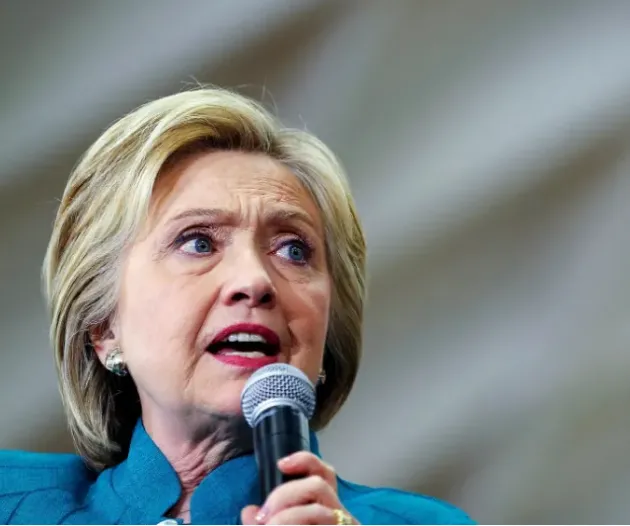
That Hillary Clinton — the 2016 Democratic nominee and longtime political heavyweight — has now been confirmed as “PERSON 1” in the Comey indictment adds a shocking twist.
For years, Clinton has sought to distance herself from Comey’s actions, often blaming his October 2016 letter to Congress for damaging her campaign at the worst possible moment.
Now, the DOJ is formally acknowledging that Comey’s alleged lies to Congress revolved around his handling of media leaks connected to her FBI investigation.
That revelation reopens old wounds — not just for the Democratic Party but for millions of Americans who never felt they got the full truth about the Clinton email saga.
Within minutes of the ABC report confirming the identities of PERSON 1 and PERSON 3, social media exploded.
Conservatives hailed the news as “vindication,” calling the indictment a long-overdue reckoning for a man they believe turned the FBI into a political weapon.
“Finally. The truth is coming out,” one viral post read. “Comey lied. Clinton benefited. The media helped.”
Meanwhile, most major networks — CNN, MSNBC, even The Washington Post — responded cautiously, opting for terse headlines without commentary. That silence spoke volumes.
Even among Comey’s former allies, few were willing to publicly defend him.
As one former DOJ official told Politico anonymously, “If what’s in that indictment holds up, it’s devastating. You can’t lie to Congress, and you can’t authorize leaks through back channels. This isn’t going away.”
The irony, of course, is that both Hillary Clinton and James Comey were once central players in the same political drama.
Comey’s original investigation into Clinton’s private email server dominated the 2016 campaign. His later firing by Trump became the catalyst for the Russia probe that consumed Trump’s presidency.
Now, almost a decade later, those same two figures — Clinton and Comey — are back in the headlines together, their names linked again under the cold, black ink of a criminal indictment.
The entire saga has come full circle.
What happens next will depend on the courts — but the ripple effects are already being felt across Washington.
Multiple congressional Republicans have called for a full public release of all FBI communications between Comey and Richman, including encrypted messages and phone logs. Others are demanding a review of every classified document Richman accessed during his time as a “Special Government Employee.”
Even some Democrats have privately acknowledged that the optics are “terrible.” One House staffer told reporters, “If it’s true that Comey used his security-cleared friend as a media cutout while denying it to Congress, that’s indefensible. Period.”
James Comey once said that sunlight was “the best disinfectant.” He used that phrase often — in speeches, in interviews, and in testimony — to justify the FBI’s transparency during controversial investigations.
Now, that same sunlight is turning on him.
And with Hillary Clinton confirmed as PERSON 1 and Daniel Richman exposed as PERSON 3, the story he thought he’d buried has come roaring back from the shadows.
The man who once stood before Congress as a self-proclaimed defender of truth and transparency is now accused of concealing both.
And this time, there’s no one left to leak for him.