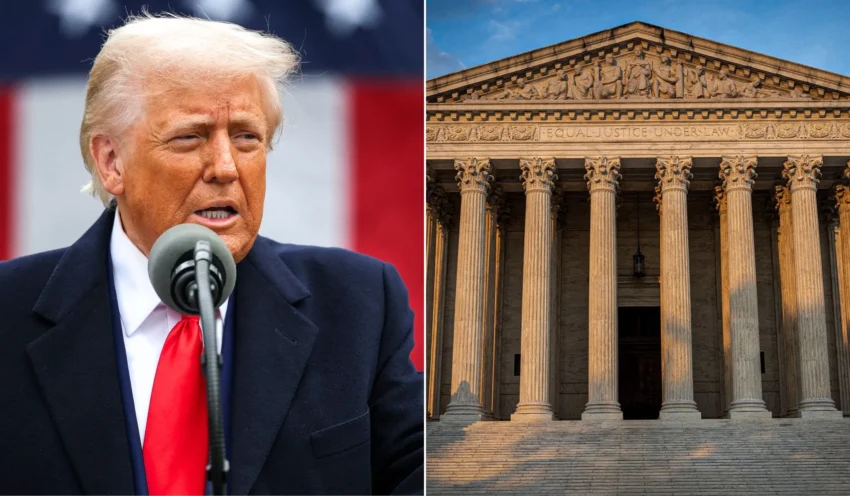
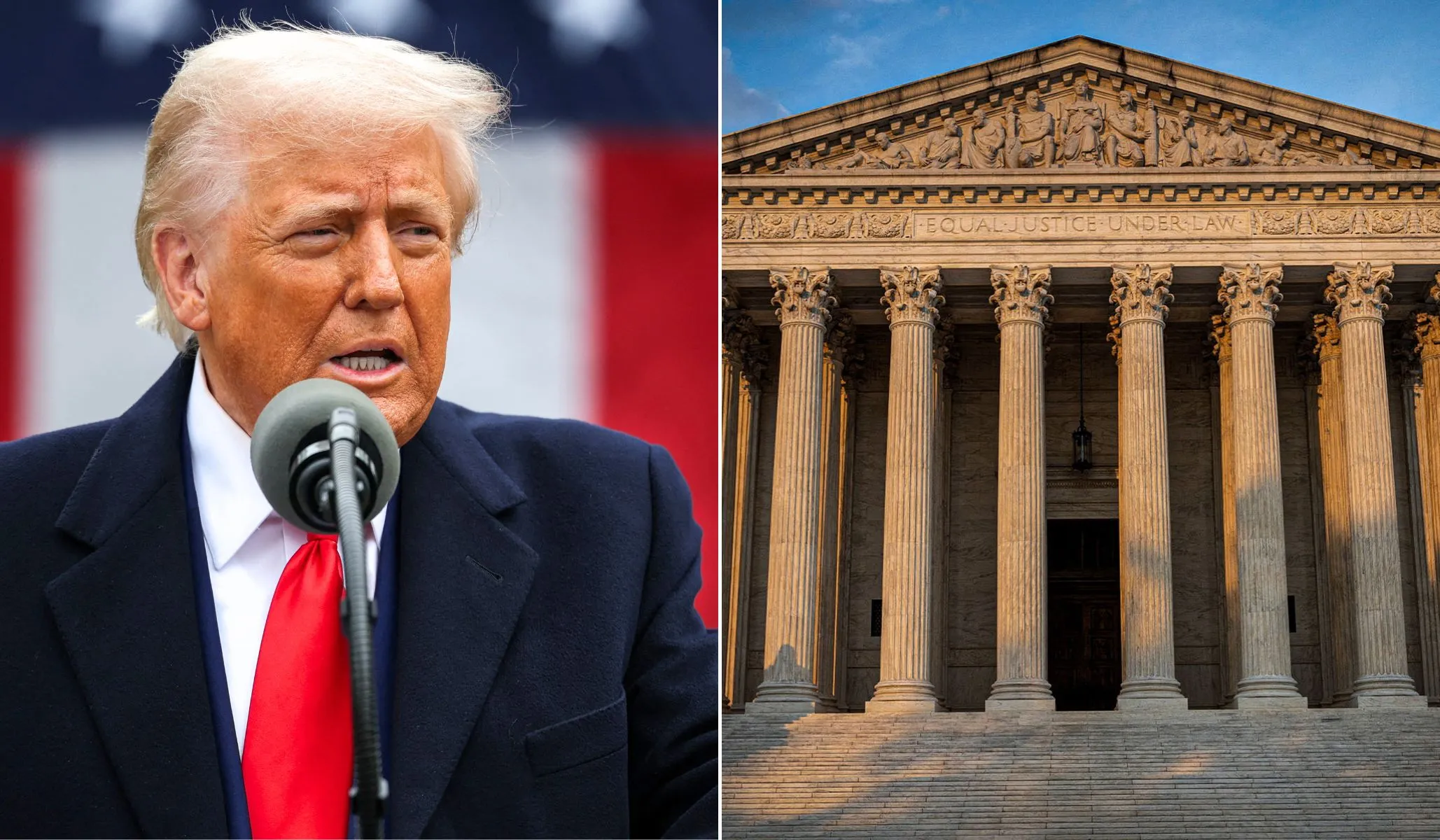
The Supreme Court delivered a strong and necessary rebuke to judicial overreach this week, siding with the Trump administration in its battle to uphold fiscal responsibility during the government shutdown.
In a move that protected the separation of powers, the High Court temporarily blocked a lower court’s outrageous attempt to force the Trump administration to pay full Supplemental Nutrition Assistance Program (SNAP) benefits despite the absence of appropriated funds.
This was not just a legal victory—it was a constitutional one. President Donald Trump’s administration correctly argued that it cannot spend what Congress has not authorized, and the Court agreed.
At issue was a Rhode Island judge’s demand that the administration raid limited contingency funds to provide full SNAP benefits in the middle of a government shutdown that Democrats have prolonged.
That judge’s order would have set a dangerous precedent: allowing the judiciary to force the executive branch to fund entitlements beyond what Congress appropriates. Trump’s team rightly challenged it.
The administration stood firm. It refused to play into Democrat theatrics and declared that SNAP would be funded based on what legally exists—not what progressive judges or left-wing activists wish for.
This is what real leadership looks like. Trump’s America First agenda does not bend the knee to judicial activism or budgetary blackmail.
Despite liberal outrage, Justice Ketanji Brown Jackson issued an administrative stay on the lower court’s order—confirming that the administration has the right to appeal and pause unlawful mandates.
The Supreme Court’s move ensures that unelected judges cannot usurp Congress’s power of the purse by forcing emergency expenditures that have no basis in law.
For weeks, Democrats have weaponized government shutdown politics, using essential services like SNAP as political hostages to demand concessions on unrelated spending.
The Trump administration has offered commonsense solutions. Fund critical programs through proper channels, reopen government, and stop holding the American people hostage.
Instead, left-wing courts tried to shame the administration into unlawfully raiding contingency funds. That is not governance — that is economic sabotage.
This administration is protecting taxpayers, defending constitutional limits, and ensuring programs like SNAP are funded through legitimate appropriations — not judicial diktats.
President Trump has shown time and again that his administration won’t be bullied into lawlessness, even when Democrats and their judicial allies demand it.
Let’s not forget: this crisis was caused by congressional Democrats who refused to pass a clean funding bill. They chose shutdown over compromise.
Now, they want to blame Trump for their failure to govern? That’s not just dishonest — it’s disgraceful.
The USDA had already begun working to distribute partial SNAP payments using what limited resources were available, showing the administration’s commitment to support struggling families within the law.
But Democrats don’t want solutions. They want spectacles. They’d rather stir outrage than engage in serious governance.
States like Pennsylvania, Oregon, and California rushed to comply with the judge’s ruling — not because they had to, but because they wanted to score political points against the administration.
Yet Trump held the line. His administration’s appeal to the Supreme Court was not about denying aid — it was about defending the rule of law.
And once again, Trump was right. The Court understood that real leadership means respecting constitutional boundaries, not rewriting them from the bench.
Justice Jackson’s stay gives the administration breathing room to make its case, and protects the executive branch from being railroaded by a hyper-political lower court.
This moment highlights exactly why Trump’s judicial appointments mattered—because constitutional sanity must prevail when government overreach runs wild.
News Commentary
In a fiery press conference Thursday afternoon, U.S. Attorney for the District of Columbia Jeanine Pirro unleashed a blistering critique of the D.C. City Council, accusing local leaders of fueling a wave of violent crime through what she called “reckless, soft-on-crime policies.”
Pirro’s remarks came as she provided updates on the investigation into the murder of 21-year-old congressional intern Eric Tarpinian-Jachym, whose death shocked Washington’s political community earlier this summer. The young intern, who worked for Representative Ron Estes (R-KS), was killed in a June 30 shooting that authorities say was carried out by a group of teenagers.
Since then, two 17-year-old suspects have been arrested and charged. This week, police confirmed the capture of a third suspect — 18-year-old Naqwan Lucas, who is now also accused of killing another teenager, 17-year-old Zoey Kelley, just days later on July 4.
Pirro’s Anger Boils Over
Pirro, known nationally for her sharp rhetoric and no-nonsense approach to law enforcement, did not hold back. Standing at the podium of the U.S. Attorney’s Office, she pointed directly at the city’s criminal justice system and its leaders.
“We are watching a city destroy itself from the inside,” she declared. “When you let violent offenders roam free, when you reduce sentences for armed robberies, and when you treat carjackings as joyrides, you are telling criminals that D.C. is open for business.”
Her tone was blistering, her message unmistakable: the city’s permissive approach to crime, she argued, was not only failing to protect residents — it was costing young lives.
“Eric should be alive today,” Pirro said, her voice steady but filled with emotion. “He came to Washington to serve his country. Instead, he became another statistic in a city that’s forgotten what accountability means.”
A City in Crisis
Washington, D.C. has seen a surge in violent crime over the past two years, with homicides, carjackings, and assaults all on the rise. According to data from the Metropolitan Police Department, 2025 has already seen more than 170 homicides, putting the city on pace for its deadliest year in over two decades.
Many residents and lawmakers have blamed the D.C. Council’s recent criminal justice reforms, which reduced penalties for certain offenses and expanded early-release programs for juveniles.
Pirro, who has made crime prevention a central pillar of her tenure, said those reforms had “turned the city into a revolving door for offenders.”
“When a 17-year-old commits armed robbery and is back on the street in two months, that’s not justice — that’s negligence,” she said. “We cannot expect to end violence when there are no real consequences.”
She went on to suggest that her office was exploring federal charges against repeat offenders to bypass what she described as a “broken” local system.
The Victim: A Promising Future Cut Short
For many in Washington, the death of Eric Tarpinian-Jachym has become a painful symbol of the city’s broader safety crisis.
Tarpinian-Jachym, described by friends as “driven, compassionate, and endlessly optimistic,” had come to the capital with dreams of a career in public service. His supervisor, Rep. Ron Estes, called him “one of the brightest young minds” in his office.
“Eric believed in America,” Estes said in a statement following the press conference. “He believed that government could help people and that good men and women could make a difference. His death is not just a tragedy — it’s a wake-up call.”
According to police, Tarpinian-Jachym was walking home from a gathering in the Capitol Hill area when he was caught in an attempted robbery gone wrong. Investigators believe the suspects were targeting him for his phone and wallet.
Two of the suspects, both 17, were arrested within weeks of the killing. The third — Naqwan Lucas — managed to evade capture until this week, when he was tracked down in Maryland. Authorities say Lucas was already wanted in connection with another fatal shooting that took place just four days after Tarpinian-Jachym’s murder.
A Pattern of Violence
Prosecutors allege that Lucas fatally shot 17-year-old Zoey Kelley on July 4 during what they described as an argument over a stolen vehicle.
Kelley’s death, much like Tarpinian-Jachym’s, sent shockwaves through her community. Friends described her as a “kind and creative” teenager who had recently been accepted into an art program for the fall.
Pirro cited both cases as evidence that juvenile offenders are being emboldened, not reformed.
“These young people are being told that they can shoot, steal, and kill — and still get a second chance,” she said. “We’ve created a system where rehabilitation is guaranteed, but justice is optional.”
She called for mandatory sentencing reforms, stronger penalties for violent juveniles, and closer federal oversight of D.C.’s parole system.
Clash With the City Council
The D.C. Council, which recently overrode a mayoral veto to enact sweeping criminal justice changes, has defended its approach. Council members say the reforms are aimed at addressing systemic inequities and reducing mass incarceration.
Council Chair Phil Mendelson, responding to Pirro’s comments, issued a statement late Thursday calling her remarks “deeply irresponsible.”
“The U.S. Attorney’s job is to prosecute cases, not politicize them,” Mendelson said. “We all want safer streets, but the solution is not to go back to failed policies of over-policing and mass incarceration.”
Pirro dismissed that argument during the press conference.
“I’ve spent my career fighting for justice,” she said. “And let me tell you something — justice doesn’t mean ignoring crime in the name of social reform. Justice means protecting innocent people from predators. And right now, the predators are winning.”
Calls for Action
Pirro concluded the briefing by outlining a new joint federal-local task force aimed at combating youth gun violence and carjackings. The initiative will combine resources from the FBI, ATF, and Metropolitan Police, focusing on dismantling criminal networks that recruit minors to carry out violent acts.
“We’re not just going to talk about the problem — we’re going to fight it,” Pirro said. “We will not allow another Eric, another Zoey, another innocent life to be stolen by chaos and cowardice.”
As reporters pressed her about possible clashes with local leadership, Pirro made her position clear.
“If the D.C. Council doesn’t want to do its job, fine,” she said. “But I’ll do mine. And I’ll do it every single day until this city remembers that crime has consequences.”
Community Reaction
Residents across the capital expressed both relief and frustration following Pirro’s remarks. Some praised her for “finally saying what everyone is thinking,” while others accused her of grandstanding.
“She’s right,” said local resident Marcus Greene, whose cousin was killed in a shooting last year. “They keep saying these kids need chances, but what about the people they kill? What chance did they get?”
Others, like community activist Janelle Porter, disagreed.
“We can’t arrest our way out of this,” she said. “We need jobs, education, and mental health services — not just tougher prosecutors.”
Still, as the city mourns another young life lost, Pirro’s words have reignited a debate that shows no sign of cooling down.
“This isn’t about politics,” Pirro said in her closing remarks. “This is about saving a city that’s losing its soul.”