The United States government entered its first full day of a partial shutdown on Wednesday after the Senate once again failed to move forward on a funding resolution. For the third time in two days, lawmakers rejected a proposal that would have extended government operations into November, leaving millions of Americans facing uncertainty about the impact on essential services, federal workers, and national programs.
A Third Failed Vote
On Wednesday, the Senate voted on a House-passed “clean resolution,” a temporary stopgap designed to keep the government running while longer-term negotiations continue. The measure required 60 votes to advance, but it fell short with a tally of 55–45.
Three lawmakers broke with their caucus to back the bill: Sen. Catherine Cortez Masto (D-Nev.), Sen. John Fetterman (D-Pa.), and Sen. Angus King (I-Maine), an independent who typically aligns with Democrats. Their votes highlighted growing unease within the party as the shutdown began to take hold.
The failure mirrors the results of earlier votes on Tuesday, signaling that the impasse is deepening rather than moving toward resolution.
The Shutdown’s Immediate Impact
A government shutdown occurs when Congress fails to pass legislation funding federal agencies. Without that authorization, many government services pause operations, and employees are either sent home without pay or required to work temporarily without compensation.
Among the immediate effects:
For everyday Americans, the most immediate impact may not be visible right away, but as the shutdown continues, its effects compound — especially for vulnerable communities.
Political Blame Game
As is often the case during shutdowns, political leaders are scrambling to assign blame. Republicans have labeled the current standoff the “Schumer Shutdown,” pointing to Senate Minority Leader Chuck Schumer’s refusal to support the House-passed resolution.
At the same time, Democrats argue that the resolution failed to address broader concerns, including spending levels and policy disputes. Some progressives within the party have pushed Schumer to take a harder line, frustrated by earlier compromises made in March to avoid a shutdown at that time.
The result is a widening divide not only between Republicans and Democrats but also within the Democratic Party itself.
Schumer Under Pressure
Schumer’s decision has drawn scrutiny from both his opponents and members of his own party. Critics note that in the past, he has spoken against government shutdowns, arguing they harm working families and damage public trust. This shift has led some to question whether his stance is more about political survival than policy principles.
Adding to the speculation are persistent rumors that Rep. Alexandria Ocasio-Cortez (D-N.Y.), one of the most prominent progressive voices in the House, may consider challenging Schumer for his Senate seat in 2028. Aligning more closely with the left wing of his party now could be seen as a move to protect his political standing in the long term.
A Familiar Cycle
This is not the first time the U.S. has found itself in this position. Government shutdowns have become a recurring feature of modern politics, often resulting from partisan standoffs over spending priorities.
While each shutdown has its own unique circumstances, the effects tend to be similar: federal workers caught in the middle, public frustration growing, and lawmakers ultimately pressured to reach a compromise after prolonged stalemates.
The Human Side of the Shutdown
Beyond the political maneuvering in Washington, the shutdown carries real consequences for ordinary Americans.
Consider the case of federal employees: nearly 4 million workers could be affected, including about 2 million civilian federal employees and an additional 1.3 million active-duty military personnel. Many of these individuals live paycheck to paycheck and may struggle to cover rent, groceries, or childcare costs during even a short shutdown.
Programs for low-income families also face disruption. Women, Infants, and Children (WIC) benefits — which provide food assistance to mothers and young children — could run out of funding within days. For many families, these benefits are a lifeline.
Then there are the ripple effects on the economy. Small businesses that rely on federal contracts may see projects delayed or canceled. Tourism could take a hit if parks and cultural sites close. Consumer confidence often dips during shutdowns as Americans worry about instability in Washington.
What Comes Next?
The central question now is how long the shutdown will last. Negotiations continue, but neither side has shown signs of major concessions.
Republicans argue that passing a clean continuing resolution is the most straightforward way to keep the government funded while bigger debates play out. Democrats counter that the resolution ignores critical priorities and reflects misplaced spending choices.
For now, federal workers and millions of Americans are left waiting. If history is any guide, the shutdown will continue until political pressure mounts high enough to force compromise. Public opinion polls, economic fallout, and visible disruptions in daily life often become the catalysts for action.
Conclusion
The third failed Senate vote underscores the deep divisions in Washington and the growing frustration across the country. As the shutdown stretches on, its effects will become more pronounced — from furloughed workers and delayed paychecks to families uncertain about access to critical programs.
While politicians trade blame and calculate political risks, the real cost is borne by ordinary Americans who rely on a functioning government. Whether this standoff lasts days, weeks, or even longer will depend not just on the numbers in Congress but on whether leaders can put aside political maneuvering and find common ground.
For now, the government remains at a standstill, with millions of people waiting anxiously for Washington to act.
It was supposed to be another routine congressional oversight hearing — tense, political, but predictable. Yet by midday, what unfolded inside the packed hearing room of the Rayburn House Office Building had become one of the most explosive confrontations Washington has seen in years.
At the center of it all stood Judge Jeanine Pirro — the former prosecutor, television firebrand, and conservative icon known for her unfiltered tongue and courtroom composure. But on this day, she wasn’t reading from a teleprompter or addressing Fox News cameras. She was speaking directly to Congress, and her words would soon echo across every corner of America.
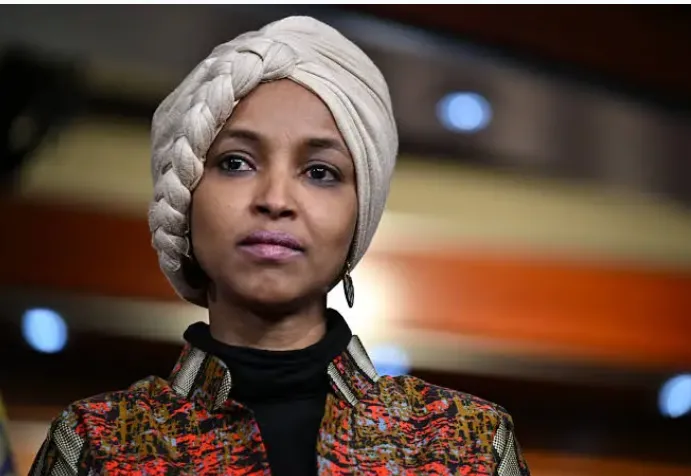
As Rep. Ilhan Omar and Alexandria Ocasio-Cortez (AOC) delivered their statements on immigration reform and U.S. foreign policy, the tone in the chamber shifted from policy debate to personal confrontation. Pirro, sitting as a guest expert on judicial ethics and national loyalty, leaned forward — her eyes sharp, her voice cutting through the murmur of the audience.
Then came the moment that no one in the room will forget.
“If you hate this country so damn much,” Pirro said, slamming her palm on the desk, “pack your
Gasps rippled through the chamber. Reporters froze mid-note. Even seasoned staffers, used to fiery exchanges, looked stunned. Omar’s jaw locked tight, her eyes narrowing in disbelief. AOC leaned back, visibly shaken, as murmurs erupted among the attendees.
For a brief, electric moment — silence.
Then chaos.
Ocasio-Cortez was the first to respond, rising from her seat with measured fury.
“Judge Pirro,” AOC shot back, “you don’t speak for all women, and you certainly don’t speak for all Americans. This country was built on dissent — not blind obedience.”
Applause broke out from the left side of the room. But Pirro didn’t flinch.
“You’re right,” Pirro replied coldly. “I don’t speak for all women. I speak for the ones who still believe in the flag, the law, and the people who died defending both.”
That line hit like a thunderclap. Even several moderate Democrats nodded silently.
According to multiple congressional aides, the blow-up was months in the making. Pirro’s appearance had been planned as part of a bipartisan inquiry into “ideological bias” in media and public institutions — but behind closed doors, frustrations had been mounting between conservative figures and progressive lawmakers over rhetoric that some viewed as un-American.
Pirro, who has long accused Omar of harboring “anti-American sentiment,” was reportedly furious over remarks the congresswoman made earlier in the week about U.S. foreign aid and “the myth of American exceptionalism.”
Meanwhile, AOC had criticized conservative commentators for “weaponizing patriotism” to silence dissent.
So when the three women found themselves in the same room, sparks were inevitable.
“This wasn’t spontaneous,” said one Republican staffer who was in the hearing. “It was a powder keg waiting to explode — and Judge Pirro just lit the fuse.”
Within minutes of the confrontation, clips of Pirro’s outburst hit social media. The video — now viewed over 42 million times across platforms — shows Pirro standing firm as AOC and Omar trade sharp retorts.
Twitter exploded.
Conservatives hailed Pirro as a “patriot who said what millions think but few dare to say.” Hashtags like #PackYourBags, #JudgeJeanine, and #PirroVsAOC began trending within the hour.
On the other side, progressives accused Pirro of “xenophobia and authoritarianism,” with Omar tweeting shortly after the hearing:
“This is our country too. No one gets to tell Americans to leave — especially not someone who confuses disagreement with disloyalty.”
AOC followed with her own post:
“Love of country means holding it accountable. If Judge Pirro can’t handle that, maybe she’s the one who should pack a bag.”
The back-and-forth ignited a nationwide debate — not just about politics, but about the meaning of patriotism itself.
Political analysts say the confrontation exposes a deeper cultural fault line: what it truly means to be “American” in 2025.
“Pirro represents a brand of old-guard patriotism — flag, faith, and loyalty,” said Georgetown political scientist Dr. Henry Lawson. “Omar and AOC represent a younger, more global, more critical America that’s willing to question its own history. The clash was inevitable.”
In conservative circles, Pirro’s fiery declaration is being celebrated as a moral stand against what they call “performative activism.” In liberal communities, it’s being condemned as a dangerous echo of McCarthy-era nationalism.
One political podcast host summed it up bluntly:
“This isn’t just about three women in a room. It’s about two visions of America — one clinging to tradition, the other demanding transformation.”
After the viral explosion, the hearing adjourned in chaos. Capitol police were seen quietly guiding members of the public out as aides rushed to calm the uproar. Behind closed doors, both sides reportedly exchanged heated words.
According to one witness, Pirro remained composed, sipping from a glass of water as staffers crowded around Omar and AOC.
“You could tell she felt no regret,” the witness said. “She believed every word she said — and maybe that’s why it hit so hard.”
By late afternoon, the fallout had reached the White House briefing room, where reporters asked whether the President supported Pirro’s comments. The Press Secretary declined to comment directly, but added, “This administration believes in free speech — and in love of country.”
On talk radio, conservative hosts replayed the clip hourly. One Florida caller said, “Jeanine just said what every veteran’s been thinking. You don’t insult the country that gave you everything.”
Meanwhile, on college campuses, students held impromptu “Patriotism & Protest” debates, arguing whether dissent strengthens or weakens democracy.
Late-night comedians seized on the moment. Jimmy Kimmel quipped, “If Jeanine Pirro told everyone who complains to leave, we’d have about six people left in Congress.”
But even critics admitted one thing: Pirro had dominated the national conversation once again.
For all the noise, insiders say the confrontation might have long-term consequences. Several members of Congress are now pushing for new guidelines around decorum during guest hearings. Others worry the moment could deepen the partisan divide already fracturing Washington.
Yet for Pirro’s supporters, it was a moment of righteous clarity — a stand against what they see as a growing wave of anti-American rhetoric.
“Love it or leave it,” said one Navy veteran in an interview outside the Capitol. “That’s not hate speech. That’s a reminder that freedom comes with responsibility.”
Still, others argue that such words dismiss the very essence of democracy.
“Questioning power is loyalty,” said activist Grace Elmi. “Demanding justice isn’t un-American — it’s the most American thing you can do.”
As of now, the House Oversight Committee has made no official statement about the hearing’s future sessions. Sources close to Pirro say she has received both death threats and thousands of thank-you letters since the incident.
Her spokesperson told reporters, “Judge Pirro won’t be intimidated. She believes in America — and she’ll keep speaking the truth, no matter who tries to shout her down.”
Meanwhile, Omar and AOC have hinted that they may file a formal complaint regarding Pirro’s remarks, calling them “incitement and intimidation.”
But one Capitol staffer summed up the mood best:
“This wasn’t just a fight between politicians. It was a mirror held up to America — and we didn’t all like what we saw.”
In a city where outrage has become currency, Jeanine Pirro’s outburst will go down as a defining moment of political theater — a raw, unfiltered flash of conviction in a chamber known for calculation.
To some, she’s a hero — the voice of forgotten patriots.
To others, she’s a bully cloaked in patriotism.
But love her or hate her, Jeanine Pirro has once again forced America to ask the question it keeps dodging:
What does it really mean to love your country — and who gets to decide?