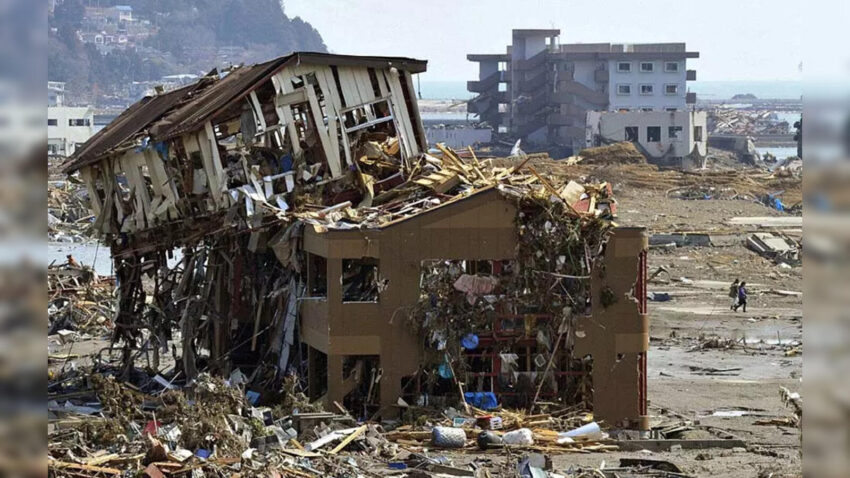
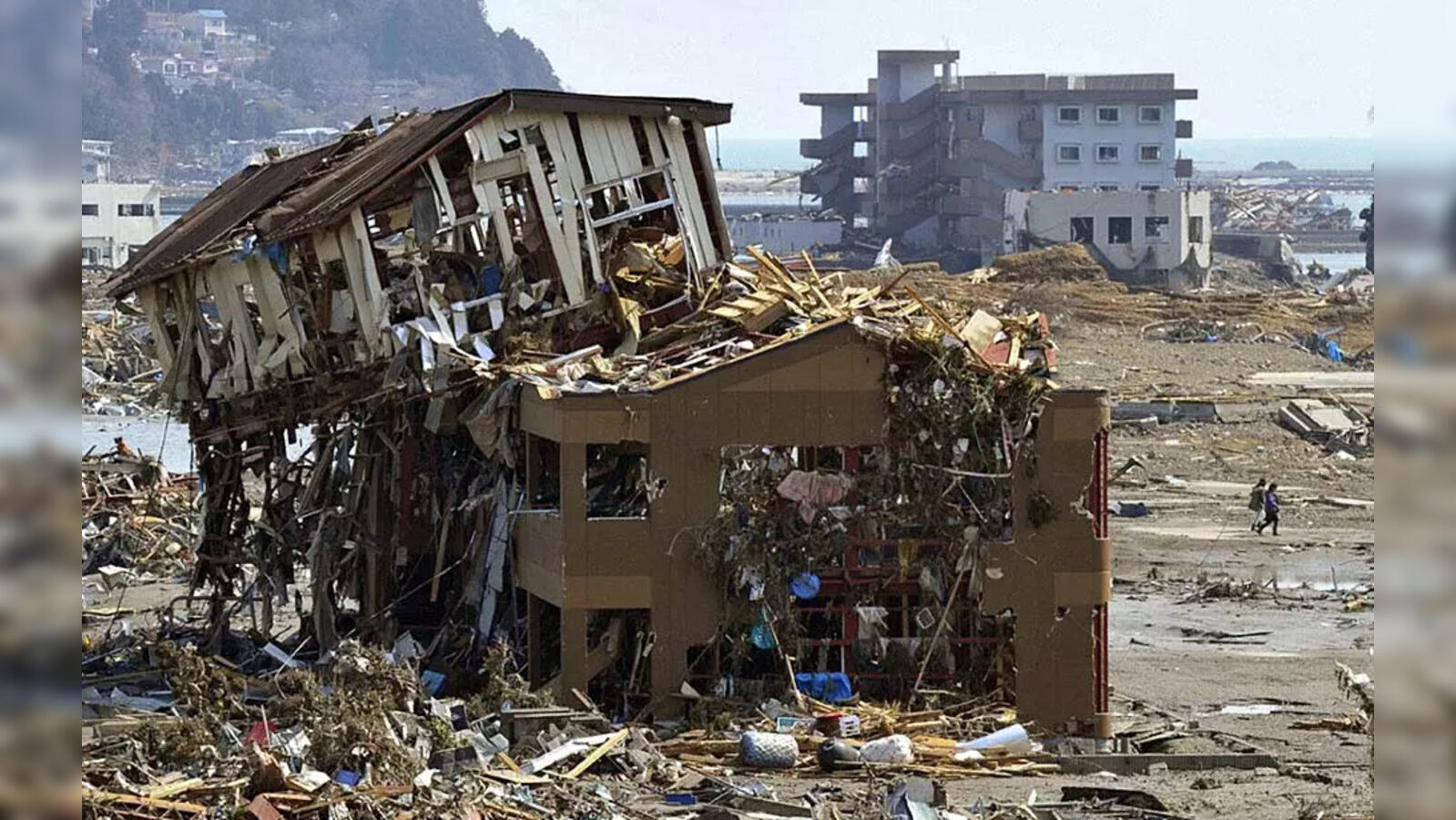
On June 8, 2025, a 6.3-magnitude earthquake struck central Colombia, rattling major cities including Bogotá, Villavicencio, and parts of Medellín and Cali. According to the U.S. Geological Survey (USGS) and the Colombian Geological Service (SGC), the quake occurred at approximately 8:08 a.m. local time, with its epicenter near Paratebueno, Cundinamarca Department, at a depth of about 10 kilometers.
The event, though powerful, did not cause large-scale loss of life. However, it left communities shaken, damaged homes and infrastructure, and highlighted Colombia’s ongoing vulnerability to seismic activity.
Magnitude: 6.3 (USGS, SGC)
Date & Time: June 8, 2025, 8:08 a.m. local time (COT)
Epicenter: Near Paratebueno, Cundinamarca, around 187 km southeast of Bogotá
Depth: Approximately 10 km, considered shallow, which usually leads to stronger surface shaking
Aftershocks: Several moderate aftershocks, ranging from magnitude 4.0 to 4.6, were recorded in the hours following the main tremor
Shallow quakes like this one are particularly disruptive because seismic energy reaches the surface more quickly, amplifying the shaking in populated areas.
The strongest shaking was felt in Cundinamarca Department, particularly in Paratebueno and nearby municipalities. Reports from local authorities noted:
Structural damage to homes, schools, and public buildings
Road disruptions, with cracks appearing in some routes leading to affected towns
Evacuations in Bogotá, where office workers and residents temporarily left buildings
Communities in Meta Department, especially in Villavicencio, also reported noticeable tremors. The earthquake was felt across much of central Colombia, though the intensity decreased farther from the epicenter.
The Colombian Geological Service confirmed that, as of early reports:
No deaths were recorded directly linked to the earthquake
Several people sustained injuries, mostly from falling objects and minor structural collapses
Dozens of families near Paratebueno were displaced due to unsafe housing conditions
The National Unit for Disaster Risk Management (UNGRD) immediately deployed teams to assess structural damage and provide emergency support in the affected municipalities.
Colombian authorities responded swiftly to ensure public safety and to begin assessing long-term recovery needs. Key actions included:
Damage Assessments
Engineers inspected schools, hospitals, and residential areas in Cundinamarca and Meta. Some schools were temporarily closed pending structural evaluations.
Medical Support
Local hospitals treated those injured by falling debris. Additional medical staff were placed on standby in Bogotá and Villavicencio.
Infrastructure Repairs
Road crews worked to reopen affected highways. Electricity and telecommunications were briefly disrupted in certain areas but restored within hours.
Public Guidance
UNGRD urged residents to remain cautious of aftershocks, avoid entering damaged buildings, and follow official instructions.
The USGS and the European-Mediterranean Seismological Centre (EMSC) confirmed the magnitude and depth of the quake. International agencies continue to monitor aftershocks in the region, which sits on complex fault systems connected to the Nazca Plate subducting beneath the South American Plate.
Colombia is located along the Pacific Ring of Fire, one of the most seismically active regions in the world. The country experiences frequent moderate to strong earthquakes due to the interaction of multiple tectonic plates, including:
Nazca Plate: Subducts beneath the South American Plate along Colombia’s Pacific coast
Caribbean Plate: Interacts with northern Colombia
Local Fault Systems: Such as the Eastern Frontal Fault System, which passes near the epicenter of this event
Historically, Colombia has experienced devastating earthquakes, including the 1999 Armenia earthquake (magnitude 6.2), which caused significant casualties and destruction in the Quindío region.
Experts emphasize that while earthquakes cannot be prevented, preparedness saves lives. The Colombian Geological Service and emergency agencies recommend:
During an earthquake: Drop, cover, and hold on; stay away from windows and heavy furniture.
After the shaking stops: Evacuate buildings safely, avoid damaged structures, and expect aftershocks.
Long-term preparedness: Secure heavy objects at home, create emergency kits, and participate in national earthquake drills (such as Colombia’s annual
These measures are particularly important in rural communities where infrastructure may be less resilient.
While this earthquake was not as catastrophic as some past events, the incident drew global attention. Colombian authorities received offers of technical assistance from international seismic monitoring organizations. Relief agencies also signaled readiness to assist communities most affected, especially if longer-term housing and infrastructure needs emerge.
The 6.3-magnitude earthquake in Cundinamarca serves as another reminder of Colombia’s seismic risks. Strengthening infrastructure resilience, enforcing modern building codes, and enhancing public education remain essential to minimizing risks in future events.
The government has pledged to provide financial support for reconstruction in Paratebueno and other affected municipalities. The recovery process will likely focus on:
Reinforcing public infrastructure like schools and hospitals
Providing temporary housing for displaced families
Improving communication systems to ensure rapid alerts for future quakes
The June 2025 Colombia earthquake—measuring 6.3 magnitude with its epicenter near Paratebueno, Cundinamarca—caused significant concern across central Colombia but, fortunately, did not result in widespread casualties. With injuries reported and infrastructure damaged, the quake underscores the importance of preparedness and resilient infrastructure in a seismically active nation.
As Colombia begins its recovery, the event highlights not only the vulnerability of communities in earthquake-prone regions but also their resilience and the importance of collective efforts in building safer, more prepared societies.
Beneath the bustling streets and quiet neighborhoods that line America’s southern frontier, a shadowy world of criminal engineering operates with the precision of multinational corporations and the stealth of special operations forces. Recent discoveries have revealed the staggering sophistication of these subterranean networks, where millions of dollars in illegal substances flow through passages that rival legitimate infrastructure projects in their complexity and ambition.
The latest revelation in this underground war between law enforcement and organized crime has exposed not just another smuggling route, but a testament to the extraordinary lengths criminal organizations will go to circumvent America’s border security measures. What agents discovered challenges assumptions about the capabilities of drug cartels and underscores the evolving nature of the battle for control of America’s borders.
The sophistication of these operations suggests that the traditional approaches to border security may be facing challenges that extend far beyond what can be seen above ground, requiring new strategies and technologies to combat threats that literally operate beneath the radar of conventional detection methods.
The discovery that has captured the attention of law enforcement agencies across the Southwest began with routine investigative work but quickly evolved into something that amazed even veteran Border Patrol agents. The tunnel that agents uncovered near San Diego represents one of the most ambitious and sophisticated smuggling infrastructure projects ever documented along the U.S.-Mexico border.
Stretching nearly 3,000 feet from its origin beneath a residential home in Tijuana’s Nueva Tijuana neighborhood to its planned terminus near a warehouse in Otay Mesa, California, the passage represents months or possibly years of careful planning, engineering, and construction. The scale of the project suggests the kind of long-term investment and organizational capability typically associated with legitimate major construction projects.
U.S. Border Patrol agents made the discovery in April, finding a tunnel that was still under construction but had already reached an advanced stage of completion. The timing of the discovery likely prevented the tunnel from becoming operational and potentially allowing millions of dollars worth of illegal drugs to flow undetected into the United States.
The tunnel’s dimensions tell a story of both ambition and practical engineering considerations. Measuring approximately 42 inches in height and 28 inches in width, the passage was designed to allow for efficient movement of people and contraband while remaining small enough to avoid detection by ground-penetrating radar and other surveillance technologies. The tunnel extended as deep as 50 feet underground, well below the depth of most detection equipment and deep enough to avoid interference from surface construction and utilities.
What sets this tunnel apart from simpler smuggling routes is not just its length, but the sophisticated infrastructure that had been installed to support long-term operations. The passage was equipped with electrical wiring and lighting systems that would have allowed for round-the-clock operations regardless of surface conditions. The installation of electrical infrastructure suggests access to technical expertise and the kind of detailed planning typically associated with legitimate construction projects.
Perhaps most remarkably, the tunnel featured a complete ventilation system designed to provide fresh air circulation throughout the passage. This engineering detail demonstrates understanding of the life safety requirements for extended underground operations and suggests that the tunnel was designed to support sustained human activity rather than simple contraband transport.
The tunnel also included a rail system specifically designed for transporting drugs and other contraband efficiently from the Mexican entrance to the U.S. exit point. This infrastructure investment indicates that the operators expected to move significant quantities of materials through the passage and were willing to invest in systems that would maximize efficiency and minimize the physical demands on workers.
The entrance to the tunnel was concealed beneath freshly laid tile flooring in a residential home in Tijuana, demonstrating sophisticated understanding of concealment techniques and suggesting coordination with local property owners or front organizations. The level of concealment indicates awareness of law enforcement detection methods and a commitment to operational security that extends beyond the tunnel itself.
Law enforcement authorities believe the tunnel construction was undertaken by the Sinaloa Cartel, one of Mexico’s most powerful and sophisticated criminal organizations. Despite the imprisonment of the cartel’s former leader, Joaquín “El Chapo” Guzmán, who is currently serving a life sentence in a maximum-security prison in Colorado, the organization continues to demonstrate the kind of operational capability and resource allocation that makes projects like this tunnel possible.
The Sinaloa Cartel’s involvement in tunnel construction is not unprecedented, as the organization has historically demonstrated exceptional sophistication in its smuggling operations and infrastructure development. The cartel’s ability to undertake such ambitious construction projects while its former leader remains in U.S. custody demonstrates the institutional depth and operational continuity that makes it one of the most formidable criminal organizations in the Western Hemisphere.
El Chapo’s own history with tunnel construction adds context to this latest discovery. During his criminal career, Guzmán became notorious for his use of elaborate tunnel systems both for smuggling operations and for his dramatic prison escapes. His expertise in tunnel construction and his organization’s institutional knowledge in this area continue to influence cartel operations even in his absence.
The cartel’s willingness to invest in long-term infrastructure projects like this tunnel reflects a business model that treats smuggling operations as permanent enterprises requiring substantial capital investment and sophisticated logistics. This approach differs significantly from opportunistic smuggling operations and suggests a level of organizational sophistication that presents ongoing challenges for law enforcement agencies.
The San Diego tunnel discovery represents just the latest example in a long-running pattern of underground smuggling infrastructure along the U.S.-Mexico border. Since 1993, authorities have discovered over 95 tunnels in the San Diego area alone, demonstrating both the persistence of criminal organizations and the ongoing cat-and-mouse game between smugglers and law enforcement.
Each tunnel discovery provides law enforcement agencies with valuable intelligence about criminal construction techniques, operational methods, and organizational capabilities. However, the continued discovery of new tunnels also demonstrates the limitations of current detection and prevention methods when faced with determined criminal organizations willing to invest significant resources in infrastructure development.
The pattern of tunnel discoveries suggests that criminal organizations view underground smuggling routes as a core component of their operational strategy rather than as emergency alternatives to surface smuggling methods. The consistency of tunnel construction over decades indicates that these organizations have developed institutional expertise in underground construction and view tunnel operations as sufficiently profitable to justify ongoing investment despite the risk of discovery and loss.
Earlier this year, authorities discovered another sophisticated tunnel in El Paso, Texas, stretching from Ciudad Juárez, Mexico, into El Paso’s storm drain system. This tunnel had already been used for human smuggling operations, with some migrants reportedly paying as much as $20,000 to enter the United States through the passage.
Like the San Diego tunnel, the El Paso passage featured lighting, ventilation, and reinforced structural support designed to prevent collapse and support ongoing operations. The similarity in construction techniques and infrastructure investment suggests that criminal organizations are sharing technical expertise and operational methods across different geographic regions.
While much attention focuses on drug trafficking through these tunnels, the discovery of human smuggling operations reveals another dimension of the underground smuggling economy. The $20,000 fee reportedly charged to migrants using the El Paso tunnel represents a significant sum that demonstrates both the desperation of individuals seeking to enter the United States and the profit potential that drives continued investment in tunnel construction.
Human smuggling through tunnels presents particular risks for migrants, who may find themselves in confined, poorly ventilated spaces with limited options for escape in case of emergency. The underground environment presents hazards ranging from structural collapse to oxygen depletion, and migrants using these routes may be particularly vulnerable to exploitation and abandonment by smuggling organizations.
The discovery of tunnels being used for human smuggling also complicates border security efforts, as law enforcement agencies must address both drug trafficking and human trafficking through the same infrastructure. The dual-use nature of these tunnels requires comprehensive response strategies that address multiple types of criminal activity.
Jeffrey Stalnaker, the acting chief patrol agent in San Diego, praised the agents who discovered the latest tunnel and emphasized the importance of continuing efforts to detect and shut down these smuggling routes. “Stopping drug tunnels like this is vital to keeping Americans safe,” he said. “I’m proud of our team and the help we got from Mexican police.”
The international cooperation aspect of tunnel investigations presents both opportunities and challenges for U.S. law enforcement agencies. Effective tunnel investigation requires coordination with Mexican authorities, as most tunnels originate on the Mexican side of the border and involve criminal organizations operating in both countries.
Once discovered, tunnels are typically sealed with concrete to prevent future use, but the destruction of individual tunnels represents only a temporary setback for criminal organizations with the resources and expertise to construct new passages. The ongoing discovery of new tunnels despite the destruction of previous ones suggests that current interdiction methods may be insufficient to deter continued investment in underground smuggling infrastructure.
The sophisticated nature of recent tunnel discoveries also suggests that criminal organizations are adapting to law enforcement detection methods and investing in more advanced construction techniques and concealment methods. This technological arms race between criminal organizations and law enforcement agencies requires ongoing innovation in detection methods and investigative techniques.
The tunnel discoveries come at a time of renewed focus on border security under President Donald Trump’s administration. Trump made border security a cornerstone of his successful 2024 campaign, promising to shut down what he characterized as predecessor Joe Biden’s “open border” policies and launch a comprehensive deportation effort.
The appointment of Thomas Homan as border czar has signaled the administration’s intention to take aggressive action on immigration enforcement. Homan, the former acting director of Immigration and Customs Enforcement during Trump’s first term, has promised “shock and awe” in deportation operations and has reported significant interest from retired law enforcement officers and military veterans in participating in border security efforts.
“I shut my phone off Friday night because I couldn’t handle the phone calls, and texts and emails from thousands of ICE agents and border patrol agents excited about the rumor I’m coming back,” Homan told “Fox & Friends.” “But more important than that, thousands of retired agents, retired Border Patrol agents, retired military [want] to come in and volunteer to help this president secure the border and do the deportation operation.”
However, the sophistication of tunnel operations suggests that border security challenges extend beyond surface enforcement and require specialized expertise and technology to address underground smuggling routes. The discovery of advanced tunnels demonstrates that even enhanced surface security measures may be insufficient to completely stop smuggling operations without corresponding investments in underground detection and interdiction capabilities.
The ongoing discovery of sophisticated tunnels highlights the need for advanced detection technologies capable of identifying underground construction and activity. Ground-penetrating radar, seismic monitoring, and other specialized equipment offer potential solutions for detecting tunnel construction before passages become operational.
However, the depth and sophistication of recently discovered tunnels suggest that criminal organizations are aware of current detection capabilities and are designing their infrastructure to avoid or minimize detection risks. The 50-foot depth of the San Diego tunnel, for example, may have been chosen specifically to operate below the effective range of standard detection equipment.
The international nature of tunnel operations also complicates detection efforts, as most construction activity occurs on the Mexican side of the border where U.S. law enforcement agencies have limited direct access and must rely on cooperation with Mexican authorities. Effective tunnel detection may require enhanced intelligence sharing and joint operations between U.S. and Mexican law enforcement agencies.
The substantial investment required for tunnel construction suggests that these operations generate sufficient profits to justify the significant upfront costs and ongoing risks. The economic analysis of tunnel operations reveals the scale of criminal profits from drug trafficking and human smuggling that makes such infrastructure investments viable business decisions for criminal organizations.
The rail systems, electrical infrastructure, and ventilation systems discovered in recent tunnels represent investments that could easily reach hundreds of thousands or millions of dollars. The willingness of criminal organizations to make these investments suggests that they expect to recover these costs through smuggling operations and generate substantial additional profits over the operational lifetime of each tunnel.
The economic incentives driving tunnel construction also suggest that purely punitive approaches to border security may be insufficient to deter continued investment in smuggling infrastructure. Effective deterrence may require strategies that increase the costs and risks of tunnel construction while simultaneously reducing the profit potential of smuggling operations.
The discovery of tunnels in residential neighborhoods raises concerns about public safety and the impact of criminal operations on legitimate communities. The concealment of tunnel entrances in residential properties suggests that criminal organizations are willing to put civilian populations at risk to support their smuggling operations.
The presence of tunnel construction and operations in residential areas may expose local residents to risks ranging from structural damage to their properties to potential violence associated with criminal operations. Community members may also face intimidation or coercion from criminal organizations seeking to maintain operational security around tunnel sites.
The ongoing discovery of sophisticated tunnels along the U.S.-Mexico border represents a significant challenge that will likely require sustained, long-term efforts to address effectively. The institutional expertise and financial resources that criminal organizations bring to tunnel construction suggest that this method of smuggling will remain a persistent threat requiring ongoing innovation in detection and interdiction methods.
The pattern of tunnel discoveries over nearly three decades demonstrates that criminal organizations view underground smuggling as a core business strategy rather than an opportunistic tactic. This strategic commitment to tunnel operations suggests that effective countermeasures will require comprehensive approaches that address not just individual tunnels but the broader organizational capabilities that make tunnel construction possible.
Future border security efforts may need to incorporate specialized underground detection capabilities, enhanced international cooperation, and strategies designed to disrupt the financial and organizational infrastructure that supports tunnel construction. The sophistication of recent discoveries suggests that the challenge of underground smuggling will require equally sophisticated responses from law enforcement agencies.
The discovery of the nearly 3,000-foot tunnel near San Diego represents another chapter in the ongoing underground war between criminal organizations and law enforcement agencies along the U.S.-Mexico border. The sophistication of the tunnel’s construction and infrastructure demonstrates the substantial resources and expertise that criminal organizations are willing to invest in smuggling operations.
As law enforcement agencies work to seal this latest tunnel with concrete and prevent its use, the broader challenge of underground smuggling continues. The pattern of discoveries over decades suggests that tunnel construction will remain a persistent threat requiring ongoing vigilance, technological innovation, and international cooperation to address effectively.
The underground empire of criminal smuggling networks represents one of the most sophisticated challenges facing border security efforts. As these organizations continue to demonstrate remarkable engineering capabilities and financial resources, the response from law enforcement agencies must evolve to match the scale and sophistication of the threat they face.
Mayor-elect Zohran Mamdani delivered a fiery victory speech late Tuesday, promising to deliver on his progressive agenda and declaring his election a historic mandate for change.
Mamdani, 34, who will become New York City’s first socialist, first Muslim, and first mayor of South Asian descent, claimed victory at Brooklyn’s Paramount Theatre, The New York Post
The Uganda-born lawmaker said his win belonged to all immigrant New Yorkers and condemned Islamophobic attacks on his campaign.
“As Eugene Debs once said, I can see the dawn of a better day for humanity,” Mamdani said, quoting the early 20th-century socialist presidential candidate.
He also invoked the words of Jawaharlal Nehru, India’s first prime minister, saying, “A moment comes, which comes but rarely in history, when we step out from the old to the new.”
Raised on Manhattan’s Upper West Side, Mamdani thanked working-class New Yorkers who powered his campaign.
“Fingers bruised from lifting boxes on the warehouse floor, palms calloused from delivery bike handlebars, knuckles scarred with kitchen burns — these are not hands that have been allowed to hold power,” he said. “And yet, over the last 12 months, you have dared to reach for something greater. Tonight, against all odds, we have grasped it.”
New York, tonight you have delivered a mandate for change, a mandate for a new kind of politics,” Mamdani said. “We won because we insisted that no longer would politics be something that is done to us. Now, it is something that we do.”
Mamdani vowed to pursue his campaign proposals, including freezing rent for two million residents in regulated apartments, creating free citywide bus service, providing universal child care, and launching a Department of Community Safety to handle mental health calls instead of the NYPD.
“This will be an age where New Yorkers expect from their leaders a bold vision of what we will achieve rather than a list of excuses for we are too timid to achieve,” he said.
“In this moment of political darkness, New York will be the light,” Mamdani added.
He declared that his victory marked the end of an era dominated by establishment figures.
“My friends, we have toppled a political dynasty,” Mamdani said to cheers. “I wish Andrew Cuomo only the best in private life. But let tonight be the final time I utter his name as we turn the page on a politics that abandons the many and answers only to the few.”Citing former Governor Mario Cuomo’s famous line, Mamdani said, “You campaign in poetry, you govern in prose.”
“When we enter City Hall in 58 days, expectations will be high. We will meet them,” he said.
Mamdani closed by promising tangible results for ordinary New Yorkers.
“New York, this power, it’s yours,” he said. “This city belongs to you.”
They told everyone it would be private — “just them, no pressure.” But the truth was: nothing about Taylor Swift’s engagement was ever going to be small.
Not when the groom is Travis Kelce, NFL royalty. Not when the bride is the most written-about woman in the world. And certainly not when her mother, Andrea Swift, was quietly flown in to London two days earlier… with no public record, no media trail, and no one really asking why.
It wasn’t for logistics. It wasn’t even to help Taylor pick a dress.
According to a family friend, Taylor had only one request that week:
“I need my mom there — not for the photos. For me.”
They spent the day before the proposal alone in the flat Taylor rented just outside Kensington Gardens. No stylists. No assistants. Just two women who’d been through decades of stages, stadiums, sickness, and survival — now sitting on a sofa, talking about a future that neither one wanted to rush.
Andrea had seen it all: the heartbreaks that went public, the ones that didn’t. The panic attacks backstage. The Grammy nights. The nights after. She knew the difference between romance and rehearsal. And she could read Taylor’s voice in a way no one else could.
That morning, the voice had changed.
“It’s not about the ring, Mama. I just… I know now.”
Andrea didn’t say much. But she packed her things and stood by the car when it was time to go.
When Travis knelt down in the garden, Taylor covered her mouth — the way people do when they’re caught between disbelief and the edge of tears.
But Andrea Swift didn’t move.
She stood at the edge of the hydrangea hedge, wrapped in a muted navy coat, one hand gripping the strap of her purse, the other folded across her chest. Her face wasn’t smiling. Her eyes weren’t crying. But something about her stillness told a deeper story than either.
Observers who were present — mainly staff and one trusted photographer — later said the energy around Andrea was “still, but tight.”
One of them described it this way:
“Everyone else leaned in. Andrea stayed back. Not distant — just rooted. Like she needed to be there, but not be part of the moment.”
And when the ring went on Taylor’s finger, she didn’t look down.
She looked up — past Travis, past the camera. She looked for her mother.
What she saw was the same woman who held her hand before her first school performance, who rubbed her back in the hospital waiting room during chemo. But this time, there was no nod. No smile. Just a soft narrowing of the eyes. And Taylor, for a half-second, froze.
That second wasn’t caught in the main photos. But it was seen. And for the people who know the Swifts, it meant more than any diamond.

She didn’t cry. She didn’t speak. But the way she looked at Taylor… said everything.
Some say she saw her daughter’s joy. Others say she saw something else — something only a mother could feel. The moment passed in seconds, but the meaning may last a lifetime.
After the proposal, when the cameras were off and the garden started to empty, Taylor walked over and wrapped both arms around Andrea from behind. They didn’t speak for nearly a minute.
Someone nearby overheard Taylor whisper:
“I saw your face. Was it… too fast?”
Andrea’s reply was as soft as it was sharp:
“No, baby. It was just real.”
Those six words stayed with Taylor the rest of the day.
Because no matter how extravagant the gesture, no matter how global the headlines, there is only one woman who can still remind her what “real” feels like. And in that moment, Taylor wasn’t a pop icon. She wasn’t the girl on every screen.
She was just a daughter, standing beside the only person who remembers the world before all this began.
Friends close to the family say Andrea’s quiet reaction wasn’t hesitation — it was
recognition. The kind that only mothers understand. A flash of memory, of fear, of pride. A knowing that your child no longer belongs only to you.
But there’s something else. A private line, never meant to be quoted — but too powerful not to share. One source claims that weeks earlier, in a rare late-night conversation, Taylor had told Andrea:
“If I ever get engaged, I’ll only say yes if I see you smiling first.”
And that’s the twist no one expected.
Because in the garden… Andrea didn’t smile.
Not because she wasn’t happy. But because some moments are too big to fit inside a smile.
Now fans are asking: was it blessing, hesitation, or something deeper?
Whatever it was, one thing is certain — the real engagement didn’t happen when Travis opened the box.
It happened the moment Taylor looked into her mother’s eyes…
…and decided to say yes anyway.