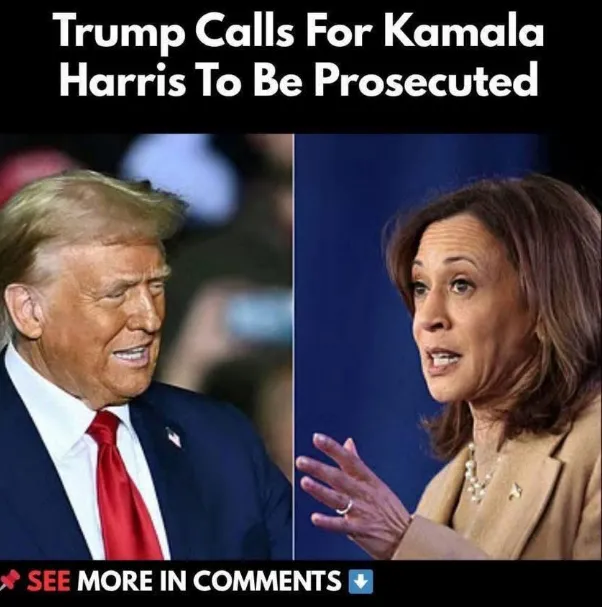
Los Angeles, July 2025 — Vice President Kamala Harris is once again at the center of speculation over her political future, following striking comments made by her longtime political mentor — and former romantic partner — Willie Brown, the ex-mayor of San Francisco.
Brown, now 91, remains an influential voice in California Democratic politics despite having left public office more than two decades ago. In a recent interview with podcaster Jon Slavet, the former mayor offered a blunt assessment of Harris’s career trajectory, suggesting that her next move might not include a run for governor — and perhaps should not.
Brown’s Surprising Admission
In a clip from the interview that has circulated widely, Brown did not mince words about Harris’s potential future in California politics.
“She may not want to run for governor of the state of California. That may not be where she should be going,” Brown told Slavet. “I think it’s going to be difficult for her to win that job.”
For Harris — who has served as a district attorney, attorney general of California, U.S. senator, and vice president — the comments land as both a personal and political jolt. Coming from someone who has been both a mentor and, decades ago, a romantic partner, Brown’s remarks carry more weight than the average pundit’s speculation.
A Mentor’s Perspective
Slavet, recounting his discussion with Brown during an appearance on Los Angeles anchor Elex Michaelson’s program, described the elder statesman as still sharp and candid at his advanced age.
“First of all, kudos to Willie — age 91, still going strong, still sharp. I mean, I think that’s amazing,” Slavet said. “He, in effect, said he doesn’t think governor is a fit for her.”
According to Slavet, Brown praised Harris’s background in the legal world but expressed doubts about her effectiveness as an executive leader.
“He talked about her strengths in the legal world, but not as an executive, which to me was pretty stunning because this is a guy who knows her very well,” Slavet noted. “He’s a legend in Democratic politics, right? He’s been a mentor to Kamala. And he actually cares about the future of California authentically, and he in effect said she should try something different.”
The Attorney General “What-If”
One of the more intriguing revelations from Brown was his claim that he had advised Harris against accepting the vice presidency when Joe Biden offered her the slot on his 2020 ticket.
According to Slavet, Brown chuckled as he recounted the moment. “He said, ‘I got in trouble for this when I said it.’ But what he told me is that when she was one of the final five and Biden was reviewing the final candidates, he recommended to her that she ask Biden to nominate her as attorney general instead.”
The reasoning, Brown reportedly explained, was simple: Harris’s skills as a prosecutor and legal strategist would shine in the role of the nation’s top law enforcement officer, while the vice presidency — a position often defined by its lack of clear responsibilities — risked diluting her political brand.
“She’s better in the legal world than as an executive,” Brown believed, according to Slavet.
A Complicated Relationship
Brown’s commentary is particularly striking given his personal history with Harris. The two were romantically linked in the mid-1990s, when Brown was speaker of the California State Assembly and Harris was beginning her legal career. While critics have long suggested that Harris benefited politically from the connection, she has consistently pushed back against attempts to reduce her career to that relationship.
Still, Brown has remained a fixture in discussions of Harris’s political journey — sometimes as a defender, other times as a critic. His latest remarks fall somewhere in between, acknowledging her talents but questioning her long-term political strategy.
Harris’s Political Dilemmas
Harris faces a unique set of challenges as she looks ahead. Her tenure as vice president has been marked by both historic firsts — as the first woman and the first person of both Black and South Asian descent to hold the office — and persistent criticisms.
Polling throughout Biden’s presidency often showed Harris with approval ratings lower than the president’s, a vulnerability that has dogged her since entering national office. Critics point to uneven messaging, high-profile missteps, and a perception that she has struggled to define her role within the administration.
Those weaknesses, Brown seemed to suggest, would make a run for California governor a risky move. Despite being Harris’s home state, California’s politics are notoriously complex, with fierce intra-party rivalries and an electorate that can be both deeply liberal and sharply pragmatic.
“She’d be walking into a hornet’s nest,” one California political strategist, who requested anonymity, said when asked about Brown’s comments. “There are already ambitious Democrats lining up for 2026 and beyond. Running for governor is not the safe bet some people think it is.”
Looking Beyond Sacramento
If Brown is correct that Harris should not pursue the governorship, the question becomes: what next?
Some observers believe Harris could still seek a return to the Senate, though that would require waiting for an opening in one of California’s seats. Others speculate she may angle for a Cabinet position in a future Democratic administration, particularly in the Justice Department, where her legal background would be most relevant.
There is also the possibility that Harris could position herself for another presidential run. While her 2020 campaign fizzled early, some allies believe her national profile as vice president gives her a stronger foundation should she try again in the future. Brown’s comments, however, cast doubt on whether such a move would play to her strengths.
Brown’s Legacy and Harris’s Future
At 91, Willie Brown has nothing to lose by speaking bluntly. Known for decades as a kingmaker in California politics, his reputation for savvy maneuvering remains intact. Whether his latest advice proves prescient or not, it underscores the uncertainty surrounding Harris’s political future.
For Harris, the stakes are high. After serving as vice president — one of the pinnacles of American politics — any step down could be seen as a setback. Yet Brown’s words serve as a reminder that ambition must be balanced with strategy, and that even a resume as trailblazing as hers does not guarantee success in every arena.
Conclusion
Kamala Harris stands at a crossroads. Her vice presidency cemented her place in history, but the path forward is far less clear. Should she heed her mentor’s advice and return to her legal roots? Or should she defy the doubts and pursue executive leadership in California or beyond?
What is certain is that her next move will be closely watched — not just by voters and pundits, but by her former mentor, who still seems invested in shaping the trajectory of a woman he once guided into the political spotlight.
As Brown himself put it: “She may not want to run for governor. That may not be where she should be going.”
The United States Senate voted Tuesday to confirm Anne-Leigh Gaylord Moe, President Donald Trump’s nominee to serve as a U.S. District Judge for the Middle District of Florida. The confirmation passed narrowly by a vote of 53–46, marking another judicial victory for the Trump administration as it continues to shape the federal courts.
A Milestone in Trump’s Judicial Agenda
President Trump has placed a strong emphasis on judicial appointments during his time in office, continuing a strategy that began during his first term. The confirmation of Anne-Leigh Moe further solidifies his influence over the federal judiciary, particularly in a key swing state like Florida.
Trump celebrated the Senate’s decision with a post on Truth Social, describing Moe as a strong and principled advocate for law and order.
“I am pleased to announce the confirmation of Anne-Leigh Gaylord Moe to the United States District Court for the Middle District of Florida,” the president wrote. “Anne-Leigh has fiercely served the people of Florida as a Judge on the Second District Court of Appeal and as a Trial Judge in the Thirteenth Judicial Circuit. She will uphold LAW AND ORDER, unlike activist judges who put the safety of illegal criminals over the safety of Americans. Congratulations Anne-Leigh!”
The appointment was met with applause from Republican lawmakers who have championed Trump’s judicial selections as part of a broader effort to install conservative judges committed to strict constitutional interpretation and limited judicial activism.
Moe’s Legal and Judicial Background
Judge Moe brings more than two decades of experience to the federal bench. She has served on Florida’s Second District Court of Appeal since 2022 and previously spent nearly a decade as a circuit judge in Florida’s Thirteenth Judicial Circuit, which includes Hillsborough County — one of the largest and most diverse jurisdictions in the state.
Before becoming a judge, Moe worked as an Assistant State Attorney in Tampa, where she built a reputation for handling complex criminal prosecutions and advocating for victims’ rights.
Legal colleagues have described her as a fair-minded jurist with a meticulous approach to the law. Supporters within the Florida legal community noted that Moe’s courtroom demeanor and strong adherence to due process made her a respected figure in the state’s judiciary.
“Judge Moe has shown a consistent commitment to justice and integrity,” said Gregory Townsend, a former colleague who served with her on the Thirteenth Circuit. “She applies the law as written, not as she wishes it to be, and that’s exactly what the federal bench needs.”
A Narrow but Significant Senate Vote
The 53–46 Senate vote reflected the growing partisan divide over judicial nominations. All Republicans present voted in favor of the confirmation, while nearly all Democrats opposed it, citing concerns over Moe’s conservative record and her past rulings in criminal cases.
Democratic senators argued that Moe’s judicial philosophy aligns too closely with the Trump administration’s hardline approach to immigration and criminal sentencing. However, Republicans dismissed those criticisms as politically motivated.
“Judge Moe has an exemplary record,” said Senator Lindsey Graham (R-SC), a member of the Senate Judiciary Committee. “She understands the Constitution, she respects the separation of powers, and she’s committed to applying the law fairly. That’s exactly the kind of judge the American people deserve.”
The confirmation marks the fifth Trump nominee approved by the Senate since the start of his second term, reflecting the administration’s ongoing effort to fill long-standing vacancies within the federal judiciary.
A Continuing Shift in the Federal Courts
Anne-Leigh Moe’s confirmation adds to the growing number of federal judges appointed by Trump, whose selections are gradually reshaping the ideological balance of the courts.
During his first term, Trump successfully appointed three Supreme Court justices, over 50 appellate judges, and more than 200 district court judges, leaving an enduring impact on the federal judiciary. His administration has signaled that judicial appointments remain one of its highest priorities, viewing the courts as a key arena for upholding conservative legal principles.
“President Trump’s judicial nominees have been instrumental in restoring balance to the courts,” said Senator Mitch McConnell (R-KY), who praised the Senate for moving forward with the confirmation. “We’re ensuring that our judges follow the Constitution and the rule of law — not partisan ideology.”
The Middle District of Florida, where Moe will serve, handles a wide range of cases — from immigration and healthcare disputes to civil rights claims and criminal prosecutions. The district includes major cities such as Tampa, Orlando, and Jacksonville, making it one of the busiest federal courts in the country.
Reactions From Both Sides
While Republican leaders celebrated Moe’s confirmation as another victory for Trump’s judicial agenda, Democrats and progressive advocacy groups criticized the decision, warning that her appointment could shift key legal rulings in the years ahead.
“This is yet another example of the administration pushing through partisan nominees to cement its control over the courts,” said Senator Richard Blumenthal (D-CT). “Judge Moe’s record raises serious questions about her willingness to protect civil rights and uphold the Constitution for all Americans.”
Progressive organizations echoed similar concerns, citing Moe’s history of siding with law enforcement in criminal cases and her strict interpretation of procedural law.
Meanwhile, conservative groups hailed her confirmation as a win for judicial restraint. The Federalist Society, a network of conservative lawyers and legal scholars, issued a statement praising Moe’s “commitment to textualism and the rule of law.”
Trump’s Response to the Shutdown Debate
Moe’s confirmation came amid broader political tensions in Washington, with the federal government still partially shut down due to budget disputes between the White House and congressional Democrats. Despite the ongoing standoff, analysts say the confirmation vote highlights the administration’s determination to keep advancing its judicial priorities.
CNN political analyst Harry Enten noted that, unlike during the 2018–2019 shutdown, Trump’s approval ratings have remained relatively stable this time around.
“In the previous shutdown, Trump’s approval dropped three percentage points within a few weeks,” Enten said. “This time, despite the gridlock, his support appears to be holding steady — especially among Republican voters.”
Political observers believe that the steady pace of judicial confirmations is helping maintain Trump’s support base by demonstrating continued progress on campaign promises, even amid legislative stalemates.
What Comes Next
With Moe’s confirmation, the Trump administration has filled yet another key judicial vacancy — part of an effort to ensure that conservative judges are positioned across the federal bench for decades to come.
Moe is expected to assume her duties on the Middle District Court later this month, where she will preside over both civil and criminal cases. Her appointment will likely have immediate implications for ongoing disputes in Florida related to immigration enforcement, business regulation, and constitutional rights.
Legal analysts suggest that her rulings will be closely watched, not only because of her conservative judicial approach but also due to the political significance of the region she serves.
“The Middle District of Florida often sets precedents that influence other jurisdictions,” said Dr. Elaine Matthews, a legal scholar at the University of Miami. “Judge Moe’s decisions will help shape how federal law is interpreted in some of the country’s most contentious policy areas.”
Conclusion
The Senate’s confirmation of Anne-Leigh Gaylord Moe represents another defining moment in President Trump’s ongoing effort to remake the federal judiciary.
Her record as a Florida appellate and circuit judge reflects a firm commitment to law enforcement and a strict interpretation of the Constitution — traits that earned her praise from conservatives and criticism from progressives.
As Judge Moe prepares to take her seat on the federal bench, her rulings will likely influence key legal and political debates in the years ahead, reinforcing the Trump administration’s legacy of reshaping the judiciary through appointments that could define American law for a generation.