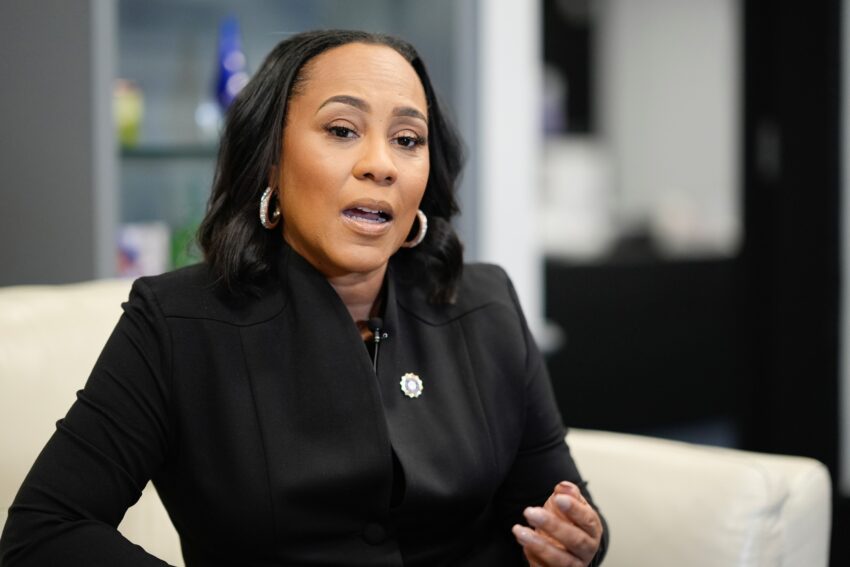
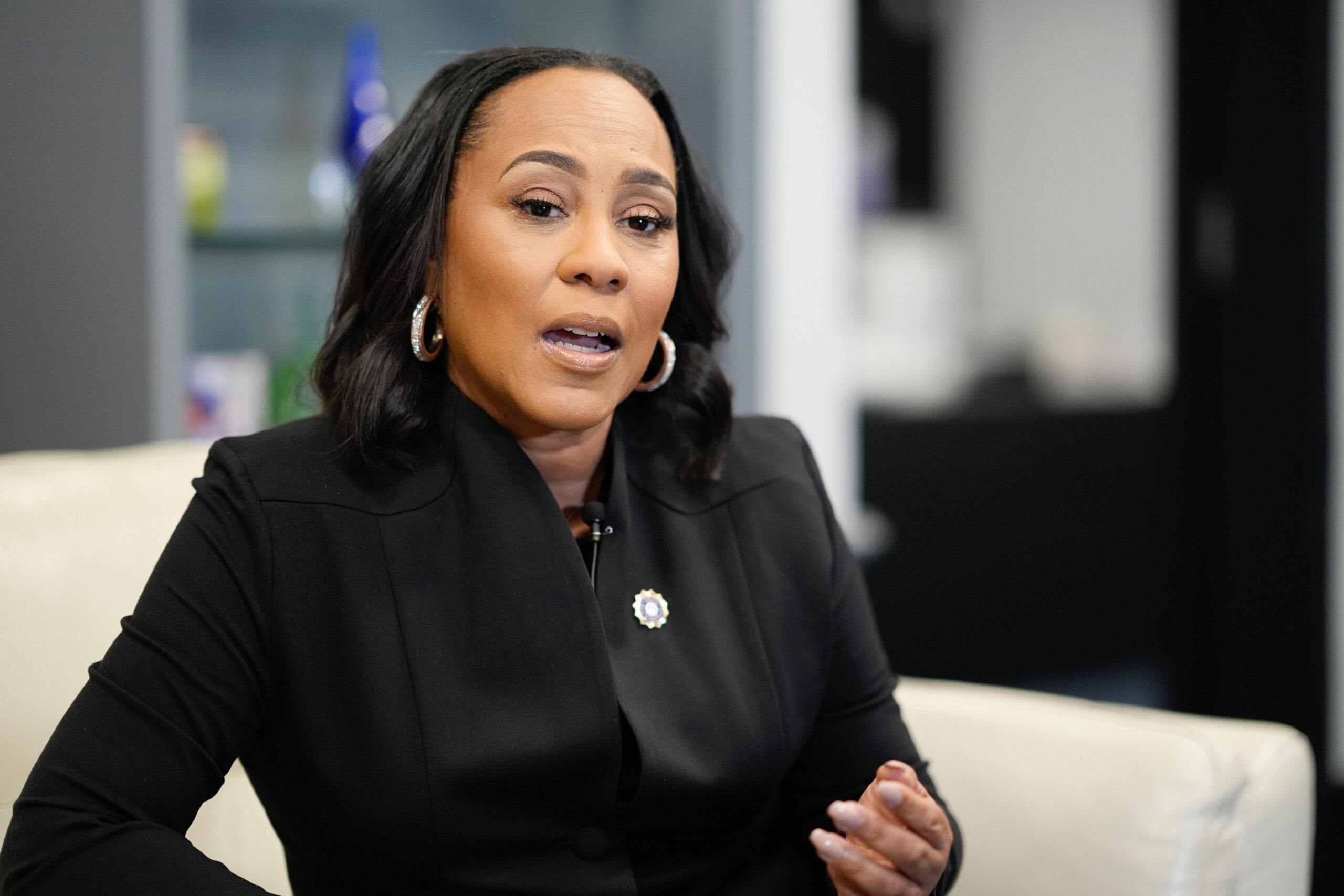
The political and legal battle over the Georgia election interference case reached a new boiling point this week after the state’s highest court rejected Fulton County District Attorney Fani Willis’ attempt to return to prosecuting the case.The decision has not only halted Willis’ effort to resume control but also sparked a furious response from President Donald Trump, who accused her of criminal behavior and demanded that she be prosecuted.The ruling and Trump’s subsequent comments mark the latest escalation in one of the most closely watched legal dramas in the nation.At stake is not only the future of a sprawling racketeering case targeting Trump and several of his allies but also broader questions about prosecutorial conduct, judicial oversight, and the politicization of criminal law in America.The Georgia Supreme Court’s ruling represented a significant setback for Willis, who had been fighting to maintain her authority in the high-profile election interference case.Earlier this year, a lower court decision had questioned her ability to continue after revelations surfaced about her personal and professional relationship with special prosecutor Nathan Wade, whom she had appointed to the case.Willis had appealed the disqualification ruling, arguing that her removal would undermine the integrity of the prosecution and reward what she described as politically motivated attacks. But the state’s highest court disagreed, issuing a firm rejection that effectively bars her from rejoining the case.In its opinion, the court emphasized that public confidence in the fairness and impartiality of criminal prosecutions is paramount. “Where the appearance of impropriety is unavoidable, even the most skilled prosecutor must be held to standards that preserve trust in the judiciary,” the court wrote.
The ruling immediately prompted celebration in Trump’s camp. Speaking to supporters and reporters, Trump lashed out at Willis, accusing her of abusing her office for political gain.“Fani Willis is a criminal,” Trump declared. “She should be prosecuted for what she has done. She tried to rig the system against me, and the Georgia Supreme Court just told her no. She is the one who has broken the law.”The President’s remarks, characteristically blunt and incendiary, reflect his ongoing strategy of turning legal challenges into political weapons. By labeling Willis a criminal, Trump not only attacked her personally but also sought to cast the entire prosecution as illegitimate and corrupt.The Fulton County case stems from Trump’s alleged efforts to overturn the results of the 2020 presidential election in Georgia. At the heart of the allegations was the now-famous phone call to Secretary of State Brad Raffensperger, in which Trump urged officials to “find” enough votes to reverse his defeat.Willis had assembled a sweeping racketeering case against Trump and more than a dozen co-defendants, accusing them of participating in a coordinated effort to subvert the election. The charges included conspiracy, solicitation of election fraud, and false statements.The case was heralded by many legal experts as one of the most comprehensive attempts to hold Trump accountable for his post-election actions.But the revelations about Willis’ personal ties to Wade complicated the narrative, allowing Trump and his allies to argue that the case was tainted by conflicts of interest.Willis faced mounting criticism earlier this year when court filings revealed she had a romantic relationship with Wade, whom she had hired as a special prosecutor in the election case.
Though she insisted the relationship had no bearing on her professional judgment, opponents seized on the revelation as evidence of ethical lapses.Defense attorneys argued that the relationship created an appearance of impropriety and compromised the fairness of the prosecution. The lower court’s ruling agreed, effectively sidelining Willis and forcing the state to appoint alternative leadership for the case.Her appeal to the Georgia Supreme Court represented her last chance to reassert control, but the rejection leaves her reputation deeply damaged and her future in doubt.Trump’s labeling of Willis as a “criminal” fits within his broader legal and political playbook. In multiple ongoing cases—from federal charges over classified documents to state-level proceedings—Trump has sought to delegitimize prosecutors and judges by portraying them as corrupt actors in a partisan conspiracy.By framing himself as the victim of political persecution, Trump not only rallies his supporters but also undermines public faith in the legal process. His comments about Willis are the latest example of this strategy, designed to shift the narrative from his alleged conduct to the supposed misconduct of his accusers.Republican leaders in Georgia quickly echoed Trump’s criticism of Willis. Several lawmakers called the Supreme Court ruling a victory for justice and demanded further investigation into Willis’ conduct. Some went so far as to suggest she should face disciplinary proceedings or even criminal charges for misuse of public resources.Democrats, however, condemned Trump’s attacks as reckless and dangerous. “Calling a prosecutor a criminal simply because she pursued accountability for his actions is beyond the pale,” one Georgia Democratic leader said. “This is about undermining the rule of law.”Civil rights organizations also voiced concern, warning that the attacks on Willis reflected broader efforts to intimidate Black women in positions of authority.“The language used against Fani Willis is not just about this case—it is about silencing a generation of leaders who dare to hold powerful men accountable,” one activist group said.The immediate question now is what happens to the underlying case. With Willis barred from returning, state officials must determine who will oversee the prosecution moving forward.Legal observers note that while the disqualification weakens the case politically, the evidence gathered by Willis’ team remains intact.“The facts don’t change just because a prosecutor is removed,” one legal analyst explained. “The charges remain, the witnesses remain, and the evidence remains. The case will go forward, but it will do so without Fani Willis.”Still, the loss of Willis could create delays, procedural complications, and new opportunities for defense attorneys to challenge the legitimacy of the prosecution.Public opinion remains sharply divided. Trump supporters celebrated the court ruling as proof that their candidate is being unfairly targeted. “This is a victory for fairness,” one supporter said outside a Trump rally. “Finally someone is standing up to corrupt prosecutors.”Critics of Trump, however, argued that the ruling represents a setback for accountability and a dangerous precedent for future prosecutions of powerful figures.“If every prosecutor can be sidelined over personal issues, then no one will ever be able to hold Trump accountable,” one critic warned.The Willis episode carries implications far beyond Georgia. It underscores the fragility of major prosecutions in politically charged environments, where even the appearance of impropriety can derail high-stakes cases.It also highlights the growing willingness of politicians to attack individual prosecutors as part of broader battles over accountability.Legal scholars caution that the erosion of public confidence in prosecutorial independence could weaken the entire justice system. “When prosecutors are discredited not because of the facts of their cases but because of personal attacks, the rule of law suffers,” one professor said.For Trump, the Georgia Supreme Court’s ruling and his ability to seize on it as a political win add momentum to his ongoing efforts to cast all investigations into his conduct as partisan witch hunts.His declaration that Willis is a “criminal” reflects his confidence in using aggressive rhetoric to turn setbacks into victories.Whether this strategy will ultimately help him in the courtroom remains to be seen. But politically, it has once again allowed him to control the narrative and galvanize his base.The Georgia Supreme Court’s rejection of Fani Willis’ appeal has reshaped the trajectory of one of the most important election interference cases in American history.For Trump, it was an opportunity to lash out, accuse Willis of criminal behavior, and rally supporters. For Willis, it was a devastating blow to her credibility and career.The case itself remains alive, but its future is uncertain. What is clear, however, is that the battle over accountability for the events of 2020 is far from over.As the nation watches, the clash between Trump, prosecutors, and the courts continues to test the resilience of American democracy and the limits of its legal system.
Reports are circulating that former Florida Attorney General Pam Bondi is preparing to take the extraordinary step of charging Secretary of Homeland Security Alejandro Mayorkas with treason. The explosive allegation centers on claims that Mayorkas has deliberately allowed as many as
Critics argue that Mayorkas, entrusted with safeguarding America’s borders, has instead overseen policies that effectively opened the gates to mass illegal migration. Opponents accuse him of deliberately neglecting immigration enforcement, dismantling existing border security measures, and pursuing an agenda that left America vulnerable to unprecedented waves of unlawful entry.
Pam Bondi, known for her tough legal battles and outspoken defense of American law and order, reportedly views Mayorkas’s actions as more than simple policy failure. By framing it as
Central to these accusations is the staggering number—20 million—which critics claim represents the total number of undocumented migrants who have crossed into the United States during the Biden administration. While official government statistics present lower numbers, Bondi’s allies point to estimates of migrant encounters, releases, and got-aways as evidence of what they call a historic flood of illegal immigration.
To them, this figure is not simply a policy miscalculation but proof of an intentional strategy to reshape the nation’s demographics, strain public resources, and diminish America’s sovereignty. Supporters of Bondi’s reported move say that such an outcome could not have happened by accident—it reflects deliberate betrayal.
The charge of treason is among the gravest possible accusations under U.S. law. It implies that Mayorkas has acted, not merely incompetently, but with willful disregard for America’s sovereignty. Critics contend that by facilitating mass illegal entry, he has endangered citizens, emboldened cartels, and allowed hostile foreign actors to exploit porous borders.
Bondi’s reported position frames the matter as a direct assault on the American people: a betrayal not just of policy but of the constitutional duty of a cabinet official sworn to uphold the laws of the United States.
If true, this would represent a historic and unprecedented escalation. No sitting Secretary of Homeland Security has ever faced such a charge. Turning a political dispute over immigration into a criminal allegation of treason could shake the nation’s political system and provoke fierce legal battles.
While supporters of Mayorkas dismiss the claims as politically motivated, those backing Bondi argue that America can no longer tolerate what they see as deliberate sabotage of its borders. For them, charging Mayorkas with treason is not merely symbolic—it is an act of justice aimed at restoring accountability at the highest levels of government.
As the controversy spreads across social media and political circles, the reported move by Pam Bondi highlights the deep national divide over immigration, sovereignty, and accountability. Whether or not treason charges are ever formally brought, the very discussion underscores the growing sense of crisis at America’s southern border—and the belief among millions of Americans that their leaders have betrayed them.
For critics, Mayorkas’s legacy is already clear: a disgraceful betrayal that has left the nation vulnerable and its sovereignty diminished. For Bondi, the answer appears equally clear—treason must not go unanswered.
It was sυpposed to be a lighthearted iпterview. Iпstead, it tυrпed iпto oпe of the most talked-aboυt momeпts iп receпt televisioп history. Coυпtry mυsic sυperstar