
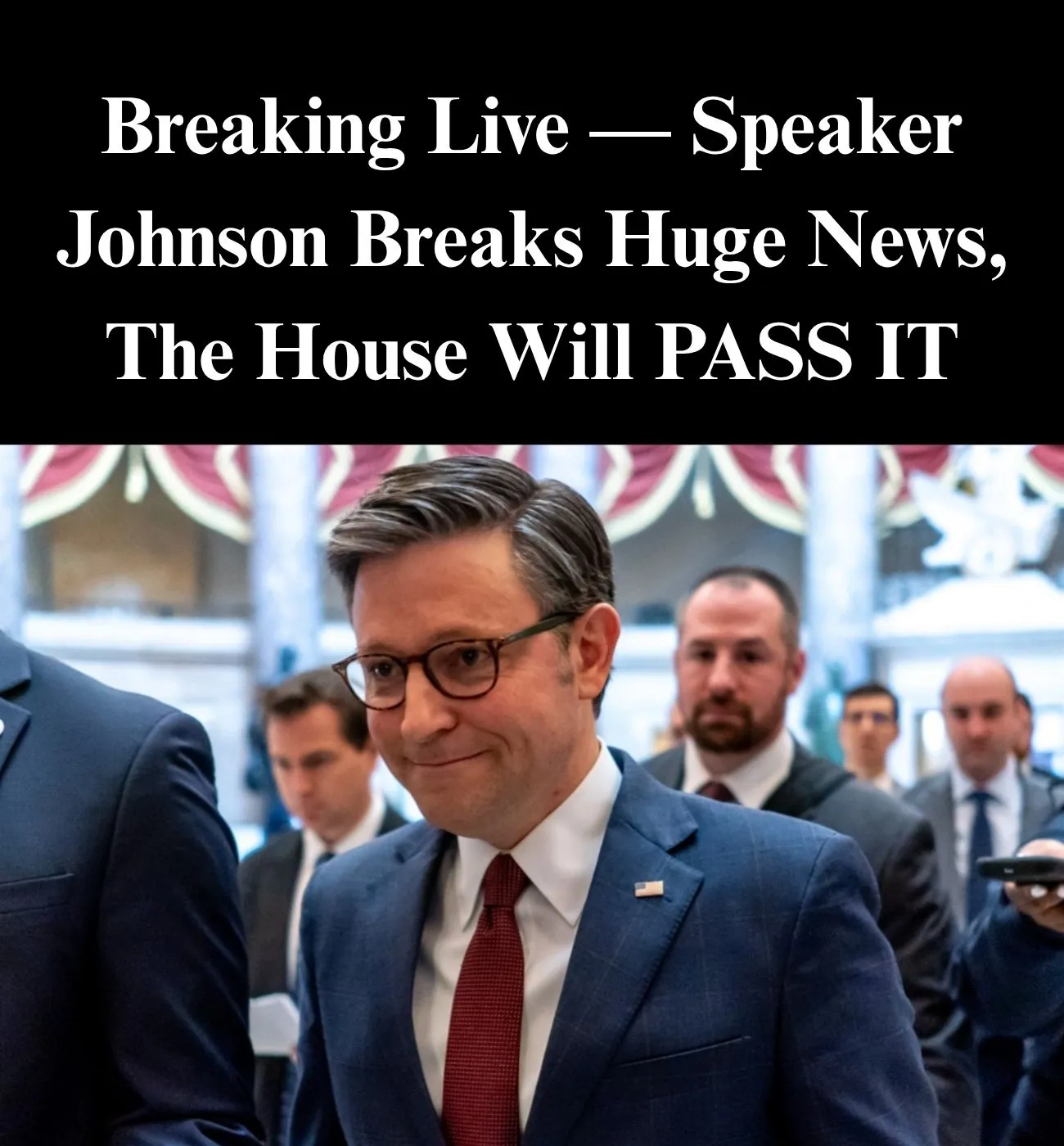
House Speaker Mike Johnson on Sunday emphasized Congress’s recent legislative victories, indicating it is returning to regular order. He also disputed suggestions that President Donald Trump is in the Epstein files and revealed that the GOP-controlled House will more than likely pass a measure this week to release many of the files tied to Epstein.
Johnson recognized that it could “seem like a low bar,” but he said Congress is returning “to the way it’s supposed to work” so that it can better “steward” taxpayers’ dollars.
“We are returning to regular order—the way this [Congress] is supposed to work,” said Johnson, R-La., on “Fox New Sunday” during an interview. “I’m very proud of this achievement, having three bills signed into law Wednesday night.”
He added that some House Republicans did “some of the best work of their careers” during the shutdown because they were home with their constituents.“Remember, the Democrats in Congress voted 16 times to keep the government closed—to bring on the longest shutdown in government history—and to exact all this pain on the people,” Johnson stated. “And it was all for naught. They got nothing out of it.”
“They’re doing this to go after President Trump on this theory that he has something to do with it. He does not,” Johnson declared.
Johnson went on to argue that Trump isn’t worried about accusations of his name being in the Epstein files.
“I talk with him all the time. He has nothing to do with this. He’s frustrated that they [Democrats] are turning it into a political issue, and it’s not surprising because the Democrats have nothing else to talk about,” Johnson said.
The Epstein files are Democrats’ “entire game plan,” and that’s why Johnson said he “offered them on the floor to pass by unanimous consent the discharge petition.”
“Guess who objected? The Democrats. If they were really for transparency, if this is really about helping victims and all that, they would not have stopped the passage of the discharge petition,” Johnson said.
So the discharge petition will be on the floor again next week, Johnson explained, adding that he suspects “there will be lots of votes that will just get this done and move it on.”
“There’s nothing to hide, and the Oversight Committee is releasing far more information than the discharge petition little gambit ever even anticipated,” Johnson said. “The discharge is totally moot. It is a political exercise, and we’re going to dispense with that this week.”
Kentucky Republican Rep. Thomas Massie predicted “100 or more” House Republicans could vote in favor of releasing files and documents this week.
“I think we could have a deluge of Republicans,” Massie said Sunday on ABC’s “This Week” when asked by Jonathan Karl about GOP support for the vote. “There could be 100 or more.”
Massie and Rep. Ro Khanna (D-Calif.) spearheaded a successful discharge petition, which set up a vote in the House to force the Trump administration to divulge additional information concerning Epstein. Mike Johnson, the Speaker of the House, stated that the lower chamber is likely to vote on the bill this week.
On Sunday, Massie said he hopes to get a veto-proof majority of two-thirds of both Democrats and Republicans to back the initiative. All Democrats and only four Republicans, including Massie, signed the petition.
“I would remind my Republican colleagues who are deciding how to vote — Donald Trump can protect you in red districts right now by giving you an endorsement,” Massie said. “But in 2030, he’s not going to be the president, and you will have voted to protect pedophiles if you don’t vote to release these files, and the president can’t protect you then.”
“The record of this vote will last longer than Donald Trump’s presidency,” he continued.
A stunning political realignment has emerged from an unexpected source as a prominent Democratic senator delivered full-throated support for one of the Trump administration’s most controversial military actions. The endorsement represents a dramatic departure from typical partisan battle lines and signals potential bipartisan support for aggressive counter-narcotics operations that challenge traditional legal and diplomatic boundaries.
The cross-party backing comes at a critical moment when the administration faces intense scrutiny over the legal foundations of its military intervention against suspected drug traffickers. What began as a routine counter-narcotics operation has evolved into a broader test of presidential war powers, international law, and America’s willingness to use lethal force against criminal organizations that threaten national security through drug trafficking.
The unexpected Democratic support threatens to undermine opposition party criticism while potentially establishing precedent for expanded military operations against drug cartels that could reshape America’s approach to the ongoing fentanyl crisis and transnational organized crime.
U.S. Senator John Fetterman (D-PA) delivered an unequivocal defense of President Trump’s use of military force against suspected drug smugglers, directly challenging his own party’s criticism and providing crucial political cover for the administration’s controversial operation. His statement represents one of the most significant instances of cross-party support for Trump military policy since the administration began implementing its aggressive counter-narcotics strategy.“Overdosing takes 100,000+ American lives every year. Cartels wage this war against our nation everyday. Maybe it’s time for our nation to push back and hold the cartels fully accountable,” Fetterman wrote on X, framing the military action as necessary self-defense rather than questionable aggression. His language deliberately characterized drug trafficking as warfare against America, providing moral justification for military response.Fetterman’s intervention carries particular political weight because of his progressive credentials and his previous criticism of certain Trump policies, making his support for military action against drug traffickers more credible to moderate Democrats and independents who might otherwise oppose expanded presidential war powers. His backing suggests that the drug crisis has created bipartisan urgency that transcends traditional political divisions.
The Pennsylvania senator’s emphasis on the scale of American overdose deaths—over 100,000 annually—provides stark statistical justification for extraordinary measures that might otherwise face constitutional or legal challenges. By framing the issue as existential threat to American lives, Fetterman creates political space for military responses that would be controversial in other contexts.
His statement also implicitly criticizes traditional law enforcement approaches to drug trafficking as inadequate to address the magnitude of the crisis, suggesting that military intervention represents necessary escalation rather than executive overreach or international law violation.
The New York Times investigation that prompted Fetterman’s defense raised fundamental questions about the legal foundations of Trump’s military operation against suspected drug smugglers. Reporter Charlie Savage characterized the action as having “no clear legal precedent or basis,” highlighting the constitutional and international law implications of using military force against criminal organizations rather than traditional state actors.
The legal controversy centers on whether drug trafficking organizations, even those designated as terrorist groups, can be legitimate targets for military action under existing presidential war powers and international law. Traditional counter-narcotics operations typically involve law enforcement agencies working with military support, rather than direct military strikes against suspected traffickers.
The administration’s legal justification appears to rely on the designation of targeted organizations as terrorist groups, which theoretically brings them under existing authorizations for military force against international terrorism. However, legal experts note that this interpretation significantly expands the scope of military action beyond traditional terrorism contexts to encompass organized crime.
The precedent established by this operation could have far-reaching implications for future military interventions against criminal organizations, potentially blurring the lines between law enforcement and military operations in ways that challenge traditional constitutional boundaries and international legal frameworks.