
As the federal government shutdown approaches its fourth week, pressure is mounting inside the Democratic Party to find a way out of the impasse that has left hundreds of thousands of federal employees unpaid and key social programs at risk of disruption.
The shutdown — now widely referred to by critics as the “Schumer Shutdown” — began after negotiations between congressional Democrats and Republicans collapsed over spending levels and border policy. What initially appeared to be a short-term standoff has turned into a prolonged test of endurance that is beginning to take a toll on both the economy and public opinion.
Mounting Pressure on Senate Democrats
According to a report from The Hill, Senate Democrats have quietly begun exploring off-ramps to end the stalemate without appearing to capitulate to Republican demands. Lawmakers and aides say the Democratic caucus is feeling the squeeze from multiple directions — federal workers, unions, and vulnerable constituents who are beginning to feel the economic strain.
One of the ideas under discussion involves supporting a Republican proposal to ensure federal employees — both essential and furloughed — receive paychecks while the government remains closed. While Democrats initially resisted piecemeal funding bills, the worsening political optics are forcing them to reconsider.
At the same time, Democratic leaders are drafting legislation to extend funding for critical social safety net programs, including the Supplemental Nutrition Assistance Program (SNAP) and the Special Supplemental Nutrition Program for Women, Infants, and Children (WIC). Without renewed funding, millions of low-income families could face interruptions in benefits within weeks.
A Senate Democratic aide told The Hill,
“We’re trying to make sure that the most vulnerable Americans don’t bear the brunt of Washington’s dysfunction. But we also need to protect the integrity of the broader funding negotiations.”
The Political Tide Turns
What makes this shutdown different from past ones is the shifting political perception among voters. In previous standoffs, Democrats often managed to frame the narrative around Republican obstruction. This time, however, polling data suggests the public is holding Democrats responsible for the gridlock.
A recent Rasmussen survey found that 54% of likely voters blame Senate Democrats for the ongoing shutdown, compared to 39% who fault Republicans. Independent voters, a key political bloc, also appear to be breaking against the majority party in the Senate.
Political analyst Caroline Bixby noted,
“In 2018 and 2019, Democrats successfully branded the shutdown as a result of President Trump’s immigration policies. This time, they control the Senate, and the public expects them to lead. It’s harder to point fingers when you’re the one steering the chamber.”
Republicans, meanwhile, have seized the opportunity to portray the standoff as a failure of leadership by Senate Majority Leader Chuck Schumer (D-NY). House Speaker Mike Johnson (R-LA) accused Democrats of “playing politics with paychecks,” saying his party had already passed multiple funding bills that Democrats refused to consider.
“We’ve done our job,” Johnson told reporters on Monday. “We’ve passed targeted funding measures for veterans, border security, and federal workers. The Senate could end this shutdown today if they chose to.”
Growing Frustration Among Federal Workers
Beyond Washington’s political posturing, the human cost of the shutdown is becoming increasingly visible. Tens of thousands of federal employees across the country are now entering their fourth week without pay, forcing some to turn to food banks, community organizations, and short-term loans.
The American Federation of Government Employees (AFGE), the largest federal workers’ union in the U.S., has been urging both parties to reach a compromise but has recently directed its frustration squarely at Senate Democrats.
AFGE National President Everett Kelley said in a statement,
“Federal workers are not bargaining chips. Our members deserve to be paid for the work they do, and this shutdown must end now. We are calling on Senate leadership to pass a clean continuing resolution.”
According to union data, nearly 800,000 workers have been affected by the shutdown, including employees at the Transportation Security Administration (TSA), Environmental Protection Agency (EPA), and Department of Agriculture (USDA). With back pay uncertain, morale is plummeting across agencies.
Programs for Families and Children at Risk
The economic ripple effects extend beyond federal employees. Programs like SNAP and WIC, which provide essential nutrition assistance to millions of Americans, are now on the verge of running out of funds.
A USDA official told reporters that benefit payments could be disrupted within two weeks if Congress fails to act. That could affect more than 7 million low-income women, infants, and children who rely on monthly food vouchers.
Senate Democrats are reportedly drafting legislation to extend funding for those programs, along with emergency provisions to keep school lunch programs operational. However, Republicans have argued that such targeted bills only prolong the broader stalemate.
“Democrats want to patch up their political problem with temporary fixes,” said Sen. John Thune (R-SD). “The responsible approach is to reopen the government completely and negotiate a full-year budget that controls spending.”
Schumer’s Balancing Act
For Majority Leader Schumer, the political calculus is complex. He faces competing pressures — from progressives urging him to hold firm on social spending and border policy, and from moderates anxious about the growing political fallout.
Behind closed doors, Senate aides describe a divided Democratic caucus. Some senators representing swing states, such as Jon Tester (D-MT) and Sherrod Brown (D-OH), have privately expressed concern that the shutdown could damage their reelection prospects if it continues into November.
One Democratic strategist, speaking anonymously, admitted:
“The polling is bad, and the narrative is slipping away. The longer this goes on, the harder it will be to recover politically. Schumer needs a win — or at least an exit ramp that doesn’t look like surrender.”
Republicans Sensing Momentum
Republicans, sensing political momentum, are showing little appetite to compromise. They have framed the shutdown as part of a broader debate over government spending and fiscal discipline, emphasizing the need to reduce the deficit and secure the border.
Senate Minority Leader Mitch McConnell (R-KY) said,
“Democrats created this crisis by refusing to accept even modest spending reforms. They’re trying to spend their way out of every problem, and the American people are tired of it.”
House Republicans, meanwhile, have continued to pass smaller funding packages that would reopen parts of the government, effectively forcing Democrats to vote against measures to pay federal employees, veterans, and active-duty military personnel — votes that have been used to paint Democrats as obstructionist.
Economic Costs Rising
Economists warn that if the shutdown extends into next month, it could begin to slow GDP growth and undermine investor confidence. A report by Moody’s Analytics estimated that each week of the shutdown could shave 0.1% off quarterly economic output.
With holiday travel approaching, disruptions in air traffic control, passport processing, and national park operations are likely to intensify. Small businesses dependent on federal contracts or tourism have already reported financial losses.
“Every day this continues, the pain spreads,” said economist Diane Swonk. “Shutdowns don’t just affect Washington — they ripple across local economies and household budgets.”
Looking Ahead
As the shutdown nears the one-month mark, Washington’s political theater shows no sign of resolution. Democrats are increasingly eager to change the narrative, but doing so without appearing to fold remains a delicate balancing act.
Insiders say behind-the-scenes discussions are ongoing, with both parties testing possible compromise frameworks — including short-term continuing resolutions or agreements on specific budget caps.
Still, without a breakthrough, Americans may be facing a second missed paycheck for federal employees and an increasingly frustrated electorate heading into the holiday season.
Political veteran Larry Sabato summed up the situation bluntly:
“Shutdowns are a political gamble. This one has gone on long enough that everyone’s losing — but some are losing faster than others.”
Inferno in Zhytomyr: Deadly Gas Station Explosion Sparks Grief—and Suspicion
Something felt wrong in Zhytomyr Oblast yesterday afternoon. The air was too still. The hum of everyday life—cars refueling, conversations drifting between pumps—was shattered in an instant.
A deafening explosion ripped through a local gas station, sending a towering fireball into the sky and plunging the region into panic.
What should have been a routine stop turned into a scene of devastation—and questions are now rising about whether this was truly an accident, or a symptom of deeper, systemic failure.
A Normal Day, Until It Wasn’t
It was just after 4:00 p.m. when the blast struck—peak refueling hours, when the station was at its busiest.
Witnesses described the earth shuddering beneath their feet, followed by screams, shouts, and flames leaping into the air like a volcanic eruption.
“It felt like the world was ending,” said one resident, still trembling hours after the incident.
Others ran from nearby shops and homes to see black smoke billowing above the treetops—a cloud of chaos that could be seen for miles.
Casualties and Chaos
The explosion claimed at least two lives and injured 15 more, several of whom remain in critical condition. Emergency responders were on the scene within minutes, facing a chaotic and dangerous situation:
Flames engulfing nearby vehicles
Gas lines threatening further explosions
Injured civilians sprawled on the ground, screaming for help
Paramedics raced to evacuate the wounded, while firefighters battled the inferno into the night.
Hospitals across the oblast launched urgent blood donation appeals, describing an overwhelming influx of patients with burns, trauma, and smoke inhalation.
What Went Wrong?
The exact cause remains under investigation.
Ukraine’s State Emergency Service has not ruled out a technical malfunction, but early speculation also points to the possibility of human error, faulty equipment, or neglected safety protocols.
Experts warn that many fuel stations across the region—especially those outside major cities—operate with outdated infrastructure and insufficient regulatory oversight.
This incident, they say, is not an outlier.
It’s a warning.
A Community in Mourning
As the flames died down, grief set in.
Residents gathered at the site late into the night—lighting candles, laying flowers, and whispering prayers for the victims. Social media flooded with images of soot-streaked skies and heartfelt messages of support from across Ukraine.
“We are with Zhytomyr,” read one post, shared thousands of times.
A Nation Reckons With Its Infrastructure
In the wake of the explosion, calls for reform are intensifying.
Activists, safety advocates, and even local officials are demanding:
Stricter fuel station inspections
Mandatory infrastructure upgrades
Criminal accountability for safety violations
“We can’t keep calling these accidents,” said one civil safety expert. “They’re preventable failures.”
Conclusion: A Tragedy That Demands More Than Mourning
As smoke still lingers over Zhytomyr Oblast, recovery efforts are far from over. Families are grieving. Survivors are fighting for their lives. And an entire community is left to ask:
Could this have been stopped?
This was more than a tragic fire. It was a flashpoint—an alarm sounding across Ukraine’s aging infrastructure, warning that unless action is taken, it won’t be the last.
The time for reform is now—before another ordinary day becomes a headline soaked in ash and sorrow.
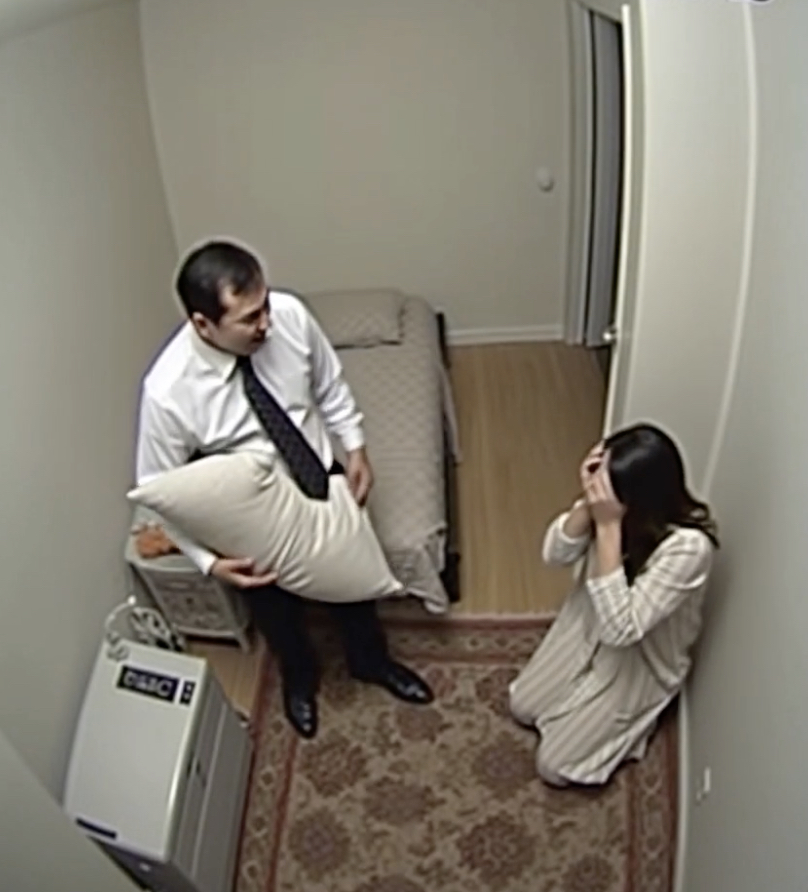 Inside the pillow, nestled amidst the worn stuffing, was a small, intricately carved wooden box. My hands trembled as I pulled it out. How had I not noticed this before? The box was polished to a shine, its surface smooth despite a few nicks and scratches that spoke of age and use. It was locked with a tiny brass latch, which opened easily with a gentle push.
Curiosity getting the better of me, I opened the box. Inside, I discovered a collection of yellowed, folded letters tied with a faded red ribbon. Each envelope was addressed to me, dated before our marriage, during the time when Héctor and I were just two young souls who thought they had found love.
My heart ached as I realized these were the love letters we had exchanged, back when every word seemed like a promise of forever. I gently took one out and unfolded it, the familiar handwriting bringing back memories. The words were filled with so much hope and dreams—dreams of traveling the world, of building a life together, of always being there for each other. I read through tears, each letter a reminder of the love that once burned brightly between us.
And beneath these letters, at the bottom of the box, was something else—a small, velvet pouch. Inside, to my astonishment, was the necklace that Héctor had given me on our first anniversary. I thought I had lost it years ago, and yet here it was, the tiny sapphire pendant gleaming faintly in the dim light of my room.
I sat back, overwhelmed by the surge of emotions. Why had Héctor kept these? Why hide them away in a pillow, only to jest about it on our final day as husband and wife? It was a mystery I couldn’t quite unravel. But maybe, just maybe, these items were a reminder to him too—a symbol of a time when love was simple and uncomplicated, before life chipped away at what we had.
The contents of that old pillow, the unexpected treasure trove of memories, made me reflect deeply. Perhaps Héctor wasn’t as indifferent as he seemed. Perhaps, in his own way, he too was clinging to a past that had long since disappeared, hidden beneath layers of resentment and unspoken words.
As I sat there with tears drying on my cheeks, I knew it was time to let go. Not just of the pain and disappointment, but of the regrets that I had carried with me. I carefully placed the letters and necklace back in the box, closed the lid, and set it on the small table beside my bed.
That night, as I lay my head on the now-empty pillow, I felt a strange sense of peace. The weight of the past had been lifted, and in its place, I felt a flicker of hope for the future. I knew the road ahead would be challenging, but I was determined to make my way through it, to find my own path and happiness.
Under-Construction Skybridge Collapses in City Center, Triggering Panic and Urgent Investigation
What was meant to symbolize progress and modern design turned to chaos on Thursday afternoon when a pedestrian skybridge under construction gave way, sending chunks of concrete and twisted steel raining down on one of the city’s busiest intersections.
The sudden collapse, which happened at around 2:30 PM, stunned bystanders and sent shockwaves through the downtown district.
Eyewitnesses Describe Seconds of Terror
Those nearby recall a split-second transition from normalcy to disaster. “There was this deafening crack, almost like an explosion,” said Sok Vanna, a motorbike taxi driver waiting at the lights. “I looked up and saw it bending, then crashing down. Everyone scattered—it was pure panic.”
Maria Santos, who runs a shop across the street, described the aftermath: “The street disappeared in a cloud of dust. The ground actually trembled. We’re just lucky this wasn’t rush hour, or we’d be talking about something far worse.”
Swift Emergency Response
Within minutes, police, firefighters, and medical crews had sealed off the area. Rescue teams, aided by search dogs, scoured the debris to ensure no one remained trapped beneath the rubble. Authorities confirmed multiple injuries among construction workers, most of whom were on break when the collapse occurred—likely preventing greater casualties. Several workers were treated at local hospitals for minor injuries and shock.
Investigation Underway
The firm overseeing the project, UrbanConnect Builders, issued a statement expressing “deep regret” and pledged to cooperate fully with investigators
A government-appointed panel of engineers and safety regulators has been tasked with determining what went wrong. Though early theories suggest a structural failure, officials have urged the public to avoid speculation until the investigation provides answers.
Safety Concerns Spark Debate
The skybridge, intended to link two major shopping centers and ease heavy pedestrian traffic, was nearly three-quarters complete and scheduled to open later this year. Instead, its collapse has cast a harsh spotlight on construction safety standards, oversight, and the pressures of rapid urban development. Public anger is already mounting, with many questioning whether shortcuts, flawed materials, or missed inspections may have contributed to the disaster.
Conclusion: A Wake-Up Call for Infrastructure Safety
As search and recovery efforts continue, the skybridge collapse stands as a sobering reminder that progress can come with hidden risks.
The incident not only disrupts a major infrastructure project but also ignites broader concerns about the integrity of construction practices and regulatory enforcement. Answers will come in time, but for now, the city remains shaken—and determined to demand accountability.
The final chapter of Liam Deane’s life is cloaked in shadows—rumors, unanswered questions, and eerie coincidences that refuse to fade.
Behind prison walls, whispers circulate that his death was no random outbreak of inmate violence, but the culmination of a silent code: a ruthless, unspoken pact among prisoners to exact vengeance on those guilty of crimes against children.
Others suspect something darker—a calculated act, perhaps even tacitly permitted by the very system meant to keep order. What truly transpired in those dim corridors may never fully come to light.
Liam Deane, just 22, from Wakefield, West Yorkshire, was convicted of a crime so harrowing it shook his community to its core: the murder of his newborn daughter, Luna, who was barely two days old.