
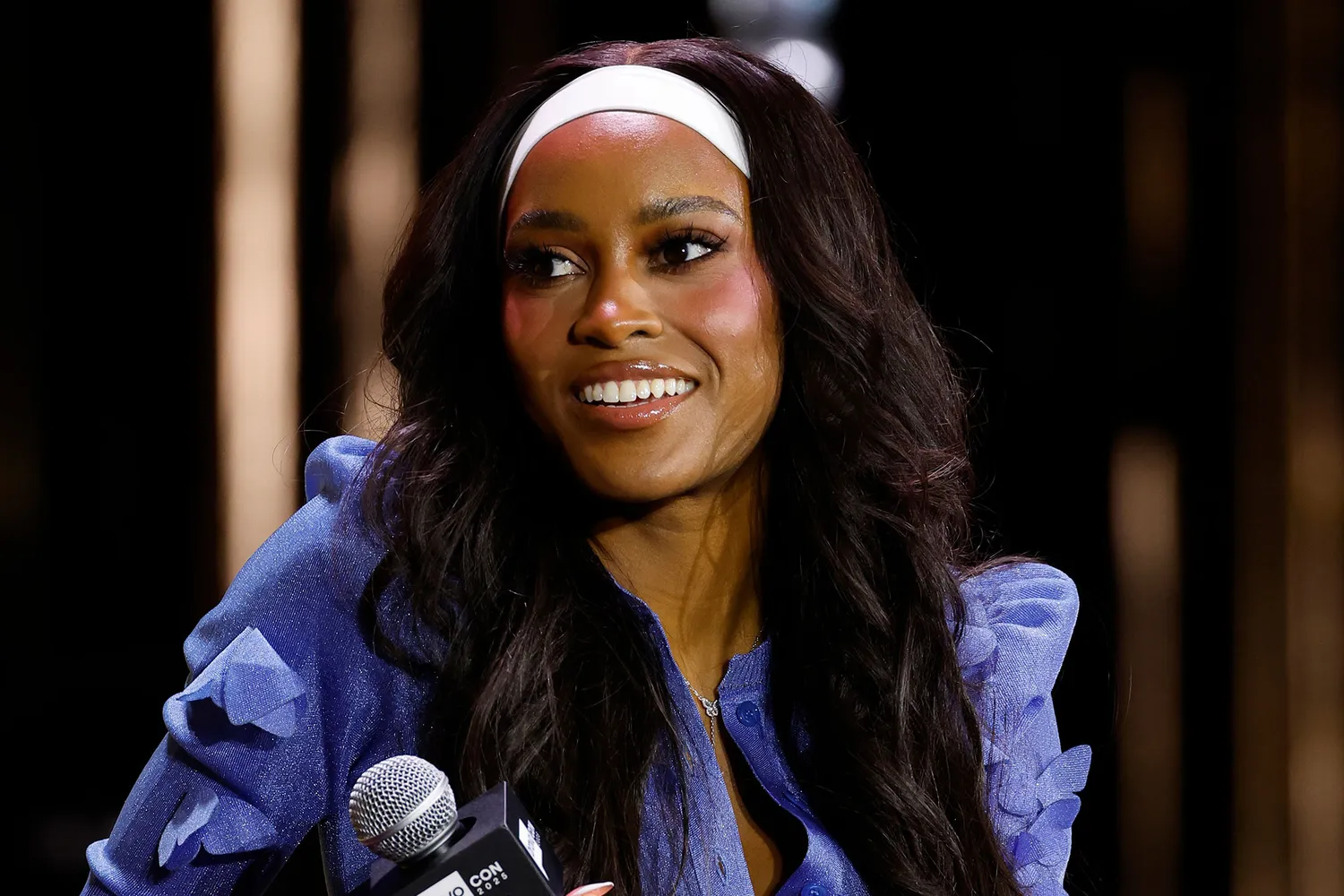
Ciara Miller and Amanda Batula are revealing some insight into the next season of Summer House — including a helpful change that took place while filming.
Miller, 29, and Batula, 34, caught up with PEOPLE at BravoCon 2025 in Las Vegas on Friday, Nov. 14, when Miller revealed what “made all the difference” for herself and her castmate while filming season 10 of the reality series.
“I feel like we have some great new people. I feel like we switched up the vibe a lot. We were on Prozac this summer,” Miller says, adding of the antidepressant, “It made all the difference. So we’re excited.”
Batula, who joined the Summer House cast in 2018’s season 2, also explained how things were different this time around: “I was up early, we were out late.”
Nicole Weingart/Bravo via Getty
Further teasing the new season, Batula adds: “It’s a wild ride, there’s emotion, there’s laughter, there’s anger, there’s fighting.”
Bravo teased the upcoming episodes of Summer House by playing a jousting-themed clip during the “Summer House Always Wins” panel at BravoCon on Saturday, Nov. 15.
During the panel, which featured Miller, Batula, Kyle Cooke, Lindsay Hubbard, Carl Radke, Jesse Solomon and West Wilson, Miller detailed her Prozac change, calling it “so much better for me.”
“The Prozac carried me through. I’m also looking for a Prozac partnership,” she said.
During the panel, Batula praised fans for their response to her sharing her mental health journey on the show, and thanked them for their support. “There’s no stigma behind mental health,” she said.
Among the major casting changes, season 10 marks the conclusion of Paige DeSorbo’s time on the show, as she announced via Instagram in June that she would not be back following her seven-season stint. Speaking on the exit during BravoCon, Miller called DeSorbo’s absence “so sad.”
“Me and Amanda looked at each other and we were like, ‘If I’m here, you have to be here,'” Miller, who joined the show during 2021’s season 5, recalled.
Miller also teased some “great new people” in the mix during the landmark season, wishing fans “good luck getting to know them.”
DeSorbo, 33, elaborated on why she decided to step away from the series in a September interview with Byrdie. “I just had this overwhelming sense that I couldn’t go back,” she said. “I know I would’ve been doing a disservice to [the show]. They accept a certain level of showing up, and I couldn’t give them that.”
DeSorbo also said it was scary to enter a new chapter in her life, admitting that she “definitely had to get over” fears that leaving the show meant the end of her career. “I am assimilating back into society,” she added.
Summer House is streaming now on Peacock. BravoCon 2025 continues through Sunday, Nov. 16 at Las Vegas’ Caesars Forum.
The Last of Us season 2 may have earned praise from critics, but among longtime fans of the video game, it sparked disappointment and debate. While season 1 was widely celebrated for its faithful, heartfelt adaptation of Naughty Dog’s acclaimed narrative, season 2 drifted from the game in ways that left the story feeling diluted, disjointed, and at times, unrecognizable. With season 3 expected to tackle the remainder of
One of the clearest criticisms comes from none other than Neil Druckmann himself. Though diplomatic in public statements about stepping away from the writers’ room, Druckmann subtly criticized the creative direction of season 2 in a recent interview, emphasizing his hope that season 3 will return to the “deeply faithful” spirit of season 1. Craig Mazin now faces the challenge of adapting the game without Druckmann or co-writer Halley Gross at his side — and restoring audience trust begins with honoring the source material.
Season 2’s biggest issue wasn’t simply deviation; it was deviation that undermined core themes. Expanding characters and backstories can elevate an adaptation — season 1’s beloved Bill and Frank episode proved that — but those expansions must reinforce the story, not contradict it. Season 2 often crossed that line, sometimes flattening emotional stakes rather than enriching them. Ellie’s softened arc, Owen and Mel’s sanitized tension, and the premature telegraphing of themes all weakened the morally complex world that defines
For season 3 to succeed, Mazin must resist the urge to oversimplify. Abby’s perspective in the game is built around her intelligence, discipline, and emotional control. Portraying her as reckless or naïve, as happened with Ellie’s characterization in season 2, would rob her arc of its power. Likewise, toning down the brutality — as the show previously did — risks erasing the moral ambiguity that makes both Abby and Ellie compelling antiheroes. Violence in
Equally crucial is subtlety. Season 2 suffered from heavy-handed dialogue that explained themes outright instead of trusting viewers to read body language, tension, and subtext. Relationships — whether hostile, tender, or complicated — must breathe naturally. In the game, characters like Mel and Abby contain layers: resentment simmering beneath cooperation, affection interrupted by bitterness. Season 3 must preserve this nuance rather than reducing interactions to constant conflict or constant exposition.
If Mazin can rediscover the balance of season 1 — faithful adaptation, thoughtful expansion, emotional precision — then season 3 has the potential to restore the show’s reputation and deliver the powerful, gut-wrenching narrative that made