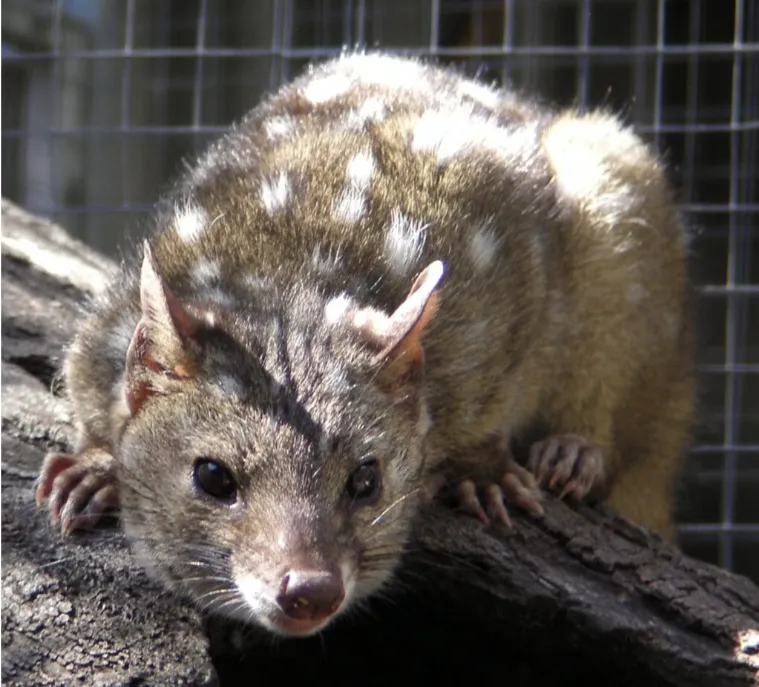
A small corner of Western Australia is celebrating a remarkable victory for wildlife conservation. Biologists at Mount Gibson Wildlife Sanctuary recently discovered a litter of baby western quolls—spiny, cat-sized marsupial carnivores—signaling a significant step in the revival of a species once on the brink of extinction.
Western quolls, also known as chuditchs, were historically widespread across Australia. Since the arrival of European settlers, however, their population has dwindled dramatically, confined today to only a few small groups in the southwest. Their decline not only threatened the species itself but also disrupted the ecological balance in the region. As nocturnal predators, western quolls play a vital role, helping regulate populations of birds, reptiles, and invertebrates.
For months, a dedicated team of researchers at the sanctuary has been working tirelessly to reintroduce the quolls to Mount Gibson, where they had disappeared entirely. Using careful monitoring and habitat preparation, the ecologists hoped that the reintroduced population would adapt and eventually thrive.
The discovery of the first pouch young has now confirmed their efforts are succeeding. “Through regular monitoring, we can see the quolls are doing well at the sanctuary and encountering the first pouch young is a positive sign that they have adjusted to the new environment,” said Georgina Anderson, Senior Field Ecologist with the Australian Wildlife Conservancy (AWC).
One particular quoll, affectionately named Aang, has quickly become a favorite among the research team. Often spotted on camera traps, Aang demonstrates a striking personality, traveling between multiple release sites, investigating chicken lures, and even disrupting bait canisters. Such behavior indicates that the animals are acclimating to their surroundings while maintaining their natural instincts.
This milestone is more than a simple count of offspring. For conservationists, it represents hope—a tangible success story that highlights the importance of careful intervention and habitat management in reversing the decline of endangered species. Baby quolls, with their tiny, spiky bodies, symbolize the resilience of life and the possibility of restoring ecosystems that were once disrupted.
The sanctuary’s achievement is part of a broader effort in Australia to save its unique wildlife. From habitat protection to predator control and breeding programs, these initiatives demonstrate that with patience and commitment, species once feared lost can reclaim their place in the wild.
Mount Gibson Wildlife Sanctuary, with its expansive bushland and carefully managed release sites, provides the perfect environment for these creatures to flourish. Biologists continue to track the quolls’ growth, ensuring they remain healthy and capable of sustaining a growing population.
As the first generation of quolls born at the sanctuary begins to explore their surroundings, conservationists are optimistic. Their survival sends a powerful message: even species teetering on the edge of extinction can be given a second chance when humans commit to protecting and nurturing them.
For now, the sanctuary celebrates these tiny spiky pioneers, knowing that each one represents not only hope for western quolls but also a reminder of the vital role humans can play in safeguarding the natural world.
CARLSON’S ACCUSATIONS
After Tucker Carlson claimed the FBI lied about the Donald Trump assassination attempt, the agency responded directly. Carlson questioned the FBI’s statements regarding suspect Thomas Crooks, suggesting the bureau misrepresented his digital footprint. Crooks, charged with attempting to kill Trump at a July campaign rally in Butler, Pennsylvania, ultimately only struck the president’s ear but killed 50-year-old firefighter Corey Comperatore. A Secret Service sniper shot Crooks shortly after, while two others, David Dutch and James Copenhaver, were injured.
Carlson said, “The FBI told us Thomas Crooks tried to kill Donald Trump last summer, but somehow had no online footprint. The FBI lied, and we can prove it because we have his posts. The question is why?”
THE FBI RESPONDS
The FBI Rapid Response account pushed back immediately: “The FBI has never said Thomas Crooks had no online footprint. Ever.”
CARLSON DOUBLES DOWN
Carlson later shared a video he claimed the FBI, under director Kash Patel, had tried to hide. The footage, allegedly from Crooks’ Google Drive, showed shooting drills and suggested Crooks maintained multiple online personas and left YouTube comments. Carlson argued that this proved Crooks “was not some secretive lone wolf who never warned anyone that he was planning violence.” He added, “Thomas Crooks came within a quarter inch of destroying this country, and yet, a year and a half later, we still know almost nothing about him or why he did it.”
He accused the FBI of “hiding from the public what they know” and described Crooks as a “volatile, troubled, possibly mentally ill young man with a long record of espousing violence in public.” Carlson claimed the bureau “used a selective read of those comments to lie about what Thomas Crooks was thinking.”
THE FBI SETS THE RECORD STRAIGHT
On Friday, Patel released documents and statements that contradicted Carlson’s claims. On X, he wrote: “The investigation, conducted by over 480 FBI employees, revealed Crooks had limited online and in-person interactions, planned and conducted the attack alone, and did not leak or share his intent to engage in the attack with anyone.”
The bureau detailed its investigation, which included examining over 20 online accounts, data from more than a dozen electronic devices, numerous financial records, and over 1,000 interviews plus 2,000 public tips. Patel’s statement reinforced that Crooks acted independently and that the FBI had no record of him openly warning anyone about his intentions.