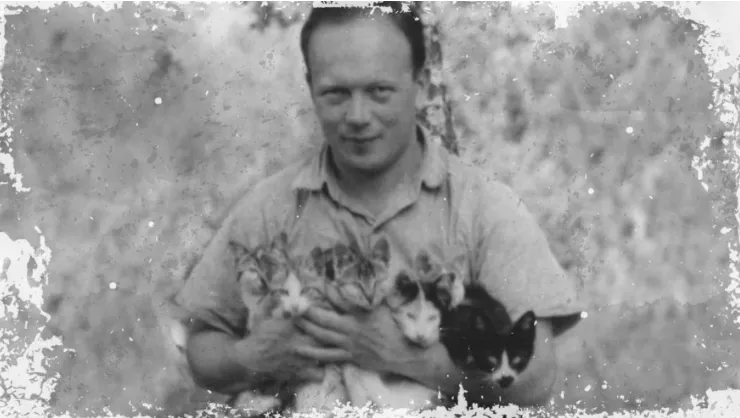
In 2019, journalist Barbara Necek directed In Search of the Polish Schindler, a documentary tracing the story of Eugene Lazowski, a Polish doctor whose actions during World War II became the subject of an enduring legend. Born in Austria to Polish parents who fled Communism in 1973, Necek was inspired by her own family history. Her grandmother, Maryja Necek, hid a young Jewish woman for over a year in war-torn Poland, risking her own life and that of her family—a real story of courage that left a lasting impression on Necek.
In 2015, Necek came across a Le Figaro article claiming that Lazowski and his colleague, Stanislaw Matulewicz, had saved 8,000 Jews in the village of Rozwadow by creating a fake typhus epidemic. The method, reportedly, involved inoculating villagers with a harmless bacterium, which caused false positives in German typhus tests. Terrified of the disease, the Nazis allegedly avoided the village, allowing thousands to survive. The story was picked up internationally, including by the Chicago Sun Times, which dubbed Lazowski “Chicago’s Schindler.”
Excited by the claim, Necek began her investigation. She discovered widespread reporting in multiple languages but few verifiable sources. Contacting the Stalowa Wola Museum and local curators, she learned there was no clear evidence that Lazowski and Matulewicz had saved Jews—the “8,000” figure was unsupported. While the doctors’ efforts did create a fake epidemic, it only protected non-Jewish Poles; most Jews in the area had already been deported to Nazi camps by 1942.
Necek also explored Lazowski’s autobiography, Prywatna Wojna (My Private War), which details his life as a patriotic Polish doctor and his opposition to anti-Semitism in pre-war Poland. Lazowski and Matulewicz did carry out an ingenious operation to shield Polish villagers from Nazi persecution, but it could not protect Jews in Rozwadow.
The legend of the 8,000 Jews saved persisted through media amplification, largely for commercial and storytelling reasons. Interviews with journalists, including Art Golab of the Chicago Sun Times, revealed that no evidence supported the extraordinary claims, but the story’s dramatic appeal kept it alive. Lazowski himself never claimed to have saved Jews, yet he accepted the fame his legend brought him in later life.
Interestingly, heroism did run in the family. Lazowski’s parents, Zofia and Kazimierz, were posthumously recognized as Righteous Among the Nations for hiding Jewish families in Warsaw during the war. Unlike Eugene’s legendary reputation, their deeds were well-documented and verifiable.
Necek’s documentary also highlights the challenges of historical memory. In contemporary Poland, educational and political forces continue to shape narratives of heroism. High school students in Stalowa Wola were shown dramatizations of Lazowski’s exploits, reinforcing the legend of saving 8,000 Jews—despite historical evidence to the contrary.
Ultimately, the case of Eugene Lazowski illustrates how myths, media narratives, and personal ambition can intertwine with historical fact. While his story does not match the legend, it remains a compelling example of human ingenuity, moral courage, and the complexities of historical memory.
CARLSON’S ACCUSATIONS
After Tucker Carlson claimed the FBI lied about the Donald Trump assassination attempt, the agency responded directly. Carlson questioned the FBI’s statements regarding suspect Thomas Crooks, suggesting the bureau misrepresented his digital footprint. Crooks, charged with attempting to kill Trump at a July campaign rally in Butler, Pennsylvania, ultimately only struck the president’s ear but killed 50-year-old firefighter Corey Comperatore. A Secret Service sniper shot Crooks shortly after, while two others, David Dutch and James Copenhaver, were injured.
Carlson said, “The FBI told us Thomas Crooks tried to kill Donald Trump last summer, but somehow had no online footprint. The FBI lied, and we can prove it because we have his posts. The question is why?”
THE FBI RESPONDS
The FBI Rapid Response account pushed back immediately: “The FBI has never said Thomas Crooks had no online footprint. Ever.”
CARLSON DOUBLES DOWN
Carlson later shared a video he claimed the FBI, under director Kash Patel, had tried to hide. The footage, allegedly from Crooks’ Google Drive, showed shooting drills and suggested Crooks maintained multiple online personas and left YouTube comments. Carlson argued that this proved Crooks “was not some secretive lone wolf who never warned anyone that he was planning violence.” He added, “Thomas Crooks came within a quarter inch of destroying this country, and yet, a year and a half later, we still know almost nothing about him or why he did it.”
He accused the FBI of “hiding from the public what they know” and described Crooks as a “volatile, troubled, possibly mentally ill young man with a long record of espousing violence in public.” Carlson claimed the bureau “used a selective read of those comments to lie about what Thomas Crooks was thinking.”
THE FBI SETS THE RECORD STRAIGHT
On Friday, Patel released documents and statements that contradicted Carlson’s claims. On X, he wrote: “The investigation, conducted by over 480 FBI employees, revealed Crooks had limited online and in-person interactions, planned and conducted the attack alone, and did not leak or share his intent to engage in the attack with anyone.”
The bureau detailed its investigation, which included examining over 20 online accounts, data from more than a dozen electronic devices, numerous financial records, and over 1,000 interviews plus 2,000 public tips. Patel’s statement reinforced that Crooks acted independently and that the FBI had no record of him openly warning anyone about his intentions.