President Donald Trump proposed a new plan Saturday to “terminate” Obamacare by redirecting federal insurance subsidies directly to Americans, a move that would mark one of the most sweeping overhauls of the health care system in U.S. history.
The president unveiled the idea in a series of Truth Social posts early Saturday morning, saying the money “currently being sent to money-sucking insurance companies” should instead go to individuals so they can “purchase their own, much better, healthcare.”
“I am recommending to Senate Republicans that the hundreds of billions of dollars currently being sent to money-sucking insurance companies … BE SENT DIRECTLY TO THE PEOPLE,” Trump wrote. “Take from the BIG, BAD insurance companies, give it to the people, and terminate, per dollar spent, the worst healthcare anywhere in the world, ObamaCare.”
He added: “Unrelated, we must still terminate the filibuster!”The president’s latest comments come as his administration faces mounting pressure to end the ongoing government shutdown, which has caused widespread delays for air travelers and uncertainty for millions of low-income Americans.Trump and his allies have been under fire for the government’s refusal to pay SNAP food benefits to 42 million recipients during the shutdown — a decision currently tied up in federal court.At the same time, Trump has been publicly urging Senate Republicans to “nuke” the filibuster and pass spending legislation without Democratic votes.His Saturday morning post appeared to link the shutdown fight and his health care ambitions, suggesting that a direct-payment model for health subsidies could help offset the affordability issues Democrats have used to criticize him.
The president’s proposal echoes a recurring theme of his populist agenda — cutting out intermediaries and redirecting federal spending “to the people.” But critics and policy analysts quickly noted the plan’s logistical and fiscal challenges.
Trump vastly overstated the size of the government’s health insurance subsidies, claiming “hundreds of billions” are sent to insurers each year. In reality, the figure is closer to $138 billion for 2025, according to Congressional Budget Office estimates.
It’s also unclear how Americans would purchase health care coverage without going through insurance companies, which currently administer the plans under the Affordable Care Act.
The proposal drew mixed reactions even among conservatives. Some praised the idea of empowering individuals, while others warned that dismantling the ACA without a replacement could destabilize the insurance market and raise costs for millions.
Democrats accused Trump of trying to rehash a failed fight from his first term, when repeated efforts to repeal Obamacare collapsed in the Senate.
Trump’s new post, however, suggests he remains determined to eliminate the program entirely — a position that continues to divide voters ahead of the next budget standoff.
“The Democrats are winning in that they are destroying our great, miracle economy,” Trump wrote in a separate post minutes before his health care proposal. “Which is exactly what they set out to do. TERMINATE THE FILIBUSTER!”
For now, the White House has not released any official proposal outlining how Trump’s plan would work, how much it would cost, or how it would replace existing coverage. But his message — both to Congress and his base — was clear: end the filibuster, end the shutdown, and end Obamacare.
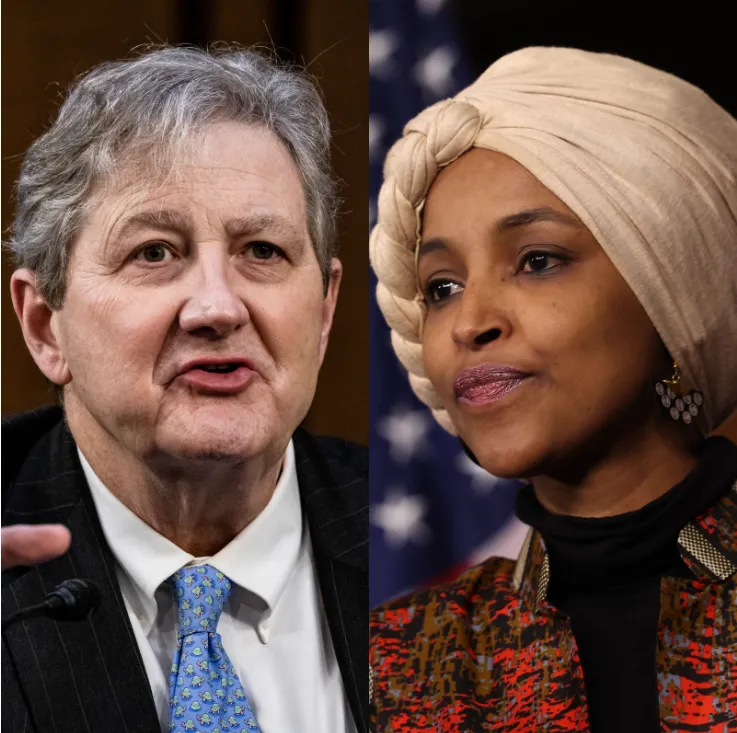
In the wake of the tragic passing of conservative commentator Charlie Kirk, Senator John Kennedy has publicly condemned Representative Ilhan Omar for her controversial remarks made on Substack. Kennedy’s strong rebuke highlights not only the sensitivity surrounding Kirk’s untimely death but also the broader tensions that exist in today’s political discourse.
Charlie Kirk, a prominent figure in conservative media and the founder of Turning Point USA, passed away unexpectedly, sending shockwaves through the political community. Known for his energetic advocacy for conservative values, Kirk had amassed a significant following, particularly among young conservatives. His death was met with an outpouring of grief and tributes from friends, colleagues, and supporters who recognized his influence in shaping the conservative movement.
In the midst of this mourning, Ilhan Omar took to her Substack account to express her views on Kirk’s legacy. However, her comments were perceived as disrespectful and insensitive, igniting a firestorm of criticism from various corners of the political spectrum, particularly from Kennedy and other Republican leaders.
While the specifics of Omar’s comments have been widely debated, it is clear that she took a critical stance on Kirk’s influence and the ideas he championed. Critics argue that her remarks crossed a line, especially given the timing of her statements shortly after his passing. Many believe that regardless of political differences, a level of respect should be maintained during such sensitive moments.
Omar’s comments included critiques of Kirk’s views on social issues and his role in promoting divisive rhetoric. She characterized his legacy as one that contributed to a polarized political landscape, arguing that his ideas were harmful to societal cohesion. While political discourse often involves sharp critiques, the context of Kirk’s death made her remarks particularly inflammatory.
Senator John Kennedy, known for his straightforward and often humorous communication style, did not hold back in his response to Omar. In a recent interview, he expressed his outrage at her comments, stating, “It is simply unacceptable to speak ill of the dead, especially someone who has left such a significant mark on the lives of many.” Kennedy emphasized the need for civility in political discourse, particularly when discussing individuals who have passed away.
Kennedy’s remarks resonated with many who felt that Omar’s comments were not only disrespectful but alSo indicative of a broader trend of incivility in politics. He called on his colleagues across the political spectrum to rise above partisan divides and show compassion, especially during times of loss.
The incident has sparked a larger conversation about the tone of political discourse in the United States. May observers have noted that the increasing polarization of politics has led to a decline in civility, with public figures often resorting to personal attacks rather than engaging in constructive dialogue. Kennedy’s condemnation of Omar serves as a reminder of the importance of maintaining respect, even amidst deep ideological divides.
Moreover, this situation highlights the role of social media and online platforms in shaping political narratives. Omar’s choice to voice her opinions on Substack—a platform known for its unfiltered content—reflects a growing trend among politicians to engage directly with their audiences, bypassing traditional media channels. While this can foster more authentic connections, it also raises questions about accountability and the potential for spreading divisive rhetoric.
The public reaction to Omar’s comments has been swift and varied. Many conservatives have rallied around Kennedy’s criticism, viewing it as a necessary defense of Kirk’s legacy. Social media platforms have been flooded with reactions, with hashtags related to the incident trending as users express their outrage or support for Omar’s right to speak her mind.
On the other hand, some progressive voices have defended Omar, arguing that her comments were a legitimate critique of Kirk’s contributions to political discourse. They contend that in a democracy, all public figures should be open to scrutiny, even posthumously. This debate underscores the complexities of navigating political criticism while honoring the memory of those who have passed.
As the fallout from this incident continues, it serves as a critical reminder of the need for civility in political discourse. While it is essential to engage in robust debates about policies and ideologies, there is a fine line between critique and disrespect. Kennedy’s call for compassion and understanding in the face of loss resonates with many who yearn for a return to more respectful political engagement.
In an era where divisive rhetoric often dominates headlines, moments like these challenge individuals to reflect on their own communication styles and the impact of their words. Political leaders have a responsibility to set the tone for their constituents, and embracing civility can pave the way for more productive discussions.
The exchange between John Kennedy and Ilhan Omar following Charlie Kirk’s tragic passing highlights the deep divisions within American politics. While Omar’s remarks were met with fierce criticism, Kennedy’s response emphasizes the importance of maintaining respect, especially in the wake of loss. As the political landscape continues to evolve, it is crucial for leaders to prioritize civility and compassion, fostering an environment where constructive dialogue can thrive.
In the end, the legacy of Charlie Kirk, like that of many public figures, will be shaped not only by his contributions but also by how those in the political arena choose to remember him. As discussions about his impact and the broader implications of political discourse continue, it is clear that the lessons learned from this incident will resonate far beyond the immediate controversy.