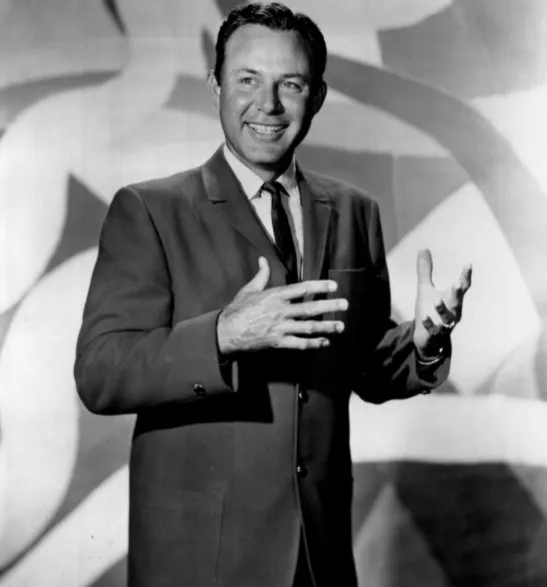
In 1960, Jim Reeves released a song that would alter the path of both country and pop music forever. “He’ll Have to Go” wasn’t just a hit — it was a cultural shift, a crossover phenomenon that elevated Reeves from respected country artist to global music icon.
Nicknamed “Gentleman Jim,” Reeves brought a polished, effortless elegance to country music. His smooth baritone — dramatic yet controlled — gave the genre a new level of sophistication at a time when country music was still seen as raw and regional.
While Reeves had already built a strong career, “He’ll Have to Go” pushed him into an entirely new league. The recording, produced by Chet Atkins, stripped away unnecessary flash and placed Reeves’ voice front and center, creating an intimate, emotional atmosphere that listeners instantly connected with.
The song itself came from a real moment overheard in a bar by writers Joe and Audrey Allison. A man was desperately pleading with his lover over the phone — a simple, vulnerable interaction that inspired one of the most memorable opening lines in music history:
“Put your sweet lips a little closer to the phone.”
This blend of longing and tenderness gave the song its emotional punch — one that resonated far beyond country audiences.
When it hit radio, “He’ll Have to Go” exploded.
It topped the Billboard Country Chart and climbed to No. 2 on the Pop Chart, a rare crossover achievement at the time.
The song helped launch what would later be called the Nashville Sound — a smoother, more accessible style that introduced country music to millions who had never listened before.
Artists like Elvis Presley, Ry Cooder, and countless others would go on to cover the track, though none captured the original magic of Reeves’ version.
Just four years after the song’s release, Jim Reeves died in a tragic plane crash at age 40. His passing shocked the music world, but his legacy only grew stronger.
“He’ll Have to Go” continued circulating through radio, jukeboxes, movie soundtracks, TV shows, and advertisements for decades.
Reeves was later inducted into the Country Music Hall of Fame, a recognition of both his talent and his lasting influence.
More than six decades later, the song remains one of the most beloved and recognizable classics in country music. Its emotional honesty, melodic simplicity, and groundbreaking crossover success paved the way for modern stars like
Shania Twain, Taylor Swift, and Keith Urban, who continue blending genres for new audiences.
“He’ll Have to Go” wasn’t just a chart-topper — it was a turning point in American music. And Jim Reeves’ velvet voice continues to remind us why some songs never fade.
CARLSON’S ACCUSATIONS
After Tucker Carlson claimed the FBI lied about the Donald Trump assassination attempt, the agency responded directly. Carlson questioned the FBI’s statements regarding suspect Thomas Crooks, suggesting the bureau misrepresented his digital footprint. Crooks, charged with attempting to kill Trump at a July campaign rally in Butler, Pennsylvania, ultimately only struck the president’s ear but killed 50-year-old firefighter Corey Comperatore. A Secret Service sniper shot Crooks shortly after, while two others, David Dutch and James Copenhaver, were injured.
Carlson said, “The FBI told us Thomas Crooks tried to kill Donald Trump last summer, but somehow had no online footprint. The FBI lied, and we can prove it because we have his posts. The question is why?”
THE FBI RESPONDS
The FBI Rapid Response account pushed back immediately: “The FBI has never said Thomas Crooks had no online footprint. Ever.”
CARLSON DOUBLES DOWN
Carlson later shared a video he claimed the FBI, under director Kash Patel, had tried to hide. The footage, allegedly from Crooks’ Google Drive, showed shooting drills and suggested Crooks maintained multiple online personas and left YouTube comments. Carlson argued that this proved Crooks “was not some secretive lone wolf who never warned anyone that he was planning violence.” He added, “Thomas Crooks came within a quarter inch of destroying this country, and yet, a year and a half later, we still know almost nothing about him or why he did it.”
He accused the FBI of “hiding from the public what they know” and described Crooks as a “volatile, troubled, possibly mentally ill young man with a long record of espousing violence in public.” Carlson claimed the bureau “used a selective read of those comments to lie about what Thomas Crooks was thinking.”
THE FBI SETS THE RECORD STRAIGHT
On Friday, Patel released documents and statements that contradicted Carlson’s claims. On X, he wrote: “The investigation, conducted by over 480 FBI employees, revealed Crooks had limited online and in-person interactions, planned and conducted the attack alone, and did not leak or share his intent to engage in the attack with anyone.”
The bureau detailed its investigation, which included examining over 20 online accounts, data from more than a dozen electronic devices, numerous financial records, and over 1,000 interviews plus 2,000 public tips. Patel’s statement reinforced that Crooks acted independently and that the FBI had no record of him openly warning anyone about his intentions.