A MESSAGE THAT ECHOED BEYOND NEW YORK
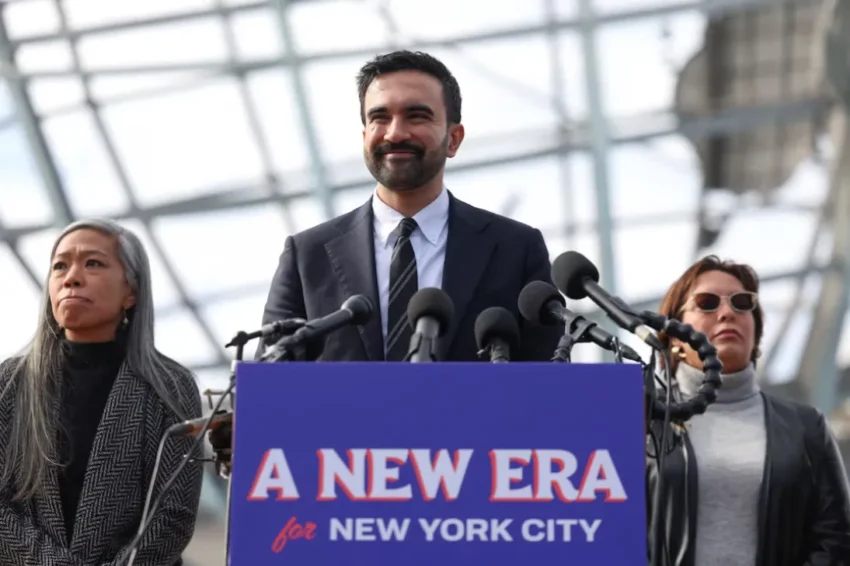
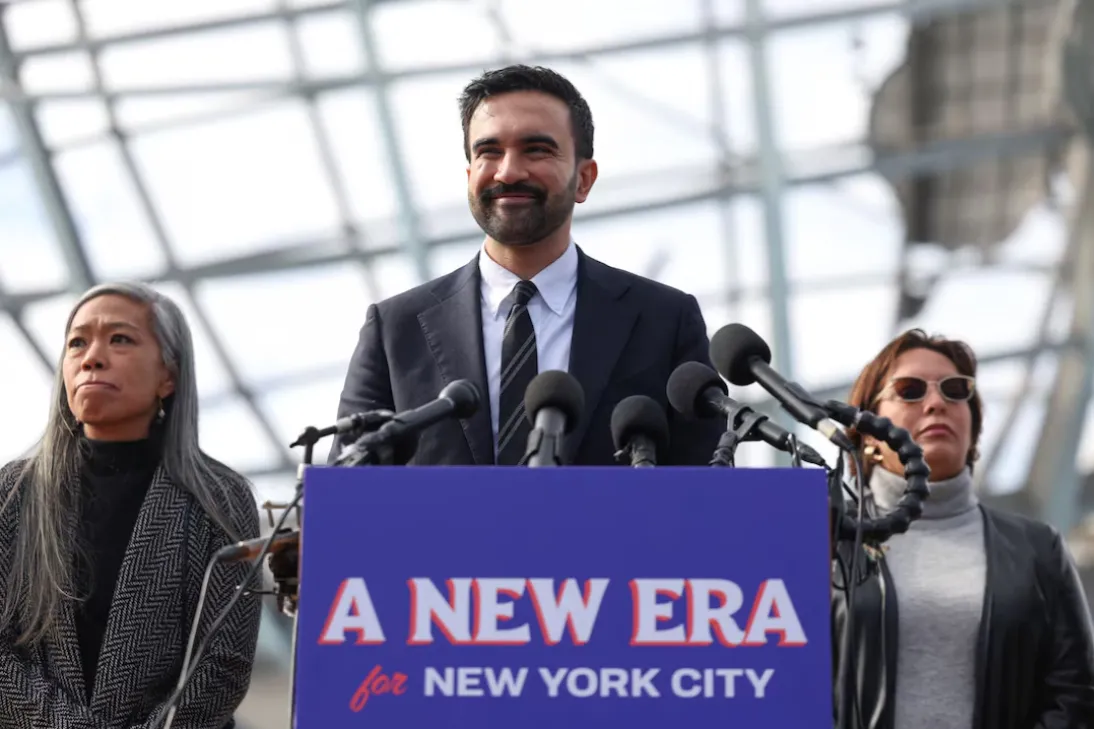
Standing before reporters in Queens, newly elected New York City Mayor Zohran Mamdani delivered a bold and uncompromising warning:
“My message to ICE agents and to everyone across this city is that everyone will be held to the same standard of the law. If you violate the law, you must be held accountable.”
It wasn’t just a statement — it was a challenge. Mamdani went on to condemn the growing belief that some individuals are “allowed to violate the law,” whether they are “the president or the agents themselves.” His words signaled the beginning of what could become a defining confrontation between city leadership and federal immigration enforcement.
THE WEIGHT BEHIND HIS WORDS
Mamdani’s remarks come at a moment when the balance between federal authority and local autonomy is being tested like never before. As a progressive lawmaker and the first Muslim mayor in New York’s history, he has built his platform on transparency, justice, and protection for immigrant communities. His message to ICE was not just about immigration — it was about power, equality, and restoring faith in the rule of law.
During his campaign, Mamdani often criticized what he called “selective justice,” arguing that accountability must apply equally to everyone, regardless of position or power. His administration, he promises, will hold not only citizens but also government agents and institutions to that same standard.
A CLASH ON THE HORIZON
Mamdani’s stance could set the stage for a tense relationship with federal authorities. New York City has long been a “sanctuary city,” limiting its cooperation with federal immigration enforcement. But Mamdani’s tone suggests a new phase — one where the city actively investigates and challenges abuses of authority, even from federal agents operating within its borders.
Critics, however, question how much influence a mayor can actually wield against a federal agency. While local policies can restrict cooperation, they cannot halt federal enforcement actions altogether. Supporters, on the other hand, see Mamdani’s message as a necessary moral stand — one that underscores the importance of law being applied equally to all.
BEYOND POLITICS — A TEST OF PRINCIPLE
At its heart, Mamdani’s message isn’t only about ICE. It’s about redefining leadership in an era when many feel the law bends for the powerful and breaks the powerless. By demanding accountability for everyone — from the Oval Office to the immigration office — he’s drawing a line in the sand that could reshape how New York handles justice, equality, and government integrity.
Whether his promise becomes policy or remains political idealism, one thing is certain: Zohran Mamdani has made it clear that, in his New York, no one stands above the law.
CARLSON’S ACCUSATIONS
After Tucker Carlson claimed the FBI lied about the Donald Trump assassination attempt, the agency responded directly. Carlson questioned the FBI’s statements regarding suspect Thomas Crooks, suggesting the bureau misrepresented his digital footprint. Crooks, charged with attempting to kill Trump at a July campaign rally in Butler, Pennsylvania, ultimately only struck the president’s ear but killed 50-year-old firefighter Corey Comperatore. A Secret Service sniper shot Crooks shortly after, while two others, David Dutch and James Copenhaver, were injured.
Carlson said, “The FBI told us Thomas Crooks tried to kill Donald Trump last summer, but somehow had no online footprint. The FBI lied, and we can prove it because we have his posts. The question is why?”
THE FBI RESPONDS
The FBI Rapid Response account pushed back immediately: “The FBI has never said Thomas Crooks had no online footprint. Ever.”
CARLSON DOUBLES DOWN
Carlson later shared a video he claimed the FBI, under director Kash Patel, had tried to hide. The footage, allegedly from Crooks’ Google Drive, showed shooting drills and suggested Crooks maintained multiple online personas and left YouTube comments. Carlson argued that this proved Crooks “was not some secretive lone wolf who never warned anyone that he was planning violence.” He added, “Thomas Crooks came within a quarter inch of destroying this country, and yet, a year and a half later, we still know almost nothing about him or why he did it.”
He accused the FBI of “hiding from the public what they know” and described Crooks as a “volatile, troubled, possibly mentally ill young man with a long record of espousing violence in public.” Carlson claimed the bureau “used a selective read of those comments to lie about what Thomas Crooks was thinking.”
THE FBI SETS THE RECORD STRAIGHT
On Friday, Patel released documents and statements that contradicted Carlson’s claims. On X, he wrote: “The investigation, conducted by over 480 FBI employees, revealed Crooks had limited online and in-person interactions, planned and conducted the attack alone, and did not leak or share his intent to engage in the attack with anyone.”
The bureau detailed its investigation, which included examining over 20 online accounts, data from more than a dozen electronic devices, numerous financial records, and over 1,000 interviews plus 2,000 public tips. Patel’s statement reinforced that Crooks acted independently and that the FBI had no record of him openly warning anyone about his intentions.