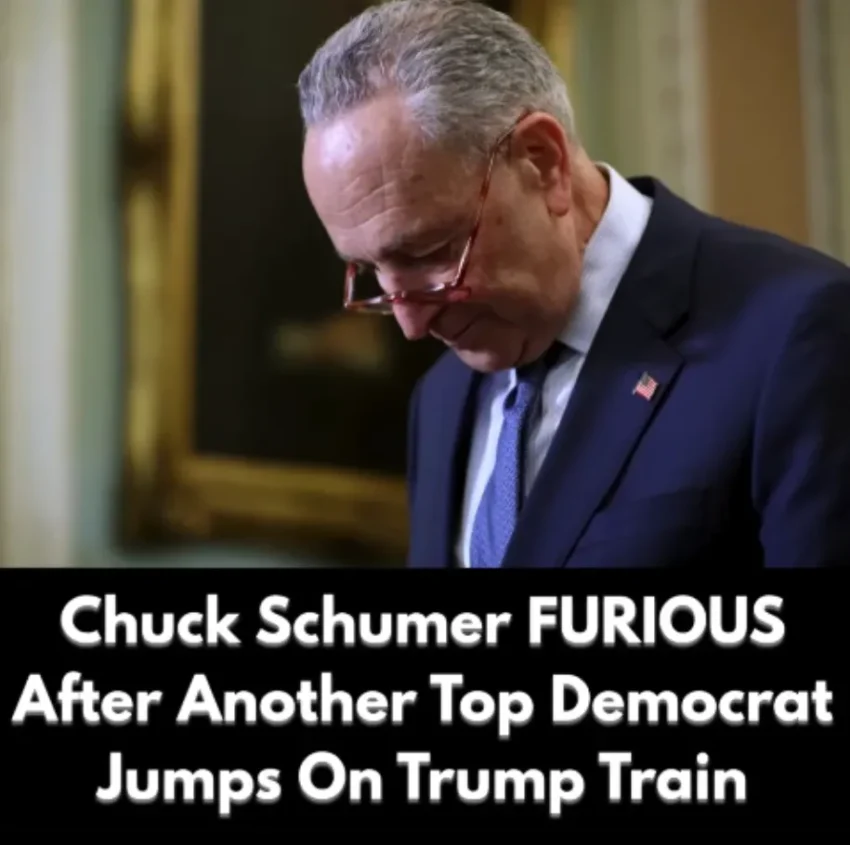
Sen. John Kennedy of Louisiana once again blended humor and political commentary in a way few lawmakers can match, offering pointed remarks about Senate Minority Leader Chuck Schumer and the broader internal tensions within the Democratic Party. His comments came during an interview on Will Cain Country, where he discussed the fallout from the recent government shutdown and the divide it revealed among Democratic lawmakers.
Kennedy Weighs In on Democratic Infighting
Host Will Cain began by highlighting the widening ideological split inside the Democratic Party—specifically the disagreements between members who voted to reopen the government and those who supported continuing the shutdown in pursuit of political leverage. Cain described the situation as a widening “civil war” within the party.
Kennedy, known for his colorful analogies and quick wit, responded with one of his signature metaphors, suggesting that Schumer miscalculated in trying to appease the party’s more hardline progressive faction.
He joked that Schumer “looked like someone who misplaced his luggage,” suggesting the minority leader was trying to regain footing after the divisive shutdown battle. According to Kennedy, Schumer’s attempt to satisfy the party’s most ideological lawmakers had backfired, leaving him caught between competing factions.
The Progressive Wing in the Spotlight
Kennedy referred to these lawmakers—those most opposed to compromise—as the party’s “socialist wing.” While the label reflects his political viewpoint, he used it to underline the degree to which a small but influential group of progressive Democrats has reshaped the party’s internal dynamics.
The senator also discussed Rep. Alexandria Ocasio-Cortez (D-NY), one of the highest-profile members of the progressive movement. He argued that the congresswoman may underestimate the broader consequences the shutdown had on Americans, a critique he has raised before regarding her approach to policymaking.
Kennedy suggested that Ocasio-Cortez has ambitions that extend far beyond her House district. Whether she seeks a top leadership role, a Senate seat, or even higher office, he believes she is positioning herself as a defining force for her party’s future. He also speculated that figures like House Democratic Leader Hakeem Jeffries could become political targets for her if she attempts to expand her influence.
As he described it, Schumer appears wary of growing challenges from within his own state. In Kennedy’s view, the New York senator is aware of the progressive movement’s strength and feels pressure from its increasingly organized supporters.
Kennedy’s Most Talked-About Comment
At one point in the interview, Kennedy delivered a line that immediately went viral online. While discussing Schumer’s uneasy position within the party, he said the senator seemed fearful of crossing progressive lawmakers. With characteristic brash humor, Kennedy remarked that Schumer appeared so intimidated that “his confidence was missing in action.”
The quip drew laughter from Cain, who has often highlighted Kennedy’s off-the-cuff comedic timing. Kennedy’s one-liners, while controversial to some, have made him a widely recognized personality in political media.
AOC’s Growing Influence
Kennedy continued by outlining why he believes Ocasio-Cortez is gaining momentum. He argued that her appeal extends beyond her district in New York City, particularly after the election of figures who share her political views—such as newly elected New York City Mayor Zohran Mamdani.
In Kennedy’s opinion, Ocasio-Cortez has been elevated by a media landscape that finds her compelling and marketable. He acknowledged her communication skills and made-for-television personality, saying she is bold, articulate, and always draws attention. However, he also suggested that she is less experienced in the policy realm, noting that he has not heard her described as particularly detail-oriented when it comes to crafting legislation.
Kennedy added another quip—this one directed at her public persona—saying that attempts to uncover more substance behind her political messaging often reveal little depth. His suggestion was that while she is an effective communicator, she lacks the legislative or policy experience of longer-serving members.
An Uncertain Future for Party Leadership
Beyond the humor, Kennedy argued that the Democratic Party is entering a period of significant transition. Longtime leaders such as Schumer and former House Speaker Nancy Pelosi built their careers on an older model of party politics—one he believes is quickly fading.
He pointed out that if the party continues embracing more aggressive progressive strategies, it may become difficult for centrist or pragmatic leaders to maintain cohesion. Figures like Jeffries, who represents a more traditional Democratic leadership style, may find themselves squeezed between competing factions.
A stunning political realignment has emerged from an unexpected source as a prominent Democratic senator delivered full-throated support for one of the Trump administration’s most controversial military actions. The endorsement represents a dramatic departure from typical partisan battle lines and signals potential bipartisan support for aggressive counter-narcotics operations that challenge traditional legal and diplomatic boundaries.
The cross-party backing comes at a critical moment when the administration faces intense scrutiny over the legal foundations of its military intervention against suspected drug traffickers. What began as a routine counter-narcotics operation has evolved into a broader test of presidential war powers, international law, and America’s willingness to use lethal force against criminal organizations that threaten national security through drug trafficking.
The unexpected Democratic support threatens to undermine opposition party criticism while potentially establishing precedent for expanded military operations against drug cartels that could reshape America’s approach to the ongoing fentanyl crisis and transnational organized crime.
U.S. Senator John Fetterman (D-PA) delivered an unequivocal defense of President Trump’s use of military force against suspected drug smugglers, directly challenging his own party’s criticism and providing crucial political cover for the administration’s controversial operation. His statement represents one of the most significant instances of cross-party support for Trump military policy since the administration began implementing its aggressive counter-narcotics strategy.
“Overdosing takes 100,000+ American lives every year. Cartels wage this war against our nation everyday. Maybe it’s time for our nation to push back and hold the cartels fully accountable,” Fetterman wrote on X, framing the military action as necessary self-defense rather than questionable aggression. His language deliberately characterized drug trafficking as warfare against America, providing moral justification for military response.
Fetterman’s intervention carries particular political weight because of his progressive credentials and his previous criticism of certain Trump policies, making his support for military action against drug traffickers more credible to moderate Democrats and independents who might otherwise oppose expanded presidential war powers. His backing suggests that the drug crisis has created bipartisan urgency that transcends traditional political divisions.
The Pennsylvania senator’s emphasis on the scale of American overdose deaths—over 100,000 annually—provides stark statistical justification for extraordinary measures that might otherwise face constitutional or legal challenges. By framing the issue as existential threat to American lives, Fetterman creates political space for military responses that would be controversial in other contexts.
His statement also implicitly criticizes traditional law enforcement approaches to drug trafficking as inadequate to address the magnitude of the crisis, suggesting that military intervention represents necessary escalation rather than executive overreach or international law violation.
The New York Times investigation that prompted Fetterman’s defense raised fundamental questions about the legal foundations of Trump’s military operation against suspected drug smugglers. Reporter Charlie Savage characterized the action as having “no clear legal precedent or basis,” highlighting the constitutional and international law implications of using military force against criminal organizations rather than traditional state actors.
The legal controversy centers on whether drug trafficking organizations, even those designated as terrorist groups, can be legitimate targets for military action under existing presidential war powers and international law. Traditional counter-narcotics operations typically involve law enforcement agencies working with military support, rather than direct military strikes against suspected traffickers.
The administration’s legal justification appears to rely on the designation of targeted organizations as terrorist groups, which theoretically brings them under existing authorizations for military force against international terrorism. However, legal experts note that this interpretation significantly expands the scope of military action beyond traditional terrorism contexts to encompass organized crime.
The precedent established by this operation could have far-reaching implications for future military interventions against criminal organizations, potentially blurring the lines between law enforcement and military operations in ways that challenge traditional constitutional boundaries and international legal frameworks.
Critics argue that bypassing normal law enforcement procedures and judicial oversight creates dangerous precedent for executive use of military force in circumstances that should require congressional authorization or international cooperation through existing law enforcement channels.
The specific targeting of Tren de Aragua gang members provides crucial legal and political justification for the military operation, as the Venezuelan criminal organization has been officially designated as a terrorist group by U.S. authorities. This designation creates legal framework for military action that would not exist for conventional criminal organizations, regardless of their involvement in drug trafficking.
Tren de Aragua’s classification as “narcoterrorists” reflects the organization’s involvement in activities that extend beyond traditional drug trafficking to include systematic violence, territorial control, and operations that threaten regional stability. The group’s activities across multiple countries in the Western Hemisphere have created international security concerns that support arguments for military rather than purely law enforcement responses.
The administration’s legal justification appears to rely on the designation of targeted organizations as terrorist groups, which theoretically brings them under existing authorizations for military force against international terrorism. However, legal experts note that this interpretation significantly expands the scope of military action beyond traditional terrorism contexts to encompass organized crime.
The precedent established by this operation could have far-reaching implications for future military interventions against criminal organizations, potentially blurring the lines between law enforcement and military operations in ways that challenge traditional constitutional boundaries and international legal frameworks.
Critics argue that bypassing normal law enforcement procedures and judicial oversight creates dangerous precedent for executive use of military force in circumstances that should require congressional authorization or international cooperation through existing law enforcement channels.
The specific targeting of Tren de Aragua gang members provides crucial legal and political justification for the military operation, as the Venezuelan criminal organization has been officially designated as a terrorist group by U.S. authorities. This designation creates legal framework for military action that would not exist for conventional criminal organizations, regardless of their involvement in drug trafficking.
Tren de Aragua’s classification as “narcoterrorists” reflects the organization’s involvement in activities that extend beyond traditional drug trafficking to include systematic violence, territorial control, and operations that threaten regional stability. The group’s activities across multiple countries in the Western Hemisphere have created international security concerns that support arguments for military rather than purely law enforcement responses.