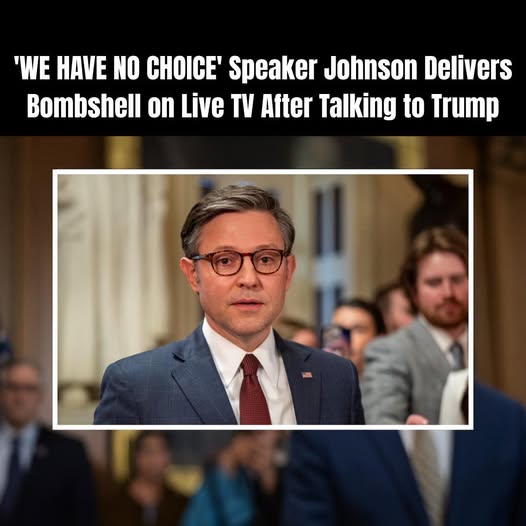
A phone call that lasted just minutes may have set in motion one of the most unconventional political strategies in modern American history. The conversation between two of the most powerful Republicans in Washington has sparked discussions about rewriting the playbook for how political parties approach midterm elections, potentially creating a spectacle that could reshape the entire electoral landscape.
The implications of this strategic shift extend far beyond typical campaign tactics, representing a fundamental reimagining of how political momentum is built and sustained in the modern era. What started as a spontaneous idea during a brief phone conversation could evolve into a game-changing moment that defines not just the 2026 midterms, but the future of American political campaigning itself.
The Genesis of an Unprecedented Idea
House Speaker Mike Johnson found himself in Detroit on what seemed like a routine political trip when his phone rang. On the other end was President Donald Trump, and what followed was a conversation that would soon capture the attention of political strategists, party leaders, and observers across the nation.
“He called me 15 minutes before that Truth and he said, ‘Mike, I’ve got a great idea,’” Johnson recounted during a Fox News interview, his enthusiasm evident as he described the moment that could mark a turning point in Republican political strategy.
The idea Trump proposed was audacious in its simplicity and unprecedented in its scope: hold a presidential-style Republican National Convention before the 2026 midterm elections. Not a rally, not a series of campaign events, but a full-scale national convention designed to generate the kind of energy and media attention typically reserved for presidential nomination contests.
Johnson’s immediate response revealed the kind of political instinct that has made him one of Trump’s most trusted allies in Congress. “Let’s have it. I’m so excited about this. I said, ‘Mr. President, let’s go.’ Because I think that would be such a great rallying point right before the midterm election for us to tout all the great successes we’ve had,” Johnson explained.
The spontaneity of the conversation belies the calculated political thinking behind the concept. Both leaders understand that midterm elections traditionally favor the opposition party, and they’re looking for ways to break that historical pattern through unprecedented means.
A Strategy Born from Success
The confidence behind this ambitious proposal stems from what Republicans view as their comprehensive victory in the 2024 elections. Johnson didn’t hesitate to frame the previous election cycle in the most favorable terms possible, declaring that Republicans won “every aspect” of the 2024 presidential election.
This interpretation of electoral success has become a cornerstone of Republican messaging as they look toward the 2026 midterms. The party’s leadership believes they have found a winning formula that transcends traditional campaign approaches, and they’re eager to replicate and amplify that success.
“The GOP is poised to perform well in next year’s midterms,” Johnson predicted with the confidence of someone who has seen his party’s recent electoral performance and believes the momentum is sustainable.
This optimism isn’t based solely on the 2024 results. Republican leaders point to a series of indicators that suggest their party has achieved something more substantial than a typical electoral victory – they believe they’ve engineered a fundamental shift in American political alignment that will have lasting consequences.
The proposed convention represents an attempt to institutionalize and celebrate this perceived transformation, creating a moment that crystallizes Republican achievements while building energy for future contests.
Trump’s Vision Takes Shape
President Trump’s enthusiasm for the convention concept was evident in his Truth Social post, where he laid out both the rationale for the idea and his assessment of the current political landscape. His message revealed a leader confident in his party’s trajectory and eager to capitalize on what he sees as unprecedented momentum.
“We have raised far more money than the Democrats, and are having a great time fixing all of the Country Destroying mistakes made by the Biden Administration, and watching the USA heal and prosper,” Trump wrote, framing the current moment as both a celebration of Republican governance and a vindication of his political approach.
The former and current president’s emphasis on the novelty of the concept – “It has never been done before” – reveals his continued attraction to breaking political norms and creating spectacles that dominate news cycles. Throughout his political career, Trump has demonstrated an intuitive understanding of how to generate attention and maintain relevance, and this convention idea fits perfectly within that strategic framework.
Trump’s reference to “Millions of people have joined us in our quest to MAKE AMERICA GREAT AGAIN” suggests that the convention would serve multiple purposes: celebrating existing supporters, attracting new ones, and demonstrating the breadth of the Republican coalition.
The “STAY TUNED!!!” conclusion to his post, complete with multiple exclamation points, reveals Trump’s showman instincts and his understanding that political anticipation can be almost as powerful as political action itself.
Johnson’s Enthusiastic Endorsement
Speaker Johnson’s public response to Trump’s proposal was swift and unambiguous. His post on X – “YES, Mr. President! Let’s go!!!!” accompanied by American flag emojis – demonstrated both his political alignment with Trump and his understanding of how to communicate enthusiasm in the social media age.
But Johnson’s support goes beyond simple political loyalty. As Speaker of the House, he has a vested interest in maintaining Republican control of Congress, and he clearly sees the convention as a tool that could help achieve that goal.
“The president loves the idea of it. I do as well. We got to pick the right location,” Johnson explained, revealing that the concept has already moved from abstract possibility to concrete planning considerations.
The mention of location selection indicates that serious discussions about logistics and strategy are already underway. The choice of venue for such a convention would carry significant political and symbolic weight, potentially favoring states that are crucial for midterm success or locations that reinforce key Republican messages.
Johnson’s emphasis on the convention as “such a great rallying point right before the midterm election” reveals the strategic thinking behind the proposal. Rather than relying solely on traditional campaign methods, Republicans are considering creating a single, massive event that could generate sustained media coverage and energize their base at a crucial moment.
The Broader Political Context
The convention proposal comes at a time when Republicans believe they have achieved something unprecedented in modern American politics: a sustained expansion of their electoral coalition that transcends traditional demographic and geographic boundaries.
Recent voter registration data has provided Republicans with additional confidence in their political position. According to New York Times analysis of data from L2, a nonpartisan firm that tracks voter rolls, more new voters registered as Republicans than Democrats for the first time since 2018.
This registration shift represents more than just numbers on a spreadsheet – it suggests a fundamental change in how Americans are aligning themselves politically. The data shows that “of the 30 states that track voter registration by political party, Democrats lost ground to Republicans in every single one between the 2020 and 2024 elections — and often by a lot.”
The scale of this shift is remarkable: a net 4.5 million-voter swing that saw Democrats lose approximately 2.1 million registrants while Republicans gained 2.4 million. These numbers provide the foundation for Republican confidence and help explain why party leaders believe they can break historical patterns that typically favor the opposition party in midterm elections.
Democratic Struggles and Republican Opportunities
The challenges facing the Democratic Party extend beyond simple registration numbers. Michael Pruser, director of data science for Decision Desk HQ, offered a particularly stark assessment of Democratic prospects: “I don’t want to say, ‘The death cycle of the Democratic Party,’ but there seems to be no end to this. There is no silver lining or cavalry coming across the hill. This is month after month, year after year.”
This assessment suggests that Republican gains aren’t simply the result of temporary political cycles or specific electoral circumstances. Instead, they appear to represent sustained trends that could have long-lasting implications for American politics.
The geographic breadth of Republican gains has been particularly noteworthy. Even in states long considered reliably Democratic, the erosion of party registration has been evident. California, despite its reputation as a Democratic stronghold, has seen significant Democratic losses in voter registration.
Meanwhile, crucial swing states have shown Republican advantages in new voter sign-ups. North Carolina, Pennsylvania, Arizona, and Nevada – all states that will be critical in determining control of Congress in 2026 – have reported Republican gains between 2020 and 2024.
The Coalition Expansion Strategy
Republican success has been built on what party strategists describe as a fundamental expansion of their traditional coalition. Trump’s appeal among working-class voters has been complemented by new strength among Latinos and young men, demographics that were not traditionally considered reliable Republican constituencies.
This coalition expansion represents more than just electoral opportunism – it suggests a realignment of American politics that could have implications far beyond any single election cycle. The proposed convention would provide an opportunity to showcase this expanded coalition and demonstrate the breadth of Republican appeal.
The enthusiasm within Trump’s base has provided Republican groups with opportunities to drive growth at the grassroots level. This grassroots energy, combined with the broader demographic gains, has created what Republican leaders believe is a sustainable political advantage.
Strategic Implications and Historical Context
The proposed convention would represent a significant departure from traditional midterm campaign strategies. Historically, midterm elections have been characterized by lower turnout, reduced media attention, and campaigns that focus primarily on local and regional issues rather than national themes.
By proposing a national convention, Republicans are attempting to transform the 2026 midterms into something more resembling a presidential election in terms of energy, attention, and national focus. This strategy reflects a belief that Republican success depends on maintaining the kind of enthusiasm and engagement typically associated with presidential campaigns.
The timing of the convention – “just prior to the Midterms” – would be crucial to its effectiveness. Too early, and the momentum might dissipate before election day. Too late, and there might not be sufficient time to translate convention energy into electoral success.
The logistical challenges of organizing such an event would be substantial. National conventions require months of planning, significant financial resources, and coordination among multiple levels of party organization. The fact that Republican leaders are discussing these challenges seriously suggests they believe the potential benefits justify the considerable investment required.
Media and Messaging Considerations
A midterm convention would create unprecedented opportunities for Republican messaging and media coverage. Traditional midterm campaigns often struggle to maintain national attention, with coverage focusing primarily on individual races and local issues.
A national convention would guarantee sustained media coverage and provide Republicans with a platform to present their message to a national audience. The spectacle of a convention – with its staged events, prominent speakers, and carefully crafted messaging – would create the kind of television-friendly content that generates extensive coverage.
The convention would also provide an opportunity for Republicans to frame the midterm elections within a broader national narrative. Rather than fighting dozens of individual races with varying local dynamics, the convention could help create a unified national message that connects congressional races to larger themes about American governance and policy direction.
Looking Ahead: Challenges and Opportunities
The success of a midterm convention would depend on numerous factors, many of which remain uncertain. The political landscape in 2026 could be significantly different from today’s environment, and strategies that seem promising now might prove less effective as circumstances change.
Opposition from Democrats would be intense, with party leaders likely to criticize the convention as an expensive political stunt that prioritizes spectacle over substance. Republican organizers would need to demonstrate that the convention provides genuine value to voters rather than simply serving as an elaborate campaign event.
The financial costs of organizing a national convention would be substantial, requiring significant fundraising efforts and careful budget management. Republican leaders would need to convince donors that the convention represents a worthwhile investment compared to other potential uses of campaign resources.
The Path Forward
As Republican leaders continue to develop this convention concept, they face numerous decisions about timing, location, format, and messaging. The success of the proposal will depend not just on the enthusiasm of party leaders, but on their ability to translate that enthusiasm into concrete organizational achievements.
The convention represents a bold bet on the continuing strength of Republican political momentum and the effectiveness of unconventional campaign strategies. If successful, it could establish a new model for how political parties approach midterm elections. If it fails to generate the expected enthusiasm or electoral benefits, it could serve as a cautionary tale about the limits of political spectacle.
What began as a spontaneous phone call between two Republican leaders has evolved into a proposal that could reshape American political campaigning. The coming months will reveal whether this ambitious idea can be transformed from concept to reality, and whether it will achieve the electoral success its proponents envision
The progressive victory of Mayor-elect Zohran Mamdani in New York City is already facing severe resistance, with Governor Kathy Hochul effectively backtracking on key socialist promises just weeks before Mamdani takes office. Mamdani’s boldest proposals—including making city buses free—have stalled as Hochul, responding to the financial realities of the state, asserts that such plans are simply not “doable” and risks accelerating the mass exodus of high-tax-paying residents.
The clash exposes a major rift within the Democratic Party: the tension between the progressive wing’s ideological demands for expansive social programs and the moderate establishment’s pragmatic concern over fiscal collapse.
Mamdani’s campaign was built on a series of ambitious, highly expensive proposals designed to transform New York into a democratic socialist model. The immediate problem is the funding mechanism for these programs.
Mamdani promised to make the city’s bus system entirely free (estimated to cost hundreds of millions in lost revenue) and implement universal child care, paid for by taxing the rich and corporations.
The Stalled Agenda: Governor Hochul, who ultimately controls state funds and infrastructure (like the MTA, which runs the buses), has signaled a decisive “no” on Mamdani’s bus promise. She stated that she “cannot set forth a plan right now that takes money out of a system that relies on the fares of the buses and the subways.”
The Fiscal Black Hole: The problem is immediate: the $700 million Mamdani estimated for replacing the fare revenue does not account for the inevitable increased costs of maintenance, staffing, and purchasing more buses needed to handle the higher ridership if the service were free. This lack of detailed financial planning renders the entire policy unworkable without massive new funding, which Hochul is unwilling to provide.
The immediate failure of the “free bus” promise was hilariously documented by everyday New Yorkers, who quickly realized that the socialist revolution had not materialized overnight.
The Bus Stop Reality: One civilian pointedly asked a bus driver: “I saw on the bus it said fares required. I thought the buses were supposed to be free now ’cause, like, Mamdani just won. When does that start?” The bus driver, highlighting the unsustainability of the rhetoric, responded that the policy was “never going to happen” and that he would still allow the man to ride for free out of personal kindness.
Governor Hochul’s response to Mamdani’s victory transitioned quickly from campaign support to crisis management, focused on protecting the state’s financial core and asserting her control over policy.
Hochul asserted that while she respects the progressive vision, she must govern by a strict pragmatic standard: “What is doable is the question.”
Refusing Tax Hikes: Hochul explicitly rejected the core of Mamdani’s funding mechanism—raising taxes on the wealthy—stating: “I’m concerned about outmigration of people who are the ones who are supporting our budget… One and a half percent of New Yorkers cover about a third of our budget. That’s enormous.” She fears that increased taxes will make New York “unattractive” for businesses and high-earners, leading to a further exodus.
The Capitalist City: Hochul confirmed that her priority is ensuring “New York City is still a capitalist city” and that she has spent time talking to the business community to reassure them. In essence, her stance is: “I wear the pants in the state of New York. I’m not on board with any of it [Mamdani’s radical plans].”
The irony of the situation—Mamdani running on promises that his own party leader must immediately shut down—is stark.
The Democratic Dilemma: The Democratic Party is exposed as playing a double game: celebrating the socialist victory to appease the far-left, while relying on the moderate establishment (Hochul) to prevent the costly policies from being implemented.
Economic Equality vs. Success: The progressive vision of achieving economic equality risks making climbing the economic ladder unattractive. As critics argue, what is the point of working hard and being successful if the penalty is giving significantly more away, leading to an economically similar result as those who do not work as hard? This threatens the core incentive structure of the capitalist city.
Mamdani’s rhetoric extended beyond financial policy into immediate political conflict, notably targeting the former president and taking a questionable stance on law enforcement.
Mamdani’s victory speech included a direct, combative challenge to Donald Trump, forcing the former president to immediately respond and call Mamdani’s ideology “communism.” This confrontational style, which Mamdani uses to build his political brand as the “anti-Trump,” is seen as a strategic miscalculation that endangers the federal funds he needs.
Mamdani’s campaign rhetoric included talking points about defunding the police and replacing officers with mental health experts in the subway system. This position has drawn sharp criticism from major figures, including Stephen A. Smith, who was born and raised in New York.
The Call for More Cops: Smith publicly rebuked the idea: “I don’t want to see less police officers. I want to see more police officers. I want to hear about no damn mental health experts in subways.”
The Need for Security: This grassroots pushback underscores that for everyday New Yorkers, security and law enforcement are immediate, practical concerns that outweigh the ideological promises of police reform. Hochul’s insistence on keeping the current Police Commissioner signals a strong alignment with the need for professional, consistent public safety over Mamdani’s radical proposals.
Mamdani’s early days as Mayor-elect serve as a wake-up call for the progressive movement. The enthusiasm of a single rally cannot overcome the established fiscal and political structures of a major state.
Hochul, though pressed by her party, is holding her ground, recognizing that she must protect the state’s budget—the very engine that supports the city. The reality is that the ambitious, unfunded socialist programs that won Mamdani the election are being halted by his own party leader, who understands that the political viability of New York State depends on maintaining its status as a profitable, capitalist center.
The big question remains whether Mamdani will adjust his political sails to navigate the “doable” reality set by Hochul, or if he will continue to push an ideological agenda that risks accelerating the flight of wealth and plunging the city into greater financial instability.