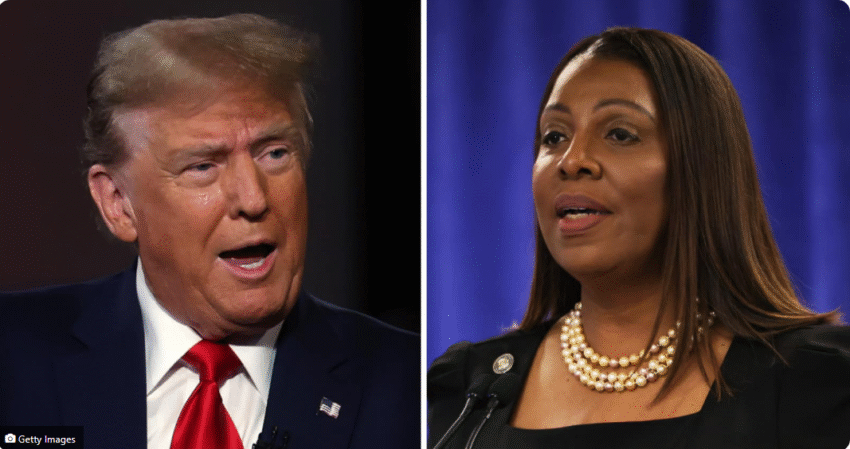
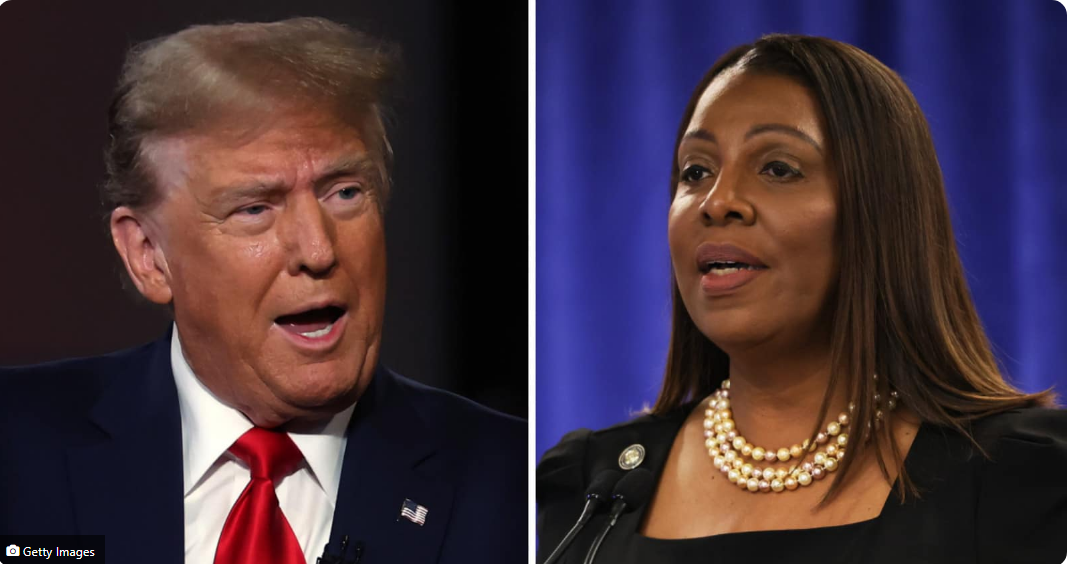
A federal appeals court on Thursday allowed President Donald Trump to move forward with his effort to overturn his criminal conviction in the hush money case in New York City.
Trump is seeking to transfer the case from New York state court to federal court, arguing that a federal judge should dismiss the jury’s 34-count guilty verdict based on the Supreme Court’s recent ruling on presidential immunity, The Hill reported.
A three-judge panel on the U.S. Court of Appeals for the 2nd Circuit said it “cannot be confident” that the lower court properly weighed Trump’s arguments in his effort to transfer the case to federal court.
“The court bypassed what we consider to be important issues bearing on the ultimate issue of good cause,” the panel noted in its ruling.
“We leave it to the able and experienced District Judge to decide whether to solicit further briefing from the parties or hold a hearing to help it resolve these issues,” the panel added.
The panel included U.S. Circuit Judges Raymond Lohier and Susan Carney, both appointed by former President Obama, as well as U.S. Circuit Judge Myrna Pérez, who was appointed by former President Biden.
Trump was convicted last year on charges of falsifying business records related to payments intended to conceal an alleged affair with adult film actress Stormy Daniels before the 2016 presidential election.
“President Trump continues to win in his fight against Radical Democrat Lawfare,” a spokesperson for Trump’s legal team said in a statement. “The Supreme Court’s historic decision on Immunity, the Federal and New York State Constitutions, and other established legal precedent mandate that the Witch Hunt perpetrated by the Manhattan DA be immediately overturned and dismissed.”
“President Trump will keep defeating Democrat weaponization at every turn as he focuses on his singular mission to Make America Great Again,” the spokesperson added.
It’s been a rough few weeks for James as she battles her own personal court case.
The judge presiding over New York Attorney General Letitia James’ mortgage fraud case on Friday rejected a motion seeking to compel federal prosecutors to maintain a log of all their communications with the media.
Defense attorney Abbe Lowell had filed the request last week, following James’ arraignment on charges of bank fraud and making false statements. The motion cited a report alleging that U.S. Attorney Lindsey Halligan exchanged a series of encrypted Signal messages with a reporter regarding the case, the New York Post reported.
Walker further wrote that while Halligan’s Signal chat with Lawfare senior editor Anna Bower earlier this month was “unusual,” he nevertheless declined to offer an opinion “on whether they were improper in any sense, either legal or ethical.”
He went on to order federal prosecutors to follow all rules of the court but did not suggest that they had violated any so far.
He also ordered a “litigation hold preventing the deletion or destruction of any records or communications having to do with the investigation or prosecution of this case.”
Halligan’s Signal messages to the reporter were configured to automatically disappear after eight hours, The Post reported.
The judge did not address whether Halligan’s communications — which reportedly disputed a New York Times story revealing that James’ grandniece told a grand jury she had never paid rent on the Norfolk, Va., property at the center of the case — constituted material subject to discovery requirements.
In response to James’ motion, federal prosecutors requested that Judge Walker impose a gag order on the New York attorney general — a request he declined.
James pleaded not guilty last week to one count of bank fraud and one count of making a false statement to a financial institution.
According to the indictment, the longtime Trump adversary purchased a three-bedroom, one-bathroom home on Peronne Avenue in Norfolk on August 17, 2020, using a $109,600 loan that included a “second home rider” identifying her as the sole occupant. That designation allegedly allowed James to secure more favorable mortgage terms, saving her nearly $19,000.
However, prosecutors say the home “was not occupied or used” by James, but “was instead used as a rental investment property” to house her grandniece, Nakia Thompson.
If convicted on both counts, James faces up to 60 years in prison and a $2 million fine.
It began as another routine Senate Foreign Relations Committee hearing—until the subject of South African refugees ignited a rare, racially charged confrontation. What started as a debate over refugee policy morphed into a tense, public showdown with implications far beyond Washington.
At the heart of the controversy: dozens of white South African farmers, known as Afrikaners, who were recently granted expedited refugee status by the U.S. State Department. The move stirred fierce debate. Critics, led by Senator Tim Kaine (D–Va.), accused the administration of playing favorites based on skin color, while supporters argued it was a humanitarian gesture responding to real persecution.
Kaine’s Charge: Favoritism or Fairness?
Kaine pointed out that South Africa now has a government of national unity, including Afrikaner representation at the ministerial level. He labeled the persecution claims as “specious” and questioned why Afrikaners deserved special treatment when countless others—Uyghurs, Rohingya, LGBTQ+ individuals in authoritarian regimes—remain in crisis zones and aren’t fast-tracked for safety. His challenge struck at the core: Should refugee policy be race-blind?
Rubio’s Rebuttal: Sovereign Picking, Not Prejudice
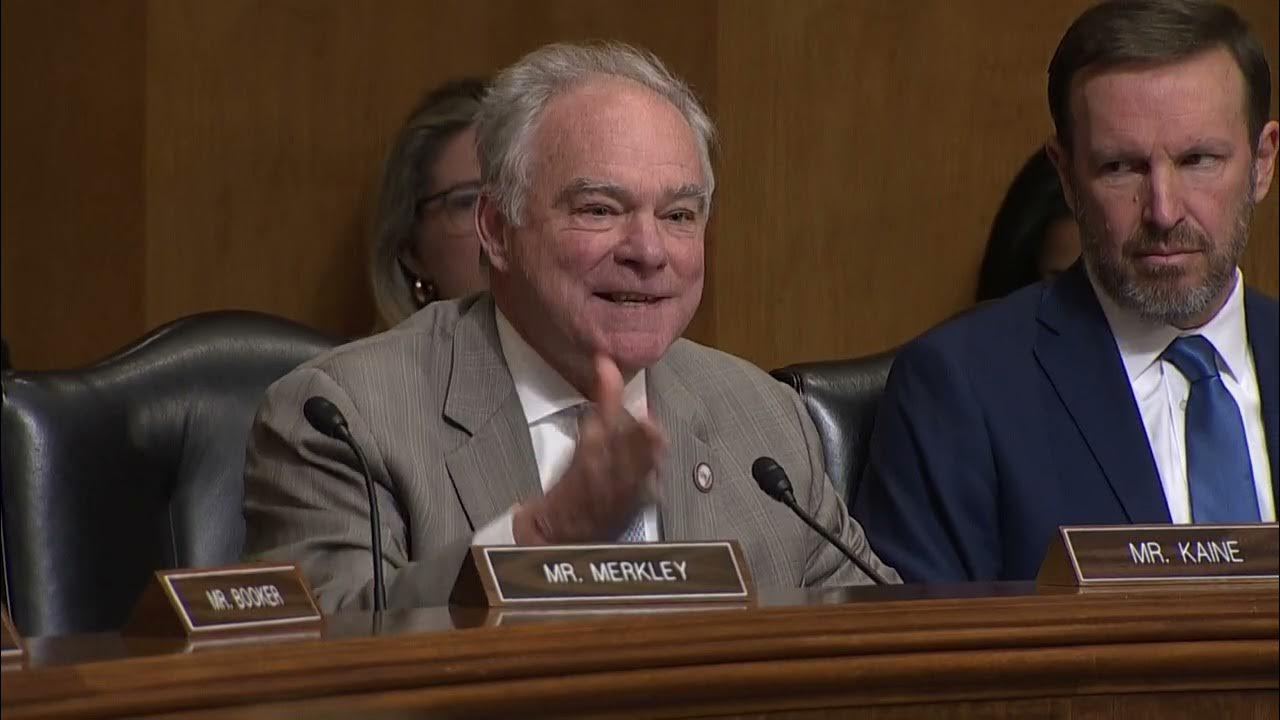
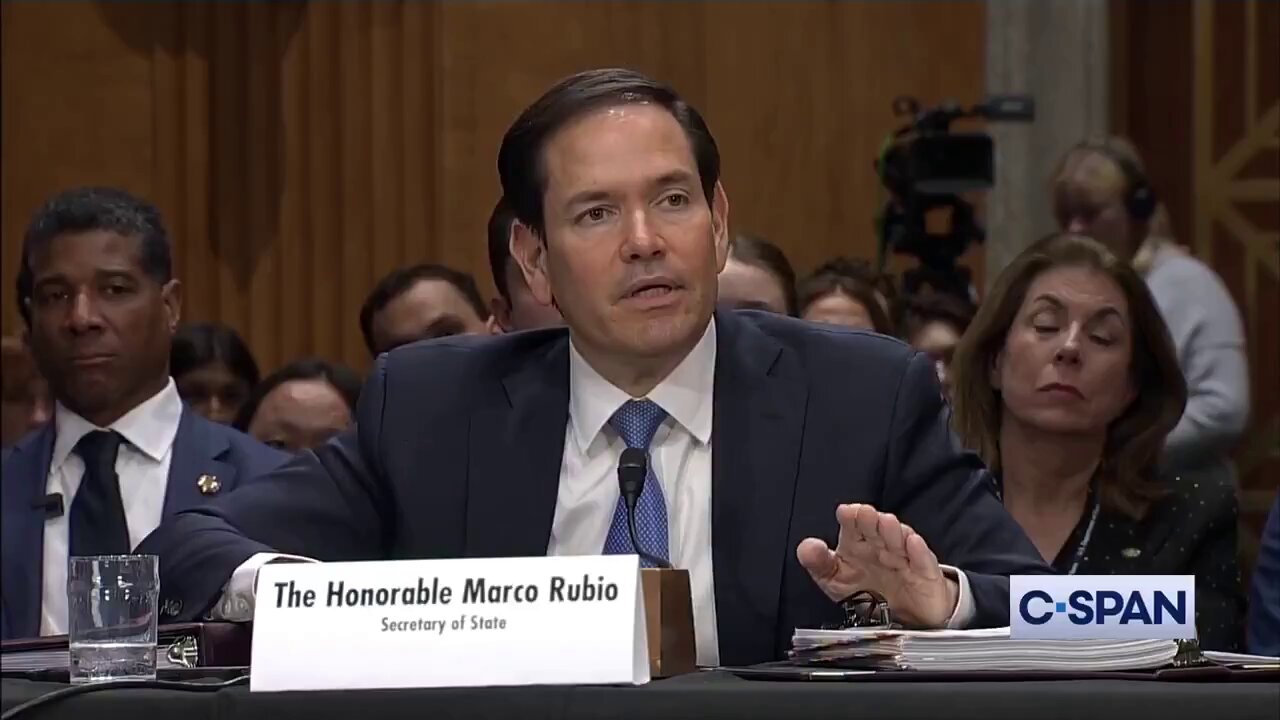
When Kaine probed, “Is it acceptable to choose based on skin color?”, Rubio counter-punched: “I’m not arguing that—you are, because you don’t like that they’re white”. He defended the program as a sovereign prerogative: the U.S. has both the right—and responsibility—to select refugees who align with national interests. He maintained the Afrikaners fit legal refugee criteria, citing the destruction of farms and targeted violence. When Kaine said such a preference contradicts notions of evenhanded policy, Rubio calmly replied, “Our foreign policy does not require evenhandedness”.
Tension Peaks: Who’s Playing the Race Card?
As the exchange escalated, tensions mounted. Kaine pushed back: “Based on the color of somebody’s skin?” Rubio fired again: “You’re the one that’s talking about the color of their skin, not me”. It was a high-stakes faceoff, with each man accusing the other of politicizing race. The room fell silent—a rare, chilling hush in Senate chambers.
Why It Matters
On the surface, it’s a debate about administrative discretion. But beneath lies a deeper cultural fault line. In an era of polarized policies—from asylum caps to detainment measures—a racial subtext colors how refugee decisions are perceived and contested. Kaine’s insistence on universal standards reflects broader Democratic calls for equality; Rubio’s stance channels Republican emphasis on control and national interest. The result? A debate that echoes major electoral themes ahead.
Broader Fallout
The implications reach far beyond this hearing. Critics—like Senator Chris Van Hollen—have decried the move as “global apartheid,” arguing it turns an emergency safety program into a political spotlight. Abroad, South Africa’s foreign ministry says claims of Afrikaner persecution are “unfounded”. And domestically, the issue feeds into an explosive conversation about how America defines compassion, fairness, and identity.
What Comes Next?
Will the Trump-era policy expand or be eviscerated by future administrations? Will this clash recalibrate how Congress oversees refugee decisions? And above all: can refugee programs ever transcend partisan optics—or are they destined to reflect them?
What began as a hearing about migration morphed into a cultural moment: two powerful voices duking it out over race, policy, and principle. Neither side blinked—or backed down. But the real verdict lies in how America continues to define refuge…and whether the nation can reconcile race, representation, and rule of law.