Senate Minority Leader Chuck Schumer, the New York Democrat who just emerged from the ‘Schumer Shutdown’ politically wounded, is watching his party self-destruct before his eyes, and it could even lead to his own undoing, according to political observers who are watching things play out in the nation’s capital.
That opinion is shared by conservative radio host and professor Hugh Hewitt, who predicted that Schumer would not win a primary contest against Rep. Alexandria Ocasio-Cortez (D-N.Y.) if she chooses to run against him as their Democratic Party shifts further and further to the hard left.
“Before I let you go, I know you’re not a gambling man, but does Chuck Schumer survive this? I mean, it seems designed to insulate him from AOC, and if that was his goal, I don’t think it worked,” Fox News host and former GOP congressman Trey Gowdy asked Hewitt during a segment on his Sunday show.
“I do think he survives it for a very selfish reason by the other Democrats. Nobody wants that job. Someone’s going to have to open the government again. He’s already got — he’s a pin cushion of arrows, so there’s nothing he can really lose,” Hewitt began before dropping his prediction.
“He’s not going to win if AOC runs against him in 2028. I would not be surprised if he is announcing his retirement early in 2027 to clear the way. He’s been in government for 50-plus years. Sometimes it’s time to go home and there’s no reason not to use that if a guy has been beat up this badly, and boy, has he been beaten up pretty badly,” he added.
WATCH:
A New York Post editorial board piece published a week ago noted that rank-and-file Democrats are largely dispirited and frustrated after a lengthy shutdown failed to win concessions from majority Republicans on issues important to their party.
“Democrats pointlessly kept the government shut down for 41 days (and still counting!), purely to satisfy their squalling left flank’s need to do something to ‘resist’ President Donald Trump,” the editorial began.
“After they shut it down, they opted to claim the point was to force the GOP to extend expiring Covid-era Affordable Care Act subsidies — though the Dems themselves had set the expiration date back in 2021,” it continued. “Yet the true reason was simply that Democratic grassroots activists and donors are furious that they can’t get their way in Washington, and insisted that their congresscritters express their rage.
“After they shut it down, they opted to claim the point was to force the GOP to extend expiring Covid-era Affordable Care Act subsidies — though the Dems themselves had set the expiration date back in 2021,” it continued. “Yet the true reason was simply that Democratic grassroots activists and donors are furious that they can’t get their way in Washington, and insisted that their congresscritters express their rage.
“It doesn’t matter that they’re near-powerless because they lost last year’s elections. That is, ‘saving democracy’ never had anything to do with respecting the wishes of the majority of voters; it
The op-ed noted, too, that the most left-wing base of the Democratic Party in Congress is livid with Schumer, with some even calling for him to be removed.
“Sen. Schumer is no longer effective and should be replaced,” postured Rep. Ro Khanna (D-Calif.).
There have been rumors for months that AOC has been eyeing a primary challenge to Schumer, which is why he bent to her wing of the party to keep the government shuttered.
A new report from CNN says that, if she does challenge Schumer, AOC would likely win.
CNN chief data analyst Harry Enten reported Tuesday that Schumer’s approval rating has fallen to its lowest level for any Democratic Senate leader since at least 1985.
Political & Economic Commentary
For more than a century, New York City has stood as the beating heart of America’s financial system — a city whose skyline reflects both the ambition and resilience of American capitalism. From the early days of the Erie Canal to the rise of Wall Street, New York thrived on trade, innovation, and opportunity. But as the city now faces another major political turning point, many in the financial world are asking whether that long reign might finally be coming to an end.
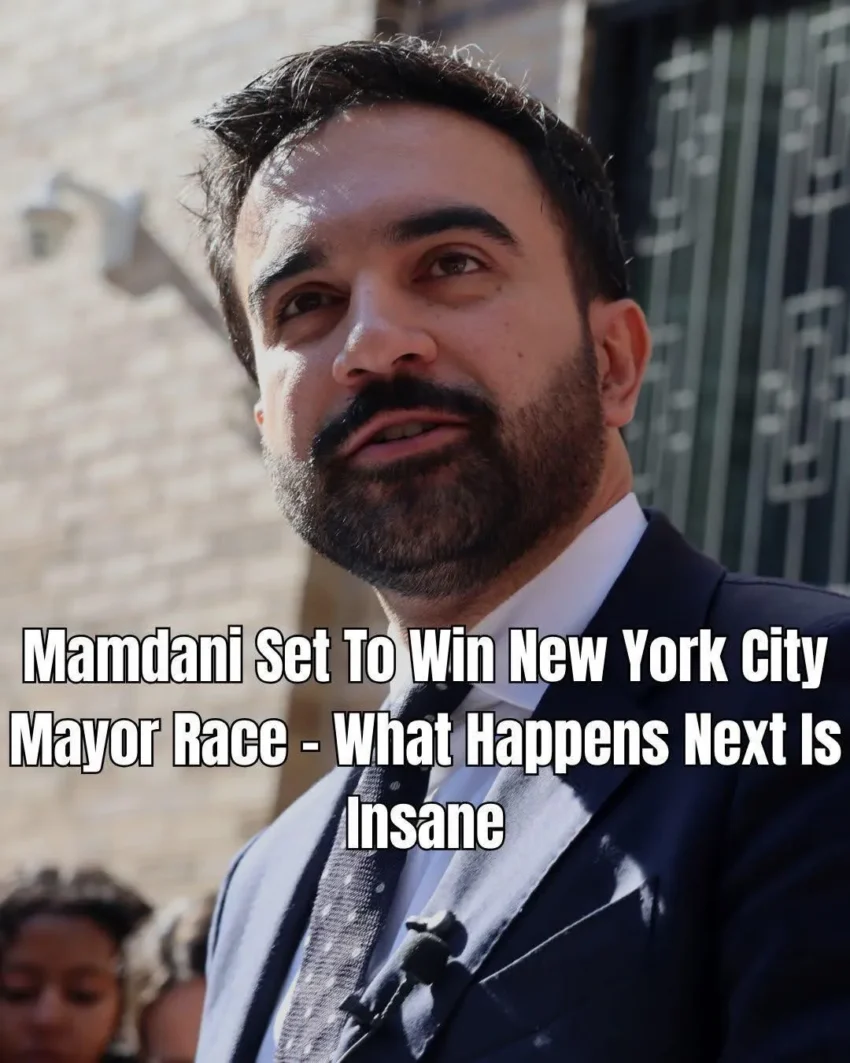
With Zohran Mamdani, a Democratic Socialist, appearing poised to win the city’s mayoral race, corporate leaders and financial institutions are preparing for what some are calling a “historic migration” — not of people, but of capital and business operations. And the destination of choice, increasingly, appears to be Texas.
The Changing Landscape of America’s Financial Capital
New York’s role as the nation’s financial powerhouse was never inevitable, but rather the result of geography, infrastructure, and a business climate that once encouraged growth. The city’s access to trade routes, its early embrace of communication technology, and its dense concentration of talent made it the natural hub for banking and commerce.
But as technology reshaped the modern economy, the traditional advantages that once anchored Wall Street to Manhattan began to fade. In an era of remote work, cloud computing, and instant communication, a company’s location has become less about proximity and more about policy.
And in that context, New York’s high taxes, complex regulations, and steep cost of living have increasingly driven businesses to consider alternatives.
A Political Turning Point
The 2025 mayoral election — one of the most closely watched in decades — has become a referendum on what kind of city New York wants to be.
Zohran Mamdani, a state assemblyman from Queens and outspoken advocate of democratic socialism, has energized younger voters with a message centered on economic equity, housing justice, and public ownership of key services. His supporters argue that decades of inequality, rising rents, and corporate privilege have created a city that works for the few while leaving millions behind.
But to the financial world, Mamdani’s rise represents something else entirely — a moment of reckoning.
“His policies are deeply concerning for anyone in finance,” said James Holloway, an economist with the Manhattan Policy Institute. “If you’re talking about raising business taxes, implementing wealth surcharges, or introducing rent freezes, you’re signaling to the markets that the city is moving in a direction that discourages growth.”
Holloway is not alone in that assessment. Even before the election, several major banks and investment firms had begun expanding their operations outside of New York, seeking both lower costs and friendlier regulatory environments.
Wall Street Looks South
Among the most notable relocations and expansions are those by Goldman Sachs, JPMorgan Chase, Wells Fargo, Charles Schwab, and Bank of America. Collectively, these financial giants represent trillions of dollars in assets and hundreds of thousands of jobs.
In the past five years, they have each established or expanded major campuses in Texas, particularly in Dallas, Austin, and Houston. The move, which began as a response to the COVID-19 pandemic and the rise of remote work, has evolved into a broader strategic realignment.
Texas, with its zero state income tax, lower corporate rates, and less restrictive business regulations, has marketed itself as the new frontier for finance and innovation.
“Dallas is now the second home of American finance,” said Richard Ortega, a commercial real estate analyst based in Texas. “It’s not about abandoning New York; it’s about diversification. Companies want flexibility, and Texas offers that without the overhead.”
Even so, few executives will say publicly that they’re leaving New York entirely. Most describe their strategy as “increasing operational presence” — a diplomatic way of saying they’re shifting critical functions elsewhere while keeping a symbolic or legal footprint in Manhattan.
But for many on Wall Street, the writing is on the marble façade of the New York Stock Exchange: the center of gravity is shifting.
The Ripple Effect on the City’s Economy
If financial institutions continue this migration, the economic consequences for New York could be profound. The finance and insurance sector accounts for roughly 20% of the city’s tax revenue, according to the New York Comptroller’s Office.
A reduction in that base — even by a few percentage points — could translate into billions of dollars lost annually, potentially affecting everything from public housing projects to school funding.
“People think of Wall Street as an abstract symbol of wealth,” said Ellen Cho, a professor of urban economics at Columbia University. “But the reality is that financial firms generate a massive portion of the tax base that keeps New York running. If they start leaving, the impact will be felt across all five boroughs.”
Already, real estate developers have reported declining demand for office space in the Financial District, while residential leasing in Midtown has cooled as executives relocate to other states.
A Clash of Visions
Mamdani, for his part, has dismissed the notion that his election would drive businesses away. “The people of this city deserve a government that works for them, not for the billionaires,” he said during his final campaign rally in Brooklyn’s Prospect Park.
He has pledged to raise corporate taxes, expand rent control, and increase funding for social programs through a “wealth contribution” model — a proposal that critics warn would accelerate the very economic flight he seeks to prevent.
Supporters argue that these measures are necessary to correct decades of inequality. “For too long, we’ve lived in a city where Wall Street thrives and working people struggle,” said Maria Hernandez, a community organizer from the Bronx. “This election is about fairness, not fear.”
But fairness, economists say, must be balanced with fiscal stability. “You can’t redistribute what you no longer have,” noted Holloway. “If capital leaves, it doesn’t come back easily.”
Texas Welcomes the Opportunity
Meanwhile, in Austin, Dallas, and Houston, local officials are already preparing for what they see as an influx of financial operations and skilled workers.
Governor Greg Abbott, who has long courted companies fleeing high-tax states, recently stated that “Texas stands ready to welcome every business that wants to grow, innovate, and prosper.”
Several Fortune 500 firms that previously operated in New York now maintain their headquarters or secondary offices in Texas. The Texas Economic Development Corporation estimates that financial and technology sectors have created over 200,000 new jobs since 2020 as a direct result of relocation trends.
For cities like Dallas, this migration represents more than just economic growth — it’s an opportunity to redefine the national balance of financial power.
The Road Ahead
If Mamdani does take office, his administration will face a monumental challenge: proving that a left-leaning, equity-focused economic model can coexist with the realities of a global financial hub.
For Wall Street, the coming months may determine whether New York remains its historic home or becomes merely one of several operational outposts scattered across the Sun Belt.
The outcome of this experiment — one part political and one part economic — will reverberate far beyond the five boroughs.
As the markets open on Wednesday morning, investors, analysts, and policymakers alike will be watching not only for election results, but for something much larger: a sign of whether the capital of capitalism can adapt to a new ideological era, or whether it will cede that title to the South.