A New Chapter in America’s Energy Story
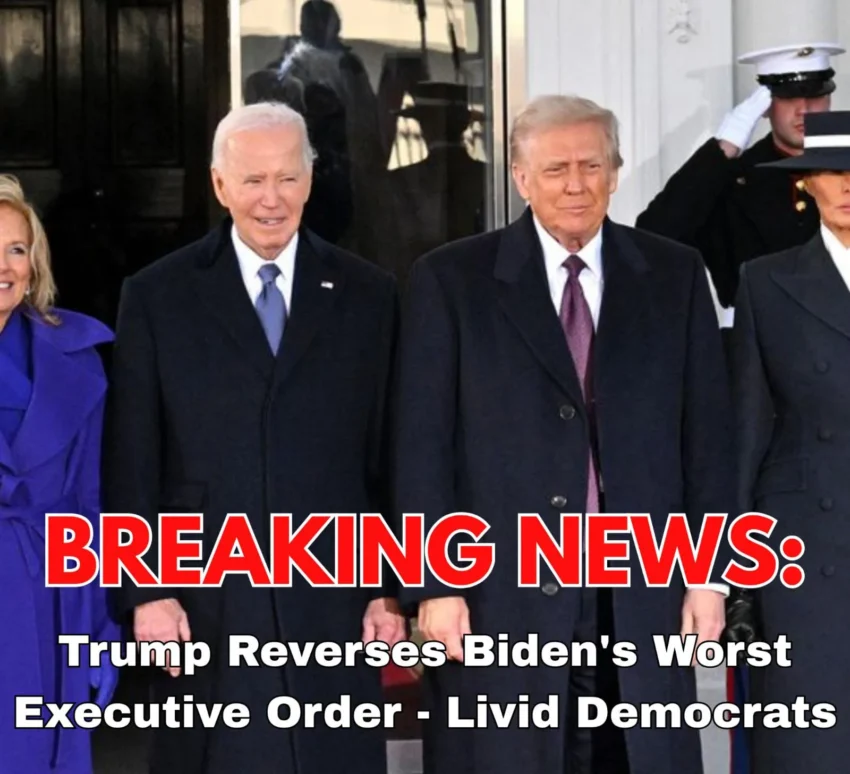
In a sweeping move that redefines the nation’s energy landscape, President Donald Trump on Thursday overturned a signature Biden-era restriction on oil and gas exploration across millions of acres of federal land in Alaska. The action—one of the most consequential energy decisions of Trump’s current term—opens more than 13 million acres of the National Petroleum Reserve in Alaska (NPRA) to potential development, effectively dismantling a 2024 rule issued under former President Joe Biden.
The NPRA, a vast 23-million-acre expanse on Alaska’s North Slope, was originally set aside by Congress in 1923 as an emergency fuel reserve for the U.S. Navy. It remains the largest block of untapped public land in the country, rich in oil, natural gas, and mineral deposits. For decades, it has stood at the center of America’s recurring debate over energy independence versus environmental preservation.
Trump’s order marks a decisive turn in that debate. The Department of the Interior, led by Secretary Doug Burgum, announced the final rule reversal early Thursday, calling it a “restoration of common sense and sovereignty” over American energy resources.
“By rescinding the 2024 rule, we are following the direction set by President Trump to unlock Alaska’s energy potential, create jobs for North Slope communities, and strengthen American energy security,” Burgum said. “This action restores balanced management and ensures responsible development that benefits both Alaska and the nation.”The rule change will be published in the Federal Register on Friday, but the announcement itself has already ignited a national conversation—one that bridges economics, environmental ethics, and geopolitics.
From Biden’s Restrictions to Trump’s Reversal
In 2024, the Biden administration issued a sweeping conservation rule that barred new drilling leases on 10.6 million acres within the NPRA and tightened restrictions on another 2 million acres, citing concerns about climate change, caribou migration, and subsistence hunting. It was hailed by environmental groups as a victory for conservation and Indigenous sovereignty.
But industry leaders and many Alaskan officials saw the move as a chokehold on the state’s economy. Oil production taxes and royalties fund much of Alaska’s public services, including healthcare, education, and rural development. Under Biden’s rule, developers faced permitting gridlock and declining investment confidence.
“Washington’s decisions were strangling our communities,” said Nagruk Harcharek, president of Voice of the Arctic Iñupiat, an organization representing Alaska Native corporations and North Slope villages. “We rely on responsible energy development to support our way of life. Without it, our schools, clinics, and infrastructure crumble.”
Trump’s rescission directly responds to that criticism. It reopens roughly half the NPRA to new leasing and exploration while maintaining some environmental safeguards, particularly around Teshekpuk Lake—one of the most ecologically sensitive areas in the Arctic.
For Trump, the rollback is both symbolic and strategic. It reinforces his “America First Energy” agenda, a central pillar of his policy since his first term, emphasizing fossil-fuel dominance, deregulation, and domestic production as the cornerstone of economic strength
Energy Security Meets Economic Realities
The Trump administration’s announcement comes at a pivotal moment for the U.S. economy. Despite record-high domestic oil production—surpassing 13 million barrels per day in late 2025—energy prices remain volatile, driven by international tensions, supply disruptions, and rising global demand for natural gas.
Trump has repeatedly blamed Biden’s earlier climate regulations for inflationary energy costsand reduced industrial competitiveness. The White House’s statement on Thursday framed the Alaska decision as a direct measure to reduce household and business energy bills.
“This is about putting American workers, consumers, and families first,” the statement read. “Every barrel produced here at home means less dependence on hostile regimes abroad and lower costs at the pump.”
Independent analysts agree the move could stimulate billions in new investment across the North Slope, where exploration companies have waited years for regulatory clarity. The return of federal lease auctions, industry experts say, could create tens of thousands of jobs and generate hundreds of millions in royalty revenues for both federal and state coffers.
Energy economist Dr. Laura Kline of the University of Texas notes: “This is not just about Alaska—it’s about signaling to markets that the U.S. intends to remain the global leader in hydrocarbon supply. That reassurance affects everything from LNG export terminals in Texas to fuel prices in Ohio.”
Alaska’s Energy Infrastructure: A Legacy Reignited
Central to the policy shift is the Trans-Alaska Pipeline System (TAPS)—an 800-mile engineering marvel that for nearly half a century has been the backbone of America’s northern oil production.
Built between 1974 and 1977, the pipeline connects Prudhoe Bay’s oil fields on the Arctic coast to the port of Valdez, traversing mountains, tundra, and permafrost. At its peak in the 1980s, TAPS carried over 2 million barrels of oil per day. But as North Slope output declined, throughput fell to under 500,000 barrels—raising concerns that low volumes could eventually threaten the pipeline’s operational viability.
The renewed drilling in the NPRA, industry leaders argue, could breathe new life into this infrastructure. “The pipeline is Alaska’s lifeline,” said John Hendrix, former energy advisor to the state’s governor. “Without a steady flow, maintenance becomes more expensive and risks of shutdown grow. New production keeps it viable, keeps Alaskans employed, and keeps America’s energy artery open.”
TAPS is managed by the Alyeska Pipeline Service Company, a consortium of major energy firms. The company issued a cautious statement welcoming the administration’s decision, noting that while environmental standards must be respected, “the operational and economic stability of Alaska’s energy system depends on sustained production.”
Environmental Opposition and Legal Challenges Ahead
Predictably, environmental advocacy groups reacted with alarm. Organizations like the Natural Resources Defense Council (NRDC), Sierra Club, and Earthjustice condemned Trump’s rollback, pledging immediate legal action.
“This decision represents one of the largest environmental rollbacks in modern U.S. history,” said Rebecca Salazar, Arctic program director for Earthjustice. “Opening millions of acres of pristine wilderness to drilling is a direct assault on the planet’s climate stability.”
Critics argue that expanded drilling undermines U.S. commitments under international climate accords and risks further endangering Arctic ecosystems already stressed by rapid warming. They also warn that fossil fuel expansion diverts investment away from renewable energy innovation.
Legal experts anticipate that lawsuits will hinge on the National Environmental Policy Act (NEPA)and potential violations of the Endangered Species Act. Plaintiffs are expected to challenge the adequacy of the administration’s environmental review and allege that rescinding Biden’s rule constitutes an “arbitrary and capricious” action under administrative law.
However, the Trump administration appears ready for battle. Interior Department attorneys have spent months preparing for litigation, crafting what they describe as an “airtight procedural record” documenting economic need, environmental mitigation measures, and broad public consultation.
“Courts defer to agencies when procedures are followed meticulously,” noted environmental law scholar Robert Haskins of Georgetown University. “If Interior checked every box, plaintiffs may face an uphill climb.”
The Broader Economic Context: From “Green Transition” to “Energy Dominance”
The policy reversal also signals a broader philosophical shift—from Biden’s “clean energy transition” to Trump’s renewed emphasis on energy abundance and affordability.
During his term, Biden prioritized cutting emissions, introducing aggressive climate targets, and pouring federal subsidies into wind, solar, and electric vehicles. Yet critics say those measures, while well-intentioned, left the nation vulnerable to energy shortfalls and rising costs, particularly as AI-driven data centers and electric infrastructure expanded faster than renewable capacity.
Trump, by contrast, has promised to “unleash American energy” through oil, gas, nuclear, and even advanced coal technologies. In speeches, he has framed fossil fuels not as relics but as pillars of national resilience and global influence.
“Energy is wealth. Energy is power,” Trump said at a Houston rally earlier this year. “We’re going to produce it here, ship it from here, and sell it on our terms—not beg for it from anyone else.”
Supporters argue this policy shift is pragmatic, not ideological. With global oil demand projected to rise for at least another decade, they contend that cutting domestic supply merely shifts production—and emissions—to less regulated nations.
“If we don’t drill it, someone else will,” said Sen. Dan Sullivan (R-Alaska). “The difference is that we do it cleaner, safer, and with better labor and environmental standards than anyone else on Earth.”
Indigenous Perspectives: Between Tradition and Modernization
Among Alaska’s Indigenous communities, reactions to the Trump administration’s decision are mixed but nuanced.
For many in the North Slope Borough, oil development has funded a generation of self-governance. Taxes and royalties have financed modern schools, hospitals, and sanitation systems in a region where logistical costs are staggering.
“We are not anti-environment,” said Mayor Charles Brower of Utqiaġvik (formerly Barrow). “We are pro-survival. Oil development gave us heat, jobs, and opportunity. Without it, our children face an uncertain future.”
Still, other Alaska Native voices remain skeptical. The Gwich’in Steering Committee, representing communities farther south, expressed concern about cumulative ecological impacts. “We are stewards of this land,” said committee member Sarah James. “The Arctic is not just a resource—it’s our home.”
Trump officials insist that the administration will maintain “rigorous consultation” with tribal governments and incorporate traditional knowledge into environmental reviews. Whether that promise satisfies skeptics remains to be seen.
Industry Response: A Surge of Optimism
Within hours of the announcement, energy markets responded with cautious enthusiasm. Shares of ConocoPhillips, ExxonMobil, and Hilcorp, all of which have active leases or exploration interests in Alaska, rose modestly in after-hours trading.
“This is a confidence signal,” said Mark Cross, senior analyst at Wood Mackenzie. “It tells investors the U.S. government once again sees oil and gas as assets, not liabilities.”
Industry groups hailed the reversal as a return to energy realism. The American Petroleum Institute (API) called it “a decisive step toward long-term energy affordability and security.”
“The world’s demand for oil and gas is not declining; it’s growing,” API President Mike Sommers said. “Policies must reflect that reality. Today’s decision moves us closer to an energy policy that supports growth, jobs, and innovation.”
The Global Context: Energy as Geopolitical Leverage
Beyond domestic economics, the decision reverberates globally. Trump has framed energy production as a strategic weapon in foreign policy, arguing that America’s ability to export oil and liquefied natural gas (LNG) reduces the leverage of authoritarian regimes like Russia, Iran, and Venezuela.
“Every time we produce more energy at home, the dictators and warlords of the world lose power,” Trump said earlier this month.
Analysts agree that expanding Arctic output could help stabilize global supply chains, particularly if geopolitical tensions in the Middle East or Eastern Europe escalate. “Energy independence is no longer a slogan—it’s a shield,” said Col. Michael Andrews, former Pentagon energy advisor.
Environmental Innovation Within Expansion
Interestingly, Trump officials are pairing the rollback with promises of technological safeguards. The Interior Department announced it will incentivize “next-generation drilling” that minimizes surface disturbance and methane leakage, using carbon capture, reinjection, and digital monitoring systems.
“The narrative that environmental protection and energy expansion are incompatible is outdated,” Secretary Burgum said. “We’re harnessing innovation to make sure Alaska leads in both production and preservation.”
This hybrid rhetoric—economic expansion couched in environmental stewardship—reflects the administration’s attempt to broaden its coalition, appealing not just to oil-state Republicans but also to moderates worried about climate impacts.
Political Fallout: The Energy Divide Deepens
The timing of Trump’s move is politically charged. With the 2026 midterms on the horizon, energy policy has emerged as a defining wedge between Republicans and Democrats.
Progressives warn that expanded drilling will accelerate climate change and alienate younger voters. Conservatives counter that green mandates have inflated utility bills and driven inflation.
Polling from the Pew Research Center suggests Americans remain split: 49% favor prioritizing renewables, 46% prioritize fossil fuel production to stabilize prices. Among independents, support for expanded oil drilling has climbed sharply in the past year.
“This issue will define the next decade of politics,” said Dr. Raymond Cruz, a political scientist at George Mason University. “It’s not just about energy—it’s about identity, jobs, and the future of the American Dream.”
Looking Ahead: A New Energy Frontier
As the dust settles, the implications of Trump’s decision will unfold over years. Lease sales could begin as early as 2026, followed by seismic surveys, environmental assessments, and exploratory drilling. If viable reserves are confirmed, production could ramp up in the early 2030s—coinciding with peak global demand projections.
For Alaska, that could mean billions in new revenue. For Washington, a revived argument over how to balance climate responsibility with economic necessity. And for the world, a reminder that the United States—whatever the administration—remains an energy superpower capable of reshaping global markets with a single policy stroke.
Conclusion: Energy Realism Returns
With Thursday’s sweeping action, President Trump has reaffirmed his administration’s belief that American energy production is not the problem—it’s the solution. The decision to reopen 13 million acres of Alaskan wilderness marks more than a policy reversal; it is a philosophical declaration that economic strength, national security, and affordable energy remain inseparable.
Whether history judges this as visionary leadership or environmental regression will depend on outcomes yet unseen. But one truth endures: the story of American energy is far from over. It is a saga written in oil and ambition, shaped by presidents, pipelines, and the endless northern frontier where resource and responsibility meet beneath the Arctic sky.
The political landscape in Washington was rocked this week as Democratic Congresswoman Ilhan Omar found herself at the center of a heated controversy following remarks she made about conservative activist Charlie Kirk, whose assassination has sent shockwaves through the nation’s political circles.
The fallout comes amid growing calls from Republican lawmakers for Omar’s removal from her committee assignments, citing her comments as inflammatory and divisive at a time when the country is grappling with the tragic loss of one of the right’s most influential voices.
Charlie Kirk, founder of Turning Point USA, was widely regarded as a transformative figure in conservative politics, especially among young voters. His assassination, still under investigation, has ignited a fierce debate about political rhetoric, polarization, and the future direction of both major parties.
As news of Kirk’s death broke, outlets like The Wall Street Journal described him as “the man who helped Republicans break through to young voters,” while students and colleagues hailed him as “probably the most influential person in our generation.” Kirk’s ability to mobilize youth and energize grassroots activism made him a formidable force, and his absence leaves a palpable void in conservative circles.
Longtime GOP strategist Mark Halperin observed, “Democrats are still not grasping that influence or its fallouts.” Halperin noted that many in the Democratic Party underestimated Kirk’s significance, failing to appreciate the deep bond he forged with young conservatives and the political consequences of his assassination.
The controversy erupted after Omar responded to Kirk’s staff and supporters in a series of statements that critics say dehumanized the slain activist and his legacy.
“There is nothing more—The answer [is to] pretend that his words and actions have not been recorded, and in existence for the last decade,” Omar said. “These people are full of bleeped, and it’s important for us to call them out.”
Her remarks were quickly seized upon by Republican lawmakers, who accused Omar of contributing to the kind of rhetoric that leads to political violence. “It’s that kind of dehumanization that led to his assassination, to his murder,” said conservative commentator Lisa Boothe during a segment on Fox News’ “America Reports.” Boothe argued that Kirk was targeted not only for his political beliefs but also for his Christian faith, describing his death as “a spiritual battle that supersedes the political one.”
The exchange highlighted the deepening polarization in American politics, with both sides blaming the other for escalating rhetoric and violence. Boothe went further, stating, “Bullets are flying in one direction. The left is the party that is engaging in this political terrorism—from the attempted assassination of Steve Scalise to President Trump to the assassination of Charlie Kirk.”
Democratic Senator John Fetterman offered a contrasting perspective, urging caution against blanket condemnation. “We can’t just be ‘Trump is always wrong’ or we’re going to set the country on fire,” Fetterman said. “A lot of Americans disagree with you—that does not mean that they are fascists or want to shred the Constitution.”
The backlash against Omar has been swift. Republican leaders in the House have called for her removal from key committees, arguing that her comments violate standards of decorum and contribute to a toxic political environment. “We cannot tolerate this kind of rhetoric from members of Congress, especially in the wake of such a tragedy,” said House Minority Leader Steve Scalise, himself a survivor of political violence.
Supporters of Omar defend her right to speak out, pointing to her history of advocacy on issues of gun safety and social justice. Omar herself doubled down on her criticism, saying, “I don’t think a single person who has dedicated their entire career to preventing gun safety legislation from getting passed in this House has any right to blame anybody else but themselves for what is happening.”
As the debate rages, attention has turned to the future of Turning Point USA, the organization Kirk founded. Halperin speculated that Kirk’s death could galvanize the group, potentially transforming it into a powerful wing of the Republican National Committee. “If they do and they run it well, that could be a private, party-affiliated powerhouse unlike anything we’ve ever seen in American politics,” Halperin said.
The organization has already seen an outpouring of support from conservatives across the country, with many pledging to continue Kirk’s mission of engaging young voters and challenging liberal orthodoxy.
The controversy surrounding Omar’s comments and the broader reaction to Kirk’s assassination underscore the challenges facing America as it navigates an era of intense political division. Calls for unity and reconciliation have been met with skepticism, as accusations of “political terrorism” and “dehumanization” fly from both sides of the aisle.
Boothe’s remarks on Fox News struck a chord with many viewers: “We are seeing a wickedness and evilness in this country, people dancing on the grave of a great man, a great father, a great husband, someone who just wanted to do good in this country.”
As Congress debates Omar’s fate and the nation mourns Kirk’s loss, the question remains: Can America find a way to move beyond the hatred and polarization that have come to define its politics?
In the coming days, House leadership is expected to hold hearings on Omar’s committee assignments, with both parties bracing for a contentious fight. Meanwhile, Turning Point USA is planning a nationwide series of rallies and events to honor Kirk’s legacy and renew its commitment to conservative activism.
Whether this moment will serve as a catalyst for change or further entrench the divisions remains to be seen. What is clear is that the assassination of Charlie Kirk—and the reaction it has provoked—will reverberate through American politics for years to come
New Yorkers Rally Against Zohran Mamdani as Anti-Communism Protests Sweep NYC
New York City saw tense street demonstrations this week as protesters gathered outside City Hall and across parts of Manhattan to denounce Democratic Socialist Assemblyman Zohran Mamdani, accusing him of promoting far-left ideology and “communist” values that, they claim, threaten the city’s future.
While some viral headlines exaggerated the event by claiming that New Yorkers had “kicked Mamdani out of the city,” the reality was a large, emotional protest — not an expulsion. The rallies reflected a growing wave of opposition against Mamdani’s policies and rhetoric as he continues to gain national attention for his unapologetically socialist platform.
The demonstration began early Tuesday, when hundreds of protesters carrying American flags and placards reading “No to Communism in New York” and “We Reject Radicalism” marched toward City Hall. Organized by a coalition of small business owners, police union supporters, and conservative community leaders, the march aimed to express frustration with what participants see as a growing influence of socialist and anti-capitalist movements within local politics.
Some demonstrators accused Mamdani — a member of the Democratic Socialists of America and a vocal critic of capitalism and U.S. foreign policy — of being out of touch with working-class New Yorkers. “We built this city through hard work and opportunity,” said Maria Gonzalez, a small-business owner from Queens. “Now people like Mamdani want to destroy everything that makes New York thrive.”
Tensions rose briefly when Mamdani was confronted by a group of protesters during a public event in Midtown. Videos circulated online showing demonstrators shouting at the assemblyman, calling him “anti-American” and “a communist.” Security quickly intervened, escorting Mamdani away from the crowd as chants of “Go back to Queens!” and “No Communism in NYC!” echoed through the streets.
In a statement later that evening, Mamdani condemned the protests as an attempt to silence political dissent. “New York is big enough for debate,” he said. “Those who label every effort to fight inequality as ‘communism’ are afraid of change. I’m not going anywhere — I’m staying right here to fight for working families.”
Political analysts note that Mamdani has become a lightning rod for controversy since entering the Assembly in 2021. His support for rent freezes, free public transportation, and calls to “globalize the intifada” have drawn both praise and fierce criticism. His candidacy for New York City mayor in 2025 has further amplified divisions between progressives and moderates in the city’s Democratic base.
The protests highlight a broader ideological clash playing out across the United States — one between populist conservatism and a resurgent left that embraces democratic socialism. For many New Yorkers, Mamdani represents a new generation of politicians pushing the limits of progressive politics. For his opponents, he embodies the dangers of radicalism.By nightfall, police reported no major incidents, though videos of the marches spread widely online, fueling polarized debate nationwide. Whether the backlash will hurt Mamdani’s political ambitions or strengthen his appeal among supporters remains to be seen. What is clear, however, is that New York — often seen as a microcosm of America’s political divide — continues to be a stage where ideology meets street-level passion.