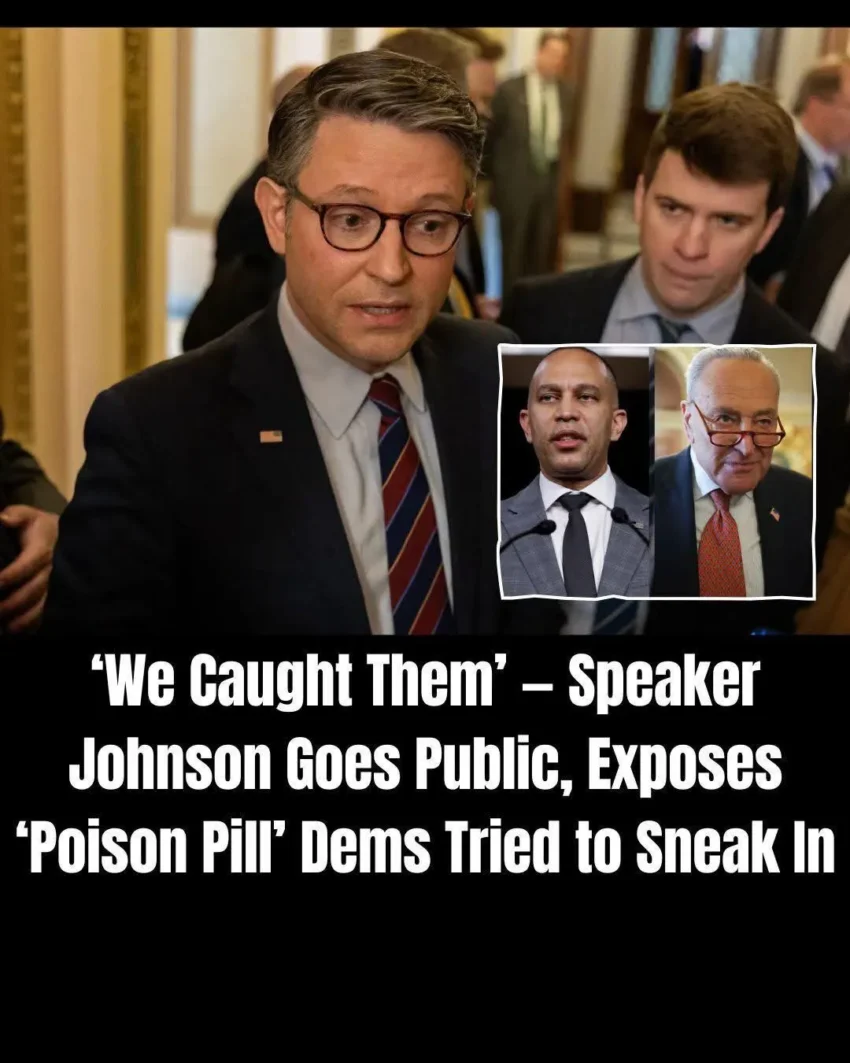
As the federal government inches toward reopening after weeks of uncertainty, House Speaker Mike Johnson has intensified criticism of his Democratic counterparts, alleging that they attempted to insert what he described as a “poison pill” into negotiations over a stopgap funding measure. At the center of the dispute is the continued debate over the future of Affordable Care Act (ACA) subsidies—specifically, pandemic-era enhancements that are set to expire at the end of the year.
In a Monday interview with Newsmax, Johnson outlined what he believes will be the next chapter in the legislative battle: an effort by House Republicans to address rising healthcare costs. While the shutdown itself has drawn most of the public focus, Johnson argued that the deeper issue is the financial sustainability of the nation’s healthcare system.
A Government Shutdown and a Roadblock in the Senate
On September 19, the House narrowly passed a continuing resolution on a 217–212 vote. The measure was intended to keep the government funded through November 21, buying lawmakers more time to negotiate long-term appropriations. However, the proposal quickly met resistance in the Senate, where a broader debate regarding ACA subsidies stalled progress.
Democratic lawmakers have sought to extend the additional subsidies introduced during the COVID-19 pandemic. These subsidies temporarily lowered premiums for millions of Americans using ACA marketplaces and softened the impact of rising insurance costs driven by inflation and increased demand for healthcare services. With the provisions set to expire at the end of the year, Democrats maintain that allowing them to lapse could destabilize insurance markets and increase premiums for lower- and middle-income households.
Republicans, however, have criticized the subsidies as costly, temporary fixes that mask deeper structural issues. Johnson reiterated this view during his interview, framing the subsidies as a financial burden with long-term implications. He maintained that continuing them without addressing the root causes of rising premiums would be fiscally irresponsible.
Negotiations and the One Big Beautiful Bill Act
Johnson emphasized that House Republicans had initially incorporated several healthcare reform provisions into what they called the “One Big Beautiful Bill Act.” According to the Speaker, these provisions were designed to confront rising premiums and address systemic inefficiencies in the healthcare system. Although he did not publicly outline each component in detail, he suggested that the changes would have reduced costs for consumers rather than funneling additional funds toward insurers.
Johnson said that these provisions were removed during closed-door negotiations, defending the Republican position that subsidies for insurance companies were contributing to widespread inflation in the healthcare sector.
“The problem is that we are subsidizing very wealthy insurance companies,” Johnson stated during the interview. “That is not helping costs go down. It’s driving premiums up even higher.”
Johnson argued that decades of incremental policy changes had left the healthcare system overly reliant on federal intervention and federal subsidies. He contended that reversing this trend is necessary for meaningful reform.
Democrats Push Back: A Matter of Stability
While Johnson focused on the economic aspects of the subsidies, Democrats argue that the ACA enhancements have played a stabilizing role in a volatile market. They note that since 2020, millions of Americans have benefited from lower premiums, making coverage more accessible and reducing the number of uninsured households during a period of economic uncertainty.
According to Democratic lawmakers, letting these subsidies expire without a long-term replacement could cause premiums to surge for many Americans—especially those who fall just above the income threshold for traditional subsidies.
With enrollment season underway, the stakes are high. Any uncertainty about insurance costs or eligibility criteria can influence consumer behavior and strain healthcare providers already grappling with staffing shortages and inflationary pressures.
The Senate’s Next Move and What It Means for the Shutdown
As of Monday, the Senate advanced its own version of a temporary funding bill, clearing a key procedural hurdle. A final vote is expected soon. The Senate bill would keep the government funded through January 30—an extension beyond the House’s original plan. Whether the House will accept that timeline remains unclear. Johnson avoided providing a specific date or commitment, indicating that discussions are still ongoing.
“The Senate has done some work, and a final vote is coming,” Johnson said, adding that the House would review the proposal upon its arrival. “But we want reforms. We want to ensure that taxpayer dollars are being used responsibly.”
For Johnson, the debate over subsidies is not merely an isolated issue but a broader representation of the healthcare challenges the country faces. He framed Republican opposition as an attempt to reshape federal spending priorities and reduce overall costs.
A Long-Term Challenge That Extends Beyond Politics
Healthcare pricing has long been a bipartisan concern, though solutions often divide lawmakers. Rising premiums, the cost of prescription drugs, administrative inefficiencies, and regulatory complexities have created a system that frustrates patients, providers, and policymakers alike. Johnson emphasized that Republicans are ready to offer what he described as “ideas to fix the broken system,” though those ideas remain undefined in public discussions.
Democrats contend that the Republican stance ignores the immediate needs of ordinary Americans, particularly those who depend on the ACA marketplace for coverage. They argue that without the subsidies’ extension, millions could face premium hikes or be forced to consider going uninsured.
Where the Debate Goes From Here
The standoff highlights the broader ideological divide between the two parties: one side pushing for expanded government involvement to stabilize markets and protect consumers, and the other pressing for structural reform to reduce long-term costs and limit federal spending.
Both sides acknowledge that healthcare costs are rising, and both have signaled a desire to act on the issue once the shutdown is resolved. Yet their visions for how to address that problem remain fundamentally at odds.
As the shutdown negotiations continue, the future of the ACA subsidies—and the broader question of how to reform the healthcare system—will likely remain central points of contention. What happens next will affect not only the political dynamics in Washington but also the financial realities facing millions of American households.
In a dramatic moment that captivated the nation, Senator John Kennedy confronted Supreme Court Justice Brett Kavanaugh during a recent Senate Judiciary Committee hearing, presenting him with an “ethics card” that ignited a firestorm of controversy. The seemingly innocuous gesture quickly spiraled into a high-stakes showdown, highlighting the tension between ethical accountability and judicial independence.
The scene was set in the Senate Judiciary Committee room, where the atmosphere was thick with anticipation. Cameras flashed as Senator Kennedy approached Justice Kavanaugh, who sat at the witness table, exuding confidence. Kennedy, known for his sharp wit and straightforward demeanor, handed Kavanaugh a small white card emblazoned with ethical guidelines that every federal judge swears to uphold.
“Do you recognize the code you swore to uphold?” Kennedy asked, his voice steady but piercing. The room fell silent, every eye fixed on Kavanaugh as he hesitated, holding the card without speaking. The tension was palpable; even the staff behind Kavanaugh shifted nervously in their seats..
.
.
.
The ethics card, while modest in size, became a powerful symbol in the hearing. It contained the oath that Kavanaugh had taken upon his appointment to the Supreme Court, a reminder of the ethical standards expected of him. Kennedy’s gesture was not merely a joke; it was a deliberate provocation aimed at holding Kavanaugh accountable for his actions and decisions.
As Kavanaugh’s fingers brushed the edge of the card, he remained silent, prompting Kennedy to press further. “This is the code you swore to. Do you recognize it?” The senator’s insistence turned the moment into a spotlight on the judge’s commitment to ethical conduct.
Kavanaugh, who had previously spoken eloquently about judicial independence and ethical standards, now found himself cornered. His initial confidence began to wane as the pressure mounted. “I’m committed to the highest ethical standards,” he finally stated, attempting to deflect the confrontation. However, Kennedy was relentless.
“Procedures aren’t principles,” Kennedy shot back, emphasizing that the ethics card represented more than just a set of guidelines; it was a promise to the American people. The optics of the situation were brutal. The card lay between them like evidence in a trial, and Kavanaugh’s refusal to engage with it spoke volumes.
As the hearing progressed, it became clear that the balance of power had shifted. Kennedy’s calm demeanor contrasted sharply with Kavanaugh’s growing discomfort. The senator’s questions cut through the tension, turning Kavanaugh’s hesitations into contradictions. Each pause in Kavanaugh’s responses seemed to amplify the stakes, and the atmosphere grew increasingly charged.
The press bench leaned forward, reporters typing furiously as the drama unfolded. Kennedy’s strategy was clear: he was not only questioning Kavanaugh’s actions but also using the ethics card to expose a potential hypocrisy in the justice’s refusal to acknowledge the very standards he had once championed.
Just as the tension reached its peak, a committee clerk burst into the hearing room, carrying a thin folder and a phone flashing with notifications. This unexpected interruption added a new layer to the confrontation. Kennedy seized the moment, sliding the leaked memo across the table to Kavanaugh.
“Before you answer, I’ve just received a record,” Kennedy stated, revealing that the memo contained internal instructions regarding how Kavanaugh should navigate ethical inquiries. The room erupted in whispers as reporters processed the implications of the leak.
The memo, dated six months prior, instructed Kavanaugh to “avoid direct engagement with external ethics inquiries” and to “preserve judicial independence optics at all costs.” This revelation was a bombshell, suggesting that Kavanaugh had been aware of the ethical implications of his actions and had crafted a strategy to sidestep them.
Kavanaugh’s composure cracked as he faced the weight of his own words. Kennedy’s calm questioning transformed the memo into a weapon, forcing the justice to confront the contradiction between his public statements and private strategies. “You predicted this confrontation. You scripted your refusal, but you didn’t plan for the leak,” Kennedy asserted, driving home the point that Kavanaugh’s actions were under scrutiny.
Kavanaugh attempted to frame his response, claiming the memo reflected “internal strategy, not misconduct.” But Kennedy was unyielding. “It reflects intent. And now it’s public,” he countered, as the implications of Kavanaugh’s actions became increasingly clear.
As the hearing unfolded, the public began to take notice. News tickers updated in real-time, and social media exploded with reactions to the confrontation. Hashtags like #ReadTheCode began trending, reflecting a growing demand for accountability from public officials. Viewers at home could sense the gravity of the moment, and the implications of Kavanaugh’s refusal to engage with the ethics card resonated far beyond the hearing room.
Kennedy’s strategy was working. He had turned Kavanaugh’s own words against him, creating a narrative that would dominate headlines for days to come. The optics of the situation painted Kavanaugh as someone unwilling to uphold the very standards he had publicly espoused.
As the hearing drew to a close, Kennedy leaned into the microphone, his voice steady and authoritative. “Judge, ethics aren’t optional. They’re the line between justice and power. And you just showed the country which side you’re on.” The weight of this statement hung in the air, leaving Kavanaugh visibly shaken.
The silence that followed was deafening. Kavanaugh sat frozen, his mouth opening and closing as he struggled to respond. The cameras captured every moment, broadcasting the tension to viewers across the nation.
Kennedy stood, collecting his materials without glancing at the cameras. “This committee will remember your silence,” he stated, his back straight as he walked toward the exit. The optics were powerful, symbolizing a decisive moment in the ongoing conversation about ethics and accountability in government.
The confrontation between Senator Kennedy and Justice Kavanaugh marked a significant moment in American politics. It highlighted the importance of ethical accountability for public officials and the need for transparency in the judiciary. As the fallout from the hearing continued to unfold, it became clear that Kavanaugh’s refusal to engage with the ethics card would have lasting implications for his reputation and the public’s trust in the Supreme Court.
In the weeks that followed, discussions about judicial ethics and accountability dominated news cycles, with many calling for greater scrutiny of the actions of Supreme Court justices. Kennedy’s bold move to confront Kavanaugh not only captured the attention of the nation but also set a precedent for future hearings, reminding public officials that their words and actions would be closely examined by the public they serve.
As the country grapples with issues of trust and integrity in leadership, the events of that hearing will be remembered as a pivotal moment in the ongoing quest for accountability in American governance.