Chuck Schumer faces calls to step aside over failure to secure Obamacare subsidies extension
The eight critical votes that advanced a short-term spending package on Sunday evening and put the government on the path to re-opening also tore the seams of Democratic Party unity, bringing scrutiny to its shutdown strategy and leadership.
One of the eight said that the plan Democrats had rallied around at its outset had crumbled.
“After six weeks — going on seven weeks — that path wasn’t working,” Sen. Angus King, I-Maine, said. “It wasn’t going to happen. The question was: Does the shutdown further the goal of achieving some needed support for the extension of the tax credits? Our judgment was that it will not produce that result.”
Would it change in a week? Or another week? Or after Thanksgiving? There’s no evidence that it would.”
SHUTDOWN IGNITES STRATEGIST DEBATE: WILL TRUMP AND GOP PAY THE POLITICAL PRICE IN 2026?
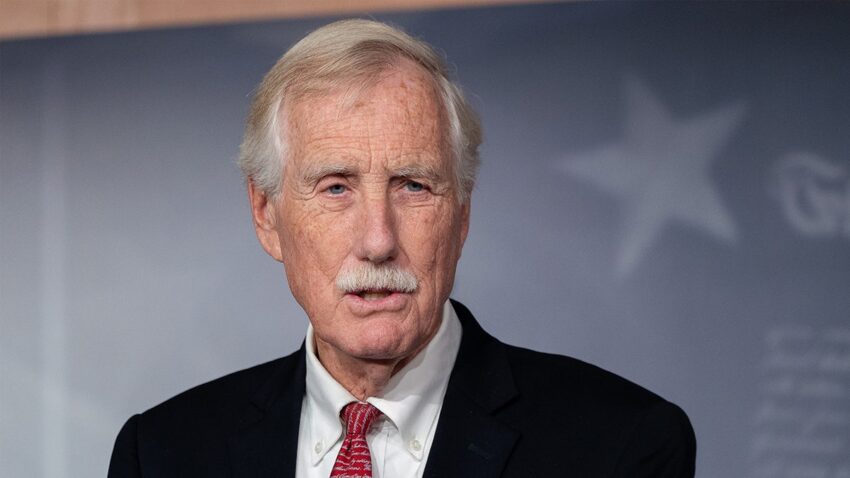
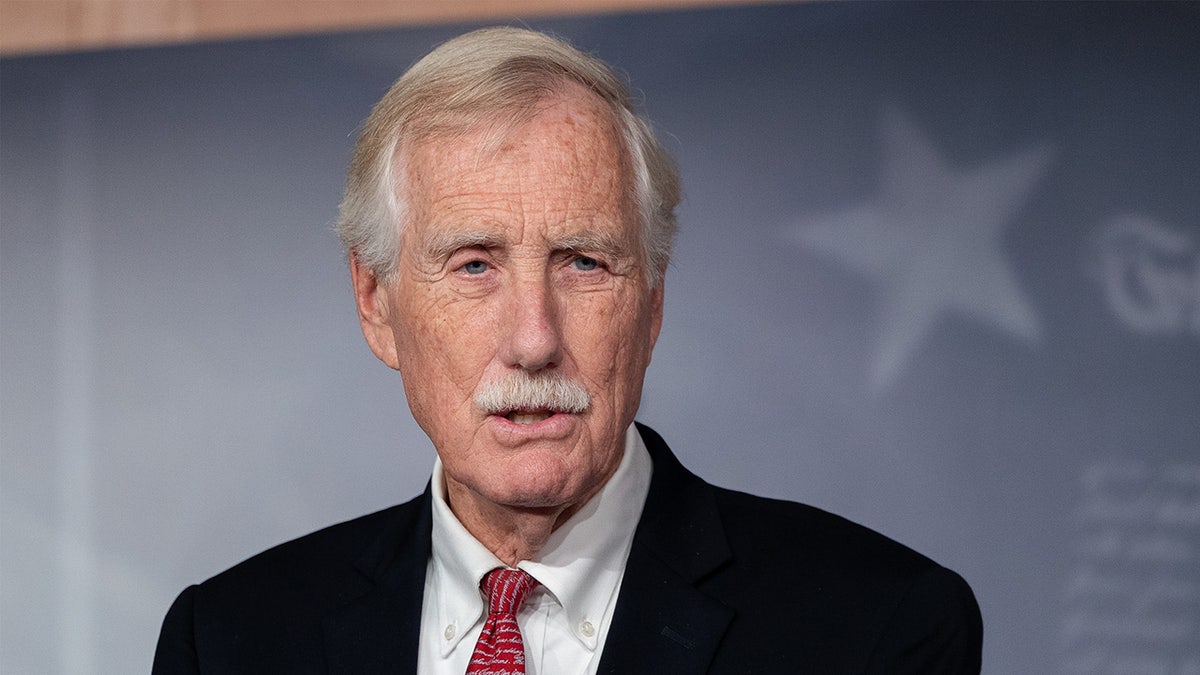
Sen. Angus King, I-Maine, speaks at a press conference with other Senate Democrats who voted to restore government funding in Washington, Nov. 9, 2025. (Nathan Posner/Getty Images)
To other Democrats, it’s the party’s top figures who led a losing effort.
“Senator Schumer is no longer effective and should be replaced. If you can’t lead the fight to stop healthcare premiums from skyrocketing for Americans, what will you fight for?” Rep. Ro Khanna, D-Calif, said in a post on social media on Sunday.
The government first plunged into a shutdown 40 days ago on Oct. 1 when Democrats rejected a short-term spending bill advanced by Republicans in the House meant to keep the government afloat until Nov. 21. Democrats had demanded that lawmakers first consider expiring COVID-era Obamacare subsidies set to phase out at the end of the year. Republicans, who saw spending and the tax credits as completely unrelated, refused to negotiate on the tax credits during the shutdown.
Ultimately, Republicans avoided any substantive concessions on the Obamacare credits.
The package advanced by the Senate on Sunday looks to reopen the government through Jan. 30, 2026, and also includes a bundle of three yearlong spending bills to fund Veterans Affairs, the country’s agriculture expenses and the legislative branch.
In return, Democrats who voted for the package secured the inclusion of language that prevents the Trump administration from conducting mass layoffs of federal workers through Jan. 30 and guarantees back pay for federal employees fired since the beginning of the shutdown. Additionally, they secured a stand-alone vote on the tax credit subsidies to be considered later this year, although that vote remains likely to fail without the needed Republican support.
To some Democrats, a failure to secure an extension — or even a partial extension — of the Obamacare subsidies was unacceptable.
GOVERNMENT SHUTS DOWN AFTER CONGRESS DEADLOCKS ON SPENDING DEAL
Senate Minority Leader Chuck Schumer, D-N.Y., walks to speak at a news conference following the weekly Senate Democratic policy luncheon at the U.S. Capitol in Washington, Jun. 17, 2025. (Anna Moneymaker/Getty Images)
“I cannot support a deal that still leaves millions of Americans wondering how they are going to pay for their healthcare or whether they will be able to afford to get sick,” Sen. Mark Warner, D-Va., said of the proposal.
“That’s not a deal. It’s an unconditional surrender that abandons the 24 million Americans whose healthcare premiums are about to double,” Rep. Ritchie Torres, D-N.Y., said in a post on X.
But after 40 days of waiting, frustrations over the lack of an off-ramp didn’t just come from the senators who voted to advance the legislation.
“I just don’t get what the point is of delaying even longer,” Sen. Elizabeth Warren, D-Mass., said moments after opposing the bill. “I want Republicans to grow a backbone and say, ‘Regardless of what Donald Trump says, we’re going to restore these cuts on healthcare,’ but it looks like I’ve lost that fight. So, I don’t want to impose more pain on people who are hungry and who haven’t been paid.”
Sen. Chris Coons, D-Del., who pledged to vote against the package over its silence on Obamacare subsidies, said he understood the cracks in the party’s unity.
SPEAKER JOHNSON FLIPS SCRIPT ON DEM LEADERS WITH STAUNCH WARNING AGAINST GOVERNMENT SHUTDOWN
Sen. Chris Coons, D-Del., walks through the Senate Subway in the U.S. Capitol in Washington, Jan. 27, 2025. (Anna Moneymaker/Getty Images)
“On healthcare, I’d like to keep trying,” Coons said. “But I understand, I respect my colleagues who are saying it’s time.”
CLICK HERE TO GET THE FOX NEWS APP
A final vote on the spending package is expected to take place in the Senate early this week. After that, it must clear the House of Representatives before it can become law and reopen the government.
In the annals of political theater, few things are as compelling as a moment of unscripted truth. The Senate Judiciary Committee hearing on July 29, 2025, was supposed to be another predictable chapter in the endless partisan debate over voting rights. It had all the usual trappings: impassioned speeches, legalistic arguments, and the simmering tension that accompanies any discussion of a deeply divisive issue. But in an instant, a heated exchange between Senator John Kennedy and voting rights advocate Stacey Abrams erupted into a moment of viral fury. What followed was an even more powerful, albeit quiet, reveal that would ultimately define the day and send a ripple of conversation across the nation.
The initial confrontation was a masterclass in political combat. The topic was a new piece of federal legislation on voting, and Abrams, a leading expert on the subject, was a star witness. She spoke about the disproportionate and negative impact of certain voting measures—such as strict voter ID laws and the consolidation of polling places—on communities of color, the elderly, and rural voters. She argued that while these measures might seem neutral, they have historically created significant barriers for specific populations. “When we create barriers to voting,” Abrams stated, “intentional or not, we must acknowledge that those barriers are not felt equally by all citizens.” It was a calm, reasoned, and data-driven argument.
But to Senator Kennedy, it was a political opening. Known for his folksy charm and sharp wit, he leveraged her statement to launch a full-throated attack. He accused her of casting aspersions on the hardworking people who run elections, of suggesting that they are intentionally trying to suppress voters. He called her statement a “blatant racial remark.” The accusation was direct and meant to land with force. Abrams attempted to clarify, explaining that her argument was about systemic impact, not individual intent. But Kennedy wasn’t interested in nuance. He pressed on, his voice rising, framing the issue in a deeply personal and emotional way. “So you’re saying our laws are racist?” he demanded. “You’re saying the people of Louisiana are racist?”
The exchange escalated, each side sticking to their script. Kennedy played the part of the righteous defender of the American people, while Abrams maintained her poise, refusing to be baited into a personal attack. She made one final attempt to reframe the debate, telling the Senator that his characterization of her words was a “deliberate misinterpretation for political theater.” It was at this point that Kennedy’s famous fury erupted. “What did you just say?” he shot back, his voice cutting through the tension in the room. The cameras focused on the fiery back and forth, capturing every tense moment.
But then, the chairman called for a recess. As the room buzzed with chatter, most of the network cameras and microphones were either turned off or focused elsewhere. But one live microphone remained, capturing a moment that was never meant for public consumption. As Abrams began to gather her papers, she leaned over to an aide, and in a quiet voice, a whisper that was nonetheless crystal clear on the audio feed, she said something that would immediately re-center the entire national conversation. “He doesn’t get it,” she sighed, a deep note of sadness and frustration in her voice. “He thinks this is about him. This was never about him. It’s about the grandmother in rural Georgia who has to choose between her medicine and a bus ticket to get a new ID. I wish he could just see the people.”
The comment was not a political calculation. It wasn’t a pre-rehearsed line meant to be delivered to a crowd. It was a lament, an unguarded glimpse into the true motivation behind her work. For millions who heard it, the words were a revelation. They saw Kennedy’s public performance as a calculated bit of political posturing—manufactured outrage designed to energize his base. In contrast, they saw Abrams’s private whisper as a moment of genuine, weary empathy. Her words confirmed that her focus wasn’t on scoring political points but on the real-world impact of policy on vulnerable people.
The hot mic clip went viral within the hour. The hashtag “#HeDoesntGetIt” began trending across social media platforms. News outlets, which had been preparing segments on Kennedy’s fiery takedown, quickly pivoted, leading with the hot mic bombshell instead. The fallout was immediate and deeply polarizing. Kennedy’s supporters doubled down, claiming his outrage was justified and that Abrams’s private comment was condescending and dismissive. They saw it as proof of her elitism and arrogance, a sign that she believed a U.S. Senator was too simple to understand a complex issue. But for millions of others, the moment was an affirmation of their beliefs. They saw Kennedy’s public fury as a facade, a performance that was starkly contrasted by what they viewed as Abrams’s authentic concern.
The incident has become a defining moment in the bitter, ongoing debate over voting rights in America. It’s no longer just about a bill or a hearing. It’s a conversation about the nature of our political discourse itself. It raises critical questions about what is real and what is for show, and how an unguarded moment can reveal more truth than hours of testimony. It also speaks to a fundamental philosophical divide in America today. On one side, there’s a worldview that sees issues through the lens of individual responsibility and intent, believing that to critique a policy’s impact is to accuse the people behind it of ill intent. On the other side, there’s a worldview that sees the world in terms of systemic problems and collective responsibility, arguing that even well-intentioned policies can have disproportionately negative effects on certain communities.