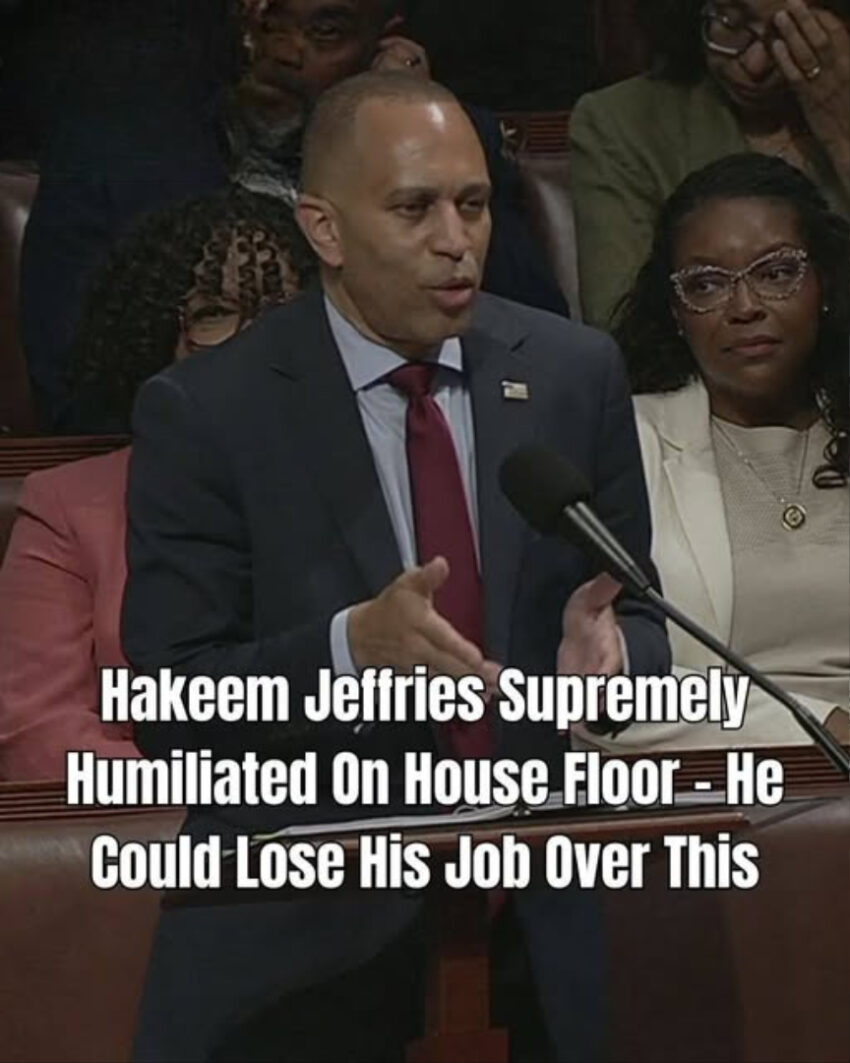
Few people have embodied Republican resolve during the Schumer Shutdown more than House Speaker Mike Johnson (R-LA). From day one, Johnson has stood firm, calmly and consistently reminding the American people that Democrats are the ones responsible for grinding the government to a halt.
He’s made it clear this wasn’t about governing — it was about political “leverage” and keeping the party’s far-left fringe happy. While Democrats played games, Johnson kept the focus where it belonged: on reopening the government responsibly and exposing the cynical motives behind the shutdown.
“After this weekend’s ‘Hate America’ rallies co-sponsored by the Communist Party, I thought [Sen. Minority Leader Chuck Schumer (D-NY) would] finally do the right thing. But he’s still too terrified of his radical base — even admitting he’ll keep the government shut down while hardworking Americans suffer,” Johnson said at the time, which was day 23 of the Schumer Shutdown.
On Wednesday night — two days after a small group of Senate Democrats finally broke ranks to start ending the longest shutdown in U.S. history — the House of Representatives followed suit, voting 222–209 to take the next-to-last step toward ending the Schumer Shutdown. Six Democrats crossed party lines to join the GOP majority in voting to reopen the government, while two Republicans sided with Democrats in opposition.
Before getting to Speaker Johnson’s post-vote remarks, let’s take a quick look at the roll call — the Democrats who defied party leadership to end the shutdown, and the two Republicans who inexplicably voted with the Left to keep it going:
Good on these Democrats for defying their “Temu Obama” leader, Hakeem Jeffries.
Speaking to reporters after the vote, Speaker Johnson delivered the most important reminder of all: none of this chaos ever had to happen. He pointed out that House Republicans had already passed a clean continuing resolution back on September 19 — one that included no GOP wish-list items and was simply meant to “keep the lights on” so both parties could debate their priorities through the normal legislative process.
In plain English, this entire shutdown was a Democrat-made disaster. It was engineered and prolonged by House and Senate Democrats, led by Jeffries (D-NY) and Chuck Schumer — the same pair now pretending to be the heroes for ending the mess they created in the first place:
Here’s the official statement from the GOP leadership, which provided more details:
“The Democrat Shutdown is finally over thanks to House and Senate Republicans. There is absolutely no question now that Democrats are responsible for millions of American families going hungry, millions of travelers left stranded in airports, and our troops left wondering if they would receive their next paycheck. It was the Democrat Party that voted 15 times to keep the government closed and force the longest shutdown in U.S. history.
“All of it was pointless and utterly foolish. Democrats admitted they used the American people as ‘leverage’ and hurt their constituents on purpose — but they got nothing for their selfish political stunt. Voters will remember which party played political games in an attempt to ‘look tough’ to their base, while real people suffered.
“Now that Republicans have succeeded in ending the Democrat Shutdown, we look forward to continuing our important legislative work delivering results for the American people.”
President Trump signed the measure late Wednesday, officially funding the government through the end of January.
Let’s be clear: This was a Democrat-caused shutdown. And it was abjectly pointless. Only a party that hates the people they supposedly represent would do that.
When the daughter of a global superstar speaks, the world listens—even more so when her words cut through the noise of public mourning and spark a national debate about kindness, legacy, and the price of honesty in the age of social media.
In the days following the shocking death of conservative commentator Charlie Kirk, tributes and condemnations alike flooded the digital landscape. But it was a single Instagram Story—just a few words, posted by Ava Raine, daughter of Dwayne “The Rock” Johnson—that set off a firestorm felt across the American cultural spectrum.
“If you want people to have kind words when you pass, you should say kind words when you’re alive.”
With those words, Ava Raine—known to millions through her wrestling pedigree and rising stardom—thrust herself into the center of a conversation that is as old as civilization itself: How do we remember the dead? And what, if anything, do we owe the living in the way we speak of those who are gone?
What followed was a collision of grief, celebrity, and public conscience—one that reveals as much about modern America as it does about the individuals at its heart.
Charlie Kirk’s sudden, violent death stunned the nation. Tributes poured in from political allies and ideological opponents alike, each seeking to make sense of a life lived loudly and, for some, controversially. In this charged atmosphere, Ava’s post landed not as a whisper, but as a thunderclap.
Within hours, screenshots of her story ricocheted across Twitter, Reddit, and news aggregators. The responses were as polarized as the times themselves. Some called her statement “refreshingly honest,” a rare moment of candor in a culture that too often sanitizes legacies. Others accused her of cruelty, insensitivity, or worse—of weaponizing grief for a social message.
But Ava, unlike so many public figures who retreat in the face of backlash, doubled down.
“And I’ll stand behind this. Be kind, now more than ever.”
She posted again, unflinching, her words as much a challenge as a plea.
To understand why Ava’s comments struck such a nerve, one must first understand the ecosystem in which they appeared. Social media, for all its virtues, has become a battleground for grief, outrage, and the performance of virtue. The deaths of public figures are no longer private affairs—they are national events, dissected in real-time by millions.
In this environment, the expectations for celebrity conduct are both sky-high and contradictory. Speak too soon, and you risk insensitivity; wait too long, and you’re accused of silence. Offer platitudes, and you’re dismissed as shallow; speak your mind, and you invite the wrath of the masses.
Ava’s remark, then, was more than a personal opinion. It was a test of the boundaries that define public discourse in 21st-century America. It forced a reckoning: Do we value honesty over decorum? Is kindness in death owed, earned, or both?
To his supporters, Charlie Kirk was a fearless champion of conservative values, a voice for a generation that felt unheard. To his critics, he was a provocateur, a man whose rhetoric often veered into the incendiary. His legacy, like so many in public life, is complicated.
In the hours after his death, tributes from political leaders and media personalities painted a portrait of a man who inspired loyalty and loathing in equal measure. For many, the instinct was to soften the edges, to remember only the best. For others, including Ava, the moment called for a more nuanced truth.
“It’s not about speaking ill of the dead,” said Dr. Karen Fields, a cultural historian at the University of Michigan. “It’s about refusing to erase the complexity of a person’s life just because they’re gone. Ava’s comment touched a raw nerve because it asked us to confront that complexity, rather than hide from it.”
Born Simone Johnson, Ava Raine has lived her entire life in the shadow—and spotlight—of her father’s fame. As the first fourth-generation wrestler in WWE history, she has navigated the treacherous waters of public expectation, carving her own path while honoring a family legacy.
But with fame comes scrutiny, and with scrutiny comes the expectation that every word, every gesture, will be weighed and judged. Ava’s decision to speak out, and to stand by her words, is a testament to both her independence and her willingness to risk public ire in service of a principle she believes in.
“People forget that celebrities are people, too,” said Dr. Lisa Monroe, a psychologist who studies fame and social media. “They grieve, they get angry, they have opinions. The difference is, their every emotion is amplified a thousandfold. Ava’s choice to double down wasn’t just about Charlie Kirk—it was about reclaiming her agency in a world that constantly tries to take it from her.”
The backlash to Ava’s post was swift and fierce. Critics accused her of insensitivity, of disrespecting the dead, of using a tragedy to score points. Her mentions filled with vitriol, as strangers debated not just her words, but her character.
Yet for every critic, there was a defender. Many praised her for refusing to participate in what they saw as the “whitewashing” of controversial legacies. Some shared stories of their own experiences with loss, and the discomfort they felt at being asked to speak kindly of those who had caused them pain in life.
The debate soon spilled over into mainstream media. Cable news hosts dissected her comments; op-ed writers weighed in on the ethics of posthumous praise. Hashtags like #BeKindNow and #LegacyMatters trended for days, as Americans grappled with the question: When someone dies, do we owe them kindness, or honesty?
What makes Ava’s story so emblematic of our times is not just the controversy it ignited, but what it reveals about the state of American culture. In a nation increasingly divided along political, generational, and ideological lines, even grief has become a battleground.
“In the past, mourning was a private affair,” said Dr. Fields. “Now, it’s a public spectacle. We perform our grief for an audience, and that audience expects us to follow certain scripts. Ava tore up the script, and people didn’t know how to react.”
This cultural shift has profound implications. It raises questions about authenticity, about the pressures of performative empathy, and about the ways in which social media distorts our most intimate emotions.
At the heart of the controversy lies a deeper philosophical question: What does it mean to remember someone well? Is kindness in death a form of mercy, or a betrayal of truth? And who gets to decide which stories are told, and which are forgotten?
For some, Ava’s words were a necessary corrective—a reminder that the dead are not saints, and that honesty is a form of respect. For others, her refusal to offer unqualified kindness was a failure of compassion.
“There is no easy answer,” said Dr. Monroe. “But Ava’s comments have forced us to confront the uncomfortable reality that kindness and honesty are sometimes in tension. The best we can do is to strive for both, even when it’s hard.”
Those close to Ava describe her as thoughtful, principled, and unafraid of controversy. “She knew what she was saying would upset people,” said a longtime friend, who asked not to be named. “But she also felt it was important. She’s seen too many people rewrite history after someone dies, and she didn’t want to be part of that.”
Her father, Dwayne Johnson, has remained publicly silent on the controversy. Privately, sources say, he has encouraged Ava to stay true to herself, even in the face of criticism.
“She’s her own person,” said another family friend. “She’s not afraid to speak her mind, and that’s something her dad has always respected.”
History is replete with examples of controversial figures whose deaths forced society to grapple with uncomfortable truths. From political leaders to cultural icons, the question of how to remember the dead is as old as memory itself.
In recent years, the phenomenon has only intensified. The deaths of public figures like Kobe Bryant, Ruth Bader Ginsburg, and Rush Limbaugh all sparked fierce debates about legacy, forgiveness, and the ethics of mourning.
“Ava’s comments are part of a larger reckoning,” said Dr. Fields. “We’re being asked to consider not just what we say about the dead, but what those words say about us.”
In the weeks since her original post, Ava has become an unlikely symbol for a new kind of celebrity honesty—one that refuses to trade candor for comfort. Her words have inspired think pieces, classroom debates, and even sermons.
At universities, students have debated the ethics of posthumous praise. In churches, pastors have invoked her message as a call to live kindly, so that kindness is what remains. On social media, thousands have shared their own stories of complicated grief, finding solace in Ava’s refusal to pretend.
Yet the backlash has not subsided. Ava continues to receive threats and hate mail, a reminder that honesty, especially from young women in the public eye, is still a dangerous game.
What does Ava’s story tell us about the future of public discourse in America? For one, it reveals the immense power—and peril—of celebrity in shaping national conversations. It also exposes the fault lines that run through our culture, dividing us not just by politics, but by our very ideas of kindness, truth, and memory.
As America continues to grapple with these questions, the story of Ava Raine and Charlie Kirk will remain a touchstone—a moment when the nation was forced to confront the messy, uncomfortable realities of grief in the digital age.
In the end, Ava’s message is both a challenge and a hope. “Be kind, now more than ever,” she wrote—a plea for compassion, not just in death, but in life. It is a reminder that the stories we tell about the dead are, in the end, stories about ourselves—about the values we cherish, the truths we dare to speak, and the kindness we choose to extend, even when it is hard.
As the headlines fade and the debate moves on, Ava Raine’s words linger—a testament to the enduring power of honesty, and the courage it takes to speak it, even when the world demands silence.
Some stories are so painful to tell that they feel like a wound being reopened every time the words leave your lips. What happened to my daughter one ordinary Saturday began like any family errand and ended in the cold, humiliating walls of a police station.
She was accused of shoplifting. But the truth was even worse.
The person who put her there wasn’t a stranger, or a cruel bully, or even a mistake by security. It was my own mother—her grandmother—who deliberately slipped a gold necklace into her bag, sending my child down a path of arrest, shame, and tears. And my father, the man who once carried her on his shoulders and clapped at her recitals, stood by my mother’s side and swore a false statement to police.
This is the story of how my parents betrayed us, and how I chose to fight back—for my daughter, and for the fragile bond of trust between us.
The day had started like so many others. Laundry, groceries, a few errands before maybe grabbing lunch. Then came the phone call that cracked my world open.
“Your daughter has been arrested for shoplifting.”
When I reached the police station, I saw Emily sitting on a hard metal chair. Fifteen years old, with red wrists from the handcuffs, her face streaked with tears. She looked so small, so utterly broken, that it felt as though someone had ripped the air from my lungs.
The officer explained that store security had discovered a gold necklace in her bag. My father, Robert, had given a sworn statement saying he saw Emily slip it inside. My mother, Helen, stood by his side as a “witness.”
I turned to Emily. She shook her head, sobbing: “I didn’t do it, Mom! I swear!”
And in that moment, I believed her completely.
The evidence was thin—blurry security footage, the necklace “discovered” in her purse, my father’s word against hers. Still, it was enough to have her handcuffed, booked, and humiliated.
I held her trembling hands, and then a memory flashed back with sickening clarity: that morning, my mother had been fussing over Emily’s bag. She laughed, pretending to “tidy it up.” I hadn’t thought twice about it. Now, the pieces clicked together like an icy puzzle.
Helen had planted the necklace. And Robert had backed up her lie.
Why would my own parents do this? What twisted reasoning justified destroying their granddaughter’s life?
I didn’t scream. I didn’t collapse. I simply told Emily, “Trust me. I’ll fix this.” And inside, I made a promise that nothing—absolutely nothing—would stop me from clearing her name.
Emily was released that night on the condition she would appear in court. Driving her home, she sat silent, curled against the door, her body hunched as though she could disappear from the world. Every red light felt like an accusation staring at us.
That night, once she was asleep, I told my husband Daniel everything. He was horrified. Like me, he struggled to understand. “Why would your parents do this?” he asked. But there was no logical answer, only a deep well of betrayal.
Helen had always been harsh with me, especially about Emily. She called her “spoiled,” said she was “too independent.” My father had always followed Helen’s lead, no matter how unreasonable. But never in my worst fears did I imagine they would conspire to frame their own granddaughter.
The next morning, I began gathering evidence. I asked the store manager for a copy of the incident report. It was simple: necklace missing, necklace found, witness testimony from Robert Sanders. Nothing about Helen.
When I pushed for additional footage, the manager hesitated but admitted there were more cameras—angles that hadn’t been given to police. That was the thread I needed.
With the help of my friend Laura, now an attorney, I filed a formal request. Within 48 hours, the truth came to light.
Laura and I sat together in her office as the footage played.
There was my mother—Helen—in her familiar floral jacket, leaning into Emily’s bag in the parking lot before we entered the store. Clear as day, her hand slipped something inside. She tapped the bag, smiled, and walked away as if nothing had happened.
It was undeniable. My mother had framed my daughter.
I felt anger, yes, but beneath it something heavier: grief. This wasn’t an accident. It wasn’t a misunderstanding. It was deliberate, cold, and heartless.
Laura’s voice was steady: “This will get the charges dropped. But your parents could face charges themselves—false reporting, perjury. Are you ready for that?”
I wasn’t. But I knew what I had to do next.
That evening, Daniel and I drove to my parents’ house. Emily begged me not to go, terrified of more conflict, but I promised I’d handle it.
When Helen opened the door, she looked smug. Robert sat in his chair, remote in hand. Without a word, I opened my laptop, pressed play, and set the video on their coffee table.
Silence.
Helen’s face drained of color. Robert shifted but said nothing. When the clip ended, I closed the laptop and looked at them both.
“You framed your granddaughter,” I said quietly. “You nearly destroyed her life. For what? To prove a point?”
Helen’s lips trembled, but no words came. Robert muttered that he was “just standing by his wife.” Neither of them could look me in the eye.
I stood, gathered my things, and said the only words left: “We’re done here.”
Three days later, Laura called. The District Attorney had dropped the charges. The video spoke for itself. In fact, prosecutors were considering an investigation into my parents for false statements.
Relief washed over me, but it was the heavy kind—the kind that comes after surviving a storm that’s left your home battered and broken. Emily was safe, yes. But the scars were already forming. She flinched at sirens. She cried at night. The betrayal of her grandparents had cut deep.
Meanwhile, my parents began their own spiral. Calls filled my voicemail—Helen’s rambling excuses, Robert’s single plea: “Can’t we just move on?” But I deleted each message.
Finally, I agreed to meet Helen one-on-one.
We sat in a quiet diner, the air heavy with unspoken words. She looked smaller than I’d ever seen her, her confidence drained.
“I didn’t think it would go that far,” she whispered. “I just thought… Emily needed a lesson. She’s too headstrong.”
I stared at her. “You planted a necklace on your granddaughter. You had her arrested. She wakes up screaming because of you.”
For once in her life, Helen had no comeback. Her coffee sat untouched, her hands trembling.
“You broke something,” I told her. “And it won’t be fixed with an apology. Emily doesn’t trust you anymore. And until she decides she feels safe, you won’t see her.”
I left her there, silent, in that booth.
When I returned home, Emily was curled on the couch beside Daniel, watching a sitcom. She looked up, searching my face. I smiled, pulled her close, and whispered that the charges were gone. She cried, clinging to me like she used to during thunderstorms.
In that moment, I made a vow: my parents would never again hold power over her. Blood may connect us, but love and trust are choices. And I choose Emily.
As for Helen and Robert, they never recovered. Word spread among family, friends, and neighbors. Their voices grew quiet in the community. They hadn’t silenced Emily—they had silenced themselves.
And in the silence they left behind, my daughter began to heal. Slowly, steadily, she found her voice again.
The birthplace of Bence is unpronounceable. It’s a city in Hungary called Székesfehérvár.
Like every parent, they couldn’t wait to see the face of their child. How is he going to look? Like his pops or mom? Is he going to resemble like any of the parents?
When Bence was born, he didn’t appear anything close to his parents. He had a thick, snow-white hair!
Some babies are born with no hair. Some are born with lots of hair, but Bence, the little winter king was born with all white hair. It’s not something you see every day in the brith room.
The styling is for old people, who got white hair due to stress or genes. My stepfather used to say: “do you think I got these white hairs because I had no problems?”
So, yeah, white hair can mean that we’ve been through a lot. Bence was born with all that experience before he went through it!
To be born white extremely light hair is typical for Scandinavians, but not completely white, pale as a wall. That’s why it is a rare sigh to see white hair on a newborn.
Bence’s parents were worried about his albinism, a condition that affects the production of melanin, the pigment that colours skin, hair and eyes… even though he looks magnificent.
Albinism is not life-threatening, although people with it are more sensitive to light and increases their risk of developing skin cancer.
After hefty testing, the research determined that he did not have albinism. What a twist.
He had very little melanin, which is why he was born with a pale tone and white hair.
He is delivered on schedule and is in perfect health. His hair will turn darker as he aged, something like Benjamin Button!
All the nurses adored him at the hospital. He was known as “Prince Charming.”
According to Dr. Zoltan Kummer, Bence’s hair could become darker in a few years, and the problem is more of a localized, possibly transitory pigment deficit.
In the city he was born, Székesfehérvár, is frequently referred to as Fehérvár, which in Hungarian means “white castle.” He resembles like a newborn king of the white castle.
As a result of being unique, he gained worldwide attention and millions around the globe know the story about the white king from Hungary.
The boy grew up into a beautiful child!
Please SHARE this amazing story with Family and Friends!
In the shadows of flashing patrol lights and the chaos of high-stakes missions, there is a silent partner who never asks for recognition. Loyal, sharp-eyed, and unflinching in the face of danger,
From sniffing out hidden explosives to locating missing children, from chasing down armed suspects to comforting victims in distress, these dogs embody courage in its purest form. They are not simply tools of the trade. They are partners —
The dedication of K9 dogs often rivals, and sometimes exceeds, that of their human counterparts. Trained relentlessly, they learn to detect even the faintest trace of drugs, locate the lost in vast wilderness, and step into danger zones no officer would face alone. In doing so, they save lives — not in abstract numbers, but in real, measurable ways: a bomb averted, a child found, a violent crime stopped before it could unfold.
And when tragedy strikes, their sacrifice is not forgotten.
In many police departments, the passing of a K9 officer is honored with the same dignity as that of a fallen human officer. Funeral processions are held — solemn, respectful ceremonies where
For handlers, the loss of a K9 partner is like losing a limb, a family member, a piece of the soul. These dogs are not just partners in crime-fighting but companions who share sleepless nights, long patrols, and countless quiet moments of trust.
Stories abound of K9s who leapt between their handlers and danger, who tracked suspects tirelessly for hours, or who, after a grueling day’s work, laid their heads on their handler’s lap with the same devotion they gave in the field. Their bond is forged not in training sessions alone, but in the
These processions, while heart-wrenching, are not just about mourning. They are a celebration — a way of saying thank you for years of unwavering service. Communities often gather to watch, some holding candles, others holding signs that read “Thank you for your service.” Children wave small flags, and families of officers stand side by side, knowing firsthand the risks these dogs take.
Every bark silenced, every pawprint left behind, tells a story of loyalty and sacrifice. And though they may no longer walk the beat, their spirit endures — in the officers they protected, in the lives they saved, and in the communities that will never forget them.
The legacy of K9 police dogs goes far beyond their years of service. They inspire trust, courage, and community spirit. They remind us that bravery does not always speak in words, but sometimes in a bark, a wagging tail, or the unflinching leap into danger.
As we honor these noble companions, let us also remember to support the programs that train and care for them, and to recognize their handlers whose lives are forever changed by their presence — and their loss.
For in every K9 officer lies the heart of a hero, and in every farewell procession, the echo of a promise kept:
To serve. To protect. To never let us walk alone.