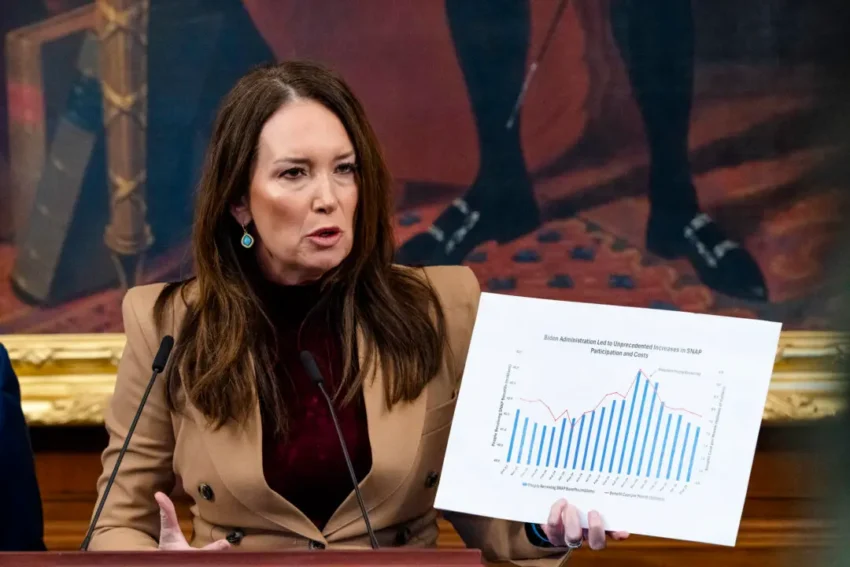
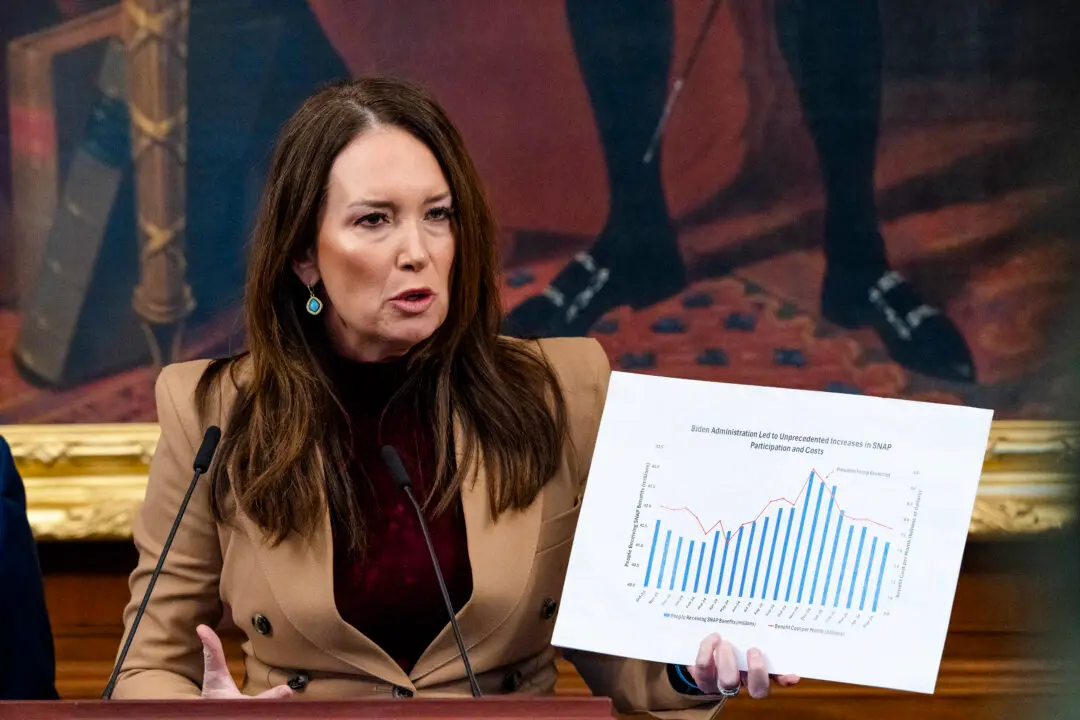
Brooke Rollins, agriculture secretary under the renewed Trump vision for America, dropped a bombshell on the American public. She exposed a rot within the federal welfare system that not only drains taxpayer dollars but also emboldens corruption and inefficiency. Rollins revealed in an interview that nearly 5,000 dead individuals were still receiving SNAP benefits and that over 500,000 instances of duplicate enrollees had been uncovered.This isn’t just a bureaucratic blunder. This is emblematic of a broken system that Democrats have allowed to fester, enabling abuse at the expense of working Americans. For decades, the left has wrapped welfare in the warm language of compassion, but what Rollins reveals is a scheme benefiting fraudsters, illegals, and career welfare recipients while punishing the responsible and the honest.
“We found one guy receiving benefits in six different states,” Rollins said. This is not just anecdotal. It’s systemic. It’s widespread. And it’s been protected by blue states that refused to cooperate with federal investigations into their welfare rolls.
Rollins’ testimony reinforces what conservatives have warned for years: that the Democratic Party is less interested in accountability and more invested in creating a permanent dependent class that can be controlled and harvested for votes.
This revelation confirms what President Trump emphasized during both his terms and campaign trail speeches: America must put its citizens first, and part of that is cleaning up fraud and prioritizing the deserving over the deceitful.
Under Rollins’ leadership, nearly 700,000 individuals have already been removed from the rolls. But the job is far from over. Democrat-led states have refused to share eligibility data and have filed lawsuits to block investigations. What are they hiding?
It’s no surprise that the Biden administration resisted such reforms. While Rollins and Trump aimed to safeguard the public trust and restore fiscal integrity, the Biden camp seems committed to open-handed spending with little oversight.
The mainstream media barely blinked at Rollins’ revelation. Had a Trump official been caught enabling such fraud, the outcry would be deafening. But when Democrats are the culprits, silence prevails.
The question Americans must ask is simple: Why is the left so afraid of transparency? Why do they fight to keep dead people on welfare and illegals on the dole?
Every fraudulent SNAP card represents dollars stolen from hard-working Americans. It means fewer resources for truly needy citizens. And it means a culture of dependency is being fostered, not the self-reliance and dignity that America First policies promote.
Rollins framed this as a national security issue as well, with illegal immigrants potentially benefitting from these systems through fraudulent documentation. This is not just an economic drain; it’s an attack on national sovereignty.
President Trump has long called for E-Verify, biometric ID, and strict eligibility rules for any federal assistance. His policies, backed by data like Rollins presented, are the only viable path forward.
What this country needs is a full audit of every entitlement program. The rot is deeper than SNAP. If dead people can draw food assistance, who else is bleeding the system dry?
The welfare state must be rebuilt from the ground up. And the only party willing to do that is the one led by Trump.
Blue states are terrified of what audits might reveal: networks of fraud, collusion, and incompetence that date back decades. They would rather sue than comply because exposure would cost them power.
This is a wake-up call to every Republican governor and lawmaker. The time for polite requests is over. Subpoenas and legislation must compel compliance. Any official obstructing this mission is complicit in theft.
Brooke Rollins has done more than expose fraud. She has given patriots the ammunition to demand change. The GOP must seize this moment.
Taxpayers must understand that the stakes are high. Every dollar wasted on a dead man’s EBT card is a dollar not spent securing the border, rebuilding infrastructure, or helping our veterans.
At a busy airport, a police dog made headlines by refusing to let a pilot board his plane. The canine’s unusual behavior drew immediate attention, showcasing the critical role these trained dogs play in keeping passengers safe.
The terminal buzzed with travelers eager to reach their destinations. Among them, a pilot prepared to enter the cockpit. Suddenly, the dog stepped in, blocking his path. The handler was confused; such behavior was uncharacteristic of the disciplined dog.
Curiosity and concern rippled through the crowd. Security quickly secured the area and launched a thorough investigation. Officers searched the pilot and his belongings, taking the dog’s warning seriously.
What they discovered stunned the team. Hidden in the pilot’s luggage was a suspicious package. Upon inspection, it posed a potential threat. Immediate evacuation followed, and specialized units arrived to handle the situation carefully.
This incident highlighted the extraordinary instincts of police dogs. Their sharp sense of smell and alertness can detect danger that humans might miss, potentially saving countless lives. The courageous dog’s actions prevented a disaster, earning admiration from staff and travelers alike.
As news of this brave police dog spreads, it underscores the vital bond between handlers and their canine partners. The airport soon resumed normal operations, but the memory of this heroic act remains a testament to vigilance, dedication, and the power of instinct.
The Texas political landscape has been dramatically altered by a significant court ruling that has effectively shut down controversial fundraising operations designed to support Democratic legislators who fled the state to prevent Republican redistricting efforts. This landmark decision represents a major victory for state law enforcement while raising fundamental questions about the boundaries of political activity, campaign finance regulations, and the appropriate use of nonprofit organizations in partisan political battles.
COURT RULING EXPOSES COMPLEX CAMPAIGN FINANCE VIOLATIONS
Tarrant County District Judge Megan Fahey delivered a decisive blow to Democratic political operations Friday evening when she issued a temporary restraining order against former congressman Beto O’Rourke and his nonprofit organization, Powered by People, following allegations of systematic campaign finance violations. The ruling came after Attorney General Ken Paxton’s office presented compelling evidence of what the court characterized as “unlawful fundraising practices” that violated multiple provisions of Texas election law.
Judge Fahey’s ruling specifically addressed the use of political contributions to fund personal expenses for Democratic legislators who abandoned their legislative duties to prevent consideration of congressional redistricting legislation. The court found that O’Rourke’s organization had systematically violated state law by using political donations to cover air travel, lodging, logistics, and daily fines for legislators who left the state rather than fulfill their constitutional obligations.
The judicial decision reflects careful consideration of complex legal questions surrounding the appropriate use of political funds and the boundaries between legitimate political activity and personal financial support. Judge Fahey’s ruling emphasized that “consumers have and continue to suffer irreparable harm through these unlawful acts because they are making political contributions that are being used to fund personal expenses and violate state law.”
The temporary restraining order immediately prohibits O’Rourke and his organization from continuing their fundraising activities or providing additional financial support to absent legislators. This immediate intervention prevents further violations while ensuring that political contributions are not misused for purposes that violate state campaign finance regulations.
ATTORNEY GENERAL’S AGGRESSIVE ENFORCEMENT STRATEGY PROVES EFFECTIVE
Attorney General Ken Paxton’s successful legal action against O’Rourke represents the culmination of a comprehensive investigation into Democratic fundraising practices that potentially violated multiple aspects of Texas election law. The speed with which Paxton’s office obtained the restraining order demonstrates both the strength of their legal arguments and the urgency of preventing continued violations of campaign finance regulations.
Paxton’s enforcement strategy reflects a broader commitment to ensuring that political activities comply with established legal frameworks regardless of partisan affiliation or political objectives. The attorney general’s willingness to pursue legal action against high-profile political figures demonstrates the principle that no one is above the law when it comes to campaign finance compliance.
The investigation that led to Friday’s court victory apparently uncovered systematic patterns of illegal activity that extended beyond simple technical violations to encompass what prosecutors characterized as deliberate attempts to circumvent campaign finance regulations. The strength of this evidence allowed Paxton’s office to obtain immediate judicial relief despite the political sensitivity of the case.
Paxton’s public response to the court victory reflected confidence in both the legal merits of the case and the broader principle of legal accountability for political actors who violate established regulations. His statement that “we absolutely will make an example out of law breakers” demonstrates commitment to consistent enforcement regardless of political considerations.
BETO O’ROURKE’S DEFENSIVE STRATEGY FAILS TO PREVENT LEGAL CONSEQUENCES
O’Rourke’s response to the court ruling revealed the fundamental weakness of his legal position while demonstrating the political calculations that may have motivated his organization’s controversial fundraising activities. His characterization of Paxton’s enforcement action as an attempt to “shut down his nonprofit because our volunteers fight for voting rights and free elections” reflects a defensive strategy that prioritizes political messaging over legal compliance.
The former congressman’s statement that Paxton “wants to make examples out of those who fight so that others won’t” suggests an understanding that his legal troubles could discourage similar activities by other political organizations. This acknowledgment that enforcement actions serve deterrent purposes validates Paxton’s approach to campaign finance enforcement while highlighting the broader implications of the court ruling.
O’Rourke’s defiant declaration that “I’m not going anywhere” and his intention to continue political activities despite the court order reflects a concerning disregard for judicial authority and legal compliance. This attitude may complicate his legal situation while demonstrating the partisan motivations that appear to drive his political activities.
The simultaneous filing of a counter-lawsuit by O’Rourke against Paxton in El Paso district court represents an attempt to create alternative legal venues and delay enforcement actions. However, this strategy appears unlikely to succeed given the strength of the evidence presented in Tarrant County and the clear violations of campaign finance law that have been documented.