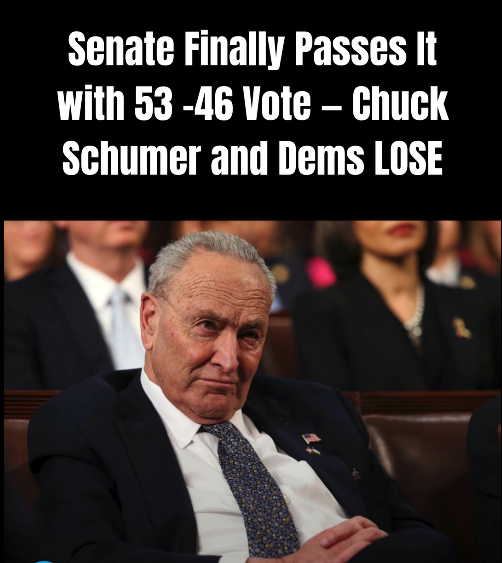
The United States Senate voted Tuesday to confirm Anne-Leigh Gaylord Moe, President Donald Trump’s nominee to serve as a U.S. District Judge for the Middle District of Florida. The confirmation passed narrowly by a vote of 53–46, marking another judicial victory for the Trump administration as it continues to shape the federal courts.
A Milestone in Trump’s Judicial Agenda
President Trump has placed a strong emphasis on judicial appointments during his time in office, continuing a strategy that began during his first term. The confirmation of Anne-Leigh Moe further solidifies his influence over the federal judiciary, particularly in a key swing state like Florida.
Trump celebrated the Senate’s decision with a post on Truth Social, describing Moe as a strong and principled advocate for law and order.
“I am pleased to announce the confirmation of Anne-Leigh Gaylord Moe to the United States District Court for the Middle District of Florida,” the president wrote. “Anne-Leigh has fiercely served the people of Florida as a Judge on the Second District Court of Appeal and as a Trial Judge in the Thirteenth Judicial Circuit. She will uphold LAW AND ORDER, unlike activist judges who put the safety of illegal criminals over the safety of Americans. Congratulations Anne-Leigh!”
The appointment was met with applause from Republican lawmakers who have championed Trump’s judicial selections as part of a broader effort to install conservative judges committed to strict constitutional interpretation and limited judicial activism.
Moe’s Legal and Judicial Background
Judge Moe brings more than two decades of experience to the federal bench. She has served on Florida’s Second District Court of Appeal since 2022 and previously spent nearly a decade as a circuit judge in Florida’s Thirteenth Judicial Circuit, which includes Hillsborough County — one of the largest and most diverse jurisdictions in the state.
Before becoming a judge, Moe worked as an Assistant State Attorney in Tampa, where she built a reputation for handling complex criminal prosecutions and advocating for victims’ rights.
Legal colleagues have described her as a fair-minded jurist with a meticulous approach to the law. Supporters within the Florida legal community noted that Moe’s courtroom demeanor and strong adherence to due process made her a respected figure in the state’s judiciary.
“Judge Moe has shown a consistent commitment to justice and integrity,” said Gregory Townsend, a former colleague who served with her on the Thirteenth Circuit. “She applies the law as written, not as she wishes it to be, and that’s exactly what the federal bench needs.”
A Narrow but Significant Senate Vote
The 53–46 Senate vote reflected the growing partisan divide over judicial nominations. All Republicans present voted in favor of the confirmation, while nearly all Democrats opposed it, citing concerns over Moe’s conservative record and her past rulings in criminal cases.
Democratic senators argued that Moe’s judicial philosophy aligns too closely with the Trump administration’s hardline approach to immigration and criminal sentencing. However, Republicans dismissed those criticisms as politically motivated.
“Judge Moe has an exemplary record,” said Senator Lindsey Graham (R-SC), a member of the Senate Judiciary Committee. “She understands the Constitution, she respects the separation of powers, and she’s committed to applying the law fairly. That’s exactly the kind of judge the American people deserve.”
The confirmation marks the fifth Trump nominee approved by the Senate since the start of his second term, reflecting the administration’s ongoing effort to fill long-standing vacancies within the federal judiciary.
A Continuing Shift in the Federal Courts
Anne-Leigh Moe’s confirmation adds to the growing number of federal judges appointed by Trump, whose selections are gradually reshaping the ideological balance of the courts.
During his first term, Trump successfully appointed three Supreme Court justices, over 50 appellate judges, and more than 200 district court judges, leaving an enduring impact on the federal judiciary. His administration has signaled that judicial appointments remain one of its highest priorities, viewing the courts as a key arena for upholding conservative legal principles.
“President Trump’s judicial nominees have been instrumental in restoring balance to the courts,” said Senator Mitch McConnell (R-KY), who praised the Senate for moving forward with the confirmation. “We’re ensuring that our judges follow the Constitution and the rule of law — not partisan ideology.”
The Middle District of Florida, where Moe will serve, handles a wide range of cases — from immigration and healthcare disputes to civil rights claims and criminal prosecutions. The district includes major cities such as Tampa, Orlando, and Jacksonville, making it one of the busiest federal courts in the country.
Reactions From Both Sides
While Republican leaders celebrated Moe’s confirmation as another victory for Trump’s judicial agenda, Democrats and progressive advocacy groups criticized the decision, warning that her appointment could shift key legal rulings in the years ahead.
“This is yet another example of the administration pushing through partisan nominees to cement its control over the courts,” said Senator Richard Blumenthal (D-CT). “Judge Moe’s record raises serious questions about her willingness to protect civil rights and uphold the Constitution for all Americans.”
Progressive organizations echoed similar concerns, citing Moe’s history of siding with law enforcement in criminal cases and her strict interpretation of procedural law.
Meanwhile, conservative groups hailed her confirmation as a win for judicial restraint. The Federalist Society, a network of conservative lawyers and legal scholars, issued a statement praising Moe’s “commitment to textualism and the rule of law.”
Trump’s Response to the Shutdown Debate
Moe’s confirmation came amid broader political tensions in Washington, with the federal government still partially shut down due to budget disputes between the White House and congressional Democrats. Despite the ongoing standoff, analysts say the confirmation vote highlights the administration’s determination to keep advancing its judicial priorities.
CNN political analyst Harry Enten noted that, unlike during the 2018–2019 shutdown, Trump’s approval ratings have remained relatively stable this time around.
“In the previous shutdown, Trump’s approval dropped three percentage points within a few weeks,” Enten said. “This time, despite the gridlock, his support appears to be holding steady — especially among Republican voters.”
Political observers believe that the steady pace of judicial confirmations is helping maintain Trump’s support base by demonstrating continued progress on campaign promises, even amid legislative stalemates.
What Comes Next
With Moe’s confirmation, the Trump administration has filled yet another key judicial vacancy — part of an effort to ensure that conservative judges are positioned across the federal bench for decades to come.
Moe is expected to assume her duties on the Middle District Court later this month, where she will preside over both civil and criminal cases. Her appointment will likely have immediate implications for ongoing disputes in Florida related to immigration enforcement, business regulation, and constitutional rights.
Legal analysts suggest that her rulings will be closely watched, not only because of her conservative judicial approach but also due to the political significance of the region she serves.
“The Middle District of Florida often sets precedents that influence other jurisdictions,” said Dr. Elaine Matthews, a legal scholar at the University of Miami. “Judge Moe’s decisions will help shape how federal law is interpreted in some of the country’s most contentious policy areas.”
Conclusion
The Senate’s confirmation of Anne-Leigh Gaylord Moe represents another defining moment in President Trump’s ongoing effort to remake the federal judiciary.
Her record as a Florida appellate and circuit judge reflects a firm commitment to law enforcement and a strict interpretation of the Constitution — traits that earned her praise from conservatives and criticism from progressives.
As Judge Moe prepares to take her seat on the federal bench, her rulings will likely influence key legal and political debates in the years ahead, reinforcing the Trump administration’s legacy of reshaping the judiciary through appointments that could define American law for a generation.
In a dramatic turn of events, John Bolton, former national security adviser, has found himself once again under federal scrutiny. Recently, federal agents raided Bolton’s Bethesda home and Washington office, renewing a longstanding investigation into his handling of classified material.
This latest development brings a sense of urgency to the case that had previously faded into the background after Bolton’s memoir release in 2020. With fresh intelligence gained from foreign sources, the investigation has gained new momentum, raising serious concerns for Bolton and his legal team.
The raids, which took place last week, were authorized by federal judges after prosecutors presented evidence that Bolton may have unlawfully retained or transmitted classified material.
The specific items involved remain under seal, and no charges have been filed yet, but the prospect of criminal charges looms large. The investigation gained new traction under the Biden administration, which has reignited the probe after intelligence agencies reviewed information from a foreign adversary’s spy service, prompting a fresh round of actions.
The case centers on Bolton’s retention of classified communications linked to intercepted foreign intelligence. The New York Times reported that intelligence officials had reviewed these materials and found that Bolton’s involvement might have violated federal law.
The renewed inquiry comes after a lengthy period of dormancy, following the controversial publication of his memoir The Room Where It Happened, which was met with significant pushback from the Trump administration.
At the time, officials argued that Bolton’s memoir contained classified details, but despite these concerns, a judge allowed the book’s release.
Bolton’s memoir, which harshly criticized Trump’s foreign policy and exposed sensitive details about foreign leaders and diplomatic efforts, became a flashpoint in the ongoing debate about the handling of classified information.
While the memoir sparked outrage within the White House, it is now the newly uncovered foreign intelligence intercepts that are driving the investigation forward. These materials have allegedly revealed that Bolton may have mishandled classified communications, which is a violation of federal law.
The precise nature of the communications remains unclear, and whether they were authored by Bolton himself or were related to his associates has yet to be confirmed.
Bolton’s legal team has responded swiftly, with the former national security adviser consulting with defense attorney Abbe Lowell, who has represented other high-profile figures facing federal scrutiny.
In an interview with the Washington Examiner, Bolton briefly addressed the raid, acknowledging its occurrence while simultaneously criticizing Trump’s handling of the Ukraine situation.
His remarks added fuel to the fire, as tensions between Bolton and Trump have remained high since Bolton’s departure from the White House in 2019.
The FBI’s actions have drawn significant attention and debate, particularly with regard to the role that Trump may be playing in these developments. Critics argue that the raid is part of a broader effort to target Trump’s critics and that federal authorities may be pursuing Bolton under pressure from the former president.
Trump, who has repeatedly criticized Bolton since their falling out, weighed in on the investigation, calling Bolton “unpatriotic” and questioning his loyalty and intelligence. Trump’s remarks, which were made last week, only added more fuel to the speculation surrounding the FBI’s actions.
FBI Director Kash Patel and Deputy Director Dan Bongino have both publicly weighed in on the investigation, underscoring their commitment to rooting out corruption and holding individuals accountable.
Patel’s statement, “NO ONE is above the law,” reflects the FBI’s stance on the matter, while Bongino added that “public corruption will not be tolerated.”
These statements signal the agency’s intent to pursue this case with vigor, and it is clear that Bolton is not the only individual who could face the consequences of mishandling classified information.
For now, the investigation remains ongoing, and federal prosecutors have not indicated whether additional warrants will be issued or if further searches are planned.
Bolton’s legal team is bracing for the possibility of an indictment, but the outcome remains uncertain. The case is particularly noteworthy because it may set a precedent for how the government pursues classified leaks involving former officials.
If Bolton is charged, it could have far-reaching implications for how sensitive materials are handled by individuals who once held positions of power.
The investigation has drawn attention to the broader issue of how former officials manage classified information once they leave government service.
While Bolton is a prominent figure in this regard, other former officials could face similar scrutiny as the government continues to investigate potential leaks and mishandling of sensitive materials.
As the FBI’s investigation into Bolton progresses, it remains to be seen whether other high-profile individuals will be swept up in the inquiry.
Bolton’s history with the Trump administration is a complicated one. After serving as national security adviser from 2018 to 2019, Bolton became one of Trump’s most vocal critics.
He openly disagreed with Trump’s foreign policy decisions and frequently clashed with the president over issues ranging from North Korea to Iran. Bolton’s memoir, which was released in June 2020, provided a detailed account of his time in the White House and painted a damning picture of Trump’s leadership.
The book’s publication sparked outrage within the White House, with officials claiming that it contained classified material. Despite these concerns, a judge ruled that the book could be published, although it was heavily scrutinized for its contents.
Bolton’s criticisms of Trump have only intensified over time, and the former national security adviser has continued to speak out on issues of foreign policy.
In recent months, he has made frequent appearances in print and broadcast outlets, offering his analysis of international events and the U.S. government’s response.
However, his continued outspoken stance has likely contributed to the renewed interest in his handling of classified information. The FBI’s investigation is not only about whether he mishandled classified material but also about whether his actions were motivated by a desire to undermine the Trump administration.
The fallout from Bolton’s memoir and the subsequent investigation has further polarized an already divided political landscape. Trump and his allies have used the investigation to criticize Bolton, casting him as a disloyal and unpatriotic figure.
Meanwhile, Bolton’s defenders argue that the investigation is politically motivated and part of a broader effort to silence critics of the former president. As the case continues to unfold, it will undoubtedly remain a topic of heated debate and speculation.
In the broader context of the Trump administration’s relationship with the intelligence community, the Bolton case is significant. During Trump’s second term, CIA Director John Ratcliffe briefed Patel on intercepted foreign communications, which are now central to the investigation.
The intelligence community’s review of these materials has brought the issue of classified leaks to the forefront once again. The Justice Department under Trump also sought to block the publication of Bolton’s memoir, arguing that it exposed sensitive information about foreign leaders and ongoing diplomatic efforts.
This pushback from the Trump administration raises questions about how the intelligence community handles leaks and whether political considerations influence the pursuit of such cases.
As Bolton’s legal team prepares for the next steps, it remains unclear what the future holds. Will Bolton face criminal charges for his handling of classified material, or will the investigation fizzle out as others have before it?
The case has already drawn widespread attention and will likely continue to be a focal point of political discourse in the coming months. Whether or not Bolton is ultimately charged, the investigation highlights the ongoing tension between national security concerns, political dynamics, and the accountability of former officials in handling classified information.
For now, the outcome of the Bolton case remains uncertain, but the investigation is a reminder of the ongoing battles over classified material and the complex intersection of politics, security, and the law.
As the FBI continues to investigate Bolton’s actions, the case will undoubtedly shape how future investigations into classified leaks are conducted, potentially setting a precedent for how the government deals with former officials and their handling of sensitive information.
The Canyon Didn’t Just Crack—It Warned Us First
And We Didn’t Listen.
It started with a sound—barely audible over the laughter of tourists snapping selfies against a stunning canyon backdrop. A subtle groan. A shiver in the steel. Then came the chaos.
What was marketed as a once-in-a-lifetime thrill turned, in seconds, into a horror few will ever forget.
And now, with lives shattered and fingers pointing in every direction, investigators are asking: was this an accident of nature—or a manmade failure no one wanted to see coming?
From Awe to Terror in Seconds
The now-infamous canyon attraction had earned viral fame for its daring skywalks, glass-bottom platforms, and heart-racing views. But on this day, it wasn’t fear that thrilled tourists—it was fear that swallowed them.
According to multiple witnesses, a viewing platform teetering over the canyon’s edge began to shake. Some assumed it was part of the ride. But then the support beneath groaned louder. Metal twisted. Concrete split. And in one terrifying lurch, the edge crumbled, taking the structure—and several visitors—with it.
“There was no warning,” said one survivor, “until it was too late.”
The Ground Was Giving Warnings—We Just Didn’t Hear Them
see more
It was a quiet Tuesday afternoon at the Maplewood Police Department when the station doors swung open. Officers looked up from their paperwork, mildly curious. What they saw was Mrs. Eleanor Turner, the seventy-two-year-old widow who lived on Oak Street, holding the leash of her golden retriever, Sunny. Normally, Sunny was known in the neighborhood for his calm, almost sleepy demeanor. People often joked that he was the gentlest dog they had ever met, content to lie in the sun for hours. But today was different.
Sunny tugged excitedly at his leash, tail wagging furiously, eyes bright, tongue lolling happily out of his mouth. He barked once, twice, as if urging Eleanor to move faster. Eleanor, a frail but determined woman with silver hair neatly pinned back, cleared her throat and spoke softly to the officer at the front desk.
“Excuse me, Officer Parker… I know this must sound silly, but something’s not right. My Sunny has been acting… unusual. Too cheerful. Almost restless. It’s like he’s trying to tell me something.” Officer Parker raised an eyebrow, glancing from Eleanor to the golden retriever that seemed to radiate excitement. He had heard plenty of odd complaints during his years on duty, but there was something about Eleanor’s anxious sincerity that kept him from dismissing her outright.
“What do you mean by unusual?” he asked, leaning forward. Well,” Eleanor said, patting Sunny’s head, “he’s always been such a calm dog. But since this morning, he’s been jumping around, whining at the door, and pulling me down the street. I finally gave in and followed him, and he led me straight here. He wouldn’t stop until we arrived at the station.”
The officers in the room exchanged amused glances. Still, Parker knew better than to ignore instincts—whether human or animal. He stood and nodded. All right, Mrs. Turner. Why don’t we see where Sunny wants to go?” Within minutes, Parker and two other officers—Rodriguez and Kelly—were outside with Eleanor and Sunny. The golden retriever tugged at the leash, his body practically vibrating with purpose. “Lead the way, boy,” Parker said with a chuckle.
Sunny barked once and began trotting down Main Street. They followed him past the bakery, past the post office, and into the quieter residential area. People on the sidewalks turned their heads, curious to see a pair of uniformed officers trailing behind an elderly woman and her overexcited dog. Sunny made no stops. He moved with determination until they reached an old brick house at the end of Willow Lane. The house had been vacant for months, its shutters closed, paint peeling on the porch.
Sunny whined, pulling harder. He scratched at the gate and barked insistently. Officer Rodriguez frowned. “No one’s supposed to be living here. Place has been empty since the Petersons moved away last year.” Still, something about the dog’s behavior put them on alert. “Let’s check it out,” Parker said. The officers carefully pushed open the creaky gate. Sunny darted forward, his nose to the ground, sniffing eagerly. He ran straight to the back of the house and began pawing at a cellar door half-hidden under the porch. His tail wagged like a flag.
Kelly knelt down and pressed her ear to the old wooden door. Her eyes widened. “Do you hear that? … It sounds like crying.” Everyone froze. Parker quickly motioned for Rodriguez to call it in. Eleanor clutched her chest, whispering, “Oh my goodness.” With a crowbar borrowed from the patrol car, they pried the cellar door open. A waft of damp air escaped, followed by the unmistakable sound of a child sobbing.
Flashlights revealed a little girl, no older than six, sitting on an old blanket. Her eyes were wide, cheeks streaked with tears, but she looked up at them with a mixture of fear and relief. “Sweetheart, it’s okay,” Parker said gently, lowering himself to her level. “We’re the police. You’re safe now.” The girl trembled but didn’t resist when Kelly reached for her hand. Eleanor gasped. “Oh, that poor child…”
At the station later, wrapped in a blanket and sipping hot cocoa, the girl told her story in a small, shaky voice. Her name was Lily. She had been playing in the park the previous afternoon when she got lost. A stranger had found her and promised to help her get home. Instead, she was brought to the abandoned house and left in the cellar. “I was scared,” Lily whispered, hugging the stuffed bunny an officer had given her. “I cried all night. Then this morning I heard barking outside, and it gave me hope. I thought someone would find me.”
All eyes turned to Sunny, who wagged his tail happily, lying at Eleanor’s feet. “He must have heard her,” Eleanor said softly, stroking his head. “He knew she needed help.” News of Sunny’s discovery spread quickly through Maplewood. The local paper ran the headline: “Dog Leads Police to Missing Child.” Reporters wanted to interview Eleanor, and neighbors stopped by with treats for Sunny. But Eleanor remained humble. “I didn’t do anything,” she said. “It was all Sunny. He knew something was wrong, and he wouldn’t rest until we listened.”
The police, however, insisted she accept recognition alongside her dog. At a small ceremony the following week, Chief Reynolds presented Sunny with a bright blue ribbon that read “Hero Dog.” Eleanor’s eyes filled with tears as she clipped it to his collar. “Sometimes,” Reynolds said, addressing the crowd, “heroes come in unexpected forms. Today, a little girl is safe because one dog paid attention when no one else could.” Lily and her parents attended, too. The moment Lily saw Sunny, she broke into a smile and ran to hug him. Sunny licked her face, his tail wagging wildly.
“See?” Eleanor whispered to Parker. “That’s the cheerfulness I saw in him. He knew he had a purpose.” From that day on, Lily often visited Eleanor and Sunny. The little girl and the golden retriever became inseparable playmates. Eleanor, who had lived alone for years, found her quiet house filled with laughter again. And whenever people asked about the day Sunny became overly cheerful, Eleanor would smile and say, “Sometimes joy means more than we realize. Sometimes it means there’s someone out there who needs us.”