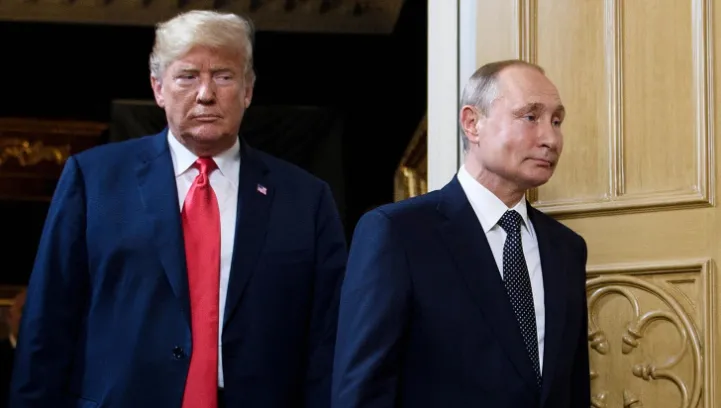
Newly declassified FBI interview records have reignited controversy over Senator Adam Schiff’s role in the turbulent years of the Trump-Russia investigation.The documents, covering a period from 2017 to 2023, include testimony from an unidentified whistleblower who claimed that Schiff, then the top Democrat on the House Intelligence Committee, authorized leaks of classified material to politically damage President Donald Trump.The whistleblower, described as a Democratic intelligence officer working within the committee, told investigators that Schiff’s actions were part of a broader effort to advance the “Russiagate” narrative that dominated headlines during Trump’s presidency.The disclosures revive one of the most contentious chapters in modern American politics, raising questions about political influence, the handling of sensitive information, and the role congressional leaders played during a time when the nation’s intelligence apparatus was heavily focused on alleged ties between Trump’s campaign and Russia.According to FBI interview summaries, the whistleblower repeatedly alleged that Schiff personally instructed House Intelligence Committee staff to approve the leaking of classified information designed to harm Trump politically.The whistleblower claimed to have attended an all-staff meeting where Schiff explicitly stated that the committee would leak derogatory material about the president.“In this meeting, SCHIFF stated the group would leak classified information which was derogatory to President of the United States DONALD J. TRUMP,” one FBI summary noted. “SCHIFF stated the information would be used to indict President TRUMP.”The whistleblower further alleged that Representative Eric Swalwell of California, another high-profile Democrat serving on the Intelligence Committee, was most likely the direct source of some of the leaks.
These leaks, according to the account, were calculated to fuel the Russiagate narrative that engulfed Washington during Trump’s first years in office.Swalwell has strongly denied the claims, asserting that the accusations are politically motivated. He pointed to FBI Director Kash Patel, who has overseen the release of the documents, as pursuing a partisan agenda. “This is about politics, not the truth,” Swalwell insisted.The whistleblower also alleged that Schiff had dangled a potential reward for loyalty in the lead-up to the 2016 presidential election. According to the testimony, Schiff promised the whistleblower the role of CIA Director if Democratic nominee Hillary Clinton won the presidency.When Clinton lost to Trump, the promise evaporated, but the whistleblower claimed Schiff continued to push for leaks as a way to disrupt Trump’s ability to govern effectively.Though no direct evidence has surfaced linking Schiff to such a promise, the allegation adds a dramatic new layer to longstanding suspicions that partisan motivations underpinned the Intelligence Committee’s actions during the Russia probe. Schiff was one of the most vocal proponents of the theory that Trump or his associates colluded with Moscow, a claim later undermined by Special Counsel Robert Mueller’s investigation, which did not establish conspiracy.From 2017 to 2019, Schiff served as the ranking Democrat on the House Intelligence Committee before taking the chairmanship. In this role, he was one of Trump’s fiercest critics, frequently appearing in television interviews to assert that evidence of collusion existed, though much of what he suggested publicly was never substantiated in official reports.His prominence during the Russia investigation made him a lightning rod for partisan attacks. Republicans accused him of exaggerating intelligence findings and selectively leaking information to bolster the case against Trump. Democrats defended him as a watchdog against what they viewed as threats to national security and election integrity.The declassified documents now thrust Schiff back into the spotlight, reigniting debates over whether his leadership crossed lines between oversight and political maneuvering.
At the heart of the controversy are the leaks themselves. Between 2017 and 2023, numerous classified details related to intelligence operations, surveillance warrants, and Trump associates surfaced in the media.Some of these disclosures were later proven misleading or incomplete, but at the time they shaped public perception of the Trump presidency.The whistleblower claimed that Schiff believed leaking was necessary to create a climate in which Trump could be indicted or removed from office. Critics argue that such a strategy, if true, amounted to weaponizing intelligence against a sitting president.Supporters counter that aggressive oversight was warranted given concerns about Trump’s conduct and his campaign’s contacts with Russians.Regardless of motive, the leaks had profound political consequences. They fueled months of speculation, prompted congressional hearings, and ultimately contributed to Trump’s first impeachment in 2019, which centered on his dealings with Ukraine but occurred in a political environment still shaped by Russiagate suspicions.Representative Swalwell, who was specifically named in the whistleblower’s claims, has mounted a strong defense. He insists that he was not involved in leaking classified information and has cast the allegations as part of a broader campaign to discredit Democrats who challenged Trump.Swalwell has also faced scrutiny in the past for his reported ties to a suspected Chinese spy, an issue Republicans have cited to question his fitness for serving on the Intelligence Committee.By linking Swalwell directly to the leaks, the whistleblower’s testimony has reopened old debates about his judgment and credibility. Swalwell, however, remains defiant, arguing that Republicans are recycling discredited narratives for political gain.
The declassification of these FBI records comes at a time when Trump and his allies are eager to highlight what they describe as Democratic corruption and misconduct.The revelations provide ammunition for those who argue that Russiagate was a politically motivated attempt to weaken Trump rather than a legitimate investigation into foreign interference.For Schiff, now a senator, the fallout could be significant. He has long been a polarizing figure in American politics, admired by Democrats as a determined opponent of Trump and reviled by Republicans as a symbol of partisanship in intelligence oversight.Renewed scrutiny of his past actions threatens to overshadow his current role in the Senate and complicate his standing as a prominent Democratic voice.Republicans in Congress are already calling for further investigations into Schiff’s conduct. Some have suggested he should face censure or even removal from committee assignments if evidence emerges that he knowingly approved unlawful leaks.Democrats, by contrast, are defending Schiff as the target of politically motivated smears designed to distract from Trump’s legal challenges and controversial policies.The controversy also raises broader questions about how intelligence oversight is conducted in Washington. The House Intelligence Committee is tasked with safeguarding classified information while ensuring that the intelligence community remains accountable to elected representatives.If members of the committee are found to have authorized or facilitated leaks for political gain, it would represent a serious breach of trust.Critics warn that such actions could undermine public confidence in congressional oversight and discourage whistleblowers or intelligence officers from cooperating with lawmakers.Others argue that selective leaks are an inevitable part of Washington’s political culture and that both parties have engaged in the practice when it served their interests.The reemergence of these allegations underscores how unresolved the debates around Russiagate remain. While Mueller’s investigation did not establish conspiracy, it did document numerous contacts between Trump associates and Russian figures, fueling continued disputes over what those interactions meant.For Trump’s supporters, the entire episode is proof of a “witch hunt” orchestrated by Democrats and elements of the intelligence community. For his detractors, it reflects legitimate concerns about a president who welcomed foreign interference in U.S. elections.By placing Schiff at the center of new allegations, the declassified documents risk further polarizing public opinion. To some, they will vindicate long-standing suspicions that Democrats abused their positions to undermine Trump.To others, they will appear as a politically timed release designed to distract from ongoing controversies surrounding Trump himself. The revelations contained in the newly declassified FBI interview documents have thrust Adam Schiff and Eric Swalwell back into the political spotlight.According to a whistleblower’s claims, Schiff approved the leaking of classified material intended to damage Trump during the Russia investigation, while Swalwell served as a likely conduit. Both men deny wrongdoing, and Democrats insist the allegations are part of a partisan effort to discredit them.Still, the claims raise profound questions about how intelligence is handled in Washington, whether partisan goals have corrupted oversight, and what precedent such actions set for the future.As the political battle intensifies, the controversy surrounding Schiff’s alleged role in Russiagate leaks threatens to reopen old wounds and reshape the debate over accountability in the highest levels of government.
Zohran Mamdani, a pro-communist and Democratic Socialist candidate for New York City Mayor, found himself embroiled in chaos on Thursday afternoon as conservative activists confronted him during a campaign event in Staten Island.The event, held at the Istanbul Bay Authentic Mediterranean Restaurant, was intended to be an anti-Trump rally where Mamdani, a vocal critic of former President Donald Trump, continued his narrative of labeling the former president as a “fascist” and vowing to obstruct the federal government if elected.However, what was meant to be an opportunity for Mamdani to rally his supporters quickly turned into a chaotic confrontation with a large group of protesters. Conservative activist and artist Scott LoBaido, known for his outspoken opposition to left-wing politics, was at the event and had words for Mamdani.
LoBaido, who is a frequent critic of socialist ideologies, greeted Mamdani with chants of “You are not welcome here,” a sentiment that seemed to be shared by many of the protesters outside.Mamdani’s arrival was met with a chorus of boos, air horns, and cowbells. Outside, a group of protesters shouted anti-Mamdani chants, further intensifying the tension at the event.When Mamdani arrived at the restaurant, security was forced to escort him through a side door to avoid the protesters gathered outside. However, the jeers and protests didn’t stop once he entered the venue.LoBaido, positioned in the front, called out Mamdani as he made his way into the restaurant, “Let me tell you something, you are not welcome in this island. October 7th, you Jew hater!” His words, directed at Mamdani, underscored the deepening divisions between the candidate and those opposed to his progressive views. The protester continued, “Hey, Mr. Mamdani, can I talk to you? This is my island. You’re not welcome here… You hate Jews, you hate this country. You hate this country. Go home!”These harsh words were not isolated. The protesters outside the event were just as vocal, with one demonstrator shouting, “Go back to where you came from. We don’t want you on Staten Island,” while waving an American flag.Mamdani’s security team worked to escort him away from the hostile crowd, and he eventually exited through the back door, seemingly trying to avoid further confrontation.Despite the overwhelming backlash, Mamdani remained resolute in his commitment to continue speaking to New Yorkers across the five boroughs. In a statement following the protest, he expressed his determination to stay the course.“I will not let it dissuade me from continuing to come to Staten Island, from continuing to speak to New Yorkers, no matter where they live, no matter what politics they have,” he said, signaling that the protests would not deter him from reaching out to voters.Mamdani further added that he understood that not everyone agreed with his views but emphasized that he would engage with those who had “sincere questions.”Mamdani’s campaign has continued to gain momentum despite the controversy surrounding his policies. He remains a prominent figure within New York City’s progressive circles, with some predicting he has a strong chance of winning the mayoral race.Currently, betting site Polymarket gives Mamdani a 75 percent chance of becoming the next mayor of New York. However, his path to victory is not without challenges.He faces stiff competition from three separate challengers: Democratic primary rival Andrew Cuomo, perennial Republican candidate Curtis Sliwa, and incumbent Mayor Eric Adams, who is running as an independent candidate.The campaign event at the Istanbul Bay Restaurant was part of Mamdani’s “Five Boroughs Against Trump” tour, in which he has traveled across New York to rally against the policies of President Trump, particularly in regard to immigration.Mamdani, who is a vocal advocate for progressive policies, particularly in the areas of criminal justice reform, healthcare, and immigration, has increasingly become a polarizing figure in the city’s political landscape.Mamdani’s appearance at the Staten Island event was intended to be a rallying cry for his supporters, but it quickly turned into a reminder of the deep divides in the city and the broader nation.Staten Island, known for its conservative leanings, is one of the most difficult boroughs for Democrats to win over, and Mamdani’s appearance there was a bold move. However, it was clear that many in the crowd viewed him as a symbol of the political left, and they were determined to make their opposition known.Protesters outside the event expressed their frustration with Mamdani’s platform and policies, with many indicating that they planned to vote for Curtis Sliwa, the Republican mayoral candidate.“He wants to make everything free. He can’t afford that. He’s a socialist. He don’t live that. We’re not socialist,” said Tommy Banks, a Staten Island native, in an interview with Fox News.The protesters voiced concerns about Mamdani’s socialist ideology, arguing that his policies would be harmful to the city’s economy and its traditional values.One protester, Manny, a retired Wall Street worker, also weighed in on Mamdani’s policies, calling them “anti-Wall Street” and suggesting that they would only hurt New York’s economic landscape.“This is Trump country,” he added, further underscoring the strong conservative sentiment on Staten Island. The pushback against Mamdani’s candidacy highlights the ideological divide between different parts of the city and the difficulty he will face in convincing more conservative voters to support his progressive agenda.Despite the controversy surrounding his appearance on Staten Island, Mamdani’s resolve to continue engaging with voters remains firm. His campaign is built on a promise of progressive change, and he has made it clear that he is not afraid to take on difficult issues, even if it means facing significant opposition.He has emphasized the importance of unity and open dialogue, even in the face of protests and criticism.While Mamdani’s campaign may be viewed by some as a long shot, his message is resonating with a growing number of New Yorkers who are seeking a more progressive direction for their city.The protests in Staten Island, while disruptive, only seem to reinforce the polarized nature of the current political climate in the city and across the nation.Mamdani’s ability to continue pushing forward in the face of such challenges will be a key factor in determining his political future. As the mayoral race continues to heat up, it is clear that Mamdani’s policies and his ability to navigate the political divides will be central to his campaign’s success or failure.In the coming months, Mamdani’s ability to engage with voters on both sides of the political spectrum will be crucial to his prospects in the mayoral race. The controversy surrounding his Staten Island appearance may just be the beginning of the battles he will face as he seeks to reshape New York City’s political landscape.Whether he can overcome the opposition and build a coalition large enough to win the mayor’s office remains to be seen, but his campaign is one that will undoubtedly continue to generate debate and discussion in the city’s political sphere.