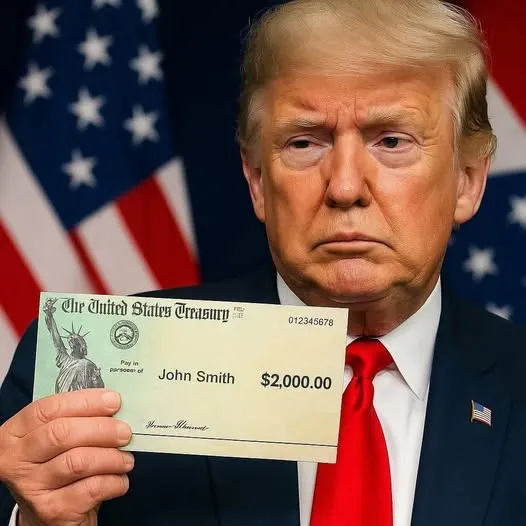
U.S. President Donald Trump has unveiled a new proposal to give most Americans a $2,000 “tariff dividend,” a plan he says would return money collected from import tariffs directly to citizens. The announcement has quickly become a focal point of national debate over trade policy and fiscal feasibility.
In a post shared on Truth Social on November 9, Trump wrote, “A dividend of at least $2,000 a person (not including high-income people!) will be paid to everyone.” His message suggested that the payments would exclude wealthier households, framing the initiative as a benefit for working- and middle-class Americans.
According to Trump, the proposed dividend would be funded through federal revenue generated by tariffs on imported goods. He described the idea as a way to share what he called the “economic benefits of strong trade policies” with ordinary citizens, presenting it as a form of economic justice for those most affected by global trade competition.
Despite the bold promise, many specifics remain uncertain. The Trump campaign has not released a formal plan explaining how the funds would be distributed, what the eligibility thresholds would be, or when payments might begin. The lack of concrete details has fueled both anticipation and skepticism among policy analysts.
Treasury Secretary Scott Bessent commented that the dividend “could come in many forms,” hinting that it might not necessarily involve direct cash payments. Instead, it could take the shape of tax reductions or credits, depending on how the policy is ultimately structured and funded.
Economists and fact-checkers have since questioned the practicality of the proposal. Analysts point out that current U.S. tariff revenues may fall far short of what would be required to fund $2,000 payments for most Americans. They also note that several existing tariffs are facing legal challenges, which could further complicate implementation.
For now, the “tariff dividend” remains more of a campaign-style promise than a confirmed government policy. Nonetheless, the announcement has captured public attention—energizing supporters hopeful for direct financial relief, while prompting critics to question whether the math behind the plan can truly add up.
The Benghazi Betrayal: Treason Without End – Why Hillary Clinton Must Face Justice, No Immunity, No Expiration
 The facts, long buried in conspiracy shadows but substantiated by declassified docs and investigations, paint a damning picture. In 2011, Clinton’s State Department, bypassing Congress, brokered arms deals to Libyan rebels via Ambassador Chris Stevens and dealer Marc Turi. U.S.-made Stinger missiles flowed—intended for anti-Gaddafi forces but diverted to Ansar al-Sharia terrorists. Some ended up in Afghanistan, turning against our troops.
The Taliban, armed and aware, blackmailed Obama: Release five Gitmo generals or we expose the Stingers. Bergdahl became the pawn—traded in 2014 to mask the extortion.