A federal grand jury in Miami on Wednesday indicted Democratic Rep. Sheila Cherfilus-McCormick and several co-defendants on charges that they stole about $5 million in FEMA disaster-relief funds and funneled the money into her 2021 congressional campaign, the Justice Department announced.
According to the indictment, Cherfilus-McCormick — who represents Florida’s 20th District in Broward and Palm Beach counties — and her brother, Edwin Cherfilus, diverted an overpayment tied to a COVID-19 vaccination-staffing contract awarded to their family’s home-health-care company, Newsweek reported.
Prosecutors allege the money was moved through multiple accounts to conceal its source, with a significant share ultimately directed from the FEMA-funded contract into political contributions.
The indictment also accuses the congresswoman of conspiring with her tax preparer to file a false federal tax return.
The ongoing ethics and criminal investigations continue to overshadow the congresswoman’s already troubled reputation, even prior to this indictment.
If found guilty, she could face a prison sentence of up to 53 years, while her brother could receive up to 35 years, prosecutors said.
The indictment comes as Cherfilus-McCormick, 46, is already under increased scrutiny for her family company’s pandemic-era finances.
In late 2024, Florida’s Division of Emergency Management filed suit against Trinity Healthcare Services — the firm she led before entering Congress — alleging the company overcharged the state by nearly $5.8 million for COVID-19 vaccine registration services and refused to repay the funds.
State officials said the dispute surfaced after a single $5 million overpayment triggered alarms, raising broader questions about Trinity’s handling of major public contracts during the pandemic, Newsweek reported.
The allegations in Florida have sparked an ethics investigation into the congresswoman’s significant increase in personal income. According to the Office of Congressional Ethics, Cherfilus-McCormick’s earnings in 2021 surpassed her income from the previous year by over $6 million.
The increase was largely attributed to nearly $5.75 million in consulting and profit-sharing fees from Trinity, the outlet reported.
In July, the House Ethics Committee unanimously voted to extend its investigation into whether she improperly benefited from the company’s government contracts, placing her under rare bipartisan scrutiny even before the federal indictment issued on Wednesday.
According to the indictment, the family company received a FEMA-funded COVID-19 vaccination staffing contract in 2021 and in July of that year received an overpayment of about $5 million.
Prosecutors say the defendants conspired to divert those funds and subsequently created straw-donor schemes: The indictment contends that Cherfilus-McCormick and co-defendant Nadege Leblanc arranged for friends and relatives to “donate” money to the campaign that actually came from the illicit FEMA funds.
The document also charges her and preparer David K. Spencer with conspiring to file a false tax return by mislabeling campaign expenditures and personal expenses as business deductions and inflating charitable contributions to reduce tax liabilities, Newsweek noted.
Born in Brooklyn, Cherfilus-McCormick holds a B.A. from Howard University and a J.D. from St. Thomas University School of Law. Before her 2022 special-election victory, she served as CEO of Trinity Health Care Services, the Miramar-based company now at the center of the contract dispute.
She won the seat following the death of longtime Rep. Alcee Hastings, becoming the only Haitian-American Democrat currently serving in Congress.
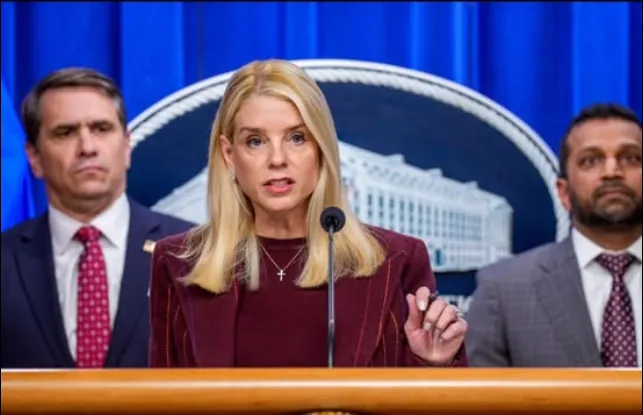
“Using disaster relief funds for self-enrichment is a particularly selfish, cynical crime. No one is above the law, least of all powerful people who rob taxpayers for personal gain. We will follow the facts in this case and deliver justice,” Attorney General Pam Bondi said.
Elijah Manley, who is running against Cherfilus-McCormick in the Democratic primary for her House seat, noted on the X platform, “Today’s indictment of my opponent, Congresswoman Sheila Cherfilus-McCormick, is a sad moment for the people of Florida’s 20th Congressional District. I am disappointed that the Congresswoman for abusing the power she was given and instead used it to enrich herself and her family. The people of FL-20 are ready to move past this era of fraud, corruption, and distractions.”
When news broke that ABC would be airing a special tribute to Charlie Kirk this Friday, audiences across the country were immediately taken by surprise.
The shock was compounded by the fact that this tribute is scheduled to air in the timeslot once belonging to late night host Jimmy Kimmel. For years, that slot was synonymous with celebrity interviews, comedy sketches, and monologues that defined nightly television.
Now, in an unexpected programming move, ABC has chosen to dedicate that very space to a figure known primarily for his political presence and outspoken commentary.
The announcement came swiftly and without elaborate preamble. Industry insiders had whispered about changes at the network, but few anticipated such a dramatic turn.
Within moments of the press release, social media platforms lit up with reactions ranging from disbelief to outright enthusiasm. Some hailed the network’s willingness to shake up tradition, while others were left scratching their heads, wondering what the tribute would entail.
The phrase “HOLY SMOKES” became a rallying cry across online threads as people processed the magnitude of this decision.
Television is built on habit, and prime timeslots carry immense cultural weight. Jimmy Kimmel’s former space is no ordinary hour of broadcasting; it is a space where millions of viewers once tuned in nightly for entertainment and satire.
By placing Charlie Kirk in that position, even temporarily through a tribute, ABC signals a shift in tone and in programming values. It is not simply about filling an empty slot; it is about redefining what kind of content deserves to sit at the center of late night.
To understand the significance, one must remember how closely guarded these hours are. Networks traditionally save them for personalities with wide appeal and commercial viability.
By devoting the slot to Kirk, ABC seems to suggest that his influence has reached a level warranting mainstream acknowledgment. Whether viewers agree with his political stance or not, the decision itself indicates a recognition of cultural impact.
Charlie Kirk built his name through activism, commentary, and as the founder of an organization that rapidly grew in visibility over the past decade. His style is direct, often provocative, and unapologetically confrontational when addressing his critics.
These qualities have made him both a celebrated figure among his supporters and a controversial presence in broader public debate. For many, his name sparks strong emotional reactions, which may explain ABC’s calculation that airing a tribute would capture audience attention.
The word “tribute” implies celebration, acknowledgment, or at least recognition of influence. What remains unclear is the tone ABC will adopt. Will it be a straightforward homage, highlighting Kirk’s career milestones?
Will it mix biography with commentary, offering a more nuanced perspective? Or will it lean heavily into a dramatic, headline-grabbing presentation designed to stir conversation more than reflection? At this stage, the only certainty is that the broadcast will not go unnoticed.
Producers, media analysts, and insiders quickly began debating the move. Some called it a risky gamble, noting that ABC’s core audience might not overlap comfortably with Kirk’s following.
Others argued it was a masterstroke, a way to pull in new demographics while reigniting interest in a timeslot that had recently struggled for fresh energy.
The departure of Jimmy Kimmel had left a vacuum, and in television, empty space is dangerous. Networks must constantly compete not only with each other but with streaming platforms and online creators who siphon off traditional viewers.
By selecting a figure as polarizing as Kirk, ABC virtually guarantees buzz, chatter, and ratings curiosity.
The entertainment press has speculated on potential formats. Could the tribute include interviews with colleagues, critics, and supporters? Might it feature archival footage of speeches, events, or defining media appearances?
Some even wonder if the broadcast could blend traditional documentary style with live commentary, creating a hybrid format that mirrors the unpredictability of Kirk himself.
Reactions from the public have been anything but muted. On one end of the spectrum, supporters expressed excitement, calling it a long-overdue recognition of a voice they feel has reshaped modern discourse.
On the other end, detractors warned that such a tribute risks mainstreaming rhetoric they see as divisive. This clash of opinion has already spilled across television panels, podcasts, and digital debates.
The move, regardless of outcome, has succeeded in placing ABC at the center of cultural conversation.
Social media posts captured the intensity of the response. Memes, celebratory gifs, and sharp criticisms flooded timelines. Some viewers announced plans to tune in specifically to see how the tribute would unfold, even if they did not support Kirk’s message.
Others vowed to boycott, framing the event as a misstep by a network once known for a very different brand of entertainment. The polarized climate all but ensures record engagement, as curiosity often drives people to watch what they claim to oppose.
The symbolism cannot be ignored. By replacing a late night entertainment host with a tribute to a political figure, ABC is reshaping expectations of what belongs in that hour.
It blurs the line between politics and entertainment, commentary and comedy, activism and mainstream recognition. Networks have always reflected cultural shifts, but this move feels especially pointed.
It suggests a moment in history where boundaries between categories are dissolving, where the platform once reserved for celebrity banter can now be a stage for ideological recognition.
For long-time television observers, it is a reminder of how fluid broadcast identity can be. Programs that begin in one genre often transform to suit audience tastes.
Talk shows evolve, news blends with satire, and documentaries adopt entertainment techniques. This tribute embodies that tradition of evolution, though in a way few predicted.
Although details remain tightly under wraps, producers have hinted at a mix of retrospective and commentary. Audiences may see highlights of Kirk’s speeches, commentary from political allies, and possibly testimonials from those influenced by his work.
Some insiders even suggested that the tribute could feature dramatic reenactments of pivotal moments, a technique increasingly popular in network specials.
Music, lighting, and narration are expected to create a tone of reverence, though critics argue this approach risks glamorizing controversy rather than analyzing it.
There is also speculation that ABC might include unexpected voices, perhaps critics or cultural commentators who can contextualize Kirk’s influence.
Doing so would broaden the scope of the tribute, framing it as cultural analysis rather than pure celebration. Whether the network chooses balance or one-sidedness will shape the legacy of the broadcast itself.
What happens after Friday may prove more important than the event itself. If the tribute draws strong ratings, ABC could be emboldened to experiment further, potentially inviting more politically charged content into spaces once reserved for light entertainment.
If it fails to capture audience interest, the network may retreat, framing the tribute as a one-time experiment. Either outcome will influence how networks think about their future strategies in a media landscape defined by fragmentation and competition.
Viewers are left to wonder what this means for the broader trajectory of television. Is this the beginning of a new era where political figures receive the same treatment as entertainers?
Or is it simply a unique moment, sparked by timing, vacancy, and the constant search for attention? Regardless of interpretation, the fact that so many are asking these questions demonstrates the cultural significance of the decision.
ABC’s announcement has already achieved what most networks dream of: national conversation, heated debate, and widespread anticipation. By placing Charlie Kirk at the center of Friday night programming, ABC has guaranteed that people will be watching—whether out of support, curiosity, or outrage.
The tribute is not just a broadcast; it is a statement, a cultural pivot, and perhaps a sign of how the boundaries of television are shifting in real time.
As Friday approaches, the eyes of both fans and critics will turn toward ABC. The legacy of this tribute will depend not only on its content but on the broader ripple effects it creates in the weeks and months to come.
For now, one thing is certain: the decision has already left a mark on the television landscape, proving once again that in media, shock and surprise remain powerful tools.