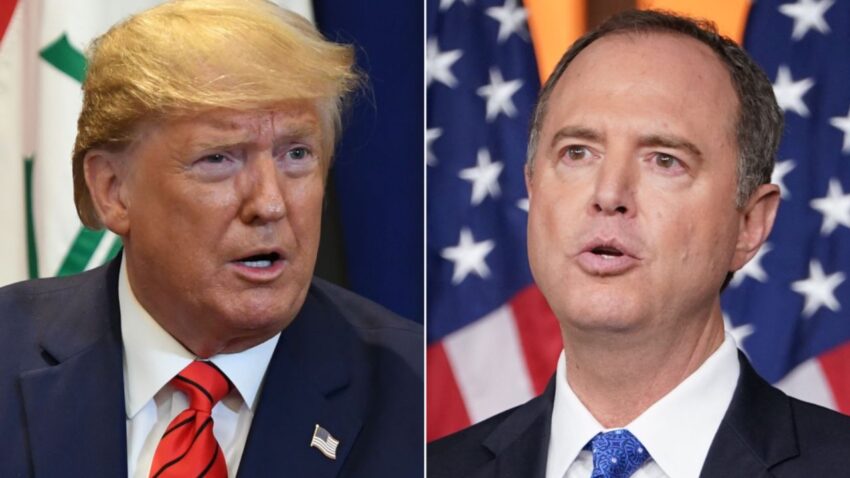
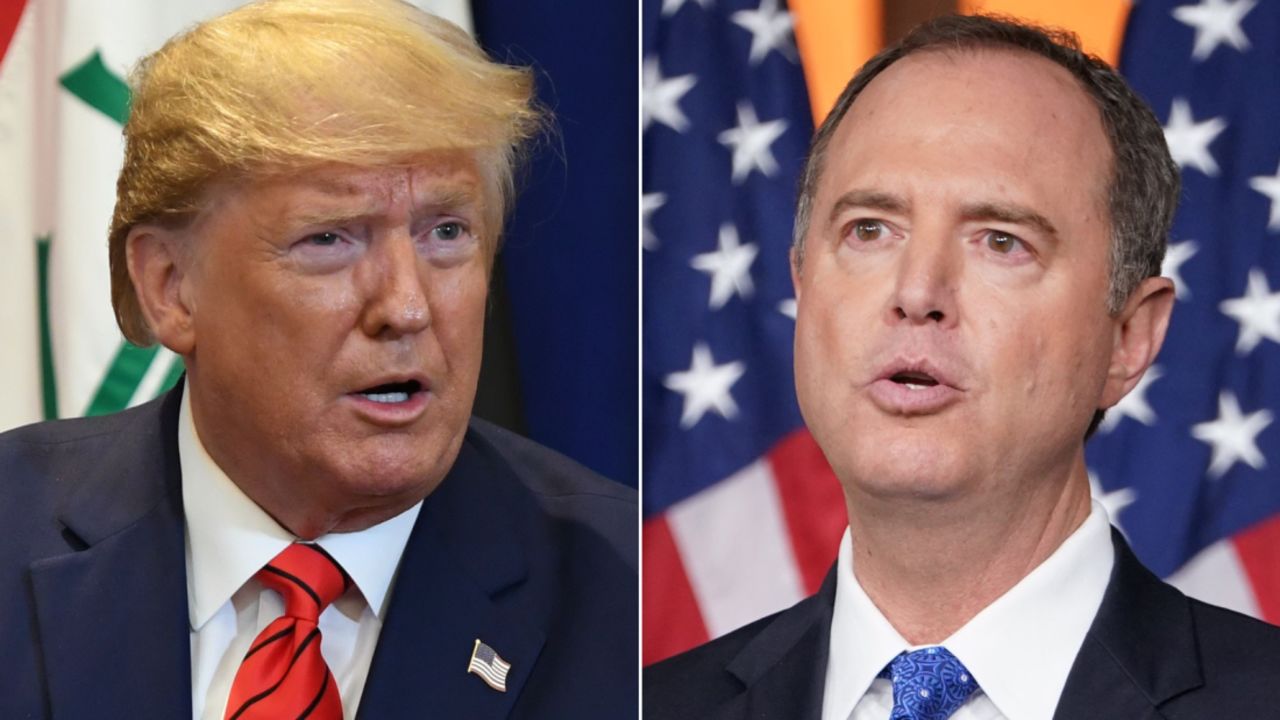
Newly declassified FBI interview records have reignited controversy over Senator Adam Schiff’s role in the turbulent years of the Trump-Russia investigation.
The documents, covering a period from 2017 to 2023, include testimony from an unidentified whistleblower who claimed that Schiff, then the top Democrat on the House Intelligence Committee, authorized leaks of classified material to politically damage President Donald Trump.
The whistleblower, described as a Democratic intelligence officer working within the committee, told investigators that Schiff’s actions were part of a broader effort to advance the “Russiagate” narrative that dominated headlines during Trump’s presidency.
The disclosures revive one of the most contentious chapters in modern American politics, raising questions about political influence, the handling of sensitive information, and the role congressional leaders played during a time when the nation’s intelligence apparatus was heavily focused on alleged ties between Trump’s campaign and Russia.
According to FBI interview summaries, the whistleblower repeatedly alleged that Schiff personally instructed House Intelligence Committee staff to approve the leaking of classified information designed to harm Trump politically.
The whistleblower claimed to have attended an all-staff meeting where Schiff explicitly stated that the committee would leak derogatory material about the president.
“In this meeting, SCHIFF stated the group would leak classified information which was derogatory to President of the United States DONALD J. TRUMP,” one FBI summary noted. “SCHIFF stated the information would be used to indict President TRUMP.”
The whistleblower further alleged that Representative Eric Swalwell of California, another high-profile Democrat serving on the Intelligence Committee, was most likely the direct source of some of the leaks. These leaks, according to the account, were calculated to fuel the Russiagate narrative that engulfed Washington during Trump’s first years in office.
Swalwell has strongly denied the claims, asserting that the accusations are politically motivated. He pointed to FBI Director Kash Patel, who has overseen the release of the documents, as pursuing a partisan agenda. “This is about politics, not the truth,” Swalwell insisted.
The whistleblower also alleged that Schiff had dangled a potential reward for loyalty in the lead-up to the 2016 presidential election. According to the testimony, Schiff promised the whistleblower the role of CIA Director if Democratic nominee Hillary Clinton won the presidency.
When Clinton lost to Trump, the promise evaporated, but the whistleblower claimed Schiff continued to push for leaks as a way to disrupt Trump’s ability to govern effectively.
Though no direct evidence has surfaced linking Schiff to such a promise, the allegation adds a dramatic new layer to longstanding suspicions that partisan motivations underpinned the Intelligence Committee’s actions during the Russia probe.
Schiff was one of the most vocal proponents of the theory that Trump or his associates colluded with Moscow, a claim later undermined by Special Counsel Robert Mueller’s investigation, which did not establish conspiracy.
From 2017 to 2019, Schiff served as the ranking Democrat on the House Intelligence Committee before taking the chairmanship. In this role, he was one of Trump’s fiercest critics, frequently appearing in television interviews to assert that evidence of collusion existed, though much of what he suggested publicly was never substantiated in official reports.
His prominence during the Russia investigation made him a lightning rod for partisan attacks. Republicans accused him of exaggerating intelligence findings and selectively leaking information to bolster the case against Trump. Democrats defended him as a watchdog against what they viewed as threats to national security and election integrity.
The declassified documents now thrust Schiff back into the spotlight, reigniting debates over whether his leadership crossed lines between oversight and political maneuvering.
At the heart of the controversy are the leaks themselves. Between 2017 and 2023, numerous classified details related to intelligence operations, surveillance warrants, and Trump associates surfaced in the media.Some of these disclosures were later proven misleading or incomplete, but at the time they shaped public perception of the Trump presidency.
The whistleblower claimed that Schiff believed leaking was necessary to create a climate in which Trump could be indicted or removed from office. Critics argue that such a strategy, if true, amounted to weaponizing intelligence against a sitting president.
Supporters counter that aggressive oversight was warranted given concerns about Trump’s conduct and his campaign’s contacts with Russians.
Regardless of motive, the leaks had profound political consequences. They fueled months of speculation, prompted congressional hearings, and ultimately contributed to Trump’s first impeachment in 2019, which centered on his dealings with Ukraine but occurred in a political environment still shaped by Russiagate suspicions.
Representative Swalwell, who was specifically named in the whistleblower’s claims, has mounted a strong defense. He insists that he was not involved in leaking classified information and has cast the allegations as part of a broader campaign to discredit Democrats who challenged Trump.
Swalwell has also faced scrutiny in the past for his reported ties to a suspected Chinese spy, an issue Republicans have cited to question his fitness for serving on the Intelligence Committee.
By linking Swalwell directly to the leaks, the whistleblower’s testimony has reopened old debates about his judgment and credibility. Swalwell, however, remains defiant, arguing that Republicans are recycling discredited narratives for political gain.
The declassification of these FBI records comes at a time when Trump and his allies are eager to highlight what they describe as Democratic corruption and misconduct.
The revelations provide ammunition for those who argue that Russiagate was a politically motivated attempt to weaken Trump rather than a legitimate investigation into foreign interference.
For Schiff, now a senator, the fallout could be significant. He has long been a polarizing figure in American politics, admired by Democrats as a determined opponent of Trump and reviled by Republicans as a symbol of partisanship in intelligence oversight.
Renewed scrutiny of his past actions threatens to overshadow his current role in the Senate and complicate his standing as a prominent Democratic voice.
Republicans in Congress are already calling for further investigations into Schiff’s conduct. Some have suggested he should face censure or even removal from committee assignments if evidence emerges that he knowingly approved unlawful leaks.
Democrats, by contrast, are defending Schiff as the target of politically motivated smears designed to distract from Trump’s legal challenges and controversial policies.
The controversy also raises broader questions about how intelligence oversight is conducted in Washington. The House Intelligence Committee is tasked with safeguarding classified information while ensuring that the intelligence community remains accountable to elected representatives.
If members of the committee are found to have authorized or facilitated leaks for political gain, it would represent a serious breach of trust.
Critics warn that such actions could undermine public confidence in congressional oversight and discourage whistleblowers or intelligence officers from cooperating with lawmakers.
Others argue that selective leaks are an inevitable part of Washington’s political culture and that both parties have engaged in the practice when it served their interests.
The reemergence of these allegations underscores how unresolved the debates around Russiagate remain. While Mueller’s investigation did not establish conspiracy, it did document numerous contacts between Trump associates and Russian figures, fueling continued disputes over what those interactions meant.
For Trump’s supporters, the entire episode is proof of a “witch hunt” orchestrated by Democrats and elements of the intelligence community. For his detractors, it reflects legitimate concerns about a president who welcomed foreign interference in U.S. elections.
By placing Schiff at the center of new allegations, the declassified documents risk further polarizing public opinion. To some, they will vindicate long-standing suspicions that Democrats abused their positions to undermine Trump.
To others, they will appear as a politically timed release designed to distract from ongoing controversies surrounding Trump himself. The revelations contained in the newly declassified FBI interview documents have thrust Adam Schiff and Eric Swalwell back into the political spotlight.
According to a whistleblower’s claims, Schiff approved the leaking of classified material intended to damage Trump during the Russia investigation, while Swalwell served as a likely conduit. Both men deny wrongdoing, and Democrats insist the allegations are part of a partisan effort to discredit them.
Still, the claims raise profound questions about how intelligence is handled in Washington, whether partisan goals have corrupted oversight, and what precedent such actions set for the future.
As the political battle intensifies, the controversy surrounding Schiff’s alleged role in Russiagate leaks threatens to reopen old wounds and reshape the debate over accountability in the highest levels of government.
The global music community is in deep mourning after the sudden loss of Brett James, the celebrated songwriter whose talent and heartfelt lyrics defined some of the most beloved songs in contemporary music. Renowned for crafting hits that resonated with millions, James’ life was tragically cut short in a small aircraft accident in North Carolina earlier today.
The crash claimed the lives of James and two other passengers when the plane came down alarmingly close to an elementary school. Miraculously, no children or staff were harmed, but the proximity of the accident to the playground underscores how narrowly a wider catastrophe was avoided.
Fans, colleagues, and admirers are grappling with the magnitude of this loss. At 55, James leaves behind an extraordinary legacy—a body of work that transcends charts and awards, connecting with people on an emotional and spiritual level. His passing has sparked an outpouring of tributes from across the globe, reflecting the deep influence of his artistry.
Local authorities report that the crash occurred in broad daylight in a community near an elementary school. Eyewitnesses described hearing a deafening explosion, followed by a plume of black smoke rising from the wreckage. Emergency responders arrived swiftly, securing the site and ensuring the safety of nearby residents and students.
Authorities confirmed that all three individuals aboard the aircraft, including Brett James, perished on impact. The identities of the other passengers have not yet been publicly released as families are being notified.
Officials emphasized the extraordinary luck that no children were injured. According to one emergency responder, “It’s truly a miracle that more lives weren’t lost. The plane came down just yards from the playground, moments before recess was scheduled to begin.”
The incident has left the local community shaken, highlighting the unpredictable and fragile nature of life.
Brett James was born in 1968 in Norman, Oklahoma, and grew up immersed in music and storytelling. Though he initially pursued a conventional career in medicine, his passion for songwriting proved irresistible. By the early 1990s, James moved to Nashville, Tennessee, determined to forge a path in the highly competitive music industry.
The early years were challenging. Like many aspiring songwriters, he faced rejection and uncertainty. Yet, through perseverance and unwavering dedication, James began to make his mark. By the late 1990s, his talent had gained recognition, and he became a sought-after collaborator for some of the biggest names in country, pop, and rock music.
Brett James’ catalog included more than 500 songs, each showcasing his ability to blend raw emotion with memorable melodies. His work not only climbed the charts but also left an indelible mark on listeners’ hearts.
Some highlights of his career include:
Faith-Inspired Ballads: Most notably, he wrote a breakout hit for a young country star that quickly became a cultural phenomenon. The song’s universal message of hope, surrender, and resilience connected with audiences worldwide.
Collaborations Across Genres: James worked with legendary artists including Kenny Chesney, Tim McGraw, and Martina McBride, crafting songs that ranged from heart-wrenching ballads to uplifting anthems.
Chart-Topping Hits: Many of his compositions reached the No. 1 spot on major music charts, cementing his status as one of Nashville’s most prolific songwriters.
James’ music stood out not only for its technical brilliance but also for its emotional depth. His songs often reflected real-life experiences, allowing listeners to see themselves in his lyrics. Fans describe his work as a companion during moments of both joy and adversity.
Although Brett James penned hundreds of tracks, one particular song solidified his place in music history. Released in the mid-2000s, it introduced a young singer to the world and became an enduring anthem of faith, hope, and perseverance.
The song’s impact transcended country music, resonating with listeners from all walks of life. Many fans recall personal stories of how the song provided solace during challenging times or inspiration during pivotal life moments. James’ ability to create music that met people where they were emotionally was his hallmark—one that few songwriters achieve.
News of James’ passing spread rapidly, with fans and fellow musicians sharing heartfelt tributes.
Artists and Colleagues: Fellow songwriters and performers expressed their sorrow, highlighting James’ generosity, mentorship, and creative brilliance. “Brett had an unmatched gift for turning stories into songs that touched people’s lives,” said one Nashville producer.
Public Figures and Fans: Social media became a space of collective grief and remembrance. Fans shared how James’ songs had become part of their personal narratives, from weddings and family gatherings to moments of reflection and healing.
Carrie Underwood Tribute: The singer credited with one of his most iconic hits posted a deeply personal message, expressing gratitude for James’ guidance and influence on her career. She described the songwriter as “an irreplaceable mentor and friend whose music will live on forever.”
The emotional response demonstrates the deep connections that James’ music fostered—a testament to the enduring power of artistry that transcends fame.
The Federal Aviation Administration (FAA) and the National Transportation Safety Board (NTSB) have initiated a comprehensive investigation into the accident. Authorities are examining factors including aircraft maintenance records, pilot experience, and weather conditions at the time of the crash.
While small aircraft accidents are relatively uncommon, they often prompt questions about safety standards, aircraft age, and training protocols. Preliminary findings are expected in the coming weeks, but for now, attention remains on the families, community, and fans coping with the tragedy.
Beyond his chart-topping hits, Brett James was celebrated as a mentor, friend, and source of inspiration. He nurtured aspiring songwriters, helping many navigate the complexities of the music industry. Numerous artists credit him with shaping their careers and encouraging them to find their unique voice.
Those who knew him personally speak of his warmth, humility, and sense of humor. Despite his global recognition, James remained grounded, cherishing time with family, friends, and his community.
His passing is not only a professional loss but also a deeply personal one for those who were close to him. His legacy lives on in the countless individuals he mentored, inspired, and touched through his music.
The untimely death of Brett James underscores the fragility of life and the power of creative expression to endure beyond mortality. While the tragedy has left fans heartbroken, his songs continue to inspire and comfort, resonating across generations.
Music, in many ways, allows individuals to live on through the emotions, memories, and experiences they evoke. Brett James’ artistry achieved precisely that—creating a lasting imprint that continues to uplift, console, and connect people worldwide.
Brett James’ passing marks a profound moment of sorrow for music enthusiasts everywhere. His compositions told stories of love, faith, struggle, and triumph, bridging the gap between artist and audience in a uniquely personal way.
Though he will not create new music, the songs he left behind remain a testament to his extraordinary talent and humanity. His voice will continue to echo through every note, lyric, and melody that touched the hearts of millions.
As fans, colleagues, and communities come together to mourn, one truth remains undeniable: Brett James’ music, like his spirit, is immortal. His legacy will continue to shine brightly, offering comfort, inspiration, and connection for generations to come.