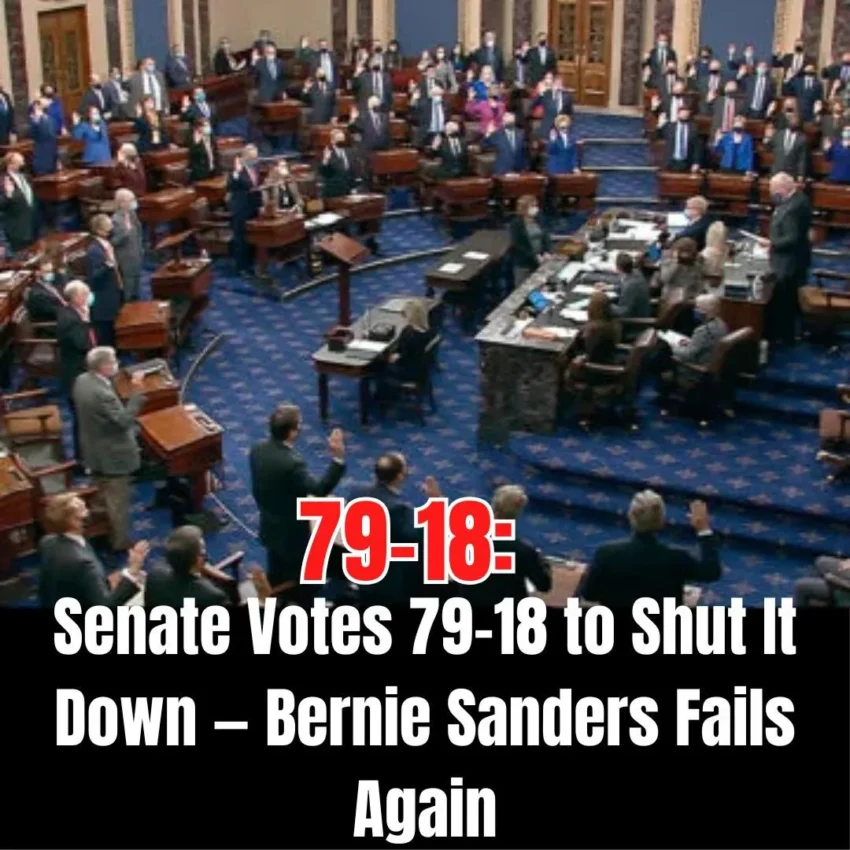
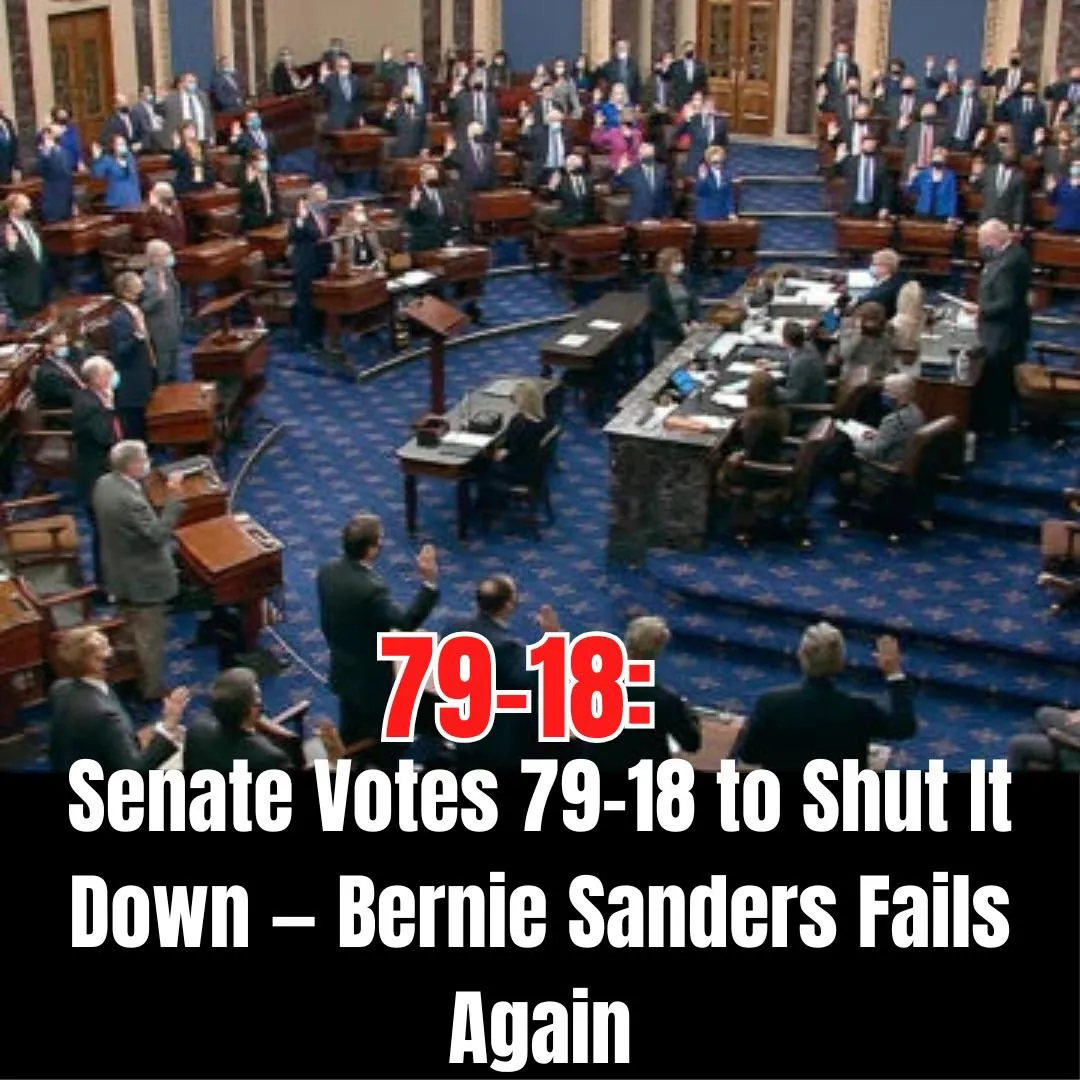
A dramatic confrontation over America’s most significant military alliance reached its climax in the Senate chamber Wednesday night, as lawmakers delivered a resounding rejection to an unprecedented attempt to halt billions of dollars in weapons transfers. The vote represents far more than a simple policy disagreement—it reflects deep fractures within the Democratic Party and raises fundamental questions about congressional oversight of foreign military aid during times of international crisis.
The legislative battle exposed sharp divisions over America’s role in global conflicts, the limits of executive authority in arms sales, and the complex relationship between humanitarian concerns and strategic alliance obligations. What unfolded in the Senate represents a pivotal moment that could reshape debates about American foreign policy, congressional war powers, and the balance between moral imperatives and geopolitical realities for years to come.
The decisive outcome has sent shockwaves through advocacy communities while reinforcing the institutional strength of one of America’s most enduring international partnerships, setting the stage for continued political battles over foreign policy priorities and humanitarian responsibilities.
The U.S. Senate voted down three separate Joint Resolutions of Disapproval (JRDs) introduced by Independent Senator Bernie Sanders of Vermont that would have blocked approximately $20 billion in arms sales to Israel. The legislative effort represented the most significant congressional challenge to U.S.-Israel military cooperation in recent memory, targeting specific weapons systems and military equipment that Sanders and his allies argued were being used in violation of international law.
Sanders’ S.J. Res. 111, the primary resolution among the three measures, was defeated by a decisive vote of 18 to 79 on Wednesday night, demonstrating the overwhelming Senate support for maintaining existing military aid arrangements. The lopsided margin reflected the broad bipartisan commitment to the U.S.-Israel strategic partnership, even amid growing concerns about the humanitarian situation in Gaza and the conduct of Israeli military operations.
The timing of the vote, occurring more than a year after the October 7, 2023 Hamas attack on Israel, reflected Sanders’ calculation that growing international criticism of Israeli military operations and mounting humanitarian concerns might create sufficient political space for congressional action. However, the decisive defeat suggests that these considerations were insufficient to overcome institutional support for the military partnership.
The legislative effort coincided with warnings from United Nations officials about impending famine conditions affecting more than 2 million Palestinians experiencing “extremely critical” levels of hunger, adding urgency to Sanders’ humanitarian arguments while highlighting the complex intersection of security concerns and civilian suffering that has defined the conflict.
In a passionate floor speech that served as his final appeal to senators, Sanders articulated a comprehensive case that the United States was complicit in violations of international law and humanitarian principles through its continued military support for Israel. His arguments combined legal, moral, and strategic considerations in an attempt to build a coalition of senators willing to challenge established foreign policy orthodoxy.
Sanders argued that the United States government was “currently in violation of the law” by continuing to provide weapons to Israel, specifically citing the Foreign Assistance Act and the Arms Export Control Act. These statutes, according to Sanders’ interpretation, prohibit the transfer of weapons to countries that violate internationally recognized human rights or obstruct U.S. humanitarian aid efforts.
“Every member of the U.S. Senate who believes in the rule of law should vote for the resolutions,” Sanders declared the day before the vote, framing the issue not as a matter of foreign policy preference but as a question of legal compliance and institutional integrity. This legal framework represented Sanders’ attempt to move the debate beyond traditional pro-Israel or pro-Palestinian positions toward questions of American law and institutional responsibility.
The Vermont Independent’s moral arguments focused on what he characterized as U.S. “complicity” in civilian casualties and humanitarian suffering. Sanders emphasized that “much of this death and destruction has been carried out with U.S. weaponry and paid for by American taxpayers,” directly connecting American citizens to the outcomes of Israeli military operations through their tax contributions and democratic participation.
In a Washington Post opinion piece published during the week of the vote, Sanders wrote: “The need is greater than at any other time in the conflict; the volume of aid getting into Gaza in recent weeks is lower than at any point since the war began.” This observation supported his argument that Israeli restrictions on humanitarian aid violated the conditions under which U.S. military assistance should be provided.
Sanders also highlighted the scale of American military support, noting that “during the last year alone, the United States has provided $18 billion in military aid to Israel and delivered more than 50,000 tons of armaments and military equipment.” These figures were intended to demonstrate the significant American material contribution to Israeli military capabilities and, by extension, American responsibility for how those capabilities were employed.
The Sanders resolutions attracted support from a small but vocal group of Democratic senators who joined him at a Tuesday news conference, including Senators Peter Welch, Chris Van Hollen, and Jeff Merkley. This coalition represented the progressive wing of the Democratic Party and reflected growing concerns within the party about the Biden administration’s approach to the Israel-Gaza conflict.
The presence of these senators at Sanders’ news conference demonstrated that opposition to continued arms sales extended beyond Sanders’ independent status to include sitting Democratic Party members, suggesting deeper fractures within the party’s foreign policy consensus. However, the small size of the coalition and the decisive defeat of the resolutions indicated that these voices remained a minority within the broader Democratic caucus.
North Carolina’s Republican-led legislature approved a revised congressional district map designed to add at least one more GOP seat in the U.S. House, aligning with President Donald Trump’s push for mid-decade redistricting to help Republicans maintain their narrow majority in the chamber ahead of the 2026 midterm elections.
The new boundaries build on the state’s existing map, drawn by Republicans in 2023 following the 2020 census, which delivered 10 of North Carolina’s 14 House seats to the GOP in the 2024 elections—even as the swing state remains evenly split between Republican and Democratic voters.
Democratic Gov. Josh Stein lacks veto power over redistricting under state law, leaving the plan poised for implementation unless challenged in court.
This move marks the third instance this year of a Republican-controlled state legislature responding to Trump’s call for aggressive redistricting strategies, following similar actions in Texas and Missouri.
In Texas, where the push began in earnest, Republicans unveiled a proposed map on July 30, 2025, aiming to flip up to five Democratic-held seats through mid-decade adjustments.
The effort stems from a pair of long-running legal battles, including a 2024 ruling by the U.S. 5th Circuit Court of Appeals that overturned prior district configurations in areas like Baytown and Galveston, creating an opening for the redraw.
Texas Republicans have cited population shifts and compliance with voting rights laws as justifications, though critics argue it’s a partisan power grab encouraged by Trump. By September 2025, state officials had begun walking back some initial rationales amid scrutiny from the U.S. Department of Justice, but the plan remains on track for adoption.
Other GOP-led states, including Ohio, Kansas, and Indiana, are weighing or advancing comparable mid-cycle changes, capitalizing on their legislative majorities to redraw lines outside the traditional decennial census timeline. Such tactics have historical roots.
Texas itself pursued a similar mid-decade redistricting in 2003 under then-Gov. Rick Perry, who helped solidify Republican dominance in the state’s delegation.
Democrats have decried these efforts as unfair gerrymandering, but Republicans counter that many blue states have long employed similar strategies to entrench their own advantages.
For instance, Illinois Democrats have drawn maps that pack Republican voters into a handful of districts, allowing the party to hold a supermajority in the state’s congressional delegation despite competitive statewide races.
In Maryland, convoluted district shapes have helped Democrats secure seven of eight House seats in a state where Republicans routinely win about 40% of the vote.
New York Democrats attempted an aggressive gerrymander in 2022, only to have it struck down by courts, but the episode highlighted ongoing partisan map-drawing in left-wing strongholds.
Overall, both parties have a history of manipulating districts for gain, with gerrymandering often canceling out nationally but distorting representation at the state level.
In response to the Republican surge, California Democrats have placed Proposition 50 on the November 2025 ballot, a measure that would authorize temporary congressional map changes through 2030 to counter moves in Texas and other red states.
The proposition, backed by Gov. Gavin Newsom and the state Democratic Party, directs the independent Citizens Redistricting Commission to adopt legislatively influenced boundaries, potentially putting five Republican-held seats at risk in districts currently represented by figures like Reps. Kevin McCarthy and Mike Garcia.
With Republicans controlling more state legislatures than Democrats, the GOP appears positioned to net additional House seats through these maneuvers.
Democrats, who fell short in 2024, need to net just three seats to reclaim the House majority in 2026, making every district adjustment critical.
The Senate remains a tougher climb for Democrats, who must defend incumbents in red-leaning states while targeting GOP vulnerabilities.
U.S. Rep. Don Davis, a North Carolina Democrat, blasted the plan as “beyond the pale” in a statement, accusing Republicans of undermining fair elections as his 1st District faces elimination under the new map.
Trump, however, hailed the North Carolina map on social media, calling it a win for “putting America First.” State House Speaker Destin Hall echoed the sentiment by reposting Trump’s message, adding, “We’re putting America First in NC!”
As legal challenges mount and the redistricting arms race intensifies, the 2026 midterms could hinge on these behind-the-scenes battles over district lines, testing the resilience of America’s electoral system.