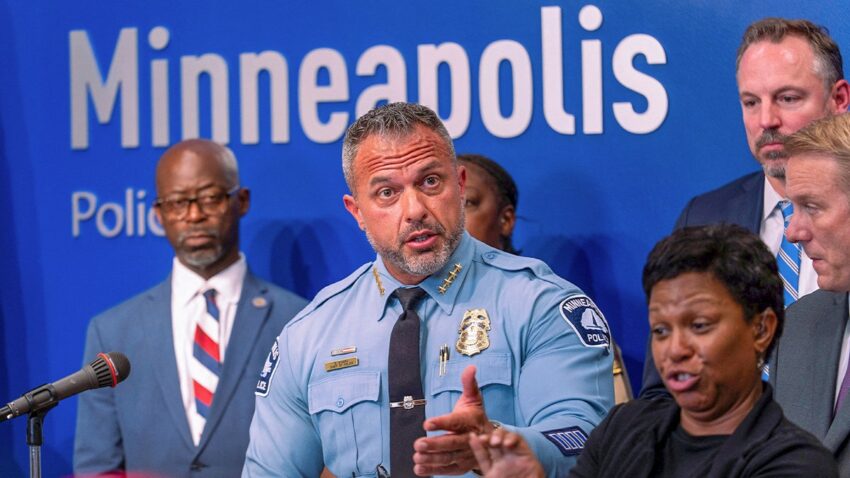
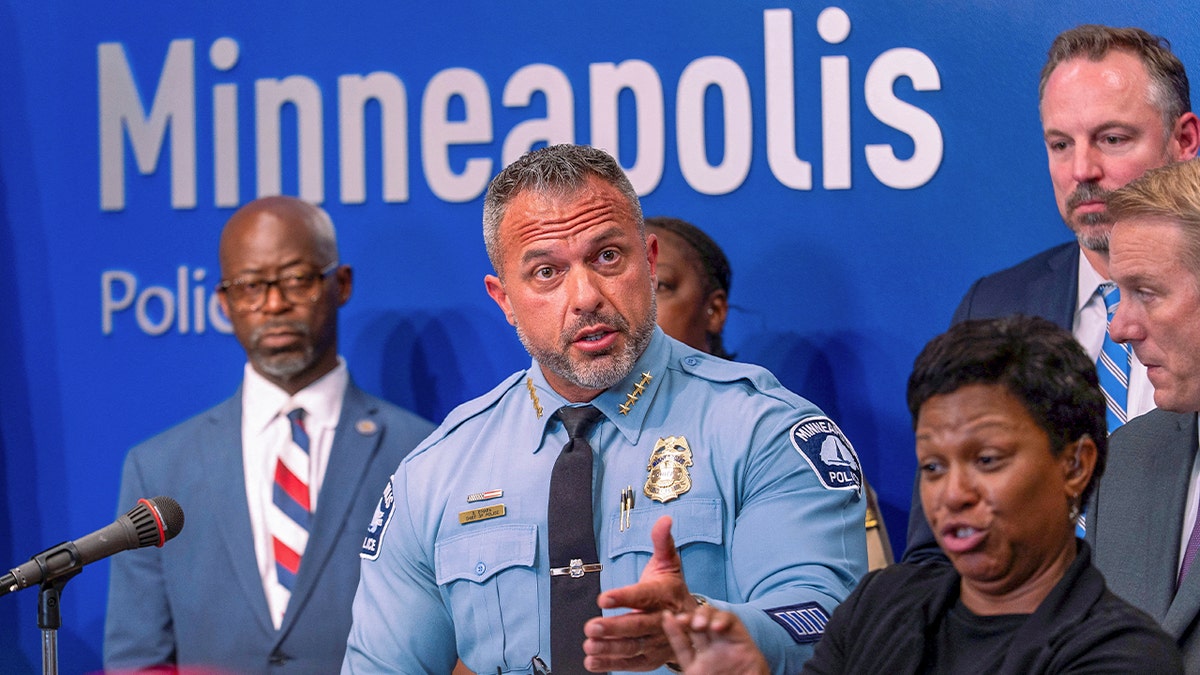
MINNEAPOLIS – In a city grappling with rising juvenile crime and intense political scrutiny, Minneapolis Police Chief Brian O’Hara has issued a formal apology to the local Somali community. The apology addresses controversial comments O’Hara made linking recent violence in the Dinkytown area to “East African kids” from outside the city.
“The Somali community here in Minneapolis has been welcoming and has shown love towards me, and I appreciate it,” O’Hara stated at a Thursday press conference, attempting to quell the backlash. “If people have taken anything that I have said out of context in a way that’s caused harm, I apologize.”
The “Mommy’s Mercedes” Controversy The friction began earlier this month following a deadly Halloween shooting. In an interview with WCCO, Chief O’Hara pushed back against the narrative that local poverty was driving crime. instead pointing the finger at suburban youth coming into the city.
“These are not poor kids from Minneapolis,” O’Hara famously remarked, claiming the suspects were taking “mommy’s Mercedes-Benz to Dinkytown” and causing chaos. He specifically identified “groups of East African kids” from surrounding communities, a statement that immediately sparked petitions demanding his apology.
A National Security Storm Brewing However, the Chief’s apology comes at a time when the Somali community in Minnesota is facing pressure far greater than local police scrutiny. A bombshell report by the Manhattan Institute alleges that Minnesota has become a hub for financial schemes funneling taxpayer money to Al-Shabaab, an Al-Qaeda-linked terror group in Somalia.
According to the report, “Every scrap of economic activity… benefits Al-Shabaab in some way.”
Trump Takes Action Reacting swiftly to these allegations, President Donald Trump announced the immediate termination of Temporary Protected Status (TPS) for Somali nationals in Minnesota.
“Minnesota… is a hub of fraudulent money laundering activity,” Trump posted on Truth Social. “I am, as President of the United States, hereby terminating… the Temporary Protected Status for Somalis in Minnesota. Send them back to where they came from. It’s OVER!”
GOP Demands Investigations House Majority Whip Tom Emmer (R-Minn.) and other Republican lawmakers are now demanding a federal investigation into the flow of money. Citing massive fraud in pandemic relief programs like “Feeding Our Future,” Emmer warned that the issue has escalated from fraud to a “grave threat to our national security.”
As Chief O’Hara attempts to rebuild trust on the streets of Minneapolis, the political and legal storm surrounding the state’s Somali community appears to be just beginning.
“My Mother Didn’t Raise a Fool.” — Senator John Kennedy Humiliates AOC After Exposing Her Real Motive Behind the Government Shutdown What began as a tense Capitol Hill hearing turned into one of the most viral political showdowns of the year. During a fiery debate on the government shutdown, Rep.
Alexandria Ocasio-Cortez (AOC) accused the Senate of “serving corporate greed.” But Senator John Kennedy — known for his sharp wit and Southern composure — calmly fired back: “Congresswoman, do you actually know what’s in the bill you’re protesting, or is this just another performance for Twitter?” The room went silent. When AOC replied that the bill was “written by lobbyists,” Kennedy leaned in and said, “Well, ma’am, my mother
didn’t raise a fool — and she sure didn’t raise a liar. So let’s talk about what’s actually in this bill.” He then read sections funding veterans’ healthcare, small business aid, and public safety programs, exposing how the shutdown hurt working families more than the wealthy. “You say you’re fighting for the people,” he said, “but the only thing you’re feeding is chaos.
” When AOC tried to interrupt, Kennedy added, “When moral stands become political theater, that’s not moral — that’s manipulation. And before you call that ‘mansplaining,’ this isn’t about gender, it’s about governing.” The exchange exploded online — clips went viral under hashtags like
#KennedyVsAOC and #MyMotherDidntRaiseAFool, gaining millions of views within hours. Kennedy’s calm, fact-based approach won praise across the spectrum, while AOC’s defenders accused him of “Southern condescension.” But things escalated when Kennedy’s office revealed internal documents suggesting some progressives backed the shutdown as a 2028 political strategy, not a moral stance. Kennedy later told reporters, “This was never about conscience — it was about control. Some folks would rather burn down the government if it means they stand tallest in the ashes.
” AOC clapped back on X, saying, “What’s truly immoral is a government that works for billionaires while Americans go hungry.” Kennedy’s reply? “Ma’am, I don’t argue with people looking for applause. I work for people looking for paychecks.” Analysts called the clash “a defining moment of the post-shutdown narrative.” Georgetown’s Dr. Allison Monroe noted, “Kennedy weaponized calmness. AOC weaponized outrage. Both performed for different audiences — and both succeeded.” In the days that followed, Kennedy appeared on major networks, insisting, “Shutting down the government to make a point is like burning down your house to protest the rent.” Even critics admitted his remarks “stripped away theater and revealed motive.” For Kennedy, “My mother didn’t raise a fool” wasn’t just a clever line — it was a message against political posturing. Asked later if he regretted his tone, Kennedy smiled and said, “I don’t mind being unpopular for telling the truth. My job isn’t to win popularity contests — it’s to keep this country from becoming a circus.” And in a week of shutdowns and showdowns, those words became the line America couldn’t stop replaying.
But amid all the internet-fueled speculation, there’s one important fact being overlooked: Trump’s most recent medical evaluation gave him a clean bill of health.
Captain Sean Barbabella, Trump’s personal physician, confirmed earlier this year that the president passed an extensive physical at Walter Reed National Military Medical Center. The five-hour exam included blood tests, cardiac screening, and a neurological evaluation—specifically, the Montreal Cognitive Assessment, on which Trump reportedly scored a perfect 30 out of 30. At the time, Dr. Barbabella stated that Trump was in top form, both mentally and physically.
In recent weeks, Trump has maintained a packed public schedule. After spending the weekend at Camp David, he returned to Washington and was photographed inspecting construction work on the White House lawn, standing confidently on a wooden plank laid over the grass while chatting with workers.
While critics and online commentators continue to dissect every wrinkle in his suit and every angle of every photo, Trump’s official medical records—and his energetic campaign trail appearances—tell a far less dramatic story.
It has been eight years since Tanzania experienced one of its most heartbreaking moments — the tragic accident that claimed the lives of schoolchildren, their teachers, and their driver in the Karatu district. On May 6, 2017, what should have been a bright and promising morning turned into a day of sorrow, leaving scars that will never truly fade from the nation’s heart.
The incident involved pupils from Lucky Vincent Primary School in Arusha. They were traveling to take part in a mock national examination, an important milestone for their young academic journeys. For the children, the trip represented an opportunity to prove their hard work, dedication, and commitment to learning. Excitement filled the bus as the children spoke with one another about their preparation, their future dreams, and the pride of making their families happy.
But as the bus made its way through the winding mountain roads of the Karatu district, disaster struck. On a rainy stretch of road, slippery conditions caused the driver to lose control. The bus veered off the route and plunged into a ravine, changing the lives of dozens of families forever.
A Nation United in Grief
When the news broke, Tanzania fell into collective mourning. Radio and television interrupted their usual programming, delivering heartbreaking updates. The following morning, newspaper headlines reflected the same shock that people felt in their homes, workplaces, and communities.
President John Magufuli declared a period of national mourning, calling upon citizens to stand together and support the affected families. Across the country, people organized prayer services, vigils, and gatherings in memory of the children. Schools paused their lessons, allowing students and teachers alike to reflect on the fragility of life and the importance of safety.
Condolences did not only come from within Tanzania. Messages of support poured in from neighboring African countries and the wider international community. Faith-based organizations, humanitarian groups, and world leaders expressed their solidarity with the grieving families, recognizing that this tragedy transcended borders.
Stories of Loss and Resilience
The accident claimed the lives of 32 children, two teachers, and the driver. Each of those individuals had their own story, their own family, and their own dreams. They were not just numbers in a news report but beloved sons and daughters, cherished siblings, and promising young students who held great potential.
Parents spoke of children who wanted to become doctors, engineers, teachers, and artists. Communities mourned not only the individuals but also the futures that had been cut short. To many, the loss was felt as if the entire nation had lost part of its soul.
Yet, amid this darkness, there were stories of survival that gave people a reason to hold on to hope. Three children — Wilson, Sadia, and Doreen — were miraculously found alive in the wreckage. Though critically injured, they were transported to the United States for advanced treatment thanks to the generosity of humanitarian organizations and well-wishers.
Their survival became a symbol of resilience. In a time when grief was overwhelming, these children represented courage, strength, and the will to continue even in the face of unspeakable challenges. Their recovery was closely followed not only in Tanzania but across the globe, showing that the human spirit can endure even in moments of deep despair.
Lessons on Road Safety
The Karatu tragedy sparked an urgent conversation about road safety in Tanzania. Parents, educators, and lawmakers demanded stronger action to ensure that such a devastating incident would never happen again.
Key concerns were raised about the condition of rural roads, the qualifications of drivers entrusted with transporting children, and the broader state of the transportation system. Experts emphasized that safe roads and qualified drivers should not be optional but fundamental requirements for protecting young lives.
Following the accident, the government promised reforms, including:
Stricter requirements for school bus drivers.
Regular safety inspections for vehicles transporting students.
Investment in improving rural and mountainous roads.
Public education campaigns on traffic laws and safety awareness.
While progress has been made, challenges remain. Many parents and community leaders continue to push for more consistent enforcement of these safety measures, reminding authorities that the tragedy of 2017 should never be forgotten or repeated.
Memorialization and Healing
Today, eight years later, the pain has softened, but it has not disappeared. Families and communities have continued to gather at the memorial site in Karatu, bringing fresh flowers and lighting candles. The names of the children are spoken aloud to ensure their memory lives on, not just as victims but as dreamers whose futures once shone brightly.
Teachers and classmates who survived often share stories about the lost children, ensuring that their personalities, ambitions, and laughter are remembered. By doing this, they keep alive the sense of who these children were — not only how their lives ended.
Faith has also played a major role in the healing process. Religious leaders have offered guidance, encouraging families to hold on to their beliefs, trust in God, and transform their grief into a force for positive change.
Global Reflections
The Karatu school bus tragedy is not just a Tanzanian story — it is a human story. Similar accidents in different countries remind us that road safety for children is a global issue. The tragedy sparked conversations internationally about how to safeguard students, particularly in regions with challenging infrastructure.
Humanitarian organizations have since used the memory of Karatu to advocate for child safety programs, improved transport regulations, and investment in safer roads. In this way, the memory of those lost has influenced change far beyond Tanzania’s borders.
The Importance of Collective Memory
Eight years later, one of the most powerful messages from the Karatu tragedy is the importance of remembering. Forgetting would mean allowing history to repeat itself. Remembering means keeping alive the lessons, the reforms, and the compassion that arose in the aftermath.
The children, teachers, and driver may no longer be physically present, but their memory endures in the form of safety campaigns, policy changes, and a strengthened national commitment to protecting students.
A Future Built on Remembrance
As Tanzania looks ahead, the tragedy of May 6, 2017, continues to serve as both a painful reminder and a guiding light. For parents, it reinforces the importance of vigilance and accountability in protecting their children. For educators, it highlights their role not only in teaching but also in safeguarding the well-being of their students. For leaders, it stands as a call to action — a reminder that policy and safety measures are not optional but vital.
Most importantly, for the families who lost their loved ones, it is a reminder that while grief never truly ends, remembrance can transform pain into strength.
Eight years on, Tanzania remembers. And in that remembrance, the voices of the children live on — reminding the world that their dreams, though interrupted, continue to inspire.