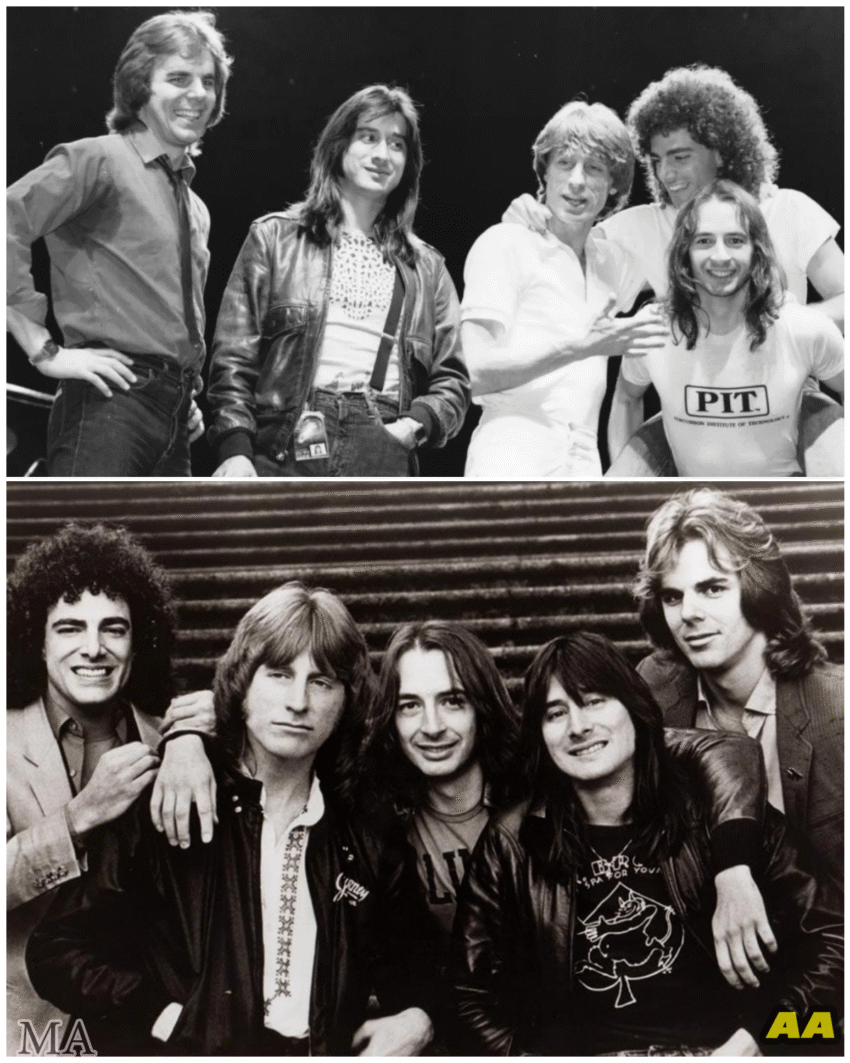
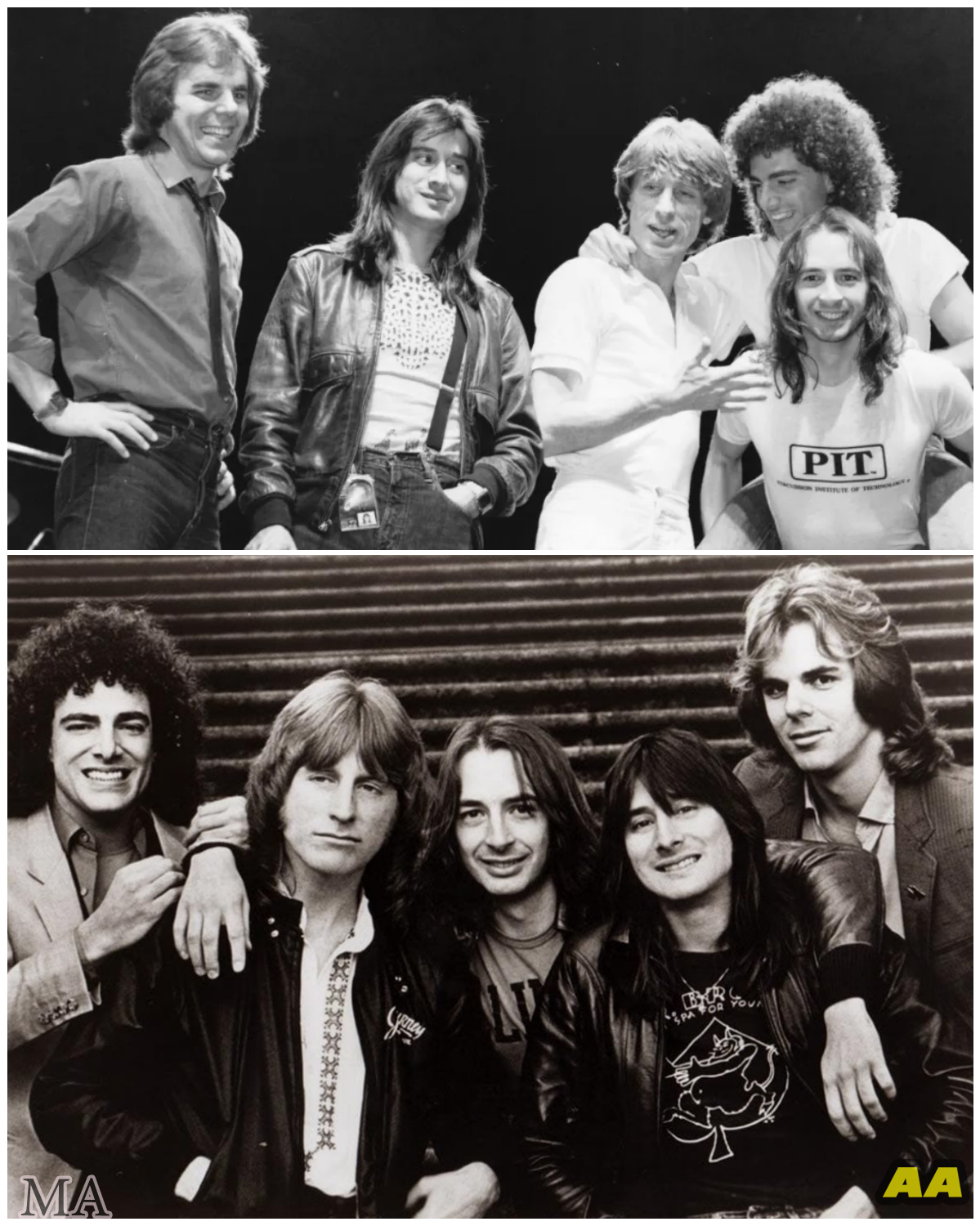
It’s the song that refuses to die.
The song that has outlasted boy bands, hip-hop fads, and even auto-tune.
Don’t Stop Believin’ by Journey isn’t just a classic rock track — it’s a cultural juggernaut, a multi-generational anthem, and the ultimate feel-good musical miracle that somehow wormed its way into hearts across the globe.
Released in October 1981 as the flagship single from Journey’s seventh studio album Escape, it originally peaked at number 9 on the Billboard Hot 100 chart.
But here’s the thing — nobody, not even the band, could have predicted that this track would go on to become one of the best-selling digital songs of all time, racking up millions of downloads and streams, and cementing itself as the ultimate rallying cry of hope and perseverance.
Written by the legendary trio of Jonathan Cain, Steve Perry, and Neal Schon, Don’t Stop Believin’ perfectly captures the magical combination of heart, hope, and sheer rock energy.
Recorded at the iconic Fantasy Studios in Berkeley, California, the track showcased the band’s signature brilliance: Perry’s soaring, soul-shaking vocals, Schon’s unforgettable melodic guitar riffs, and Cain’s instantly recognizable keyboard intro that now triggers goosebumps the world over.
Music historians agree: “From the very first notes, you can feel the electricity.
It’s almost like the song reaches inside you and refuses to let go,” said one “insider expert” who wished to remain anonymous.
But what truly transformed Don’t Stop Believin’ from a hit single into a cultural phenomenon was its revival decades later.
First, there was HBO’s The Sopranos, whose jaw-dropping 2007 series finale featured the song in a scene so iconic that it stopped the world in its tracks.
Suddenly, millions of viewers who hadn’t touched a Journey album in decades were hooked again, and the song became a symbol of suspense, hope, and nostalgia all rolled into one unforgettable moment.
Then came the Glee effect.
In 2009, the hit TV show introduced the anthem to an entirely new generation of fans who had never set foot in a smoky 1980s rock bar or experienced the glory of arena tours.
Overnight, the song wasn’t just back on the charts — it became a viral sensation, dominating digital downloads and streaming platforms.
Teenagers who were still in middle school were now belting out lyrics that had been written nearly three decades earlier, proving that the magic of Perry, Schon, and Cain’s creation had crossed generational boundaries with unprecedented force.
It’s not just the exposure that keeps the song alive — it’s the music itself.
Don’t Stop Believin’ is engineered for emotion, with an anthemic chorus, universally relatable lyrics, and a melody that seems to lift listeners above life’s trials.
The song’s themes of hope, perseverance, and longing resonate with audiences young and old, whether at sporting events, weddings, karaoke bars, or internet challenges.
One fan gushed online, “I was 15 in 2020 when I heard this for the first time.
I cried, I sang, I felt like the world finally understood me.
It’s insane how this song keeps finding new life. ”
Even the numbers are staggering.
Today, Don’t Stop Believin’ boasts over 7 million digital downloads in the United States alone, with countless streams worldwide.
Some music analysts argue that the song’s enduring popularity is a testament to the power of universal storytelling in music.
“People don’t just listen to this song,” said one digital media expert.
“They experience it.
It’s hope in auditory form, and in a world that feels chaotic, that’s priceless. ”
And let’s talk about the band.
Journey themselves are as stunned as anyone by the track’s longevity.
Jonathan Cain has admitted that he never could have imagined that a song written in the early ’80s would dominate playlists, TV finales, and karaoke bars decades later.
Neal Schon has said that performing it live still gives him chills, claiming that the track seems to have a life of its own, connecting with fans who weren’t even born when it was recorded.
Steve Perry, who famously stepped away from the band in the mid-1990s, described performing the song as “spiritual,” noting that its power continues to move him, even decades later.
Fans themselves have turned Don’t Stop Believin’ into more than just a song.
Social media is flooded with posts of people singing it in their bedrooms, at graduation ceremonies, on TikTok, and even in the middle of grocery store aisles.
Some have taken to calling it “the anthem of hope”, a track that reminds listeners to keep going when life feels impossible.
One online forum described the song as “a musical hug from the universe,” and that description seems to resonate with millions worldwide.
But the story doesn’t end there.
The song has also inspired countless covers, parodies, and reinterpretations, from classical orchestras to pop remixes to viral YouTube sensations.
Some even argue that the song’s revival in pop culture has cemented it as more than a rock classic — it’s now a global touchstone for resilience and emotional catharsis.
It’s also worth noting that the song’s lyrics and story structure are meticulously crafted.
The “midnight train going anywhere,” the “streetlight people,” the universal sense of longing — all of these elements are part of a genius formula that allows listeners from any walk of life to insert themselves into the narrative.
Music psychologists suggest that this ability to universalize the experience is a major reason why the song continues to thrive decades after its initial release.
Even more astonishing? The song’s influence on live music experiences.
From massive stadium sing-alongs to small intimate gigs, fans describe a collective emotional euphoria when the song is performed.
“It’s not just a performance, it’s a ritual,” said one concert-goer.
“You feel connected to thousands of other people, all singing the same words, all feeling the same hope.
It’s electrifying. ”
The cultural footprint of Don’t Stop Believin’ doesn’t stop at music.
It’s found its way into movies, commercials, and countless viral videos, often used as the ultimate emotional punctuation mark.
From inspirational montages to tearful goodbyes, the song has become shorthand for human resilience, hope, and the magic of possibility.
And while music trends come and go, Don’t Stop Believin’ has proven that true classics never fade.
Its melody continues to inspire, uplift, and ignite a sense of hope in listeners young and old.
The genius of Perry, Cain, and Schon lies not only in crafting a hit, but in creating a song that transcends time, culture, and technology, remaining relevant in the streaming age just as it did in the vinyl era.
The story of this anthem is also a testament to the enduring power of authenticity in music.
Perry’s emotional delivery, Cain’s unforgettable keyboards, and Schon’s intricate guitar work weren’t just skill — they were heart, soul, and vulnerability poured into sound.
And that authenticity resonates with listeners in a way that manufactured hits can never replicate.
In the end, Don’t Stop Believin’ isn’t just a song — it’s a movement, a ritual, a shared emotional experience.
It teaches perseverance, hope, and the unshakeable belief that, no matter how tough life gets, there is always a way forward.
Journey may have created the track in 1981, but the world has carried it into 2025 and beyond, proving that some music doesn’t just endure — it lives, breathes, and continues to inspire millions across generations.
Whether you first heard it on a cassette tape in 1981, on HBO in 2007, or on a smartphone in 2025, one thing is crystal clear: Don’t Stop Believin’ is more than a song — it’s a cultural heartbeat, a universal anthem, and an emotional lifeline for anyone willing to believe.
And that, dear readers, is the ultimate secret to its immortality.
“Bigfoot CAUGHT on Camera? The Bone-Chilling Videos That Have Experts Shaking — Terrifying Sightings, Hidden Footage, and Secrets in the…
“The Tragic Side of Hardcore Pawn: 10 Beloved Cast Members We Lost Too Soon — Hidden Struggles, Shocking Endings, and…
“Inside the Most SHOCKING Pawn Stars Deal in History — Secret Bids, Million-Dollar Drama, and a Twist No One Saw…
“Scandal in the Shop: The Shocking Truth About Why American Restoration Really Ended — Betrayal, Power Plays, and the Fallout…
“Betrayal on the Ice: Why Hugh Rowland REALLY Took Ice Road Truckers to Court — Hidden Feuds, Shocking Allegations, and…
“Explosive UFO Revelation: Bob Lazar Confirms Buga Sphere Secrets — Then Scientists Drop a Detail That Could Change Everything About…
End of content
No more pages to load
Next page