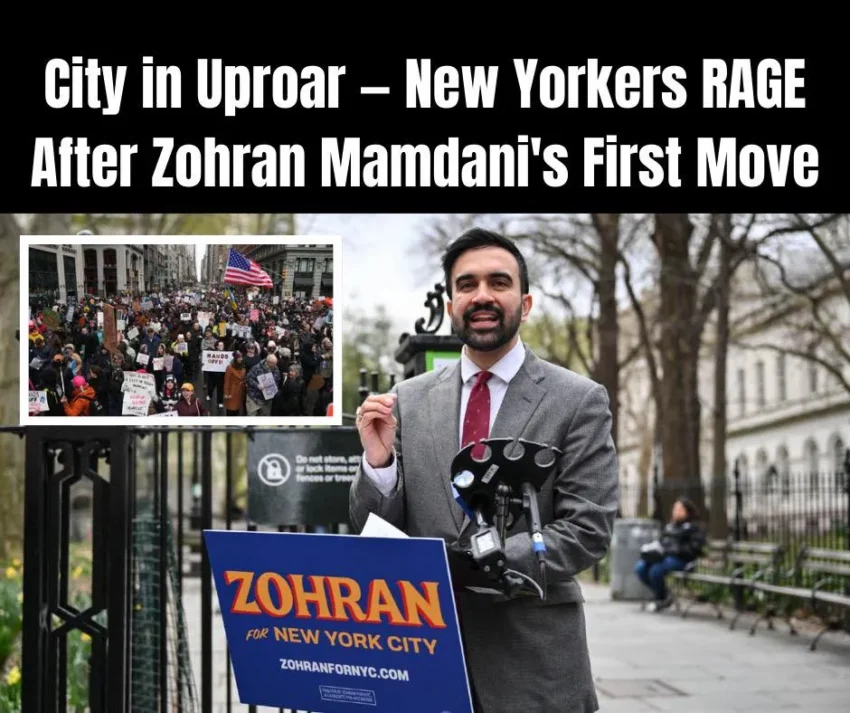
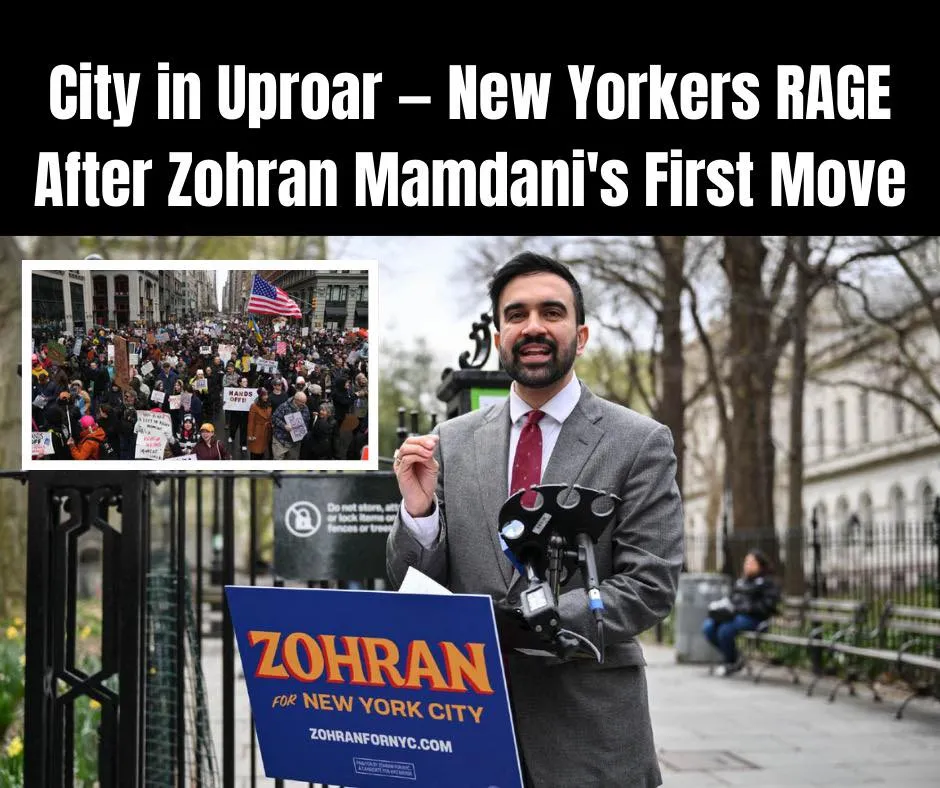
A new political and legal conflict may be unfolding in New York City as Mayor-elect Zohran Mamdani prepares to take office on January 1. In recent public remarks, Mamdani has made clear that he intends to challenge federal immigration enforcement policies he views as excessive or unjust — a stance that could place New York City on a collision course with the federal government. His comments come at a time when federal authorities have increased immigration-related operations across several major cities, triggering both support and concern among local leaders.
The latest tension was amplified after New York City Councilman Shaun Abreu posted a video showing federal Homeland Security agents detaining a man in Washington Heights. The footage — brief and without full context — circulated widely online and quickly drew criticism from some local officials. Abreu described the arrest as “deeply disturbing” and raised concerns about whether the individual was afforded proper due process.
However, subsequent reporting, including court records, clarified that the man taken into custody — identified as Alpha Amadou Diallo — had previously undergone immigration proceedings. Diallo entered the United States illegally in 2021 and was ordered removed by a Biden-era immigration judge in 2024. Federal authorities stated that his case was not a surprise enforcement action but part of a legally authorized removal order already on record.
This clarification did not diminish broader concerns among some New York City leaders who fear that expanding federal operations could create fear within immigrant communities or undermine local authority. But it did bring renewed attention to the complex relationship between immigration enforcement and municipal governance — a relationship that often becomes strained during times of heightened political pressure.
Mayor-Elect Mamdani’s Position: Firm Opposition on Principle
Zohran Mamdani, a 34-year-old incoming mayor who previously served in the New York State Assembly, has taken a clear position on the issue. Throughout his campaign and in recent interviews, Mamdani has described Immigration and Customs Enforcement (ICE) as an agency that operates with insufficient oversight. He has also stated that he intends to oppose deportation efforts that he views as disproportionate or harmful, including cases involving individuals with criminal convictions if he believes they still warrant due process or local support.
During the campaign, Mamdani voiced his stance directly, saying:
“If you want to pursue your promise to create the single largest deportation force in American history, you will have to get through me to do that here in New York City.”
This statement — widely quoted in national coverage — signaled that a Mamdani administration would be different from previous city leadership. While New York has long positioned itself as a “sanctuary city” with policies limiting cooperation with federal immigration authorities, Mamdani’s rhetoric suggests an even more assertive role in standing against certain federal actions.
Shortly after his election victory, Mamdani expanded on his views when asked about immigration agents operating within the city. At a press conference regarding his transition to office, he said:
“My message to ICE agents, and to everyone across this city, is that everyone will be held to the same standard of the law. If you violate the law, you must be held accountable.”
He went on to express concern about a “growing sense” in parts of the country that certain individuals or entities are not held to the same standards as others, though he did not elaborate on specific cases.
Federal Authorities Maintain That Actions Are Within Legal Boundaries
So far, federal officials have not taken an aggressive stance toward Mamdani’s statements. Instead, federal agencies have reiterated that their operations in New York City — including the recent detention of Diallo — are conducted under existing legal authority and court orders.
Homeland Security officials have emphasized that removal operations targeting individuals with outstanding orders are standard procedure and not a shift in policy specific to New York. They also noted that some of the current operations were planned before the city’s mayoral election and are part of larger federal efforts to address nationwide backlogs in immigration cases.
Still, the federal government’s increased activity has fueled concern among local officials who fear expanded enforcement may escalate tensions or lead to confusion within immigrant communities. New York is home to millions of foreign-born residents, many of whom live in mixed-status households.
A Potential Showdown Over Jurisdiction
The possibility of a significant dispute lies in the overlapping authorities of federal, state, and municipal governments. While immigration enforcement is unquestionably a federal responsibility, cities can influence how much cooperation they provide in terms of information-sharing, detention requests, and coordinated operations.
Over the past decade, federal administrations from both major parties have at times clashed with local governments over cooperation. Court rulings have generally affirmed that cities cannot obstruct federal law enforcement but also cannot be compelled to act as immigration enforcement arms.
A Mamdani administration that openly resists certain federal actions could lead to:
• Legal challenges
Federal agencies could argue that certain city policies improperly hinder enforcement.
• Funding disputes
Previous administrations have considered withholding funds from jurisdictions deemed uncooperative, though such attempts faced legal limitations.
• Increased federal presence
If cooperation decreases, federal agencies may choose to operate more frequently without local coordination, leading to higher visibility and potentially more community concern.
• Political repercussions
Both city and federal leaders may face pressure from their constituencies to adopt firmer stances.
Public Safety Concerns Fuel Debate
The issue takes place against a backdrop of heightened concerns about violent incidents involving some individuals living in the country illegally. Nationally reported cases have intensified debate about how cities should balance public safety with civil liberties and humanitarian considerations.
Supporters of stricter enforcement argue that cities must cooperate fully with federal authorities to prevent further violence; critics contend that aggressive tactics can break down trust between immigrant communities and local police, making neighborhoods less safe overall.
Mamdani’s critics say his stance could make it harder to remove individuals who have committed serious offenses. His supporters counter that his approach prioritizes due process, equal treatment, and community stability.
What Comes Next for New York City?
As Mamdani prepares to take office, several key questions remain:
1. Will the city revise its sanctuary policies?
Existing policies limit cooperation on detainers and certain requests. A Mamdani administration could further expand these restrictions or choose to enforce them more strictly.
2. Will federal agencies increase operations in response?
If local cooperation decreases, more federal-only operations may occur in immigrant-dense neighborhoods.
3. Could the dispute lead to court battles?
Legal challenges over municipal non-cooperation remain a possibility.
4. How will city agencies — especially NYPD — respond?
The NYPD historically avoids participating in immigration enforcement. Whether this approach expands or changes under Mamdani remains to be seen.
5. What will be the political and public response?
With immigration a major national issue, local decisions in New York could gain outsized national attention.
Conclusion
New York City stands at a pivotal moment as Mayor-elect Zohran Mamdani prepares to assume office with a clear intention to resist certain federal immigration enforcement efforts. His position sets the stage for a potentially significant confrontation over jurisdiction, public safety, and the limits of municipal authority.
Federal officials, meanwhile, maintain that they are acting strictly within legal frameworks and implementing removal orders already issued by immigration courts.
Whether this disagreement becomes a defining conflict or ultimately evolves into a negotiated balance between federal and local authority will become clearer in the months ahead. For now, the city is preparing for a transition period that may reshape how New York navigates one of the most complex issues in modern governance.
In a courtroom that felt more like a stage for a grand tragedy, the air was thick with anticipation.
The spectators, a mix of journalists, political enthusiasts, and curious onlookers, sat on the edge of their seats, their eyes glued to the defendant’s stand.
Today was not just another day in court; it was the day that would expose the dark underbelly of political machinations.
Tyler Robinson, a name that had been whispered in hushed tones for months, was about to take the stand.
His expression was a tumultuous sea of emotions—fear, guilt, and an unsettling resolve.
As he looked out at the sea of faces, he could feel the weight of their judgment pressing down on him, a palpable reminder of the choice he had made.
The moment had arrived, and with it, the potential to unravel a conspiracy that could shake the foundations of the nation.
“Your Honor,” Tyler began, his voice trembling slightly as he faced the judge, a stern figure who had presided over countless cases but had never witnessed anything quite like this.
“I have something to confess.
”
The murmurs in the courtroom hushed to a tense silence.
The air crackled with electricity, as if the very walls were leaning in to hear his words.
Tyler took a deep breath, his heart racing like a drumbeat in his chest.
He felt like a marionette, strings pulled taut, ready to reveal the hidden truths that lay beneath the surface.
“I was hired,” he continued, his voice gaining strength, “by a rival political party to assassinate Charlie Kirk.
Gasps erupted from the audience, the sound like a sudden gust of wind that swept through the room, sending chills down spines.
Charlie Kirk, a prominent political figure known for his fiery rhetoric and polarizing views, had become a target for many.
But to hear that a rival party had orchestrated a hit was beyond comprehension.
As Tyler spoke, he could see the shock etched on the faces around him.
The courtroom transformed into a theater of chaos, a place where secrets were laid bare, and the truth became a weapon.
Documents, secret bank transfers, and encrypted messages would soon be revealed, each piece of evidence like a dagger plunging deeper into the heart of political integrity.
“I didn’t want to do it,” Tyler confessed, his voice cracking under the weight of his admission.
“But they had something on me.
They threatened my family, my life
I was trapped.
His words hung in the air, heavy with desperation.
He was not just a pawn in a political game; he was a man caught in a web of fear and manipulation.
The courtroom became a stage for his emotional breakdown, a raw display of vulnerability that resonated with the audience.
Charlie, watching from across the room, felt a mix of anger and disbelief.
How could someone stoop so low? The betrayal stung, a bitter reminder of the lengths people would go to for power.
He was a symbol of hope for many, yet here was Tyler, a living embodiment of the darkness that lurked within the political landscape.
As Tyler recounted the details of the plot, he painted a vivid picture of clandestine meetings in dimly lit rooms, hushed conversations filled with threats and coercion.
The rival party had promised him riches and security, but in reality, they had offered nothing but a descent into hell.
“They wanted to silence Charlie,” he said, his voice rising with emotion.
“They wanted to make a statement, to show that they would stop at nothing to gain control
The courtroom erupted again, this time with a mix of outrage and disbelief.
The prosecutor, a sharp-witted woman with a fierce determination, leaned forward, her eyes narrowed.
“So you’re telling us that you were mere collateral in their game?” she challenged, her voice cutting through the chaos.
“Yes!” Tyler replied, desperation creeping into his tone.
“I was just a tool, a means to an end.
I didn’t want to hurt anyone.
I just wanted to protect my family.
As the trial progressed, the evidence began to unfold like a dark tapestry.
Secret bank transfers were displayed on large screens, each transaction a thread that wove together the narrative of betrayal.
Encrypted messages flashed before the audience, revealing the sinister plans that had been set in motion.
“Look at this,” the prosecutor said, pointing to a message that read: “Terminate Charlie Kirk.
Make it look like an accident.
” The room fell silent, the gravity of the situation sinking in.
Tyler felt the walls closing in around him.
He was not just confessing; he was exposing a conspiracy that could topple political careers.
The adrenaline surged through his veins, a cocktail of fear and exhilaration.
He was both the villain and the victim, a man who had crossed a line he could never uncross.
As the testimony unfolded, Charlie sat in the defendant’s chair, grappling with the reality of what was happening.
He had always been a fighter, a man who stood for his beliefs, but now he felt vulnerable, exposed.
The courtroom was a battlefield, and he was caught in the crossfire of a war he never wanted to be part of.
“Why didn’t you come forward sooner?” the prosecutor pressed, her voice steady and unwavering.
“I was scared!” Tyler shouted, his frustration boiling over.
“I thought they would kill me if I spoke out.
I thought I could find a way out, but it only got worse.
”
The emotional turmoil was palpable, a whirlwind of conflicting feelings swirling around the courtroom.
Tyler’s confession was not just a revelation; it was a cry for help, a plea for understanding in a world that had turned its back on him.
As the trial reached its climax, the tension in the room escalated.
The audience was on the edge of their seats, captivated by the unfolding drama.
The stakes had never been higher, and the truth was a double-edged sword, capable of both salvation and destruction.
“Your Honor,” the prosecutor said, her voice cutting through the tension, “this is not just about one man’s confession.
This is about a political system that has become corrupt, where lives are treated as pawns in a game of power.
”
The judge nodded, acknowledging the gravity of the situation.
The courtroom had transformed into a crucible, a place where morality was tested, and the truth was laid bare.
As the final pieces of evidence were presented, Tyler felt a sense of clarity wash over him.
He was no longer just a pawn; he was a whistleblower, a man willing to risk everything to expose the truth.
“I can’t change what I did,” he said, tears streaming down his face.
“But I can’t live with the lies anymore.
I want to make things right.
”
In that moment, the courtroom erupted into chaos once more.
Some shouted in anger, others in support.
But amidst the turmoil, Charlie felt a strange sense of empathy for Tyler.
They were both victims of a system that thrived on manipulation and deceit.
As the gavel struck, signaling the end of the day’s proceedings, the weight of the confession hung in the air like a storm cloud ready to burst.
The truth had been exposed, but at what cost?
The courtroom drama was far from over.
The revelations would ripple through the political landscape, igniting debates and discussions that would echo for years to come.
Tyler Robinson had become a reluctant hero, a man who had dared to speak out against the darkness.
As the audience began to disperse, whispers filled the air, a cacophony of opinions and emotions.
Charlie knew that this was just the beginning.
The fallout from this trial would reshape the narrative of politics in America, a reminder that in the world of power and ambition, the truth is often the most dangerous weapon of all.
In the end, both Tyler and Charlie stood as symbols of a larger truth—a truth that demanded to be heard, no matter the consequences.
The courtroom, once a place of judgment, had transformed into a stage for redemption, where the lines between right and wrong blurred in the face of humanity.
As the doors closed behind them, the echoes of their confessions lingered, a haunting reminder of the darkness that can reside within us all, waiting for the moment to be revealed.
Public transportation systems are designed to be safe havens of mobility — places where commuters, students, and families can travel with peace of mind. Yet, when violence shatters that sense of safety, entire communities are left grappling with grief, fear, and unanswered questions.
This reality was brought into sharp focus in Charlotte, North Carolina, when a routine light rail commute turned into a tragedy that has shaken the city and reverberated far beyond its borders.
On August 22, 2025, 23-year-old Ukrainian refugee and aspiring veterinary assistant Iryna Zarutska was fatally attacked while riding a Charlotte Area Transit System (CATS) train. For passengers, what began as an ordinary ride toward the East/West Boulevard Station became a nightmare they will never forget.
Weeks later, on September 9, authorities released carefully reviewed details and surveillance footage of the incident — not for public circulation but to clarify the sequence of events for investigators and city leaders. The release underscored the severity of what took place, raising urgent questions about passenger safety, mental health intervention, and the preparedness of public transit systems to prevent similar tragedies.
The morning of August 22 seemed like any other for commuters boarding the CATS light rail. The hum of conversation, the scrolling of phones, and the quiet stillness of headphones filled the train cars. Among the passengers was Iryna, wearing a black shirt and cap, sitting peacefully with her headphones on.
Behind her sat 27-year-old Decarlos Brown, a man with a history of prior arrests and documented struggles with mental health. According to investigators, there was no verbal exchange or interaction between the two before the incident unfolded.
What happened next stunned passengers and shocked the community. Without provocation, Brown attacked Zarutska, sending fellow riders into panic. Some passengers rushed to her side while others scrambled to alert authorities. Meanwhile, Brown removed his red hoodie and moved to another section of the train, where officers were waiting to arrest him at the next station.
Police confirmed that he was taken into custody without resistance and later charged with first-degree murder. Officials also announced that he has been permanently banned from all CATS services.
The tragedy left Charlotte grieving. Mayor Vi Lyles called the killing a “senseless and tragic loss,” extending her condolences to Zarutska’s family while praising the media and citizens who refrained from circulating the video online. The restraint was seen as an act of respect for the victim’s loved ones, shielding them from further trauma.
The shockwaves extended nationally. Even President Donald Trump, after being briefed on the case, publicly condemned the act, calling it “horrible” and describing the attacker in harsh terms. His comments brought national attention not only to the crime itself but also to broader issues of safety and the vulnerabilities that can arise in public spaces.
While headlines have understandably focused on the crime, those closest to Iryna want the world to remember the person she was — a young woman of resilience, talent, and compassion.
Born on May 22, 2002, in Kyiv, Ukraine, Iryna was the cherished daughter of Anna Zarutska and Stanislav Zarutskyi. Her family described her as creative, kind, and endlessly generous.
In 2022, amid the war in Ukraine, she relocated with her mother, sister, and brother to Charlotte in search of safety and new opportunities. Despite the challenges of starting over, Iryna embraced her new community with optimism. She carried with her not only the determination of someone rebuilding life from scratch but also the vibrant spirit of an artist.
A graduate of Synergy College in Kyiv, she held a degree in Art and Restoration, with skills in painting, sculpting, and fashion design. Friends recalled how she delighted in creating one-of-a-kind clothing pieces that reflected her lively personality. Beyond her artistic talent, she was also known for her love of animals and her aspiration to become a veterinary assistant — a dream she was actively working toward.
Those who knew her described her as adventurous yet deeply rooted in family life. Her mother fondly remembered her long, restful naps, jokingly calling it “an artist’s gift.” Neighbors recalled how she happily looked after their pets, always extending kindness without expectation.
Her untimely passing has left behind grieving parents, her siblings Valeriia and Bohdan, her partner Stas Nikulytsia, her aunt Valeria Haskell (Frank Scott), cousins, and countless friends. Her Instagram page, now a poignant digital memorial, reflects her bright and hopeful outlook — a gallery of moments filled with color, creativity, and joy.
The attack has raised difficult but necessary questions: How can cities ensure the safety of passengers on public transit? Could this tragedy have been prevented, and what measures need to be in place to reduce the risk of violence in the future?
Transit systems across the United States face ongoing challenges balancing accessibility with security. Cameras and police presence offer some deterrence, but gaps remain. Incidents like this underscore the need for:
The Charlotte community has already begun conversations about increasing safety patrols and expanding partnerships between transit officials and local law enforcement.
The suspect’s background also highlights another systemic issue: the intersection of untreated mental health conditions and repeat encounters with the justice system.
Law enforcement confirmed that Brown had a criminal record and past struggles with mental health. Advocates argue that tragedies like this highlight the urgent need for stronger preventive care, rehabilitation opportunities, and community support systems to address risks before they escalate into violence.
This broader societal challenge is not confined to Charlotte. Across the country, many cities are struggling with how to best support individuals in crisis while also safeguarding public safety.
The aftermath of Iryna’s death has been marked by an outpouring of grief, but also unity. Vigils have been held, and tributes continue to flood social media, where strangers and friends alike share memories, condolences, and artwork in her honor.
For the Ukrainian community in Charlotte, her death struck especially hard. Many saw Iryna’s story as symbolic of resilience — a young woman who fled war to build a brighter future, only to have her life cut short in a place she thought was safe.
Her legacy, however, continues through the lives she touched, the art she created, and the compassion she showed for both people and animals.
As Charlotte reflects on this tragedy, several important lessons emerge:
The tragedy on Charlotte’s light rail is not just a story of a crime. It is the story of Iryna Zarutska — a young woman who carried dreams, talents, and love into every part of her life. Her death is a painful reminder of life’s fragility and the urgent need to protect vulnerable spaces like public transit.
Her legacy endures in her family, in the art she created, and in the compassion she showed to animals and friends. For Charlotte, her memory serves as a call to action: to build a safer, more supportive community where tragedies like this are far less likely to occur.
Over two weeks after the attack, Charlotte Area Transit System (CATS) have released surveillance footage from the incident.
CHARLOTTE, N.C. — A 23-year-old woman was stabbed to death on a Charlotte train over two weeks ago. Now, officials with the Charlotte Area Transit System (CATS) have released surveillance footage from the incident.
On Friday, Aug. 22, Iryna Zarutska boarded the CATS Blue Line and sat in an aisle seat in front of Decarlos Brown. Video footage shows that she was wearing headphones, and the two had no interaction, according to ABC affiliate WSOC.
The train was en route to the East/West Boulevard Station, and there were many passengers on board.
During the ride, Brown, unprovoked, pulled out a knife and stabbed Zarutska to death. After the attack, video shows Brown walking to the other end of the train and removing his hoodie. Several passengers rushed to help Zarutska.
The train stopped about two minutes later, and Brown was immediately arrested by Charlotte police after stepping on the platform. He is facing first-degree murder charges, and CATS banned him for life.
Brown has a history of criminal activity and mental health issues, WSOC reported.
The 23-year-old victim was living in Charlotte after fleeing the war in Ukraine with her mother, sister and brother.
Those who knew Zarutska described her as a gifted and passionate artist who loved sculpting and designing clothing that reflected her vibrant spirit. She was also an animal lover who often cared for her neighbors’ pets.
In her obituary, it said: “Many fondly remember seeing her walking them through the neighborhood, always with her radiant smile. She dreamed of pursuing a career as a Veterinary Assistant.”
Charlotte Mayor Vi Lyles released a statement on the incident: “The video of the heartbreaking attack that took Iryna Zarutska’s life is now public. I want to thank our media partners and community members who have chosen not to repost or share the footage out of respect for Iryna’s family. This was a senseless and tragic loss. My prayers remain with her loved ones as they continue to grieve through an unimaginable time. Like so many of you, I’m heartbroken – and I’ve been thinking hard about what safety really looks like in our city. I remain committed to doing all we can to protect our residents and ensure Charlotte is a place where everyone feels safe.”