A New Chapter in America’s Energy Story
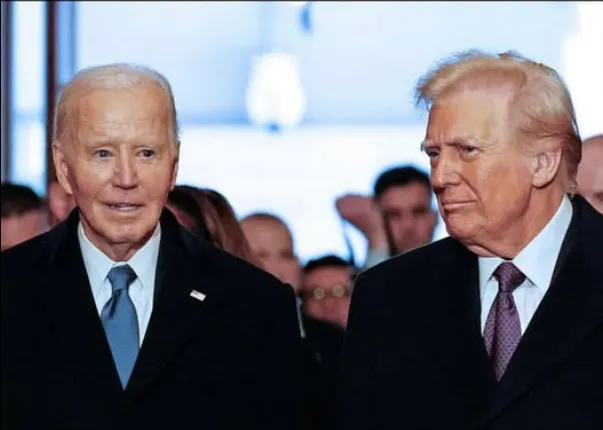
In a sweeping move that redefines the nation’s energy landscape, President Donald Trump on Thursday overturned a signature Biden-era restriction on oil and gas exploration across millions of acres of federal land in Alaska. The action—one of the most consequential energy decisions of Trump’s current term—opens more than 13 million acres of the National Petroleum Reserve in Alaska (NPRA) to potential development, effectively dismantling a 2024 rule issued under former President Joe Biden.
The NPRA, a vast 23-million-acre expanse on Alaska’s North Slope, was originally set aside by Congress in 1923 as an emergency fuel reserve for the U.S. Navy. It remains the largest block of untapped public land in the country, rich in oil, natural gas, and mineral deposits. For decades, it has stood at the center of America’s recurring debate over energy independence versus environmental preservation.
Trump’s order marks a decisive turn in that debate. The Department of the Interior, led by Secretary Doug Burgum, announced the final rule reversal early Thursday, calling it a “restoration of common sense and sovereignty” over American energy resources.
“By rescinding the 2024 rule, we are following the direction set by President Trump to unlock Alaska’s energy potential, create jobs for North Slope communities, and strengthen American energy security,” Burgum said. “This action restores balanced management and ensures responsible development that benefits both Alaska and the nation.”
The rule change will be published in the Federal Register on Friday, but the announcement itself has already ignited a national conversation—one that bridges economics, environmental ethics, and geopolitics.
From Biden’s Restrictions to Trump’s Reversal
But industry leaders and many Alaskan officials saw the move as a chokehold on the state’s economy. Oil production taxes and royalties fund much of Alaska’s public services, including healthcare, education, and rural development. Under Biden’s rule, developers faced permitting gridlock and declining investment confidence.
“Washington’s decisions were strangling our communities,” said Nagruk Harcharek, president of Voice of the Arctic Iñupiat, an organization representing Alaska Native corporations and North Slope villages. “We rely on responsible energy development to support our way of life. Without it, our schools, clinics, and infrastructure crumble.”
Trump’s rescission directly responds to that criticism. It reopens roughly half the NPRA to new leasing and exploration while maintaining some environmental safeguards, particularly around Teshekpuk Lake—one of the most ecologically sensitive areas in the Arctic.
For Trump, the rollback is both symbolic and strategic. It reinforces his “America First Energy” agenda, a central pillar of his policy since his first term, emphasizing fossil-fuel dominance, deregulation, and domestic production as the cornerstone of economic strength.
Energy Security Meets Economic Realities
The Trump administration’s announcement comes at a pivotal moment for the U.S. economy. Despite record-high domestic oil production—surpassing 13 million barrels per day in late 2025—energy prices remain volatile, driven by international tensions, supply disruptions, and rising global demand for natural gas.
Trump has repeatedly blamed Biden’s earlier climate regulations for inflationary energy costsand reduced industrial competitiveness. The White House’s statement on Thursday framed the Alaska decision as a direct measure to reduce household and business energy bills.
“This is about putting American workers, consumers, and families first,” the statement read. “Every barrel produced here at home means less dependence on hostile regimes abroad and lower costs at the pump.”
Independent analysts agree the move could stimulate billions in new investment across the North Slope, where exploration companies have waited years for regulatory clarity. The return of federal lease auctions, industry experts say, could create tens of thousands of jobs and generate hundreds of millions in royalty revenues for both federal and state coffers.
Energy economist Dr. Laura Kline of the University of Texas notes: “This is not just about Alaska—it’s about signaling to markets that the U.S. intends to remain the global leader in hydrocarbon supply. That reassurance affects everything from LNG export terminals in Texas to fuel prices in Ohio.”
Alaska’s Energy Infrastructure: A Legacy Reignited
Central to the policy shift is the Trans-Alaska Pipeline System (TAPS)—an 800-mile engineering marvel that for nearly half a century has been the backbone of America’s northern oil production.
Built between 1974 and 1977, the pipeline connects Prudhoe Bay’s oil fields on the Arctic coast to the port of Valdez, traversing mountains, tundra, and permafrost. At its peak in the 1980s, TAPS carried over 2 million barrels of oil per day. But as North Slope output declined, throughput fell to under 500,000 barrels—raising concerns that low volumes could eventually threaten the pipeline’s operational viability.
The renewed drilling in the NPRA, industry leaders argue, could breathe new life into this infrastructure. “The pipeline is Alaska’s lifeline,” said John Hendrix, former energy advisor to the state’s governor. “Without a steady flow, maintenance becomes more expensive and risks of shutdown grow. New production keeps it viable, keeps Alaskans employed, and keeps America’s energy artery open.”
TAPS is managed by the Alyeska Pipeline Service Company, a consortium of major energy firms. The company issued a cautious statement welcoming the administration’s decision, noting that while environmental standards must be respected, “the operational and economic stability of Alaska’s energy system depends on sustained production.”
Environmental Opposition and Legal Challenges Ahead
Predictably, environmental advocacy groups reacted with alarm. Organizations like the Natural Resources Defense Council (NRDC), Sierra Club, and Earthjustice condemned Trump’s rollback, pledging immediate legal action.
“This decision represents one of the largest environmental rollbacks in modern U.S. history,” said Rebecca Salazar, Arctic program director for Earthjustice. “Opening millions of acres of pristine wilderness to drilling is a direct assault on the planet’s climate stability.”
Critics argue that expanded drilling undermines U.S. commitments under international climate accords and risks further endangering Arctic ecosystems already stressed by rapid warming. They also warn that fossil fuel expansion diverts investment away from renewable energy innovation.
Legal experts anticipate that lawsuits will hinge on the National Environmental Policy Act (NEPA)and potential violations of the Endangered Species Act. Plaintiffs are expected to challenge the adequacy of the administration’s environmental review and allege that rescinding Biden’s rule constitutes an “arbitrary and capricious” action under administrative law.
However, the Trump administration appears ready for battle. Interior Department attorneys have spent months preparing for litigation, crafting what they describe as an “airtight procedural record” documenting economic need, environmental mitigation measures, and broad public consultation.
“Courts defer to agencies when procedures are followed meticulously,” noted environmental law scholar Robert Haskins of Georgetown University. “If Interior checked every box, plaintiffs may face an uphill climb.”
The Broader Economic Context: From “Green Transition” to “Energy Dominance”
The policy reversal also signals a broader philosophical shift—from Biden’s “clean energy transition” to Trump’s renewed emphasis on energy abundance and affordability.
During his term, Biden prioritized cutting emissions, introducing aggressive climate targets, and pouring federal subsidies into wind, solar, and electric vehicles. Yet critics say those measures, while well-intentioned, left the nation vulnerable to energy shortfalls and rising costs, particularly as AI-driven data centers and electric infrastructure expanded faster than renewable capacity.
Trump, by contrast, has promised to “unleash American energy” through oil, gas, nuclear, and even advanced coal technologies. In speeches, he has framed fossil fuels not as relics but as pillars of national resilience and global influence.
“Energy is wealth. Energy is power,” Trump said at a Houston rally earlier this year. “We’re going to produce it here, ship it from here, and sell it on our terms—not beg for it from anyone else.”
Supporters argue this policy shift is pragmatic, not ideological. With global oil demand projected to rise for at least another decade, they contend that cutting domestic supply merely shifts production—and emissions—to less regulated nations.
“If we don’t drill it, someone else will,” said Sen. Dan Sullivan (R-Alaska). “The difference is that we do it cleaner, safer, and with better labor and environmental standards than anyone else on Earth.”
Indigenous Perspectives: Between Tradition and Modernization
Among Alaska’s Indigenous communities, reactions to the Trump administration’s decision are mixed but nuanced.
For many in the North Slope Borough, oil development has funded a generation of self-governance. Taxes and royalties have financed modern schools, hospitals, and sanitation systems in a region where logistical costs are staggering.
“We are not anti-environment,” said Mayor Charles Brower of Utqiaġvik (formerly Barrow). “We are pro-survival. Oil development gave us heat, jobs, and opportunity. Without it, our children face an uncertain future.”
Still, other Alaska Native voices remain skeptical. The Gwich’in Steering Committee, representing communities farther south, expressed concern about cumulative ecological impacts. “We are stewards of this land,” said committee member Sarah James. “The Arctic is not just a resource—it’s our home.”
Trump officials insist that the administration will maintain “rigorous consultation” with tribal governments and incorporate traditional knowledge into environmental reviews. Whether that promise satisfies skeptics remains to be seen.
Industry Response: A Surge of Optimism
Within hours of the announcement, energy markets responded with cautious enthusiasm. Shares of ConocoPhillips, ExxonMobil, and Hilcorp, all of which have active leases or exploration interests in Alaska, rose modestly in after-hours trading.
“This is a confidence signal,” said Mark Cross, senior analyst at Wood Mackenzie. “It tells investors the U.S. government once again sees oil and gas as assets, not liabilities.”
Industry groups hailed the reversal as a return to energy realism. The American Petroleum Institute (API) called it “a decisive step toward long-term energy affordability and security.”
“The world’s demand for oil and gas is not declining; it’s growing,” API President Mike Sommers said. “Policies must reflect that reality. Today’s decision moves us closer to an energy policy that supports growth, jobs, and innovation.”
The Global Context: Energy as Geopolitical Leverage
Beyond domestic economics, the decision reverberates globally. Trump has framed energy production as a strategic weapon in foreign policy, arguing that America’s ability to export oil and liquefied natural gas (LNG) reduces the leverage of authoritarian regimes like Russia, Iran, and Venezuela.
“Every time we produce more energy at home, the dictators and warlords of the world lose power,” Trump said earlier this month.
Analysts agree that expanding Arctic output could help stabilize global supply chains, particularly if geopolitical tensions in the Middle East or Eastern Europe escalate. “Energy independence is no longer a slogan—it’s a shield,” said Col. Michael Andrews, former Pentagon energy advisor.
Environmental Innovation Within Expansion
Interestingly, Trump officials are pairing the rollback with promises of technological safeguards. The Interior Department announced it will incentivize “next-generation drilling” that minimizes surface disturbance and methane leakage, using carbon capture, reinjection, and digital monitoring systems.
“The narrative that environmental protection and energy expansion are incompatible is outdated,” Secretary Burgum said. “We’re harnessing innovation to make sure Alaska leads in both production and preservation.”
This hybrid rhetoric—economic expansion couched in environmental stewardship—reflects the administration’s attempt to broaden its coalition, appealing not just to oil-state Republicans but also to moderates worried about climate impacts.
Political Fallout: The Energy Divide Deepens
The timing of Trump’s move is politically charged. With the 2026 midterms on the horizon, energy policy has emerged as a defining wedge between Republicans and Democrats.
Progressives warn that expanded drilling will accelerate climate change and alienate younger voters. Conservatives counter that green mandates have inflated utility bills and driven inflation.
Polling from the Pew Research Center suggests Americans remain split: 49% favor prioritizing renewables, 46% prioritize fossil fuel production to stabilize prices. Among independents, support for expanded oil drilling has climbed sharply in the past year.
“This issue will define the next decade of politics,” said Dr. Raymond Cruz, a political scientist at George Mason University. “It’s not just about energy—it’s about identity, jobs, and the future of the American Dream.”
Looking Ahead: A New Energy Frontier
As the dust settles, the implications of Trump’s decision will unfold over years. Lease sales could begin as early as 2026, followed by seismic surveys, environmental assessments, and exploratory drilling. If viable reserves are confirmed, production could ramp up in the early 2030s—coinciding with peak global demand projections.
For Alaska, that could mean billions in new revenue. For Washington, a revived argument over how to balance climate responsibility with economic necessity. And for the world, a reminder that the United States—whatever the administration—remains an energy superpower capable of reshaping global markets with a single policy stroke.
Conclusion: Energy Realism Returns
With Thursday’s sweeping action, President Trump has reaffirmed his administration’s belief that American energy production is not the problem—it’s the solution. The decision to reopen 13 million acres of Alaskan wilderness marks more than a policy reversal; it is a philosophical declaration that economic strength, national security, and affordable energy remain inseparable.
Whether history judges this as visionary leadership or environmental regression will depend on outcomes yet unseen. But one truth endures: the story of American energy is far from over. It is a saga written in oil and ambition, shaped by presidents, pipelines, and the endless northern frontier where resource and responsibility meet beneath the Arctic sky.
The political spotlight has intensely focused on Minnesota following an executive order by President Donald Trump to terminate the Temporary Protected Status (TPS) for Somali immigrants in the state. The directive is a direct response to explosive federal reports detailing massive, systemic welfare fraud allegedly orchestrated by criminals within the Somali community, with millions of stolen taxpayer dollars traced to the Al-Qaeda-linked terror group, Al-Shabaab.
The resulting crisis has put Congresswoman Ilhan Omar, who represents the affected community, in a state of political distress. The core issue is not just fraud, but a devastating failure of accountability that has allowed the systemic theft of U.S. social program funds, which are subsequently funneled to international terrorism. Critics are demanding immediate action and accountability for those who allowed this crisis to fester.
President Trump’s decision to terminate TPS for Somalis was directly linked to national security and fiscal accountability concerns that have plagued Minnesota for years.
The official justification cites:
Systemic Fraud: Massive welfare fraud schemes, including fake meal counts and counterfeit disability claims.
Terror Funding: The siphoning of millions through shadowy overseas remittance channels, with the money ultimately landing in the pockets of Al-Shabaab, an Al-Qaeda-linked terror faction.
The financial crisis is linked to two major government programs, both of which have seen costs explode under questionable circumstances:
Federal and state investigations have uncovered multiple schemes:
Feeding Our Future: This high-profile case involved a program meant to feed children during the pandemic, where prosecutors alleged that criminals stole some $300 million from the federally funded program. The theft involved falsifying meal counts for non-existent children.
Medicaid Housing Stabilization Program (HSS): This program, designed to help people with disabilities find housing, has been targeted by multi-million dollar fraud schemes.
Federally Funded Autism Program: This program has also been systematically exploited with false billing claims.
The state’s top prosecutor now believes billions in taxpayer money has been stolen as a result of this organized fraud.
The most explosive finding comes from federal counterterrorism sources:
Remittance Network: Stolen taxpayer money is remitted back to Somalia from Minnesota through informal cash transfer networks known as halwalas (money handlers).
Terror Taxation: Once that cash arrives in Somalia, it enters territories where Al-Shabaab forcibly taxes every incoming financial transaction, meaning the terror group has benefited immensely from the U.S. welfare fraud.
The shocking conclusion is that American tax dollars, intended for vulnerable populations, have been used to indirectly enrich a hostile, Al-Qaeda-linked terror group.
The crisis has led to strong condemnation of local leadership for failing to stop the fraud, which was often reported years before federal agencies finally intervened.
Governor Tim Walz’s Inaction: Governor Walz is accused of allowing this fraud to proliferate unchecked. Documents show that his administration received repeated whistleblower warnings and audit flags as early as 2020. Critics argue that this negligence allowed the fraud to scale “higher, bolder, and even more destructive right up until federal authorities had to intervene.”
Ilhan Omar’s Vulnerability: Congresswoman Omar is central to the crisis. Her district is the epicenter of the fraud, and she previously filmed a promotional video at a restaurant that was later implicated in the Feeding Our Future scam. While she denies involvement, her legislative actions and political alignment with the networks under scrutiny significantly damage her standing.
The primary frustration among critics and taxpayers is the persistent lack of accountability. As one commentator stated: “We want accountability and we want justice to be served 100%. Because remember, no one is above the law.” The failure to hold anyone accountable for billions in stolen funds has led to calls for radical policy change.
The consensus among critics is that the pattern of financial scams and political corruption in Minneapolis has been ignored for too long.
Beyond Talk, We Need Action: “So much talk about it… I’m tired of the talk. We need some action.” The sentiment is that those who have done wrong need to be immediately held accountable, confirming that “what’s right is right. What’s wrong is wrong. Simple as that.”
Focus on Policy Change: The solution proposed is not just more investigation but a fundamental policy change to address the systemic fraud. The idea is to immediately stop the theft and ensure that government resources are used correctly, not siphoned off by criminal organizations.
President Trump’s decision to terminate the TPS status for Somalis is seen as a drastic measure to force accountability, targeting those whose financial networks overlap with corruption and terror-taxed channels. The crisis serves as a harsh reminder that the failure to ensure strong governmental oversight has profound national security and fiscal consequences. The demand for justice and accountability for the stolen billions is now at the forefront of the national debate.