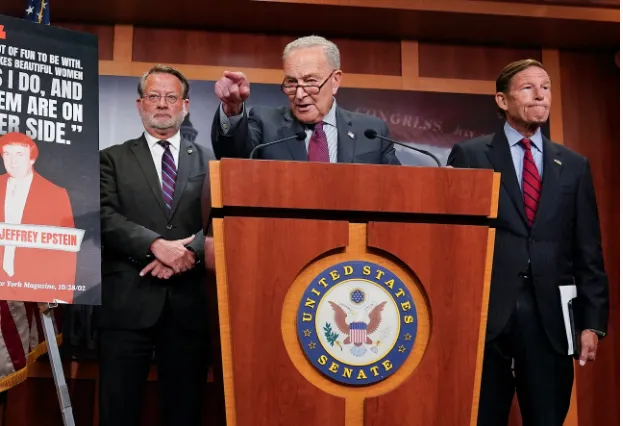
The documents reveal that Summers maintained contact with Epstein until at least July 5, 2019—just one day before Epstein’s arrest on federal sex-trafficking charges. This timing has intensified public criticism, as it demonstrates that Summers continued engaging with Epstein even as Epstein remained under widespread suspicion and scrutiny for his past crimes. Within the released messages, Summers expressed trust in Epstein and even confided in him regarding a romantic pursuit involving a woman he described as his mentee. One November 2018 message shows Epstein calling himself Summers’ “wing man,” suggesting a relationship that was both personal and advisory. These revelations contrasted sharply with Summers’ public stature as an economist and academic leader, prompting his public expression of shame and full acceptance of responsibility for what he described as “misguided” decisions.
Despite the controversy, Summers continues to hold several influential roles in academia and policy circles. He remains a University Professor at Harvard and serves as director of the Mossavar-Rahmani Center for Business and Government at the Harvard Kennedy School—roles he will continue fulfilling, according to his spokesperson. Additionally, Summers serves as a senior fellow at the Center for American Progress, a paid columnist for Bloomberg, and a member of the board at OpenAI. His announcement indicated that while he will maintain his teaching obligations and institutional responsibilities, he will step back from public commentary and engagements as part of a broader process of reflection and accountability. This partial withdrawal highlights the fine line public intellectuals walk between professional duties and reputational risk, particularly when tied to figures as controversial as Epstein.
Parallel to the Summers controversy, Representative Jamie Raskin (D-MD), the ranking Democrat on the House Judiciary Committee, is facing a backlash of his own for releasing private prison emails written by Ghislaine Maxwell, Epstein’s longtime associate and a convicted human trafficker. Maxwell’s attorney, Leah Saffian, condemned the publication of the messages as “a gross abuse of power,” emphasizing that the emails had been accessed without authorization by employees at Federal Prison Camp Bryan in Texas and subsequently leaked. The Federal Bureau of Prisons confirmed that multiple employees had been terminated for the unauthorized access. Saffian argued that both the leaking of the emails and Raskin’s decision to make them public constituted severe violations of constitutional protections owed to prisoners, including First Amendment rights and due process guarantees.
The leaked emails revealed Maxwell describing her experience at the Bryan facility in unexpectedly positive terms. She wrote that the conditions were “legions better” than those at her previous facility in Florida, praising the cleanliness, food quality, and staff interactions. Maxwell described the environment as calmer and safer, free from the violence, drug activity, and chaos she claimed characterized her prior incarceration. Some of her comments were laced with sarcasm, such as her mockery of the Florida facility’s kitchen conditions, where she described possums falling from ceilings onto ovens. These emails present a rare glimpse into Maxwell’s personal reflections since her conviction, adding another contentious layer to public interest in her case. Maxwell’s team insists that the publication of the correspondence represents another instance in which her legal and human rights have been compromised during incarceration.
Together, the Summers and Maxwell controversies illustrate a broader landscape of legal, ethical, and political tensions surrounding high-profile individuals connected to Epstein, either directly or indirectly. Summers’ decision to step back from public commitments underscores the professional consequences of maintaining relationships with figures whose reputational and criminal histories carry immense public stigma. Meanwhile, the uproar surrounding Raskin’s publication of Maxwell’s emails highlights ongoing debates over privacy, accountability, and the proper conduct of public officials who handle sensitive information. As both stories unfold, they reflect the enduring and far-reaching influence of Epstein’s legacy, continuing to implicate major political, academic, and institutional actors years after his death, and forcing renewed questions about responsibility, discretion, and the boundaries of ethical conduct in public life.
On certain days, life presents us with experiences we will never forget—moments that shape our perspective, test our resilience, and highlight lessons we didn’t know we needed. For me, one such moment happened during a period of my life when I thought I was ready for an important milestone. What I expected to be ordinary and natural instead became overwhelming, confusing, and frightening.
Instead of carrying away a memory filled with growth and positivity, I was left with fear, discomfort, and a difficult recovery. Over time, I realized that the situation was not simply the result of one decision, but of a much deeper issue:
Looking back, I now see my experience as part of a bigger story—one that speaks to the way society often avoids honest, compassionate conversations about health, relationships, and personal readiness. This article is not about assigning blame. Rather, it is about identifying where we as communities can do better. It is about acknowledging the importance of comprehensive education and support so others do not face the same struggles.
For many young people, early experiences with health and relationships are surrounded by uncertainty. They may hear jokes or half-truths from friends, see unrealistic portrayals in media, or receive only minimal instruction in school. Very often, they enter important milestones without a clear understanding of their own bodies, emotions, or boundaries.
That lack of preparation can have real consequences. In my case, it led to physical pain, fear, and a long emotional recovery. For others, it might result in stress, misunderstandings, or strained relationships.
Sharing my story is not easy, but I do so with a purpose: to help normalize conversations about personal well-being, readiness, and respect. Silence only makes challenges harder to face. By opening up, we create opportunities for learning, healing, and change.