On Thursday, the agency’s official X account posted a message inviting members of the New York Police Department to “join an agency that respects you, your family, and your commitment to serving in law enforcement.”
The recruitment post appeared to target concerns raised by critics of Mayor-elect Zohran Mamdani, who have warned that some NYPD officers may resign or relocate rather than serve under his administration, New York Magazine Intellgencer reported.
This is not the first time the Trump administration has sought to appeal directly to local law enforcement. In October, the Associated Press reported that ICE spent millions of dollars on targeted television ads nationwide, using politically charged messaging to recruit police officers in sanctuary cities.
The campaign was part of the White House’s effort to meet its goal of hiring 10,000 new ICE officers by the end of the year.
According to the report, the 30-second ads aired in cities including Chicago, Boston, Philadelphia, Seattle, and Denver, the Intelligencer noted.
President Donald Trump has been outspoken in his criticism of Mayor-elect Zohran Mamdani, labeling him a “communist” and threatening to withhold federal funding from New York City or even have him arrested if he refuses to cooperate with ICE once in office.
Mamdani, who was sharply critical of Trump throughout his campaign, said Wednesday that he remains open to working with the president on reducing the city’s cost of living — his signature campaign issue, the outlet added.
The outreach to the NYPD comes after Mamdani issued a warning to federal immigration agents during remarks on Wednesday about his transition to City Hall.
In response to a reporter’s question, the 34-year-old democratic socialist said, “My message to ICE agents, and to everyone across this city, is that everyone will be held to the same standard of the law. If you violate the law, you must be held accountable,” Newsweek reported.
“There’s sadly a sense that is growing across this country that certain people are allowed to violate the law, whether that be the president or agents themselves,” Mamdani continued. “What New Yorkers are looking for is an era of consistency, an era of clarity, and an era of conviction. And that’s what we will deliver to them.”
The mayor-elect’s comments came as part of a broader press event where he introduced his transition team and outlined plans for the weeks ahead of his January 1, 2026, inauguration.
New York City saw thousands of immigrants arrive during the Biden administration, many crossing the U.S.-Mexico border, with President Donald Trump heavily criticizing how the sanctuary city handled the issue and its refusal to cooperate with federal enforcement.
Trump administration officials, including border czar Tom Homan, vowed before Election Day that ICE agents would “flood the zone” in New York City and pursue illegal immigrants under renewed federal orders.
While other sanctuary cities such as Chicago, Los Angeles, and Boston have seen large-scale ICE operations, New York has remained comparatively restrained, with targeted enforcement at a smaller scale.
That could now change as Mamdani prepares to take office.
The mayor-elect has been sharply critical of ICE, describing it as “a rogue agency” with “no interest in law and order.”
Over the summer, he pledged to prevent federal agents from carrying out removals from the city.
While local sanctuary policies bar police from aiding immigration enforcement, city leaders cannot legally block federal agents from conducting operations.
That has fueled ongoing clashes between Democratic leaders and the Department of Homeland Security, which has threatened to withhold funding from cities refusing to honor ICE detainers.
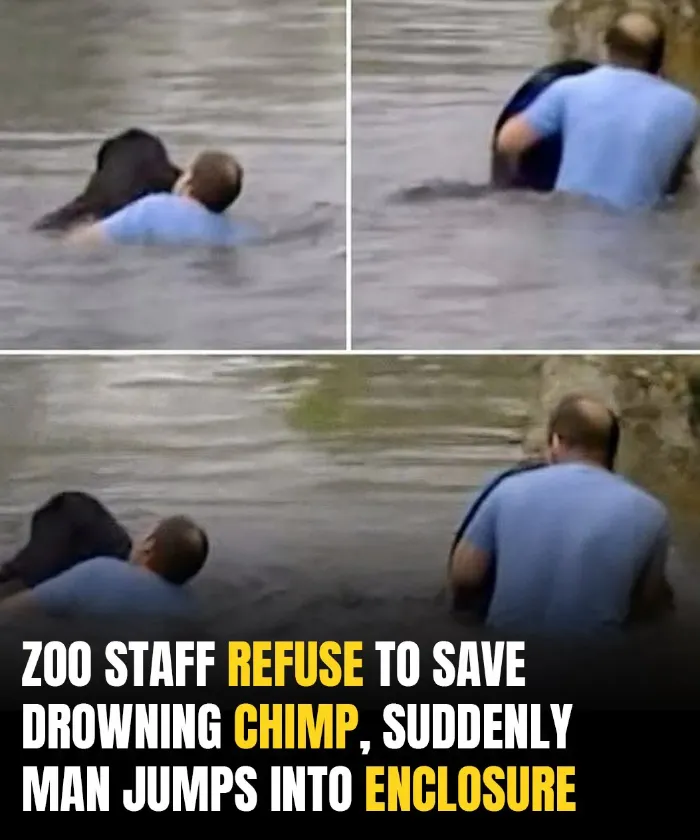
Signs cautioning visitors not to approach the animals’ enclosures are frequently posted at zoos. But that didn’t stop one courageous truck driver from rescuing a chimpanzee by jumping inside one.
Jo-Jo, one of the less combative chimps, slipped into the deep moat while attempting to avoid the battle. People were still oblivious to what was happening and were just staring at the poor animal helplessly as he began to drown.
Then, without any hesitation, Swope leaped into the sea. Retrieving the monkey to safety, he grabbed him. The amazing event that played out in front of the spectators left them in utter disbelief.
“It was the most pitiful thing I ever saw,” Swope said after the rescue. “This chimp had his hands up and his head was sticking out of the water. He was looking at the crowd. It was like he wanted someone to rescue him.”
During the rescue, the zoo staff kept telling Swope to get out, but he never thought of doing that without Jo-Jo. “People . . . were showing me which direction he was in,”
Swope recalled. “The water was so dirty you couldn`t see through it. I swam around on the bottom. Finally I found him.”
Fortunately, Jo-Jo was able to cross a cable that Swope had put in place to prevent chimps from slipping in the moat.
“He was pretty lifeless, but you could see he was still alive. He was looking at me. I think he knew what was going on,” Swope said.
Swope seemed to be saying
“thank you” as Jo-Jo gazed directly into his eyes. He knew that day a man had saved his life.
“Well, you see, I happened to look into his eyes, and it was like looking into the eyes of a man, and the message was, ‘Won’t anybody help me?’”
According to zoo employee Jane Goodall, Jo-Jo’s existence wasn’t simple. After his mother was slain by poachers when he was quite young, he was sent to the zoo.
“[But] if you see that look with your eyes, and you feel it in your heart, you have to jump in and try to help,”
In a dramatic and unprecedented shake-up of federal health leadership, Robert F. Kennedy Jr. has initiated a wide-ranging purge of officials tied to Bill Gates and his extensive influence within America’s biomedical agencies.Dozens of senior personnel at the Centers for Disease Control and Prevention (CDC), the Department of Health and Human Services (HHS), and the National Institutes of Health (NIH) are reportedly being dismissed as Kennedy seeks to dismantle what he has described as a “corrupt biomedical regime.”At the center of the purge is the ousting of CDC Director Susan Monarez, who was dismissed for insubordination after refusing to comply with directives to remove entrenched allies of the pharmaceutical industry from key positions.According to administration insiders, Monarez’s defiance sealed her fate and signaled the beginning of a much larger restructuring effort. Already, five top CDC officials have been forced out, with more departures expected in the coming weeks.
Kennedy, who has long criticized the deep ties between government health agencies and powerful private foundations, including those led by Gates, campaigned on a pledge to free American health policy from corporate capture.He argued that U.S. public health institutions had been compromised by the revolving door between regulators and the pharmaceutical industry, a relationship he insisted had corrupted the nation’s pandemic response and broader health priorities.The purge represents the clearest signal yet that Kennedy intends to make good on that promise. Rather than shuffling personnel quietly or waiting for natural retirements, Kennedy has chosen to act swiftly and decisively.
By doing so, he hopes to demonstrate to both allies and critics that his administration is committed to confronting entrenched interests directly, no matter how powerful.The mention of Gates is not incidental. For years, Bill Gates has been one of the most influential figures in global health policy. Through the Bill & Melinda Gates Foundation, he has poured billions of dollars into vaccine programs, medical research, and global public health initiatives.
While supporters hail his philanthropy, critics argue that Gates has used his fortune to shape global health policy in ways that favor pharmaceutical corporations and top-down control over community-based health solutions.Kennedy has been among the most prominent of those critics, accusing Gates of leveraging his wealth to manipulate policy at agencies like the CDC and NIH. By dismissing Gates-connected officials, Kennedy is attempting to sever the pipeline of influence that has shaped U.S. health priorities for decades.Susan Monarez’s removal is perhaps the most symbolic event so far. Appointed during the previous administration, Monarez was seen as a steady, establishment voice at the CDC.However, her resistance to Kennedy’s directive to clean house of Big Pharma allies positioned her directly against the new administration’s mission.Her dismissal, framed officially as “insubordination,” underscores the seriousness with which Kennedy views this purge. Insiders suggest that Monarez had resisted calls to demote or reassign officials with longstanding ties to pharmaceutical interests, arguing that their experience was essential.Kennedy, however, interpreted her refusal as protecting the very network of influence he vowed to dismantle.Alongside Monarez, five other top CDC officials have already been removed. While their names have not been made public, they are reportedly high-ranking figures in vaccine policy, public communications, and pandemic preparedness.Critics of the CDC’s pandemic-era policies have accused the agency of prioritizing pharmaceutical profits over transparent science and community health.By targeting these positions first, Kennedy is signaling a broader cultural shift: the era of agencies automatically deferring to pharmaceutical giants is ending. Instead, he aims to foster an environment where public health officials are accountable first and foremost to the people they serve.The purge is not limited to the CDC. Kennedy’s team is reportedly combing through rosters at HHS and NIH, identifying officials whose records show revolving-door connections with pharmaceutical companies, Gates-backed initiatives, or lobbying firms that shaped pandemic-era policies.Sources suggest that dozens more dismissals could follow in the coming months, a move likely to provoke both praise and outrage across the political spectrum.Supporters of Kennedy’s actions argue that such bold moves are necessary to restore trust in America’s health institutions. After years of declining public confidence in agencies like the CDC, many believe that sweeping reform is the only way to rebuild credibility.“These agencies lost the trust of the American people,” said one Kennedy ally. “The only way forward is to remove those who compromised that trust and replace them with individuals committed to transparency, science, and independence from corporate control.”Not everyone is applauding. Critics warn that the mass firings could create instability at a time when public health challenges remain pressing. They argue that Kennedy’s purge risks leaving key agencies understaffed or in disarray, undermining their ability to respond to crises.Others claim that targeting officials for their connections to Gates or the pharmaceutical industry unfairly politicizes public health.Yet Kennedy’s team insists the opposite is true: the politicization already existed, baked into a system where powerful corporate interests dictated policy. By purging those ties, they argue, Kennedy is depoliticizing health policy and returning it to science-driven decision-making.The purge must also be understood in the context of Kennedy’s broader political project. His administration has framed itself as a populist movement determined to challenge entrenched elites in every sector, from Wall Street to Silicon Valley to Big Pharma.By directly confronting Gates-connected officials, Kennedy is aligning himself with widespread public frustration over corporate control of government.The move also places him at odds with establishment Democrats and Republicans alike, many of whom have benefited politically and financially from pharmaceutical lobbying and Gates Foundation partnerships.It is, in short, a high-stakes gamble that could either solidify his image as a reformer or paint him as reckless, depending on how the coming months unfold.
The immediate question is who will replace the ousted officials. Kennedy’s administration has promised to appoint leaders with no ties to the pharmaceutical industry or Gates-backed initiatives.Names being floated include academics, independent scientists, and community health leaders who have been critical of pandemic-era policies.
If Kennedy follows through, the new leadership could mark a sharp departure from decades of pharmaceutical dominance in public health policymaking. Instead, the focus may shift toward holistic health, prevention, and community-driven solutions.The purge underway at the White House is more than a personnel change—it is a symbolic confrontation with decades of entrenched influence by pharmaceutical corporations and powerful philanthropists like Bill Gates.By dismissing CDC Director Susan Monarez and other top officials, Robert F. Kennedy Jr. has sent a clear message: business as usual is over.While critics decry the move as destabilizing, supporters hail it as long-overdue reform to restore integrity and trust in America’s health institutions. What is undeniable is that this purge represents a turning point.For the first time in decades, the grip of Big Pharma and private foundations on U.S. public health is being challenged at the highest levels of government.Whether Kennedy’s bold gamble succeeds will depend on his ability to rebuild these institutions with leaders committed to independence, transparency, and science in service of the people—not corporate profit.