The political ascent of New York progressive Zohran Mamdani has hit an immediate roadblock following his high-profile threat against President Donald Trump. The newly elected official, whose victory was fueled by aggressive rhetoric, quickly drew the attention of the former President, who issued a stark warning regarding Mamdani’s political viability and the financial realities of New York City.
The confrontation highlights the deep ideological chasm currently fracturing New York politics and underscores the precarious position of a new administration that must now reconcile radical spending promises with a rapidly shrinking tax base.
Mamdani’s victory acceptance speech was characterized by highly aggressive rhetoric, including a direct challenge to the former President.
In his speech, Mamdani issued a combative warning: “So hear me, President Trump, when I say this: To get to any of us, you will have to get through all of us.”
This rhetoric, which some New York Democrats deemed “crazy,” was an immediate attempt by Mamdani to solidify his image as the uncompromising anti-Trump figurehead.
The Ideological Dismissal: Trump framed Mamdani’s progressive platform as inherently flawed, stating: “For a thousand years, communism has not worked. It just, communism or the concept of communism has not worked. I tend to doubt it’s going to work this time.”
The Political Threat: Crucially, Trump used his potential influence over federal funding as leverage, cautioning that Mamdani “has to be a little bit respectful of Washington, because if he’s not, he doesn’t have a chance of succeeding.”
Trump cemented the power dynamic, stating that Mamdani should be reaching out to the federal government, not issuing threats.
Mamdani’s ambitious campaign promises—including “city-run grocery stores, free buses, universal child care, a rent freeze”—rely on massive financial resources, which are rapidly eroding due to an ongoing taxpayer flight from New York.
The newly elected mayor’s platform is built on the promise of making goods and services “free” by aggressively taxing the wealthy and corporations. However, this model faces immediate challenges:
Shrinking Tax Base: The overall New York area has seen a mass exodus of an estimated one million people since the COVID era, with approximately 700,000 fleeing New York City specifically. These departing residents are the very high-earners whose taxes Mamdani needs to fund his agenda.
The Double Bind: Trump’s warning about federal purse strings becomes doubly important. Mamdani needs federal money to compensate for the fleeing tax dollars, yet his confrontational style risks antagonizing the political figures who control that funding.
A major moment of vulnerability for Mamdani came immediately after the election when he quickly pivoted from campaigning to fundraising. Despite his platform of providing “free stuff,” his transition team issued an urgent call for donations:
The U-Turn: Mamdani’s campaign, having previously told supporters to “stop sending us money” during the election phase, abruptly reversed course: “You can start again. This transition requires staff, research, and an infrastructure… So, I hope you’ll make a donation.”
The Perception: This rapid move to ask for money immediately after securing a win fuels the skepticism that his socialist platform is unsustainable without constant, urgent financial infusions.
In a clear demonstration of political awareness, Mamdani quickly pivoted his focus to optics and political coalition building, recognizing that women were the driving force behind his victory.
The Mandate:
Election data shows Mamdani won with 84% of women aged 18 to 29 and 65% of women aged 30 to 44. This overwhelming support group was critical to his success.
The Response: Mamdani immediately unveiled an all-female transition team, including highly experienced leaders like former First Deputy Mayor Maria Torres-Springer, Lena Khan (FTC), and Melanie Hartzog (Deputy Mayor for Health and Human Services).
The Statement: This move is not merely about optics; it is a strategic statement aimed at validating the constituency that delivered his victory and signaling a departure from the “old boys club rules” of previous administrations.
The aggressive nature of Mamdani’s political debut mirrors a concerning trend in American politics where ideological purity and confrontation are prioritized over compromise and civility, as evidenced by the recent victory of Virginia’s Jay Jones.
The Unacceptable Rhetoric: Jay Jones, who won the Virginia Attorney General race, was exposed for past messages where he advocated for violence against political opponents’ children, suggesting that their death would make Republicans change their views.
The Shocking Indifference: Despite this psychotic and totalitarian rhetoric being made public, a significant portion of Virginia voters were either unconcerned or deemed the comments “not disqualifying.”
The Lesson: This event highlights the deep polarization where many political actors view the opposition not just as rivals, but as enemies who deserve to be harmed, validating the fears that political discourse has devolved into total warfare.
The Mamdani-Trump clash and the unsettling Jay Jones victory underscore the ideological and financial turbulence facing the country.
Mamdani’s strategy is clear: embrace the confrontation and consolidate the progressive base. However, this ideological purity comes with a high price tag. With the tax base fleeing and federal funds uncertain, Mamdani faces the immediate challenge of proving that his socialist ideology is a viable governing philosophy and not simply a recipe for fiscal disaster.
As the political mask “slowly comes off,” the true test for Mamdani will be whether he can transform his combative campaign rhetoric into stable, successful governance, or if New York City is simply entering another chapter of ideological chaos.
According to the New York Post, Howard Rubin, 70, allegedly used his Manhattan penthouse as a “secret sex dungeon” at the center of the case.
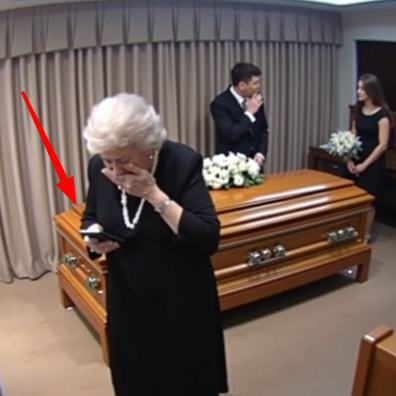 As the day gave way to night, the house settled into an unsettling quiet. Each shadow seemed to stretch and breathe with its own life, weaving a tapestry of questions and unsaid fears around me. My mind raced, replaying the messages over and over. The idea that Richard—a man I had shared nearly three decades of my life with—might still be alive was both a hopeful fantasy and a terrifying possibility. But why warn me not to trust our children? A cold knot of dread twisted in my stomach.
After the children had gone to bed, I moved silently through the house. My heart pounded with each creak of the floorboards. I paused outside their rooms, listening to their soft, even breaths. Natalie and Andrew. Could they really be hiding something from me? The very thought felt like a betrayal, but the messages left me with little choice but to pursue the truth.
I entered Richard’s study, a room that now seemed unfamiliar despite its comforting scent of leather and old books. The desk stood sentinel-like, its polished surface reflecting the dim light. This was the same desk where Richard had spent countless evenings, scribbling notes or lost in thought. I approached it with a mixture of reverence and apprehension, my fingers trembling as I reached for the top drawer.
The drawer slid open easily, revealing an orderly arrangement of pens, paperclips, and notepads. But it was the compartment beneath—a hidden space only revealed when I pressed on the false bottom—that contained the secret. As the panel shifted aside, a small bundle of papers emerged, tied with a red ribbon.
My breath caught in my throat. It was a will, completely different from the one Natalie had found. My eyes scanned the document, the legal jargon blurring until I found what I was looking for: my name, listed as the primary beneficiary. Richard had left everything to me. The house, the savings, even the small business he had nurtured for years—it was all supposed to be mine.
A wave of emotions crashed over me: relief, anger, confusion. Why had Richard hidden this? And why had Natalie and Andrew lied about the existence of another will? My heart ached at the thought of them deceiving me, but the evidence was irrefutable.
I sank into the leather chair, the weight of the secrets pressing down on me. If Richard was truly alive, what kind of danger was he in? And what had driven our children to such deception? My phone vibrated again, startling me. Another message from the unknown number: “Trust no one. I’m close. I’ll explain soon.”
The words ignited a spark of hope within me. If Richard was out there, somewhere, then I had to find him. But first, I needed answers from my children. As I sat in the dim study, the truth whispered through the cracks in the walls, demanding to be uncovered. Whatever lay ahead, I knew one thing for certain: this was just the beginning.