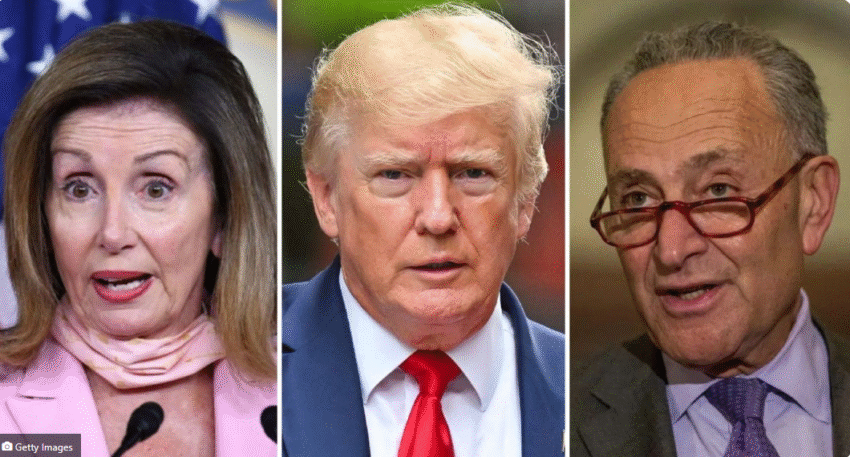
Democratic-aligned voting rights organizations are bracing for what they describe as a potential crisis if the U.S. Supreme Court moves to weaken a central provision of the Voting Rights Act, one of the nation’s cornerstone civil rights laws.
The concern centers on Louisiana v. Callais, a case the justices heard on October 15. The outcome could determine the future of Section 2 of the Voting Rights Act, which prohibits redistricting plans that dilute the voting power of racial minorities.
Two prominent voting rights groups have warned that striking down or narrowing Section 2 would allow Republican-controlled legislatures to redraw as many as 19 congressional districts in their favor, Politico reported.
That projection — outlined in a new report from Fair Fight Action and the Black Voters Matter Fund and shared exclusively with POLITICO — suggests that striking down Section 2 of the Voting Rights Act could all but ensure continued Republican control of the House of Representatives.
While a ruling before next year’s midterm elections remains uncertain, the organizations behind the report said it is still possible. In total, the groups identified 27 congressional seats nationwide that could be redrawn to favor Republicans if current legal and political conditions hold — with 19 of those shifts directly tied to the potential elimination of Section 2 protections.Doing so would “clear the path for a one-party system where power serves the powerful and silences the people,” Black Voters Matter Fund co-founder LaTosha Brown claimed, without addressing the constitutional impropriety of drawing congressional districts based solely on race – which is the issue before the high court.
Republicans have for years sought to limit or dismantle Section 2 of the Voting Rights Act, which bars racial discrimination in voting laws and redistricting. They argue that the provision unfairly benefits Democrats by requiring the creation of minority-majority districts that often lean Democratic.
The Supreme Court has previously rejected those arguments, but voting rights advocates fear the upcoming Louisiana v. Callais case could mark a turning point.
Democrats, meanwhile, could also seek to capitalize on any changes to the law by redrawing district lines in deeply Democratic states where VRA protections still apply. However, analysts say such opportunities would be limited compared with the broader redistricting advantages that Republican-controlled legislatures could gain, Politico added.
Under current law, the Voting Rights Act is used in redistricting to prevent racial gerrymandering that weakens the influence of minority voters. States typically comply by drawing districts that give racial and ethnic minority communities a fair opportunity to elect their preferred candidates.
However, many election law experts anticipate that the Supreme Court could narrow the scope of the VRA in its upcoming ruling, potentially triggering significant shifts in congressional representation across the South, noted Politico.
According to the report, such a decision could result in Democratic lawmakers being ousted entirely from states such as Alabama, South Carolina, Tennessee, and Mississippi. Other states — including Louisiana, Georgia, North Carolina, Texas, and Florida — would likely retain at least one Democratic member of Congress, but their overall Democratic representation would shrink considerably.
The report is being released as Republicans undertake a nationwide redistricting push ahead of the midterm elections — a strategy that has received strong backing from the White House and could help the GOP preserve its slim House majority. The mid-cycle redraws, while uncommon, are not without precedent and have already produced six additional Republican-leaning districts across two states.
Several other GOP-led states are expected to follow suit, a number that could grow substantially if key protections under the Voting Rights Act are rolled back.
In response, Fair Fight Action and the Black Voters Matter Fund are urging Democrats to mount an “aggressive and immediate” counterstrategy to combat Republican redistricting maneuvers already in motion.
Karoline Leavitt Stands Firm: White House Press Secretary Rebukes CNN on Musk Security Clearance
In a recent press briefing marked by an unusual mix of poise and precision, White House Press Secretary Karoline Leavitt delivered sharp and measured responses to CNN’s Kaitlan Collins, who pressed repeatedly about Elon Musk’s security clearance and his role as a special government employee. What followed was more than a tense exchange—it was a microcosm of the evolving conversation around national security, transparency, and the role of high-profile outsiders in federal operations.
his article dissects that moment and the broader context surrounding Musk’s appointment, the political dynamics in play, and what it all means for the future of government innovation and oversight.
I. The Briefing: A Flashpoint on Federal Vetting
A. Setting the Stage
The press briefing, attended by senior officials including Middle East envoy Steve Witkoff and National Security Advisor Michael Waltz, began as a routine update on domestic and foreign policy. But the session quickly pivoted when CNN’s Kaitlan Collins shifted the spotlight to Elon Musk’s official government designation and security status.
B. The Questions That Sparked It All
Collins zeroed in:
“Can you confirm that Elon Musk is a special government employee? And what kind of security clearance does he have?”
Her tone was sharp, clearly intended to expose perceived weaknesses in the administration’s vetting protocols—especially in light of Musk’s high-profile role in the Department of Government Efficiency (DOGE).
C. Leavitt’s No-Nonsense Response
“I can confirm he’s a special government employee… and he’s in full compliance with federal law.”
Pressed again for details about Musk’s background check and clearance level, Leavitt firmly stated that she didn’t have the specifics on hand but would follow up. Her brevity was intentional—a way to signal the administration’s confidence in its internal systems while avoiding unnecessary entanglement in speculative discourse.
II. The Bigger Picture: Musk in the Halls of Power
A. The Rise of the “Special Government Employee”
Elon Musk’s federal role is part of a larger trend: the integration of nontraditional, high-profile figures into public service roles. As a Special Government Employee (SGE), Musk is tasked with bringing private-sector innovation to government systems—specifically via DOGE, which aims to modernize outdated processes and eliminate wasteful spending.
B. Why the Vetting Process Matters
Supporters argue Musk’s entrepreneurial brilliance makes him an ideal asset. Critics warn that his unconventional background raises red flags when it comes to national security protocols. Leavitt’s core message was clear: regardless of his fame, Musk followed the rules.
But the administration’s reluctance to disclose exact clearance levels has left room for continued speculation.
C. Transparency vs. National Security
At the heart of this debate lies a fundamental tension: How much should the public know about classified vetting processes?
To some, transparency means confidence. To others, excessive disclosure could compromise operations. Leavitt’s tight-lipped stance reflects an effort to maintain this delicate balance.
III. Political Theater or Necessary Oversight?
A. CNN’s Motive: Journalism or Gotcha?
Kaitlan Collins’ persistent inquiries signal a wider media effort to hold unconventional appointments under the microscope. Whether it’s viewed as due diligence or political grandstanding depends on perspective.
B. Political Pundits Weigh In
Some praised Leavitt for standing her ground and demonstrating the administration’s resolve. Others believe the lack of clarity reinforces suspicion that Musk’s appointment may have sidestepped full scrutiny.
C. Trust and the Modern Vetting Process
This moment illustrates the fragile trust dynamic between the media, government, and the public. When iconic figures like Musk enter federal spaces, even small unknowns become lightning rods for controversy.
IV. Elon Musk: Innovator, Strategist, or Liability?
A. A Government Role Beyond Tech
Musk’s involvement in DOGE isn’t just symbolic—it’s operational. His presence is intended to disrupt bureaucracy and inject private-sector speed into sluggish federal systems.
B. The Security Clearance Debate
While Leavitt insists on full compliance, critics argue Musk’s nontraditional profile makes him an outlier—and possibly a vulnerability. With rising global threats and cyber warfare, vetting high-profile figures has never been more critical.
C. A Turning Point in Federal Collaboration
The Musk appointment exemplifies a broader movement: bridging Silicon Valley and Washington. But at what cost? If protocols are bent for visionaries, what precedent does that set?
V. What This Means for the Future of Governance
A. Vetting in a New Era
The Trump administration is doubling down on its promise of rigorous background checks, no matter the individual. But the incident has renewed calls for greater public insight into how SGEs are screened—particularly when they hold influence over policy.
B. The Media’s Role: Watchdog or Weapon?
Media scrutiny ensures accountability, but the Leavitt-Collins clash reveals the growing weaponization of transparency as a political tool. Going forward, expect tighter message control—and even more combative briefings.
C. Musk’s Legacy in Government
Whether Musk proves to be a boon or burden for the federal system remains to be seen. But one thing is clear: his presence has forced the system to adapt—faster, louder, and more publicly than ever before.
VI. Conclusion: Accountability Meets Disruption
The exchange between Karoline Leavitt and Kaitlan Collins wasn’t just a test of composure—it was a defining moment in how America handles its modern-day innovators in government roles.
By affirming Musk’s compliance with federal law while refusing to disclose sensitive details, Leavitt made a powerful point: the administration is betting on both innovation and integrity.
As the media pushes for more clarity and political pressure mounts, the U.S. government faces a crossroads—where accountability, efficiency, and national security must co-exist. Musk’s evolving role will continue to challenge norms and stir debate, but it may also reshape how leadership, transparency, and public service intersect in the 21st century.
The world of royalty and millions of fans across the globe have been left shaken after unconfirmed reports surfaced suggesting that Prince Harry recently received a devastating medical diagnosis that has left him and those close to him “absolutely stunned.”
According to an anonymous royal insider cited by multiple online sources, the Duke of Sussex was reportedly given grave news during a private consultation with a specialist in California. The most shocking part of the alleged conversation? A chilling remark made by the doctor:
“You’ll soon be reunited with your mother.”
The quote — whether metaphorical or literal — has sent social media into a frenzy, triggering waves of concern, speculation, and heartbreak from royal watchers and mental health advocates alike.
The idea of Prince Harry being “reunited with his mother,” Princess Diana, who tragically died in 1997, evokes powerful emotions. For years, Harry has spoken openly about how her death left him emotionally wounded, shaping his decisions, including stepping back from royal duties to prioritize mental health and family.
So what does this latest report actually mean?
While no official diagnosis or confirmation has come from Prince Harry’s representatives or Buckingham Palace, online rumors suggest the Prince may be facing a serious neurological or cardiac condition. Some speculate that the doctor’s words may not refer to a terminal illness but rather reflect the deep emotional trauma Harry still carries.
Mental health professionals have offered their own interpretations, warning that such a phrase — if truly spoken — could be a sign of severe psychological distress, perhaps even suicidal ideation. Dr. Emily Norwood, a clinical psychologist in Los Angeles, said, “If these words were directed at Harry, the concern wouldn’t just be physical — it could suggest an emotional collapse triggered by unresolved grief.”
The news comes at a time when Prince Harry has already been under enormous pressure. His strained relationship with the royal family, the ongoing public scrutiny, and the burden of maintaining his and Meghan’s life in the U.S. have all taken a visible toll.
Public reaction has been swift and emotional. Thousands have taken to social media under the hashtag #WeStandWithHarry, urging compassion and hoping the story is either false or taken out of context. One user wrote, “He lost his mother too soon. We can’t lose him too. Someone please make sure he’s okay.”
Meanwhile, close friends of the Duke have reportedly rallied around him. Meghan Markle, ever his protective partner, is said to be “closely monitoring the situation” and prioritizing Harry’s well-being above all else.
Whether the doctor’s haunting words were a medical prognosis, a metaphor, or just a tragic misunderstanding, one thing is clear: Prince Harry is still living in the long shadow of Princess Diana’s death, and the world is once again reminded that behind the crown lies a man still navigating unimaginable pain.
Following his first yearly medical since taking office again, the doctor of President Donald Trump praised the 78-year-old as fit to serve.
“President Trump exhibits excellent cognitive and physical health and is fully fit to execute the duties of the Commander-in-Chief and Head of State,” wrote Dr. Sean Barbabella, physician to the president.
Following Trump’s Friday visit to Walter Reed National Military Medical Center for his yearly physical before leaving town for the weekend, the White House sent the memo on Sunday.
The examination in de
tail Trump stands six feet three inches tall and weighs 224 pounds.
“President Trump remains in excellent health, exhibiting robust cardiac, pulmonary, neurological, and general physical function,” Barbabella wrote.
“His active lifestyle continues to contribute significantly to his well-being,” he added.
The president’s “frequent victories in golf events” were highlighted in the memo, which also acknowledged his hectic schedule and appearances.
According to the physical report, Trump’s resting heart rate was 62 beats per minute and his blood pressure was 128/74 mmHg.
After consulting with fourteen specialists, we carried out Friday’s examination, which involved laboratory and diagnostic testing. It stated that several tests were all normal.
“Examination of the head, ears, nose and throat revealed no significant abnormalities with the exception of scaring on the right ear from a gunshot wound,” the memo stated.
The medical report was the first public information on Trump’s health since the July assassination attempt in Butler, Pennsylvania. However, there were no additional details regarding the impact of the occurrence beyond mentioning the scar.
The Montreal Cognitive Assessment, a simple 10-minute test for mild cognitive impairment, was used to evaluate his cognitive abilities, and the findings showed that he scored a normal 30 out of 30.
He had previously completed the test. During his first tenure, the president also took the cognitive test. Dr. Ronny Jackson, the White House physician, reported that Trump received a score of 30 out of 30 on the January 12, 2018, test.
According to the memo, the president is taking four medications: Aspirin, Mometasone cream when necessary for a skin issue, and Rosuvastatin and Ezetimibe for cholesterol control.
It said that every vaccination the president has advised is up to date, including those for travel.
In January, Trump became the oldest person in American history to be inaugurated in as president.
He spent about five hours at Walter Reed for his first yearly physical of his second term.
His new personal doctor, Barbabella, who served in both Afghanistan and Iraq and has a wealth of battle trauma knowledge, performed the examination.
“Overall, I felt I was in very good shape. A good heart, a good soul, a very good soul,” Trump told reporters while traveling to Florida on Friday after his exam.
He also touted taking a cognitive test, claiming “I got every answer right.”
“I was there for a long time,” Trump said before the results were released. “I think I did very well.”
The document was circulated over Trump’s weekend in Mar-a-Lago, where the president spent Sunday at his golf club.