
Tech billionaire Elon Musk sparked controversy online after posting that the New York City mayoral election ballot is a “scam.” In his message, he claimed that the ballot was designed unfairly, arguing that voters were not required to present identification, that some mayoral candidates appeared more than once, and that former governor Andrew Cuomo’s name was placed in a less visible position on the form. Musk’s comments quickly gained traction, prompting widespread debate over the accuracy of his claims and the fairness of New York City’s election procedures.
Musk’s post touched on several sensitive issues in American elections, including voter identification laws and ballot design. His first claim — that no ID is required to vote — is technically true in certain contexts, but it omits the legal background. In New York, voters are not generally required to present government-issued photo ID at polling places if their registration has been verified. This rule, long established in state law, is meant to make voting accessible to all eligible citizens. Critics of Musk’s statement argued that calling this practice a “scam” misrepresents a standard voting policy used across many U.S. states.
Another point Musk raised was that some candidates appeared twice on the ballot. While this may seem suspicious to those unfamiliar with local election rules, experts quickly clarified that the repetition is allowed under New York’s “fusion voting” system. This system permits candidates to run on multiple party lines if they have been endorsed by more than one political organization. For example, a candidate like Zohran Mamdani might appear twice on the ballot — once under the Democratic Party and once under another allied party. Far from being evidence of manipulation, this is a legitimate and long-standing feature of New York’s electoral process.
Musk also objected to the placement of Andrew Cuomo’s name on the ballot, noting that it appeared last in the bottom right corner. Ballot design and placement are determined by rules established by the city’s Board of Elections, not by individual candidates. The order often follows a structured system based on party status or random drawing, rather than favoritism or bias. Election officials noted that while visual placement can affect voter perception, all candidates were listed in accordance with official procedure.
The reaction to Musk’s post was swift and mixed. Supporters of the tech entrepreneur praised him for drawing attention to what they perceived as flaws in the electoral process, while critics accused him of spreading misinformation and undermining confidence in democratic institutions. Within hours, journalists, election experts, and fact-checkers weighed in to provide context, explaining that each of Musk’s claims reflected misunderstandings of established election law rather than evidence of misconduct.
Several reputable media outlets published analyses refuting the suggestion that the ballot was a “scam.” They explained that voter ID laws vary by state, that multiple appearances of a candidate’s name are legal under fusion voting, and that ballot placement follows predetermined administrative rules. These clarifications helped calm some of the online outrage, though the incident reignited ongoing debates about how misinformation spreads rapidly on social media — especially when amplified by influential figures like Musk.
Ultimately, the controversy underscored the importance of accurate information and transparency in election reporting. Musk’s post, though quickly corrected by experts, illustrated how easily routine election practices can be misunderstood when taken out of context. As New Yorkers prepare to cast their votes, officials and observers alike have emphasized the need for voters to rely on verified sources for election information. The discussion surrounding Musk’s remarks serves as a reminder that civic trust depends not only on fair elections, but also on responsible public communication about how those elections are conducted.
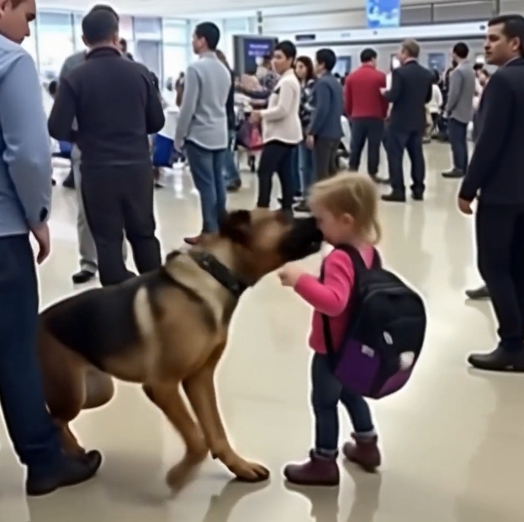 In the bustling terminal of one of the nation’s busiest airports, the usual symphony of rolling luggage, chatter, and announcements hummed in the background. Families and business travelers alike navigated the labyrinth of gates and kiosks, each person wrapped in their own world, their own journey. However, the tranquil chaos was about to be disrupted by an unexpected hero with a keen nose and an unwavering sense of duty—a security dog named Max.
Max, a seasoned member of the airport’s security team, was renowned for his impeccable track record. A sleek German Shepherd with intelligent eyes and a discerning snout, he had been trained to detect a variety of threats that might pass through the airport. On that particular day, he moved with his handler, Officer Jane Thompson, weaving through the throngs of people with practiced ease. They had already completed several successful patrols that morning, and this one seemed no different—until they reached Gate 14.
As Max approached a cluster of passengers, his behavior changed abruptly. His ears perked up, and his tail stood rigid. A low growl emanated from his throat, and he began to bark sharply, his focus narrowing in on a seemingly innocuous child’s backpack resting on the floor beside a young boy. The sudden outburst caught the attention of nearby travelers, who paused their conversations and turned their eyes toward the source of the commotion.
Officer Thompson, accustomed to Max’s alerts, quickly assessed the situation. Her heart raced, but her training kept her calm and methodical. She gently approached the boy and his parents, who were now looking around in confusion and concern. “Is this your backpack?” Officer Thompson asked, her voice steady but urgent. The boy, wide-eyed and clutching his father’s hand, nodded.
Max continued to bark, circling the backpack with intensity. The surrounding passengers began to step back, creating a radius of space around the unexpected center of attention. The chatter of the terminal quieted, curiosity and apprehension hanging in the air like a dense fog.
Officer Thompson carefully radioed for additional support, ensuring the safety protocols were followed to the letter. Within minutes, a team of officers arrived, setting up a perimeter and gently guiding the family and other passengers to a safe distance. The entire terminal seemed to hold its breath, anticipating the reveal of what lay within the seemingly harmless backpack.
As the bomb squad technician approached the bag with cautious precision, the crowd watched in silence, a tableau of anxious faces reflecting a spectrum of emotions. The technician, clad in protective gear, deftly unzipped the backpack and peered inside. The tension in the air was palpable, the silence deafening.
What was found inside the backpack was not an explosive device, nor harmful contraband, but rather, a forgotten relic of childhood innocence—a plush toy with a small electronic voice box. The toy, a beloved but well-worn teddy bear, had malfunctioned, emitting strange sounds that had triggered Max’s alert system. The child’s parents apologized profusely, relief washing over them as they reclaimed the toy, understanding now the unusual reaction it had incited.
The silence gradually gave way to a ripple of relieved laughter and applause for Max and the security team. The airport resumed its rhythm, the brief interlude serving as a reminder of the delicate balance between vigilance and the unexpected quirks of daily life. Max, unfazed, received a hearty pat from Officer Thompson, his tail wagging in triumph. Another day, another duty fulfilled, with the airport safe and secure in the capable hands—and paws—of its guardians.