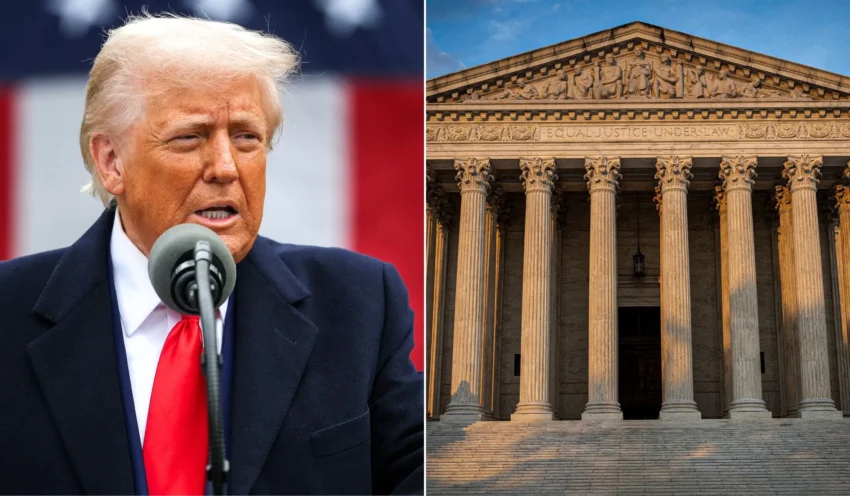
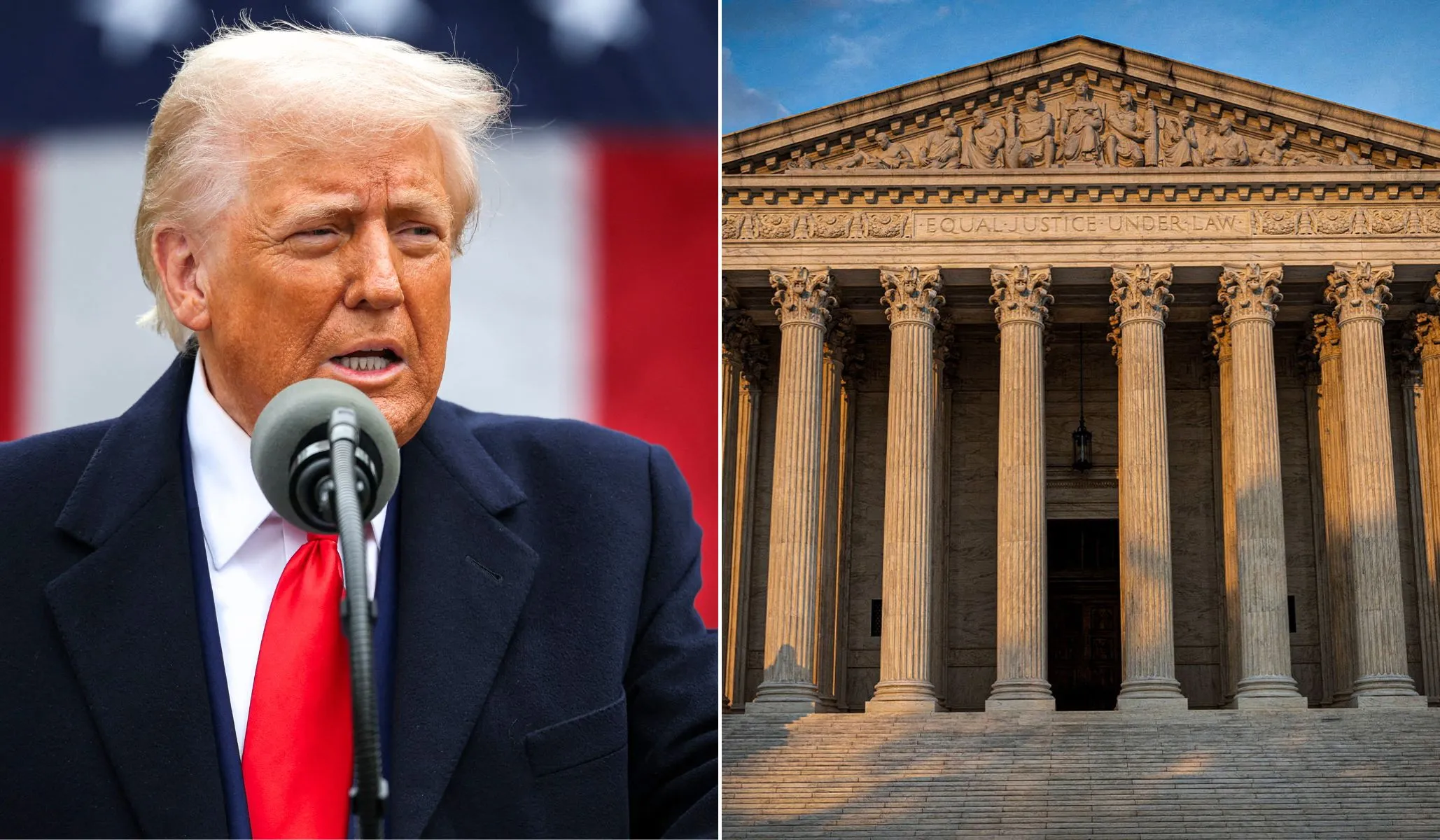
The Supreme Court delivered a strong and necessary rebuke to judicial overreach this week, siding with the Trump administration in its battle to uphold fiscal responsibility during the government shutdown.
In a move that protected the separation of powers, the High Court temporarily blocked a lower court’s outrageous attempt to force the Trump administration to pay full Supplemental Nutrition Assistance Program (SNAP) benefits despite the absence of appropriated funds.
This was not just a legal victory—it was a constitutional one. President Donald Trump’s administration correctly argued that it cannot spend what Congress has not authorized, and the Court agreed.
At issue was a Rhode Island judge’s demand that the administration raid limited contingency funds to provide full SNAP benefits in the middle of a government shutdown that Democrats have prolonged.
That judge’s order would have set a dangerous precedent: allowing the judiciary to force the executive branch to fund entitlements beyond what Congress appropriates. Trump’s team rightly challenged it.
The administration stood firm. It refused to play into Democrat theatrics and declared that SNAP would be funded based on what legally exists—not what progressive judges or left-wing activists wish for.
This is what real leadership looks like. Trump’s America First agenda does not bend the knee to judicial activism or budgetary blackmail.
Despite liberal outrage, Justice Ketanji Brown Jackson issued an administrative stay on the lower court’s order—confirming that the administration has the right to appeal and pause unlawful mandates.
The Supreme Court’s move ensures that unelected judges cannot usurp Congress’s power of the purse by forcing emergency expenditures that have no basis in law.
For weeks, Democrats have weaponized government shutdown politics, using essential services like SNAP as political hostages to demand concessions on unrelated spending.
The Trump administration has offered commonsense solutions. Fund critical programs through proper channels, reopen government, and stop holding the American people hostage.
Instead, left-wing courts tried to shame the administration into unlawfully raiding contingency funds. That is not governance — that is economic sabotage.
This administration is protecting taxpayers, defending constitutional limits, and ensuring programs like SNAP are funded through legitimate appropriations — not judicial diktats.
President Trump has shown time and again that his administration won’t be bullied into lawlessness, even when Democrats and their judicial allies demand it.
Let’s not forget: this crisis was caused by congressional Democrats who refused to pass a clean funding bill. They chose shutdown over compromise.
Now, they want to blame Trump for their failure to govern? That’s not just dishonest — it’s disgraceful.
The USDA had already begun working to distribute partial SNAP payments using what limited resources were available, showing the administration’s commitment to support struggling families within the law.
But Democrats don’t want solutions. They want spectacles. They’d rather stir outrage than engage in serious governance.
States like Pennsylvania, Oregon, and California rushed to comply with the judge’s ruling — not because they had to, but because they wanted to score political points against the administration.
Yet Trump held the line. His administration’s appeal to the Supreme Court was not about denying aid — it was about defending the rule of law.
And once again, Trump was right. The Court understood that real leadership means respecting constitutional boundaries, not rewriting them from the bench.
Justice Jackson’s stay gives the administration breathing room to make its case, and protects the executive branch from being railroaded by a hyper-political lower court.
This moment highlights exactly why Trump’s judicial appointments mattered—because constitutional sanity must prevail when government overreach runs wild.
BREAKING: Anna Paulina Luna Claims The Biden DOJ DESTROYED…
In a groundbreaking development, several members of the far-left militant group Antifa have been arrested and criminally charged following a tense standoff in Eugene, Oregon.The group’s members were accused of encircling an Immigration and Customs Enforcement (ICE) facility, instilling fear and causing significant distress among employees working within the building.This incident marks a historic turning point, as it is the first time members of Antifa have been officially designated as domestic terrorists, following President Donald Trump’s executive order that classified the group as a terrorist organization.
The arrests, which have sent shockwaves through both law enforcement and political circles, represent a critical shift in the United States’ approach to dealing with Antifa’s increasingly radicalized actions.The group, known for its violent protests and militant stance against perceived fascist ideologies, has long been a subject of controversy. For years, Antifa has been involved in clashes with law enforcement, engaging in violent protests, property destruction, and intimidation tactics, particularly against conservative and right-wing groups.While some have argued that Antifa’s actions are simply the result of individuals exercising their right to protest, others have pointed to the group’s increasingly violent tactics as a threat to public order and safety.
The latest arrests come as a result of the Trump administration’s directive to take a more aggressive stance against Antifa, which has been linked to a number of violent incidents across the United States.The incident in Eugene, Oregon, began when a group of Antifa members gathered outside the ICE facility, shouting chants and waving banners.
According to law enforcement reports, the protesters quickly escalated their actions, blocking entrances to the building and making verbal threats towards employees inside.The situation became particularly tense as Antifa members used loudspeakers to broadcast their demands for the abolition of ICE, further exacerbating the already heightened atmosphere.As the standoff continued, law enforcement agencies in Eugene, including local police and federal officers, were called to the scene to diffuse the situation.Despite attempts by authorities to engage in peaceful dialogue with the protesters, the group’s behavior escalated, and several Antifa members were arrested after they refused to disperse.The individuals arrested were charged with a variety of offenses, including conspiracy to commit domestic terrorism, vandalism, and resisting arrest.
This arrest marks a significant shift in how law enforcement and the federal government view Antifa. While the group has long been a source of contention, it was not until President Trump issued his executive order classifying Antifa as a domestic terrorist organization that the full force of federal law was brought to bear on the group’s members.The designation allows federal authorities to use counterterrorism tactics to dismantle the organization and prosecute its members under more severe charges.The decision to classify Antifa as a domestic terrorist group has been met with mixed reactions. Critics of the move argue that it is an overreach by the federal government and a politically motivated attempt to silence dissent.
These critics contend that labeling Antifa as a terrorist organization is a violation of free speech and could be used to target activists who engage in nonviolent protests.Furthermore, some have expressed concern that the government’s actions may lead to further polarization and division, with the possibility of more violent confrontations between protesters and law enforcement.Supporters of the move, on the other hand, contend that Antifa’s actions have gone beyond mere protest and have become a direct threat to public safety.They point to numerous instances in which Antifa members have engaged in violent clashes with law enforcement officers and members of opposing political groups.The group’s involvement in violent riots, such as those that took place in Portland, Oregon, and Berkeley, California, has led many to view Antifa as a domestic threat that needs to be addressed.The arrests in Eugene are just the latest in a series of actions taken against Antifa members in recent years. Federal law enforcement agencies, including the FBI, have been increasingly focused on investigating the group’s activities, particularly its role in inciting violence at protests and rallies.The Trump administration has also directed the Department of Homeland Security (DHS) to investigate Antifa’s connections to radical left-wing groups and its efforts to recruit and radicalize new members.
The issue of domestic terrorism has become a major focus for law enforcement agencies in recent years, particularly in light of the rise of extremist groups on both the far-left and far-right.While far-right extremists have often garnered more attention due to their involvement in high-profile events such as the 2017 Charlottesville rally, far-left groups like Antifa have also been responsible for violence and destruction.In many cases, these groups have engaged in violent acts while claiming to be defending social justice or fighting fascism. However, critics argue that their tactics, including property destruction, intimidation, and physical violence, often undermine the causes they purport to support.As the government ramps up its efforts to combat domestic terrorism, the actions taken against Antifa are likely to have far-reaching consequences. Legal experts suggest that the arrests in Eugene could set a precedent for future prosecutions of Antifa members across the country.\
The federal government now has the authority to use counterterrorism laws to target Antifa’s leadership, dismantle its infrastructure, and prosecute its members under more severe criminal statutes.In addition to the legal ramifications, the crackdown on Antifa is expected to have a significant impact on the group’s recruitment efforts. With federal agencies now actively targeting Antifa, it is likely that the group’s ability to recruit new members will be severely hampered.Furthermore, the criminal charges brought against Antifa members may act as a deterrent for potential recruits who might otherwise be drawn to the group’s radical ideology.
The impact of the arrests in Eugene is already being felt in political circles. The decision to classify Antifa as a domestic terrorist organization has intensified the political divide in the United States, with both sides accusing each other of stoking violence and undermining democratic institutions.
On the right, the crackdown on Antifa is being hailed as a necessary step in defending law and order, while those on the left argue that it represents a dangerous attack on free speech and dissent.The controversy surrounding Antifa is emblematic of the broader political climate in the United States, where the lines between protest and violence are often blurred.The debate over how to handle groups like Antifa is just one example of the growing polarization in American society, where political ideologies are increasingly entrenched, and the space for constructive dialogue is shrinking
.As the legal process moves forward, the outcome of the charges brought against Antifa members in Eugene will likely serve as a bellwether for how the U.S. government addresses domestic terrorism in the future.If the charges are upheld, it could set a precedent for future crackdowns on other left-wing extremist groups. However, if the charges are dismissed or reduced, it could signal that the federal government’s efforts to combat Antifa are facing significant legal and political challenges.In the meantime, the arrests have prompted renewed discussions about the role of law enforcement in managing political extremism.
As the United States continues to grapple with the rise of radical political movements on both the left and right, the question of how to balance civil liberties with national security concerns will remain a contentious issue.Ultimately, the historic arrests of Antifa members in Eugene represent a major turning point in the fight against domestic terrorism.
House Minority Leader Hakeem Jeffries expressed anger over an emerging deal with Republicans to reopen the federal government after his party kept it closed for more than 40 days.
A devastating bus accident has claimed the lives of more than 20 students, leaving families, friends, and the local community in shock. Authorities report that the tragedy occurred when the bus, carrying dozens of children, was involved in a severe collision under circumstances that are still under investigation. Emergency responders rushed to the scene, but despite their best efforts, many young lives were tragically lost.
Eyewitnesses describe the aftermath as chaotic and heartbreaking, with parents and bystanders arriving to find the scene strewn with overturned vehicles and injured students. Hospitals in the area have been put on high alert, receiving the critically injured and working tirelessly to stabilize victims. The emotional toll on families and friends is unimaginable, as they grapple with the sudden and tragic loss of children full of potential and promise.
Authorities have launched a full-scale investigation to determine the cause of the accident, including whether road conditions, mechanical failure, or driver error played a role. Safety experts are emphasizing the importance of proper maintenance and rigorous safety protocols for vehicles transporting students, hoping that such a tragedy can be prevented in the future. Meanwhile, counseling and support services are being mobilized to help families and communities cope with the grief.
As the nation mourns, messages of condolences and prayers are pouring in from around the world. Schools, local officials, and community leaders are calling for unity in support of the victims’ families. While no words can ease the pain, the collective grief and support highlight the need to remember the lives lost and to honor their memory by prioritizing safety and vigilance.
An ambulance carrying patients rolled over Saturday morning in a multi-vehicle crash at Pine Avenue and Monroe Street in Dougherty County. Eight people were injured, including a newborn baby, though officials confirmed all are expected to survive.
Inside the ambulance were three EMS workers and two patients, making the baby’s involvement especially alarming. The rollover drew a large emergency response, with additional units dispatched within minutes to treat and transport the victims.
“We are grateful that no serious injuries occurred, and we appreciate the swift response of first responders at the scene,” said EMS Director James Gibney, praising the quick coordination that helped stabilize those involved.
The Georgia State Patrol has opened an investigation, reviewing witness statements and nearby surveillance footage to determine the cause. While relief spread that no lives were lost, the incident underscores both the dangers faced by emergency crews and the importance of safer intersections.
It was 2 a.m. when a 13-year-old boy in South Carolina dialed 911. His call wasn’t about crime or danger—it was about exhaustion. He was tired of sleeping on a deflated air mattress in a bare room with nothing but walls. His grandmother, who loved him deeply, was doing her best, but she could only provide the basics. The emptiness around him mirrored how he felt inside.
Officer Gaetano Acerra responded, expecting a routine call. Instead, he found a child weighed down by struggle, with no bed, no furniture, and no comfort to call his own. Many officers might have filed a report and left, but Acerra saw more than an empty room—he saw a young boy who needed hope. “Sometimes you just know what’s right,” he later said.
Three days later, Acerra returned—not with paperwork, but with a pickup truck full of kindness. Inside were essentials that would transform the boy’s life: a real bed with fresh sheets, a desk and chair, lamps, decorations, and even a Nintendo Wii for fun. The boy’s once heavy expression melted into pure joy as his room turned from cold and lifeless into a warm sanctuary.
This gesture went far beyond furniture. Acerra gave the boy dignity, stability, and the reassurance that someone cared. His actions, shared widely across the country, became a reminder that compassion can change everything. As Acerra put it, “Every kid needs something to look forward to.” And sometimes, the smallest acts of kindness can leave the deepest mark.
An ambulance carrying patients rolled over Saturday morning in a multi-vehicle crash at Pine Avenue and Monroe Street in Dougherty County. Eight people were injured, including a newborn baby, though officials confirmed all are expected to survive.
Inside the ambulance were three EMS workers and two patients, making the baby’s involvement especially alarming. The rollover drew a large emergency response, with additional units dispatched within minutes to treat and transport the victims.
“We are grateful that no serious injuries occurred, and we appreciate the swift response of first responders at the scene,” said EMS Director James Gibney, praising the quick coordination that helped stabilize those involved.
The Georgia State Patrol has opened an investigation, reviewing witness statements and nearby surveillance footage to determine the cause. While relief spread that no lives were lost, the incident underscores both the dangers faced by emergency crews and the importance of safer intersections.