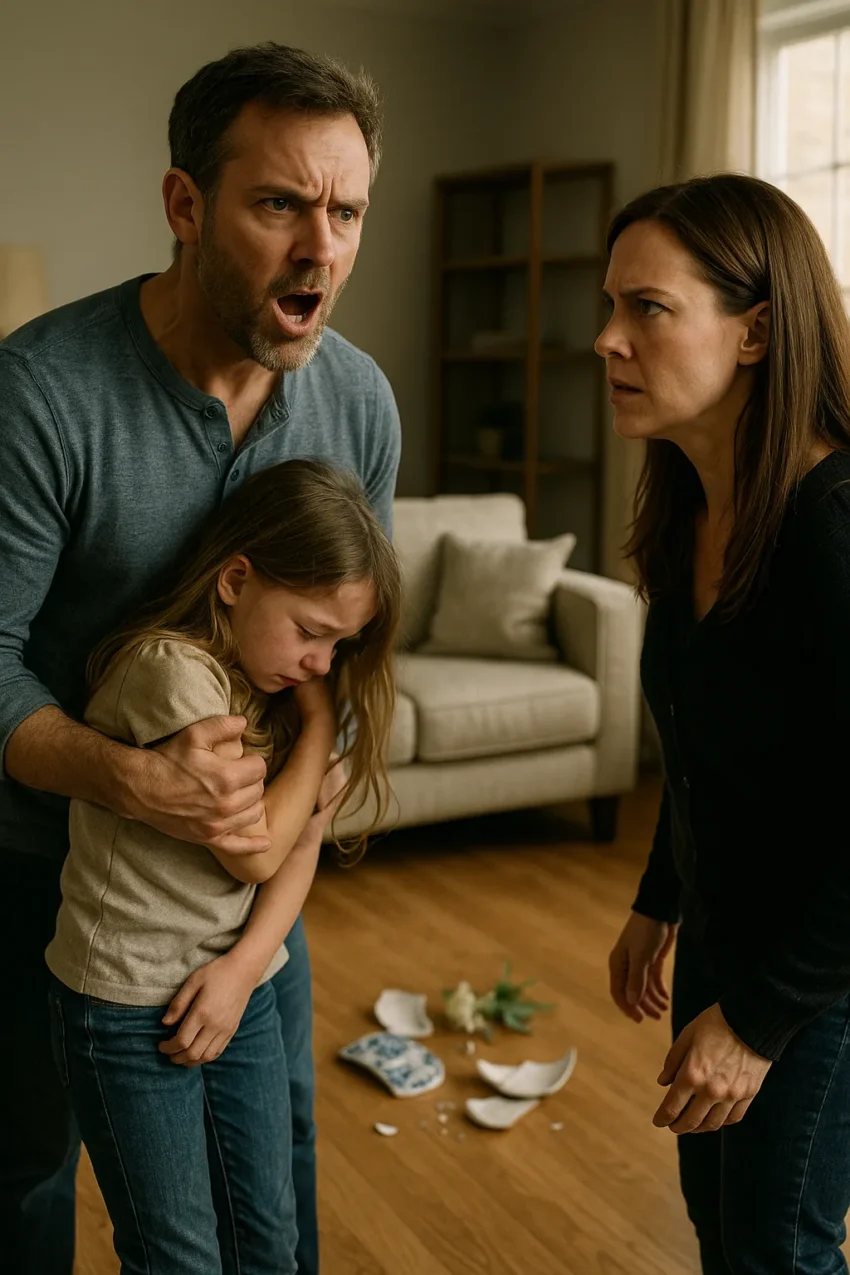
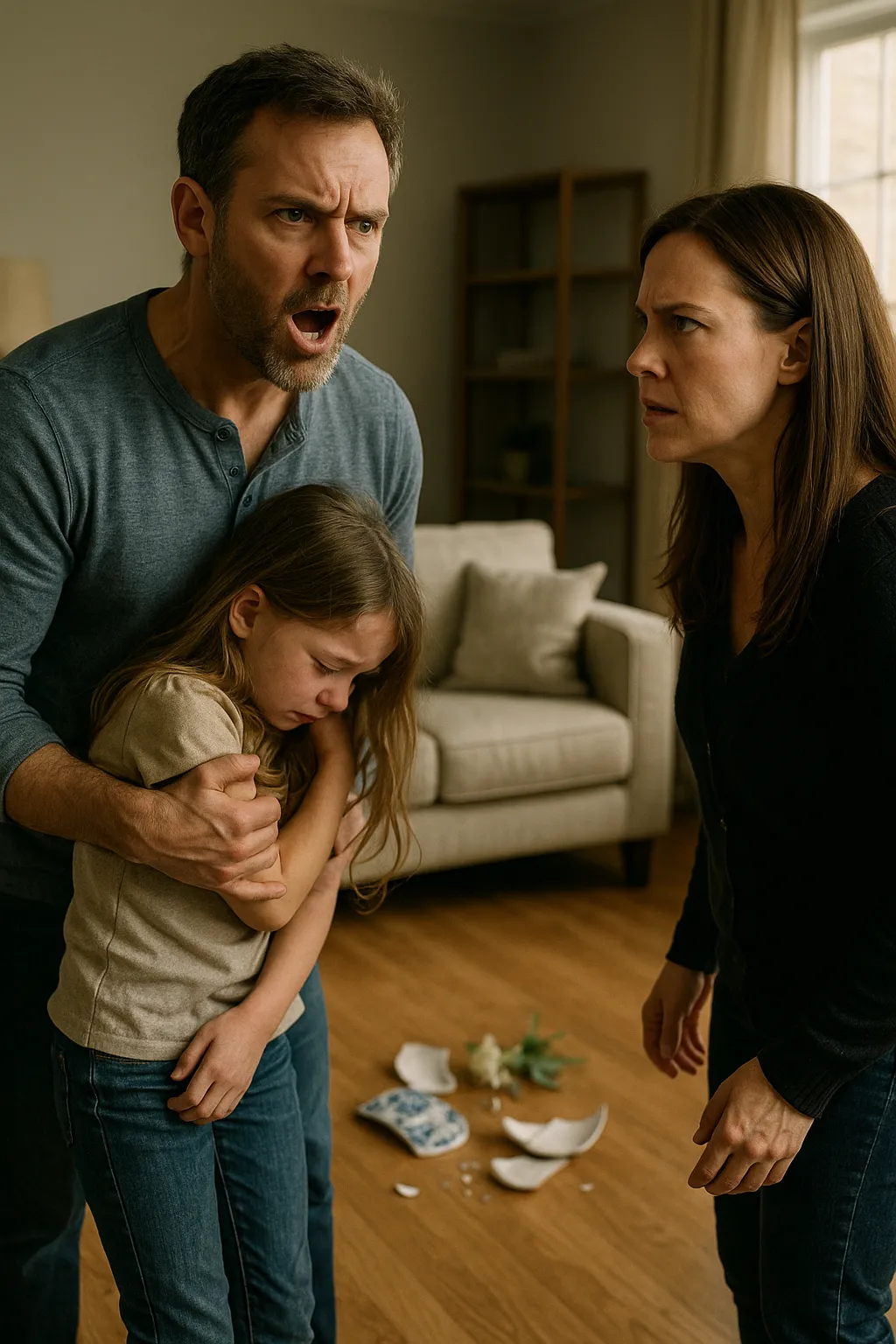
The phone slipped from Clara’s trembling hand, landing with a dull thud on the kitchen counter. For a moment, the world around her blurred — the ticking clock, the hum of the refrigerator, even the sound of rain against the windowpane seemed distant.
“What did you just say?” she whispered, pressing the phone to her ear again.
The lawyer’s voice remained calm, deliberate. “I said, Mrs. Miller isn’t entitled to any portion of Mark’s estate. According to the documents your brother signed, everything — the house, the accounts, the insurance — was placed in a trust. For Emily.”
Clara’s knees gave out, and she sank into a chair. “So… he knew?”
“Yes,” the lawyer said softly. “He must have realized something was wrong. He wanted to protect his daughter.”
Outside, thunder rolled. And in that rumble, Clara heard her brother’s voice — the same voice that had once told her, “If anything happens to me, promise you’ll look after Emily.”
She hadn’t understood then. But now, every word made sense.
The next morning, Clara drove to Lincoln Avenue. The house that once felt alive with laughter now looked like a mausoleum — blinds drawn, weeds creeping up the driveway, and the faint scent of damp wood rising from the porch.
Linda opened the door, her eyes flashing with irritation. “What do you want, Clara?”
Clara held her ground. “To see Emily.”
“She’s not here.”
Clara’s jaw tightened. “Where is she?”
Linda’s lips curved into a smile too thin to be sincere. “Boarding school. Mark wanted her to have the best education.”
“That’s a lie,” Clara said quietly.
Linda’s smile faltered.
“The lawyer called me,” Clara continued. “You might want to start packing. You don’t own this house. Or the car. Or anything inside it.”
For a moment, Linda said nothing. Then, with a laugh that sounded brittle as glass, she leaned against the doorway. “You’re bluffing. Mark left everything to me. He said he loved me.”
Clara’s eyes softened, but her words were sharp. “Maybe once. But he loved his daughter more.”
The color drained from Linda’s face.
By the time Clara left, Linda’s composure had cracked. The walls she’d built around her power — around her lies — were crumbling. That evening, she tore through drawers, searching for proof: a letter, a document, anything to contradict what the lawyer had said. But what she found instead was a small, dust-covered box wedged behind old files in Mark’s desk. Inside was a sealed envelope addressed in her husband’s handwriting:
Her pulse quickened. She hesitated for only a second before tearing it open.
“If you’re reading this, it means I didn’t make it.
I know what you’ve become, Linda. I saw it long before I could admit it to myself. You changed — and I don’t know why. Maybe grief. Maybe greed. But I couldn’t let you destroy Emily the way you were starting to destroy me.
The paper trembled in Linda’s hands. Her breath came in short, shallow bursts. For the first time since Mark’s death, she felt something real — not rage, not superiority, but fear.
Clara met the lawyer the following day at his downtown office. Mr. Whitman was an older man with kind eyes and a folder thick with documents.
“Mark came to me six months before he passed,” he explained. “He said he didn’t trust the way things were going. He wanted to secure Emily’s future privately. The trust ensures she inherits everything at eighteen. Until then, you’re her guardian of record — if you choose to be.”
Clara swallowed hard. “And Linda?”
“Legally, she’s entitled to nothing. But she won’t go quietly.”
He was right.
When the eviction notice arrived, Linda’s fury boiled over. She stormed into the lawyer’s office two days later, slamming her hand on his desk. “You can’t take my home! I was his wife!”
Mr. Whitman didn’t flinch. “You were his wife, yes. But you signed a prenuptial agreement. Everything was his separate property. And his will was clear.”
Her eyes glistened, not with sadness but with humiliation. “You think you’re protecting that brat? You have no idea what she’s capable of.”
“Emily?” he asked quietly. “She’s seven years old.”
Linda’s voice cracked into a whisper. “She’s not like other children. She sees things. She… she knows things she shouldn’t.”
Mr. Whitman’s expression darkened. “Mrs. Miller, this conversation is over.”
She left trembling, her words echoing in his mind long after the door slammed shut.
Meanwhile, Clara was already in motion. She had driven to a small foster care facility outside the city where Emily had been sent after Linda’s guardianship was suspended pending investigation.
The moment Clara entered the room, Emily ran to her.
“Aunt Clara!” she cried, wrapping her tiny arms around her waist.
Clara knelt, pulling her close. “Oh, my sweet girl… I’m so sorry it took me so long.”
Emily’s voice was a fragile whisper. “It’s okay. Daddy told me you’d come.”
Clara froze. “What did you say?”
Emily smiled faintly. “He comes in my dreams. He said, ‘Tell Aunt Clara to find the box under the floor.’”
Clara’s breath caught. “What box?”
“The one that glows,” Emily said simply.
That night, Clara returned to the house one last time, accompanied by a sheriff’s deputy overseeing Linda’s eviction. The house smelled of dust and old perfume. As Linda packed what little she could carry, Clara made her way to Mark’s old study.
The floorboards near the desk looked slightly warped — uneven. Clara knelt, prying one up with her fingers. Beneath it lay a small metal tin, just as Emily had described.
Inside were photographs — Julia holding baby Emily in a hospital room; Mark laughing beside a young Clara at a picnic; and a single folded letter, sealed with wax.
She opened it slowly.
“Clara,
If anything happens to me, promise you’ll raise Emily to know the truth. Not just about her mother — but about kindness, courage, and the danger of silence.
I didn’t tell you this before, but Julia’s accident wasn’t as simple as it seemed. The brakes had been tampered with. The police couldn’t prove anything, but I always suspected someone close to us. If you’re reading this, and Linda’s still there… be careful.
Clara’s tears fell onto the paper. She felt the room spin — grief, fury, vindication — all blending into one heavy ache. She folded the letter carefully and slipped it into her coat.
When she walked out, Linda was standing by the doorway, eyes cold, suitcase in hand. “You think you’ve won?” she hissed.
“No,” Clara said softly. “I think Mark did.”
Linda’s expression flickered — part hatred, part something else. Regret, perhaps. Then she turned and walked into the rain, her silhouette swallowed by the storm.
Years later, Emily grew into the kind of young woman Mark would have been proud of — graceful, wise, and stronger than the pain that once haunted her home. The trust her father left her paid for college, but what guided her future wasn’t money. It was love — quiet, steadfast, and fierce, passed down through every letter and photograph her father had hidden beneath the floorboards.
On the day she turned eighteen, Clara handed her the last envelope — the one Mark had written for her.
“My dearest Emily,
If you’re reading this, I’m watching from somewhere better. I don’t know what the world has given or taken from you, but I hope you never forget: You were the light that kept me going.
Emily held the letter to her chest, tears slipping down her face. “He never stopped protecting me, did he?”
Clara smiled through her own tears. “Not for a single moment.”
The house on Lincoln Avenue was long sold, its secrets finally at rest. But sometimes, on quiet nights, when the wind rustled through the trees, Clara swore she could still hear Mark’s laughter — low, steady, and full of peace.
The kind of peace that only comes when truth, at last, has found its home.
I should’ve offered right then. Should’ve told him I’d be there by morning. Should’ve remembered every night he stayed awake teaching me how to rebuild a carburetor or patch a leaky roof. But instead, I said, “Let me see what I can do,” and hung up.
For the next three weeks, I did nothing. I told myself I was busy with clients, that the city would never really shut down his garage, that Mike was exaggerating. But deep down, I knew the truth: I was afraid. Afraid of being pulled back into that old world I’d tried so hard to bury — the grease, the noise, the stares from people who thought they were better than us.
Then, one rainy Friday, I got the call.
“Mike’s gone,” said Preacher, his voice rough, breaking through the static.
I froze at my desk. “Gone where?”
He didn’t answer right away. When he did, the words hit harder than any punch I’d ever taken.
“Heart attack. Last night. He didn’t make it.”
The world went silent. The city outside my window blurred. My coffee went cold in my hand.
I don’t remember much after that — just packing a bag and driving eight hours through the rain, my wipers barely keeping up, the yellow lines on the highway twisting through tears I couldn’t stop.
When I pulled up to Big Mike’s Custom Cycles, the lights were off. The shop looked smaller than I remembered. Rust had crept up the metal door, and the old “Open” sign hung crooked, as if tired of holding on.
The parking lot was full, though. Dozens of bikes lined up, wet and gleaming like black horses in mourning. Men stood in silence under the drizzle, their leather jackets darkened by rain, patches glinting under the dim streetlight.
Preacher came out to meet me. His hair was all gray now, his eyes softer. “He talked about you, you know,” he said quietly. “All the time. Said you were his proudest rebuild.”
I couldn’t speak. I walked into the shop. The smell hit me instantly — oil, rubber, metal, and faintly, coffee. Everything was just as he’d left it. His workbench was covered in scattered tools, a half-repaired Harley resting beside it. Above the counter hung the photo I’d taken the day I left for college — me, a skinny kid with a wrench in one hand, and Mike behind me, grinning under his beard, his hand on my shoulder.
There was a folded note on the counter with my name on it.
It was written on greasy paper, his handwriting big and uneven:
Kid,
If you’re reading this, I guess my engine’s finally out of gas. Don’t get too fancy about it — I had a good run. Best years of my life, truth be told.
You made me proud. Even when you stopped calling, I kept the phone nearby, just in case. I didn’t take it personal — the world you live in now doesn’t mix with the one I left behind. But I hope, one day, you remember that both built you.
Don’t let them tear this place down. It’s not just a shop. It’s a home for kids who don’t have one. You were the first who made it out. Make sure you’re not the last.
Ride safe, son.
—Mike.
I sat there for a long time, the rain pounding the tin roof, the paper trembling in my hands. I realized then what I had done — and what I hadn’t. He had asked for help not to save his business, but to save his purpose. And I, the lawyer he’d raised, had turned away.
The funeral was small but loud in its own way. No priest, no choir — just engines. One by one, the bikers revved their Harleys in unison, a thunderous salute that rolled through the valley like a heartbeat. When it was my turn to speak, I couldn’t find words. So I just said what mattered:
“He found me in the trash and made me believe I wasn’t garbage.”
After that, I didn’t go back to the city. Not right away. I stayed. I slept on the cot in the back room — the same one he’d given me years ago. The shop was quiet without his music, his humming, his cursing at stripped bolts. But when the morning light crept through the dusty windows, I felt him everywhere — in the smell of oil, in the tools he’d worn smooth with use, in the memories tucked into every corner.
Two weeks later, the letter from the city came. “Notice of Redevelopment — Vacate within 30 days.”
I took it straight to the courthouse. Walked past the polished marble halls, the suited lawyers, the people who once looked down on men like Mike. I stood before the council, tie tight, voice steady.
“Ladies and gentlemen,” I said, “you call this place a ‘blight.’ I call it a lifeline. You see a garage — I see a refuge for the lost, a family for the forgotten. You can’t bulldoze that.”
They tried to cut me off, citing permits, zoning codes, legal jargon. But for once, I didn’t speak like a lawyer. I spoke like the boy who had been saved by a man with a grease-stained soul.
“Big Mike gave kids like me a chance when no one else would,” I said. “If you tear this down, you’re not just erasing a building — you’re erasing every second chance that might have been born here.”
I don’t know if it was my words or the way I said them, but something shifted in the room. The motion to demolish the garage was withdrawn pending review. It wasn’t a victory yet — but it was hope.
That night, the club gathered again, this time inside the shop. Preacher raised a bottle of whiskey. “To Big Mike,” he said. “The man who fixed more than engines.”
“To Big Mike,” we all echoed.
The laughter came back slowly — rough, broken, healing. I looked around and realized something: he hadn’t just built a workshop. He had built a legacy that breathed through each of us.
Months passed. The legal battle dragged on, but I fought it like it mattered more than anything — because it did. And one spring afternoon, I stood outside the courthouse holding the ruling in my hand. The property was safe. Permanently protected as a community landmark.
When I drove back to the shop, the sun was setting. The air smelled like rain and gasoline. I sat on the steps and watched the light fade over the hills. Then I whispered, “We did it, old man.”
A breeze stirred, and the wind chimes he’d hung years ago — motorcycle keys strung together — jingled softly in reply.
Today, I still run my firm in the city. But every Friday, I drive eight hours back to that shop. I keep it open with a few of the old crew. We take in kids from foster homes, from shelters, from streets — the same way he took me. I teach them how to hold a wrench, how to rebuild a carburetor, how to believe they’re worth something.
Sometimes they ask me who Mike was. I smile and point to the photo on the wall.
“He was my father,” I say. “He just never needed a birth certificate to prove it.”
And every time I turn off the lights at night, I swear I can still hear his voice behind me — low, rough, steady as an engine:
“Keep it running, kid. Always keep it running.”
Because love, I’ve learned, doesn’t always look like bedtime stories or family dinners.
Sometimes it looks like grease-stained hands, a half-fixed Harley, and a man who teaches a broken boy how to build something that lasts.